Queen Anne

Lane looks for an opportunity to find her mother in a good mood, and approaches her after she made a sale of a reputed Queen Anne chair to a customer.

Anne (1665-1714) was Queen of England, Scotland, and Ireland from 1702, and Queen of Great Britain and Ireland from 1707 until her death.

The term Queen Anne when applied to furniture usually describes styles from the mid 1720s to the mid 1760s, even though this is after the reign of Queen Anne. Queen Anne furniture is characterised as being smaller, lighter and more comfortable than its predecessors, and Queen Anne chairs have elegant curved legs and cushioned seats.

Naturally the chair shown in the episode looks nothing like a Queen Anne. The customer even begins by questioning its authenticity and saying that it looks wrong, suggesting that the Kims are selling their antiques under very loose labels. When the customer asks for evidence that the chair is Queen Anne, Mrs. Kim says she will write a letter to that effect, which isn’t any proof of provenance at all.

Purgatory

RORY: But a play is not a lie?
LANE: Well it’s far away from the truth that it might work but close enough to the truth that I think I can negotiate a Purgatory stint if forced to.

In Roman Catholic theology, Purgatory is an after-life state where souls are purified in order to make them holy enough to enter Heaven. A soul in Purgatory cannot go to Hell, and is guaranteed to to be admitted to Heaven at some point.

As a Seventh Day Adventist, Lane isn’t saying that she believes in Purgatory, but is using the concept to describe a state where her mother will chastise and punish her for a certain period, yet forgive her at a future date when she thinks Lane has suffered enough.

“Double, double, toil and trouble”

LANE: All three of them huh?
RORY: Double, double toil and trouble.
LANE: Well, it should make for an interesting afternoon.
RORY: With the pricking of my thumb, something wicked this way comes.
LANE: You’re doing very well in the Shakespeare class aren’t you?

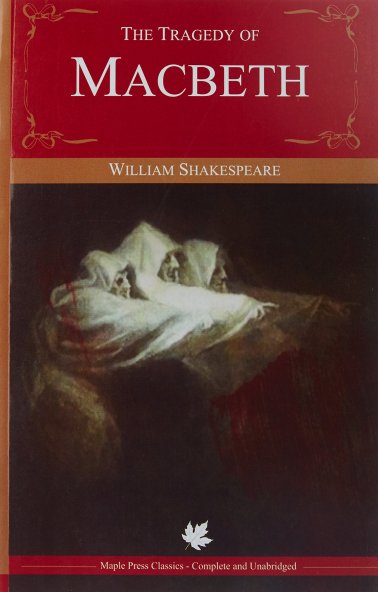
Rory is quoting from the tragedy Macbeth by William Shakespeare, first staged in 1606. In the play, Macbeth meets three witches whose prophecies drive him to murder, and eventually lead to his own demise.

Rory quotes lines from the three witches, linking Paris, Louise, and Madeline with the grim trio, and also with the “something wicked” that is coming. Lane’s comment suggests that Rory studied the play in her English Literature class.

“Very big eyes for you”

LOUISE: Tristan suddenly has very big eyes for you, Grandma.

Louise is referring to the well known European fairy tale Little Red Riding Hood, where a little girl in a red hood takes a basket of food to her grandmother in the woods, and foolishly tells a wolf where she is going. The wolf races ahead of her and devours her grandmother, dressing in her clothes to deceive the little girl, who notes, “What big eyes you have, Grandma!”.

The fairy tale is generally seen as having erotic undertones, as the wolf sweet-talks (seduces) the little girl into telling him her destination, and he also eats both the girl and the grandmother (ravages them) before they are rescued by a huntsman, who cuts them from the wolf’s belly.

We still describe a man who is sexually dangerous as a “wolf”, and it is apt that Louise slyly links Tristan with this seductive fairy tale character.

Affair

Louise says they can’t meet at her house to study as her mother is having an affair.

Nobody comments on this or asks why it affects them meeting – does Louise’s mother need the house to herself all weekend for her affair? Couldn’t she meet her lover elsewhere, or simply skip seeing him for a single afternoon? What does Louise’s father do on the weekends while the house is off limits to other family members’ activities in order to accommodate his wife’s affair? Has the house somehow been tainted by “affair-ness” so that nobody is ever allowed to visit?

These questions shall never answered. As Louise’s story doesn’t make sense, she may be making up an excuse that nobody will question out of embarrassment.

Measles

Madeline says that they can’t study at her house because her brother has measles.

Measles is a highly contagious viral infection causing fever, cough, runny nose, inflamed eyes, and a red rash. It can be fatal. Madeline must be vaccinated against the disease or she would have it herself, and the household should have been quarantined so that Madeline shouldn’t be (and possibly isn’t) living at home while her brother is infectious.

Measles were declared to be eliminated in the US in 2000 by public health officials (this doesn’t mean nobody got measles that year, just that there were so few cases and such high vaccination rates that they weren’t any threat to the general population).

Madeline’s brother getting measles in 2001 is highly unusual, and it really makes you wonder why vaccination rates are so low in the Gilmore Girls universe – in real life, Connecticut has one of the highest rates of child vaccination in the world. It seems more in line with California, where Gilmore Girls is filmed, where vaccination rates tend to be lower.

Harvey Fierstein

PARIS: My mother is having the entire place redone; she wants all evidence of my father out of there [after their divorce]. So unless you want to sit on no furniture, while watching three Harvey Fierstein impersonators rip up the carpet and paint everything a ridiculous shade of white and call it Angel’s Kiss, then we’re going to have to find somebody else’s house to go to.

Harvey Fierstein is a multi Tony Award-winning actor and playwright, best known for his 1982 Torch Song Trilogy, which he both wrote and originally starred in – it went to Broadway and the West End in London before being made into a film.

Fierstein was openly gay at a time when few celebrities were, and his works often centre on LGBT issues. Paris is simply saying that her mother’s decorators are gay, or appear to be so.

Charles I

Rory’s teacher Ms. Caldecott tells the class they will be debating “Did Charles I receive a fair trial?”. It’s not clear which class this is – it may be History, and Ms. Caldecott has replaced Mrs. Ness as the teacher for the subject this semester, or it may be Government.

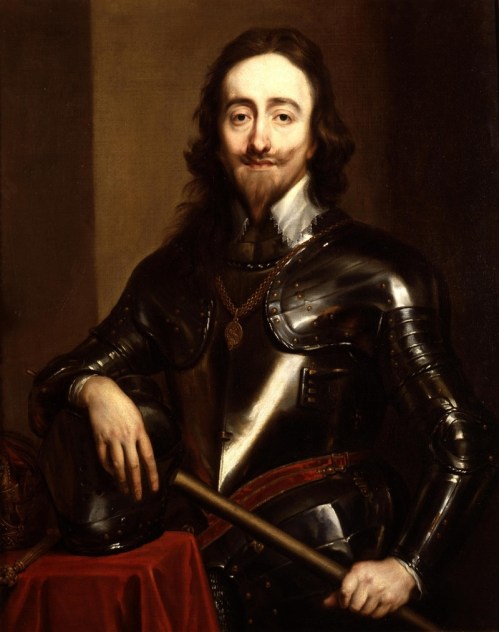
Charles I (1600-1649) was the king of England, Scotland, and Ireland from 1625 until his death. Charles was in conflict with the Parliament of England, which tried to place limits on his royal prerogative – the authority and privileges which belong to the monarch alone. Charles believed in the divine right of kings, and that he was subject to no earthly authority, but could rule as he pleased through the will of God.

From 1642, Charles fought the armies of the English and Scottish parliaments in the English Civil War, was defeated in 1645 but still refused to accept demands for a constitutional monarchy. He was tried, convicted, and executed on charges of high treason in January 1649. The monarchy was abolished before being restored in 1660.

At his trial, Charles was held responsible for all the damage done to his country during the Civil War, including the deaths of 6% of the population. He refused to plead, claiming that no court held authority over a monarch, and that his authority to rule came from God and from the laws of England. He said that the trial was illegal, and its power only came from the force of arms.

The court challenged the idea that a monarch was immune from prosecution by the state, proposing that the “king” was not a person, but an office whose occupant had to govern by the laws of the land. They went ahead with the trial without the king’s royal assent. Charles was not present to hear the evidence against him, and had no opportunity to question witnesses, so there would be material for both sides of the debate.