“Upcoming month”

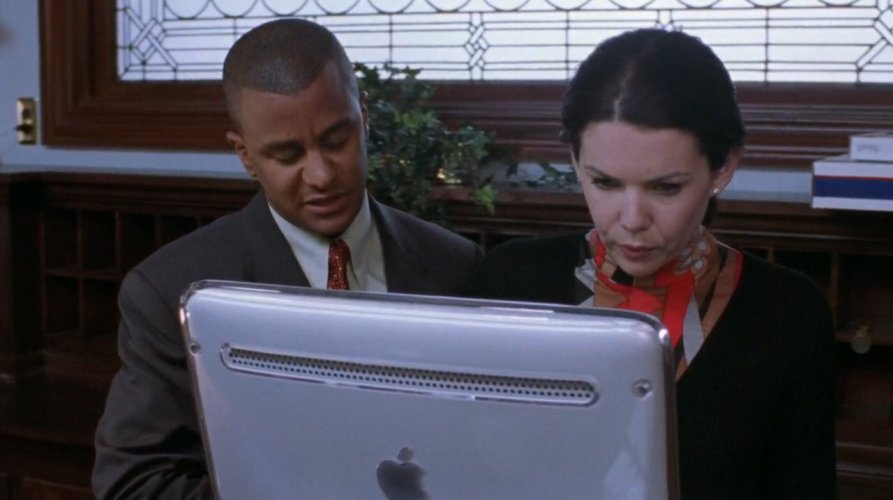
LORELAI: I didn’t do anything wrong. I did the same thing I always do when I’m pulling up reservations for the upcoming month, but nothing happened.
MICHEL: You typed in the name?
LORELAI: I typed in the name.
MICHEL: You clicked on the April 5?

If April is the upcoming month, it must still be March. The only way it can still be March is if the month has about six weeks in it, but February seemed to have about seven weeks, so we’re clearly in Gilmore time now and just have to go with it. From Lorelai’s comment, it seems to be Friday March 30.

Marx Brothers

TRISTAN: Uh … you left this [handing Rory her notebook.]
RORY: Oh yeah, I did. Thanks.
TRISTAN: Sure. [both try to go through the doorway together and back up]
RORY: Well, that could have been a potential Marx Brothers moment.

The Marx Brothers were an American family who formed a highly successful comedy act in vaudeville, on Broadway, and in film, from 1905 to 1949. They are generally known by their stage names: Groucho, Chico, Harpo, Zeppo, and Gummo. Considered to be among the greatest comedians of the twentieth century, several of their films are regarded as comedy classics.

During the show, it became apparent that The Marx Brothers made some of Lorelai and Rory’s favourite films. Amy Sherman-Palladino is also a big fan of The Marx Brothers.

“Too cabin-in-the-woods?”

PARIS: Read my manifesto, I want your thoughts.
RORY: First thought – lose the word “manifesto”.
PARIS: Too cabin-in-the-woods?
RORY: Don’t open your mail.

A reference to domestic terrorist Theodore “Ted” Kaczynski (born 1942), also known as the Unabomber. In 1971 he moved to a remote cabin in the woods in Montana, where he lived as a recluse.

He first began his bombing campaign after witnessing the destruction of the wilderness around him, and between 1978 and 1995 mailed or hand-delivered a series of increasingly-sophisticated bombs that killed three people and injured twenty-three.

In 1995, Ted Kaczynski’s lengthy essay, Industrial Society and Its Future, (known to the police as the Unabomber Manifesto) was published in The New York Times and The Washington Post. He promised that if it was published he would desist from further terrorism, and police hoped that its publication would help lead to his identification.

That proved to be the case: Ted’s estranged brother, David Kaczynski, recognised his brother’s writing style from family records of letters that Ted had written to newspapers in the 1970s, and an earlier essay by Ted.

Ted Kaczynski was arrested in 1996; he pleaded guilty to all charges in 1998 and was sentenced to life imprisonment without parole. He is currently serving his sentence in a Supermax prison in Colorado.

“Even Barbie ended up being a stewardess”

PARIS: I just think it’s strange that you don’t wanna be queen.
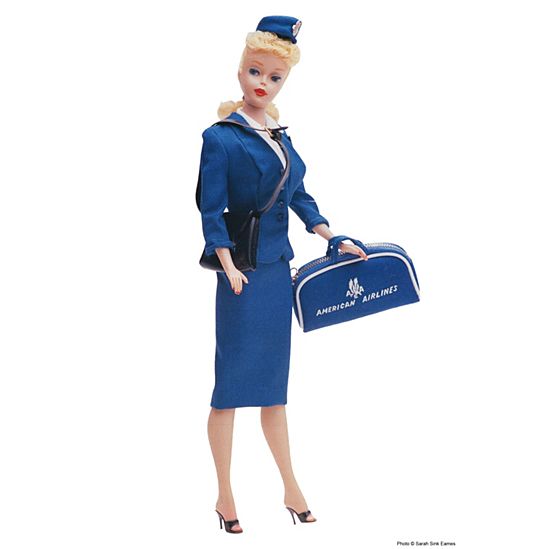
RORY: You know, not all girls want to be queen, Paris. Even Barbie ended up being a stewardess.

Rory is referring to the doll named Barbie, previously discussed. One of her early “careers” was becoming a stewardess with American Airlines in 1961, where she wore a uniform and carried a flight bag. Barbie never has been a queen, although since the 1990s she has been a princess.

Quarter Sessions Court

PARIS: We are talking about Government class, not the movies. God, why can’t I get one person to care about this as much as I do?!
LOUISE: Okay, fine. I’ll be the head of the Quarter Sessions court, but I’m still wearing the dress.

The Quarter Sessions courts were local courts held in each county – named such because they were held four times a year. Their reputation was very poor, and the chairmen did not not need legal qualifications. Even in imaginary situations, Louise doesn’t seem to aim very high.

“They get all the sex”

LOUISE: I’ll be the lady-in-waiting. The one with the low-cut blue velvet Renaissance dress.
PARIS: Lady-in-waiting is not a political office.
LOUISE: No, but they get all the sex.
PARIS: What?
LOUISE: Watch a movie.

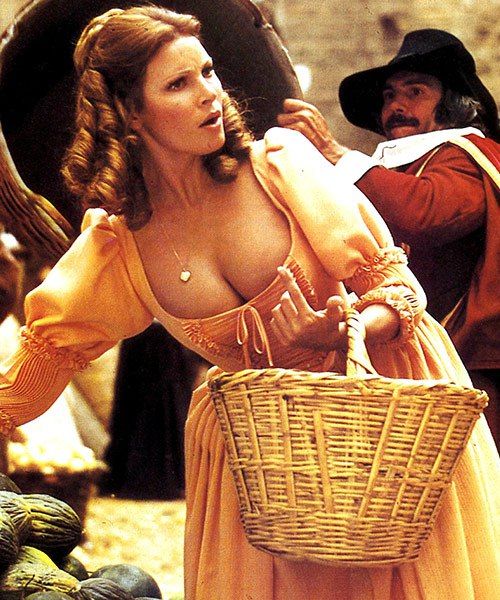
In period films, it is fairly common to have the lady-in-waiting be the “sexy” figure, as compared to the noble, romantic, or dull queen or princess she is companion to. A classic example is Racquel Welch in The Three Musketeers (1973); she plays the lady-in-waiting Constance, and all her gowns are low-cut to display her assets [pictured].

Louise seems to be thinking of a specific lady-in-waiting in a blue velvet dress, but I don’t know which one. The period film Elizabeth came out in 1998, based on the early reign of Elizabeth I; as they are studying her in Government that would seem the most likely candidate. However, there is no dress such as Louise describes, and although one of the ladies-in-waiting does have sex because of a particular dress, it ends in tragedy for her.

Henry VIII

RORY: Henry VIII started a new church when the old one wouldn’t allow divorce.
PARIS: He also cut off his wife’s head. Is he still your role model?

King Henry VIII, the father of Elizabeth I, and earlier mentioned. He initiated the English Reformation, which separated the Church of England from the pope’s authority. Rory isn’t quite right that he started a new church – the Church of England already existed, but was originally under Rome – but she is generally correct about the reason.

Henry VIII tried to have his marriage to his first wife, Catherine of Aragon, annulled by the pope, and when that didn’t work he took control of the church himself to annul his own marriage. It wasn’t technically a divorce – their marriage was declared null and void in 1533, and from then on Catherine was regarded as the widow of Henry’s older brother Arthur, her first husband.

His second wife was Anne Boleyn (c1509-1536), who was the mother of Elizabeth I. They were married in 1532, and he had her executed by beheading in 1536. She was charged with treason, adultery, and incest, but the evidence against her was unconvincing. Her main “crime” was probably failing to produce a son, as apart from Elizabeth, her other pregnancies ended in miscarriage.

Elizabethan government

PARIS: I think that the basic structure of the Elizabethan government is relatively sound. The division of power between the monarchy, the privy council, and the parliament all seem to work.

Elizabethan government was that in England under the reign of Queen Elizabeth I (reigned 1558-1603). Her government was extremely structured and complex, and made up of:

The Monarch – Queen Elizabeth herself, who ruled by divine right. She is generally regarded as one of England’s best monarchs, which is probably why Paris thinks her government would be the best to emulate.

The Privy Council – the queen’s advisors. They gave advice to the queen, but she could rule against them if she preferred. They handled routine administration.

Parliament – was made up of the House of Lords (nobility and upper level clergy) and The House of Commons (ordinary people who were elected to their position). Unlike today, it had very little power, and was mostly there to handle the financial side of things, such as taxes.

Local government – very important in Elizabethan times. Counties, cities, and towns all had their own governments to deal with issues on a local level, while the nobility ran their own manors.

Courts – the justice system was made up of a number of courts, all dealing with different types of crimes, from the most serious offences to petty matters. The wealthy and the poor had different court systems to try them, and there were separate courts for financial and religious issues.
“Grumpy McFarland”

RORY: Grandpa says I remind him of her [Richard’s mother].
LORELAI: That is the biggest compliment that can be wrenched out of Grumpy McFarland, believe me.

I think Lorelai is making a play on Spanky McFarland, one of the characters from the Little Rascals movies, earlier discussed. He was played by George McFarland, and in the earliest movies when he just a toddler, did have a rather grumpy demeanour.

“So tell me more about her”

RORY: So tell me more about her [her great-grandmother] …
LORELAI: Well, let’s see. She moved to London when Grandpa died but she didn’t like to travel, so once a year Mom and Dad would go to visit her, usually leaving me behind, much to my relief by the way, and that’s it.

We don’t know when Richard’s father died, but it was clearly a long time ago, possibly before Lorelai was born. It seems strange that someone who doesn’t like to travel would move overseas to live.

Richard and Emily said they can only afford to go to Europe every two years, but Lorelai says they saw Richard’s mother in London every year. Maybe they used to have more money when Lorelai was a child, or prices were cheaper? Because Lorelai says they “usually” left her behind, it means that she must have been to London with her parents at least once.

As her grandmother is the only one who can seemingly control Lorelai and scare her into uncharacteristically meek behaviour, it makes the viewer wonder if Lorelai would have gone off the rails as a teenager if Richard’s mother hadn’t moved to London. I suspect not, and Gilmore Girls would never have happened.