Rory Shows Emily the Potting Shed

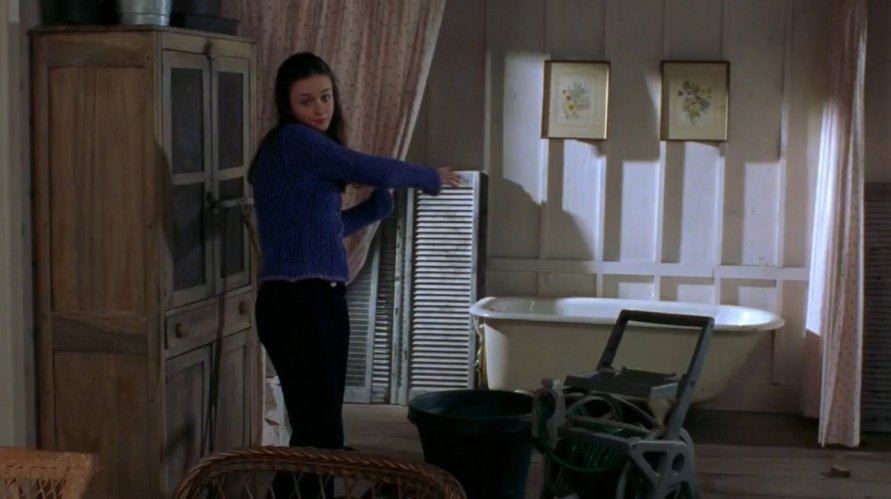
(Rory opens the door and walks in. Emily looks in from the doorway.)
RORY: I know it’s looks small, but it’s really pretty. Come on. See, we had our bed right over there, and Mom put up this really pretty curtain around the tub so that it looked like a real bathroom. And we would just sit outside at night when the Inn would have parties, and we’d just listen to music and feed the ducks and . . . (Emily walks away) Grandma? Grandma wait, what’s the matter?

This is the potting shed next to the duck pond at the Independence Inn that Lorelai and Rory lived in when they first moved to Stars Hollow, as they had no money for accommodation (like the Holy Family, there was “no room at the inn”, and they were put in an outbuilding, so Baby Rory was just like Baby Jesus).

The shed is sturdy but rustic, and is stocked with gardening tools and plants, like any potting shed: it isn’t clear if those things were there while Lorelai and Rory lived there. Their bed is no longer there (they must have shared a single bed together), but the bath has been left, including the curtain that Lorelai put around it to serve as a bathroom wall. Lorelai mentioned that it has rosebud wallpaper, but the shed is painted white inside and doesn’t look as though it’s got the kind of walls that you could easily wallpaper.

It looks impractical for bringing up a baby, and we learn later that they moved to Stars Hollow in the autumn, so it would have been very cold as well (we don’t know what they used for heating). We don’t know how long they lived in this temporary accomodation, but long enough for Rory, who was only a baby when they came to Stars Hollow, to have some memories of it, and long enough that the weather became warm enough for them to sit outside at night. I would guess at least a year, and possibly two. Who looked after baby Rory while Lorelai was working is unknown.

This is the first time that Emily has ever seen the potting shed, and she is clearly distraught to discover the conditions her daughter and granddaughter lived in. Lorelai told Sookie that her parents visited them a few times at the inn while Rory was a baby, but they never saw where they slept at night. Lorelai was probably clever at keeping them away from the shed, but their lack of curiosity is surprising. Perhaps they were scared to push it in case Lorelai ran even further away.

In this case, it is Emily who runs away, too upset to spend any more time with Rory or even say a proper goodbye to her. This incident serves as a device to keep Emily at a distance from Stars Hollow. Emily was having a good time with Rory, and was fitting in well with the townspeople, finding that she had things in common with Mrs. Kim and Michel. By showing her in the potting shed, it explains why Emily doesn’t visit Stars Hollow more often in the future.

Where they lived between the potting shed when Rory was a baby/toddler, and moving into their own house when Rory was eleven, is a complete mystery and never mentioned. Perhaps Lorelai saved up enough money to rent a cheap apartment for them, but renting would make it hard to save for a house. They could have lived in a friend’s house (with Sookie?), but if so, nobody ever refers to it.

In real life, it wouldn’t be legal for anyone to live in the potting shed under Connecticut zoning laws, but I’m not sure that would stop Lorelai anyway – rules were made for non-Gilmores!
Working Girl

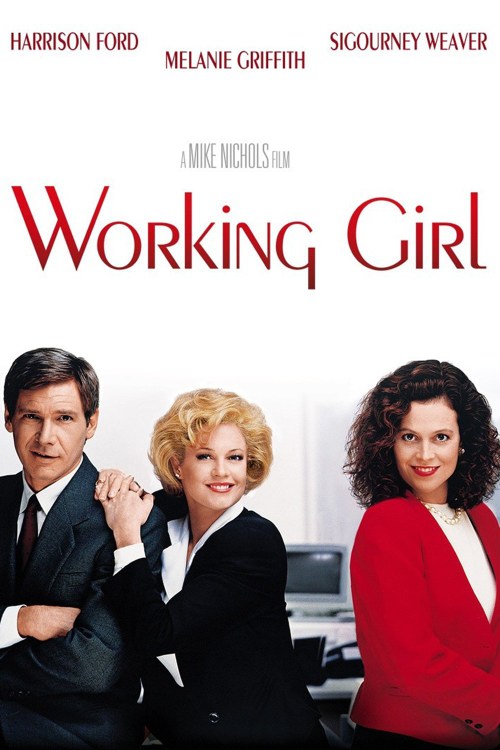
LORELAI (to Emily): I can’t picture you at Teriyaki Joe’s . . . or in jogging shoes. What’s up, working girl?

A possible reference to the 1988 romantic comedy-drama film Working Girl, directed by Mike Nichols and starring Melanie Griffiths in the lead role. The film is about a secretary who aspires be a Wall Street executive, and steps into her female boss’ role after having her ideas stolen. The film received excellent reviews, and won the Academy Award for Best Song (Let the River Run, sung by Carly Simon).

Maybe Lorelai is referring to Emily (literally) stepping into Lorelai’s shoes in order to bond with Rory. As usual, Lorelai dislikes the idea of her parents getting close to Rory – it must have annoyed her that this outing was all Rory’s idea, with Rory inviting her grandmother to spend the afternoon in Stars Hollow with her.

Teriyaki Joe’s

LORELAI: I thought you were gonna go antiquing.
RORY: Yeah we did. And then we had lunch.
LORELAI: Oh, really? Where?
EMILY: Teriyaki Joe’s.

Teriyaki Joe’s is yet another of the restaurants in Stars Hollow that we never hear about again. Teriyaki is a Japanese cuisine style where meat and fish are grilled over a barbecue plate and marinated or sauteed in a sweet and spicy sauce. Originally developed in the 17th century by Japanese cooks, teriyaki cuisine became popular in the US during the 1990s.

Emily and Michel Meet

(They introduce themselves and shake hands)
EMILY: Enchantée. D’où venez vous?
MICHEL: Paris.
EMILY: J’adore Paris. Nous y allons chaque printemps.

Emily says, “Pleased to meet you. Where are you from?”, and Michel says he’s from Paris. Emily says, “I love Paris. We go there every spring”.

In fact, Richard and Emily go to Europe every second year in the fall, and specifically refused to go to Paris in the spring, questioning whether there was anything to see at that time of year.

Emily and Michel instantly hit it off, with Emily pronouncing him a “charming man”, and Michel telling Lorelai, “I just love your mother”. It makes sense that the two people who most enjoy  torturing Lorelai would like each other.

“I work here”

EMILY: Do you spend a lot of time here? [at the Independence Inn]
RORY: Yeah. I work here a couple afternoons a week, and I help out with special occasions. They have a lot of weddings here.

We learn that Rory, on top of her heavy school workload, also works part time two afternoons per week at the Independence Inn. This is different to what Rory told Headmaster Charleston in The Lorelais’ First Day at Chilton,  when she said that she sometimes worked at the inn after school, so on weekdays. In the Pilot, Lorelai suggested she might want to help out and “earn some extra money” when Rory had a day off between changing schools, which could mean on top of the usual work she did at the inn, or to suggest that Rory helped out sometimes when she had free time.

It’s possible that Rory took on more regular work at the inn once she turned 16 (in Connecticut, there is a limit as to what kind of jobs a child under 16 may perform, although it is legal to work from 14 onward). As Rory doesn’t get home until nearly five pm from Hartford on weekdays, I can only think the two afternoons she works must be Saturday and Sunday – although it’s Saturday afternoon in this episode and Rory isn’t working, so I don’t know. She also says she works extra hours on the numerous weddings, which would mostly be on weekends anyway.

Maybe Rory works for just an hour or so after school twice a week. We never see her at this regular part-time job, so it’s hard to say how she manages her schedule. The job doesn’t seem too onerous, as it never seems to conflict with homework or social life (nor do we ever see Lorelai and Rory arriving home from work at the inn together). It’s possible that Rory is exaggerating her work schedule to impress her grandmother.

Martha Washington

RORY: So, what do you think? [of the Independence Inn]
EMILY: Well, I think it’s very nice.
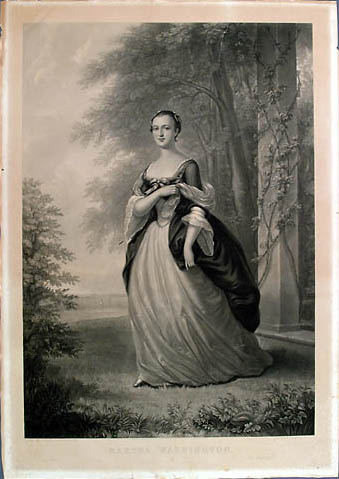
RORY: Mom’s office is right back there. Oh, and you have to see the dining room. They got the chandeliers from one of Martha Washington’s houses.

Martha Washington, born Martha Dandridge (1731-1802) was the wife of President George Washington, and First Lady of the United States (although the title was not coined until after her death, she is considered to be the first First Lady). The couple married in 1759.

Martha married the politician Daniel Custis in 1750, and after his death in 1757 she inherited his considerable estate, becoming a very wealthy widow while still a relatively young woman. Her houses included The White House, a plantation house in Virginia which was the main family home, and a house in Williamsburg, Virginia, which was later named Six Chimneys. Besides these, she was also left in possession of five plantations.

The White House burned down during the American Civil War, and Six Chimneys fell into disrepair and was eventually torn down. Of the five plantation houses, I can discover nothing, but it seems most likely that the chandeliers either came from one of these, or just possibly, from Six Chimneys; if so, the chandeliers may have been removed around the late 18th century or very early 19th century.

“Go build us another statue”

MICHEL: Be quiet.
RUNE: Go build us another statue.

Rune is referring to the Statue of Liberty (Liberty Englightening the World), which was a gift from the French people to the people of the United States. It shows the Roman goddess Libertas (Liberty) holding a torch above her head, and in her hand holding a tablet inscribed with the date of the US Declaration of Independence, July 4 1776.

Designed by Frédéric Auguste Bartholdi and built by Gustave Eiffel, the statue is located on Liberty Island in New York Harbor, and was dedicated on 1886. It has become an important symbol of American freedom.

YMCA

MICHEL: May I help you?
RUNE: Yeah, I need to know where my room is.
MICHEL: Uh, are you sure you are in the right place? Perhaps you want the YMCA or the local bus station.

The Young Men’s Christian Association, an international organisation founded in London by George Williams in 1844, and based in Geneva, Switzerland. As well as its many charitable activities, the YMCA has hostels all over the world providing low-cost accomodation for travellers.

In real life, there is no YMCA hostel in Connecticut, with the nearest one to Stars Hollow being in New York. As there is also a bus station in New York and not in Stars Hollow, Michel is telling Rune he hasn’t just come to the wrong hotel, but to the wrong town, and should get out. This subtle insult is totally wasted on Rune.

Williams Sisters

LANE: It’s like watching the Williams’ sisters [referring to Emily and Mrs. Kim haggling].
RORY: I wish we had popcorn.

A reference to American professional tennis players Venus Williams (born 1980) and Serena Williams (born 1981). Venus is on the right in the picture, and her sister on the left.

The sisters dominated the sport in the 2000s and often played against each other; the first time was in the second round at the 1998 Australian Open, which Venus won. The previous year to this episode’s airing, they met in the semifinals at Wimbledon in 2000, which Venus also won. In all, the sisters have met at 29 matches to date, with Serena leading 17-12.

“I take thee, Jesus”

LANE: So he doesn’t like me, he’s not gonna call. It’s not the end of the world. I’ll live. I’ll go on. There’s always college. Unless my parents get their way, and then it’s “I take thee Jesus to be my lawful wedded husband.”

Lane is suggesting that her parents want her to “marry” Jesus, or devote herself entirely to her religion. Catholic nuns are called “brides of Christ” for the same reason, but despite Mrs. Kim wanting Lane to (rather implausibly) attend a convent, there is no equivalent in the Seventh Day Adventist religion. Adventists don’t promote celibacy, even for people in pastoral roles in the church, so this doesn’t really make sense.