Rory’s Bookshelf

When Rory shows Richard her bedroom, he checks out her bookshelf. Here are some of the books we can see:

Summer of Fear

A 1993 serial killer novel by T. Jefferson Parker, who writes bestselling police procedural novels set in California. Parker is a journalist who turned novelist – perhaps a tiny hint of where Rory’s career is eventually headed.

The Scarecrow of Oz

A 1915 children’s book by L. Frank Baum, the ninth in his series of Oz books. The Wizard of Oz is a touchstone for Gilmore Girls, and this seems to be a little nod to the land of Oz. The Scarecrow from the original story is the magical helper (the one who didn’t have a brain, but was actually quite smart), and the human protagonists are a man and a little girl from California.

Contact

A 1985 science novel by scientist Carl Sagan. The heroine is a scientist named Ellie who showed a strong aptitude for science and mathematics from a young age, and has been left emotionally bereft by the loss of her father, with a problematic relationship with her mother. Contact with an alien civilisation allows Ellie a strange chance to reconnect with her memories of her father. It feels like something that would resonate with Rory. Ellie is also from California. The novel was a bestseller, and made into a film in 1997, starring Jodie Foster. The film might have given Rory an interest in reading the novel.

The Apocalyptics: Cancer and the Big Lie

Edith Efron was a journalist who began her career at the New York Times Magazine, became a member of Ayn Rand’s circle and wrote for her magazine, and then became editor of TV Guide at the height of its popularity. She was critical of what she perceived as “liberal bias in the media”, but provided a strong voice on race relations (Efron had a biracial son during 1950s segregation). She later wrote for the libertarian publication, Reason. The Apocalyptics is a 1984 exposé of the cancer industry and a criticism of environmental policy which Efron saw as being based on “bad science” (basically saying Rachel Carson etc were all a bunch of doom-merchants). It’s an obscure, controversial, and extremely heavy-going work. An intriguing insight into Rory’s interests.

Working: People Talk About What They Do All Day and How They Feel About What They Do

A 1974 non-fiction book by oral historian and radio broadcaster Louis “Studs” Terkel. An exploration of what makes work meaningful for people, based on interviews with people from all walks of life. It was a bestseller, and turned into a Broadway musical in 1977, and a graphic novel in 2009.

A book by “Tobias Allcot”

This seems to be a fictional book which would have been created by the props department as a slightly odd joke. Tobias Allcot is the name of a Pulitzer Prize-winning author in the film The Man from Elysian Fields, directed by George Hinkenlooper; James Coburn portrays Allcot. The film wasn’t released until September 2002, but had been shown at the Toronto Film Festival in September 2001.

Chinese Food

Lorelai orders a lot of Chinese food from Al’s Pancake World (too much, in Richard’s view). We don’t know everything she orders, but apart from egg rolls, we know she orders:

Egg foo young [pictured]: an omelette dish found in Chinese American cuisine. Its Chinese name fúróngdàn literally means “hibiscus egg” in Cantonese, and it derives from fu yung egg slices, a recipe from Guangdong (various vegetables cooked in beaten egg). In Western countries, it is usually a folded omelette with meat and vegetables embedded in the egg. In North American, it is often served with sauce or gravy.

Garlic chicken: a Chinese American chicken dish, where the chicken is stir-fried in a thick garlic, honey and soy sauce. Often topped with sesame seeds and green onions. Rory asks for this to be added to the menu.

Moo shu pork: a dish from northern China which has been a staple of Chinese American cuisine since the 1960s. It consists of marinated pork stir-fried with mushrooms, bamboo shoots, and scrambled egg, in a rice wine sauce. Usually served with rice or pancakes, and hoi sin sauce.

Love Hurts

LORELAI: I don’t think I’ve ever loved you quite as much as I love you right now.
RORY: Ah, ribs cracking, organs crushing.
LORELAI: Yeah, well, love hurts.

Probably a reference to the song Love Hurts, written by Boudloux Bryant, and originally recorded by the Everly Brothers in 1960. It is best known from the 1974 version by Scottish band Nazareth, who turned it from a country song into a hard rock power ballad. It became an international hit, and reached #8 in the US in 1976. It went to #1 in Belgium, Canada, the Netherlands, Norway, and South Africa. It was less successful in their own country, reaching #46 in the UK.

It has been covered numerous times, including by Cher, and often used in advertisements, films, and television. It is on the soundtrack to Sid and Nancy.

Censorship in a Small Town

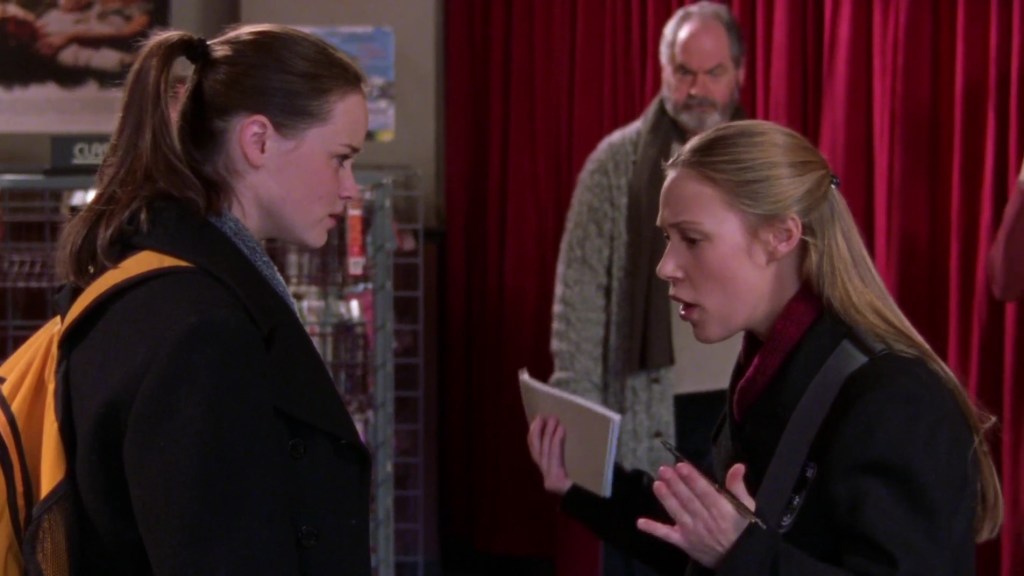
PARIS: Our story. Censorship in a small town, it’s perfect.
RORY: Paris, stop it. You know I don’t believe in censorship.
PARIS: Even better, small town minds run amok.

Paris is right – this is actually an interesting story, showing how in small towns, a tiny minority of people (Kirk and Taylor) can wield enough power to crush free speech entirely. Rory says she doesn’t believe in censorship, but she literally asked for an R-rated DVD to be put in a different section of the video store. That’s censorship!

The Rory Curtain

RORY: No! I don’t want a Rory Curtain, I never asked for a Rory Curtain!

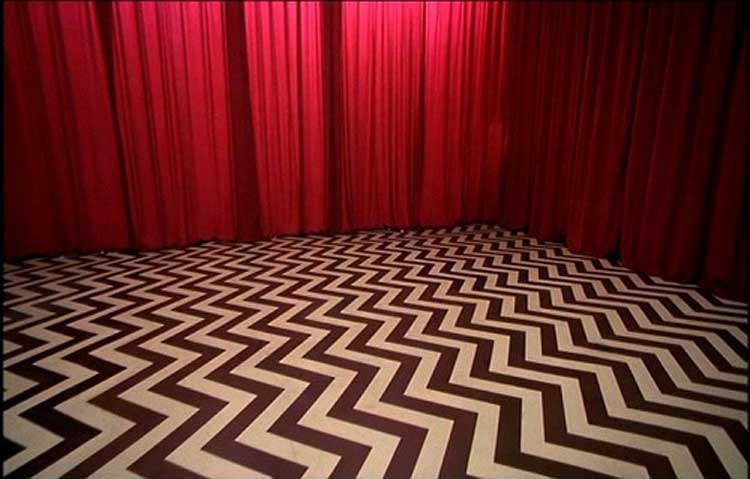
Thanks to Rory’s meddling, Kirk and Taylor have placed nearly all the DVDs behind a red velvet curtain which they have named in honour of Rory. The curtain is highly reminiscent of the red velvet curtain in the mysterious Red Room/Black Lodge in the television show, Twin Peaks, by Amy Sherman-Palladino’s favourite director, David Lynch. Like Twin Peaks, Stars Hollow is a quirky little town with a secret dark side, although it skews much more sweet and wholesome than the twisted Twin Peaks.

Frank Capra

PARIS: Nothing, not even a cigarette butt on the ground, I can’t believe it. This town would make Frank Capra wanna throw up.

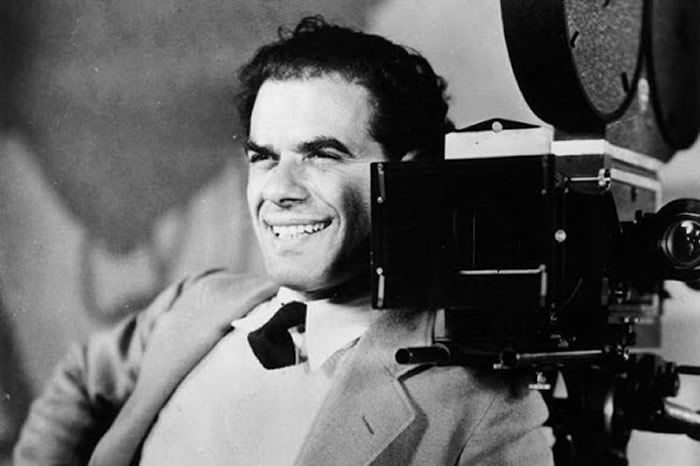
Francesco “Frank” Capra (1897-1991), Italian-born American film director, producer and writer, the creative force behind many of the award-winning films of the 1930s and 1940s. He won six Oscars, and numerous other awards, both in the US and in Italy.

He is perhaps best-known for his 1946 Christmas fantasy drama film, It’s a Wonderful Life, based on the 1943 short story, The Greatest Gift by Philip Van Doren Stern, itself loosely based on Charles Dickens’ novella, A Christmas Carol.

The film stars James Stewart as George Bailey, a man who has given up his own dreams to help others, but is driven to despair one Christmas Eve. His guardian angel saves him from suicide by showing him how he has touched the lives of so many others, and how different life would have been for his wife Mary (played by Donna Reed), and his community of Bedford Falls, should he never have been born.

It’s a Wonderful Life made a loss at the box office, and received lukewarm reviews. The FBI thought it was pro-Communist. However, after becoming a Christmas television staple in the 1970s, it became one of the world’s most beloved movies, and is regarded as one of the greatest, and most inspiring, films of all time. It was Frank Capra’s favourite of his own films, and James Stewart’s favourite film in which he starred.

The wholesome, slightly quirky town of Bedford Falls bears more than a passing resemblance to Stars Hollow, and the Christmas setting seems perfect for Lorelai’s love of snow. Also note that in the film, the kindly George Bailey gives bank loans to people based on their good character, not on their financial status – Lorelai seems to have received a shock when she discovered that bankers don’t actually care how nice you are when she was trying to get a loan.

Dr. Feelgood

PARIS: What about that guy over there? What’s his story?
LUKE: Reverend Nichols?
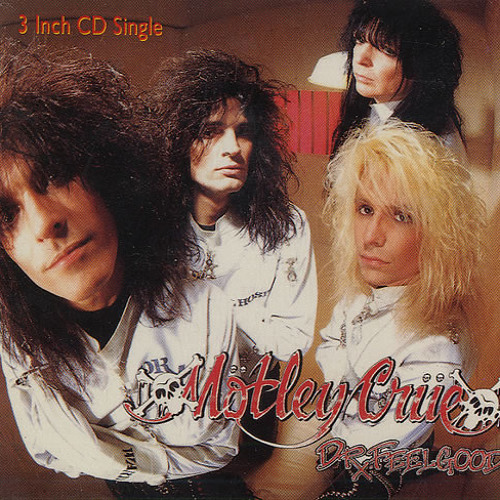
PARIS: Reverend Nichols, huh? What is that, like Dr. Feelgood?

A reference to the 1989 song Dr. Feelgood, by heavy metal band Mötley Crüe. It was the lead single from their album of the same name, and went to #6 in the US. It is their most successful single, and the only one which went gold.

The song is about a L.A. drug dealer named Jimmy who is known as “Dr. Feelgood”. The original lyrics were on a different subject, but bassist and songwriter Nikki Sixx based it on his experiences with different drug dealers, so that Dr. Feelgood is a composite of several real-life characters. Nikki Sixx, who almost died from a heroin overdose in 1987, declared himself clean and sober in 2004.

Angela Lansbury

LUKE: Who’s your friend?
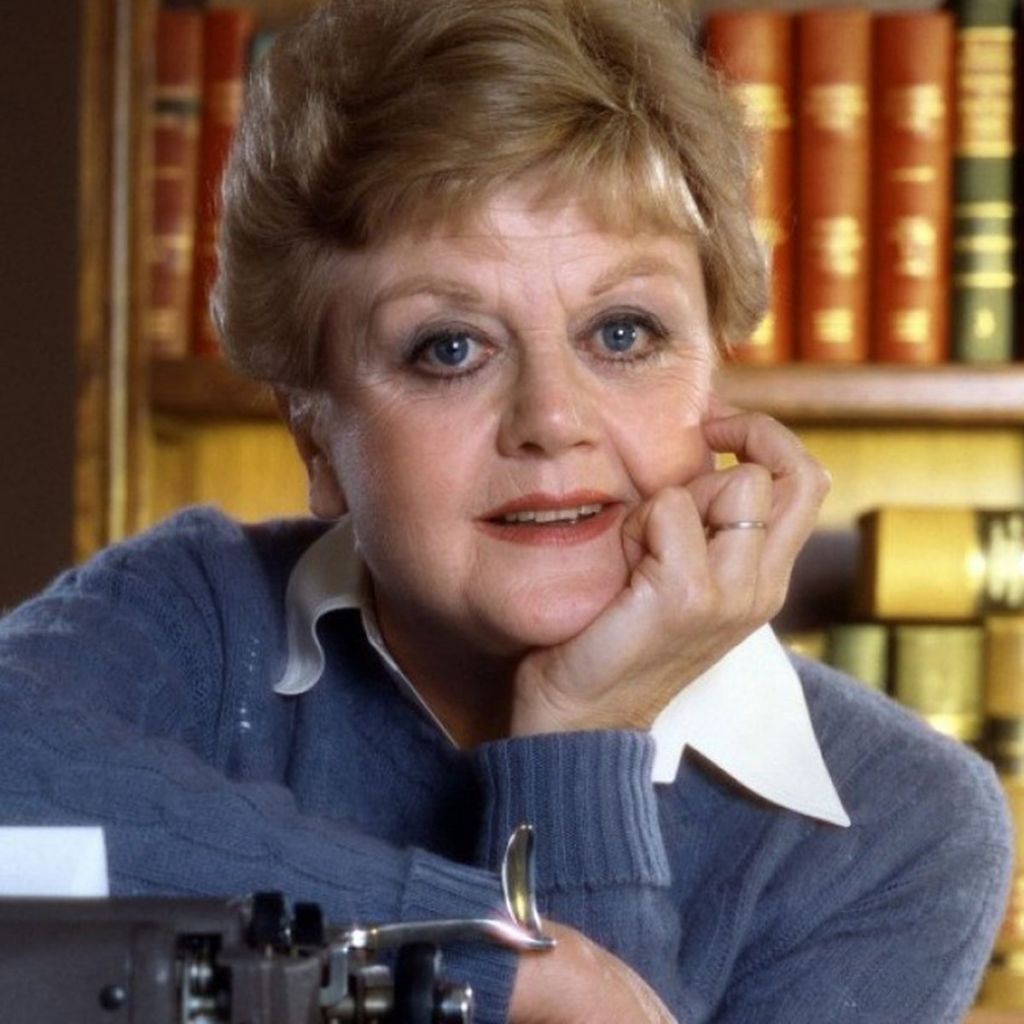
RORY: Angela Lansbury.

Dame Angela Lansbury (born 1925), British-Irish-American actress with a long and prolific career on radio, stage, film, and television. Her first film role was in the 1944 movie Gaslight, previously discussed. She has received an Honorary Academy Award, a Lifetime Achievement BAFTA Award, A Lifetime Achievement Award from the Screenwriters Guild, five Tony Awards, a Laurence Olivier Award, and six Golden Globe Awards.

She is best known for starring as Jessica Fletcher in the television detective series Murder She Wrote (1984-96). Jessica Fletcher was a retired schoolteacher turned detective novelist who was often called upon to solve murders in her spare time. Although reviews were mixed, the show was very popular and rated extremely well, especially with older viewers.