LORELAI: Oh, gee, since I just ate half a bag of marshmallows, six Pop Tarts, four bagel dogs and a really stale Cheese Nip – yup, it’s brownie time, thanks.
Bagel dogs are hot dog frankfurters wrapped in bagel-style breading or bagel dough before baking it. They are similar to pigs in blankets. They can be sold at fast food stands, or bought frozen from supermarkets.
Cheese Nips were small cheese-flavoured crackers, manufactured by Mondelez International under its brand name Nabisco. They were introduced in 1955 and discontinued in 2020.
LORELAI: Oh, that must be Pauline Kael rising from the dead.
Pauline Kael (1919-2001), film critic who wrote forThe New Yorker magazine from 1968 to 1991. One of the most influential film critics of her era, she was known for her witty, biting, opinionated reviews which often ran counter to those of her contemporaries, and were highly personal.
Pauline Kael had only died the previous year to this episode, so Lorelai is saying that Pauline Kael must be rising from the dead to sharply critique the films that Taylor has offered her.
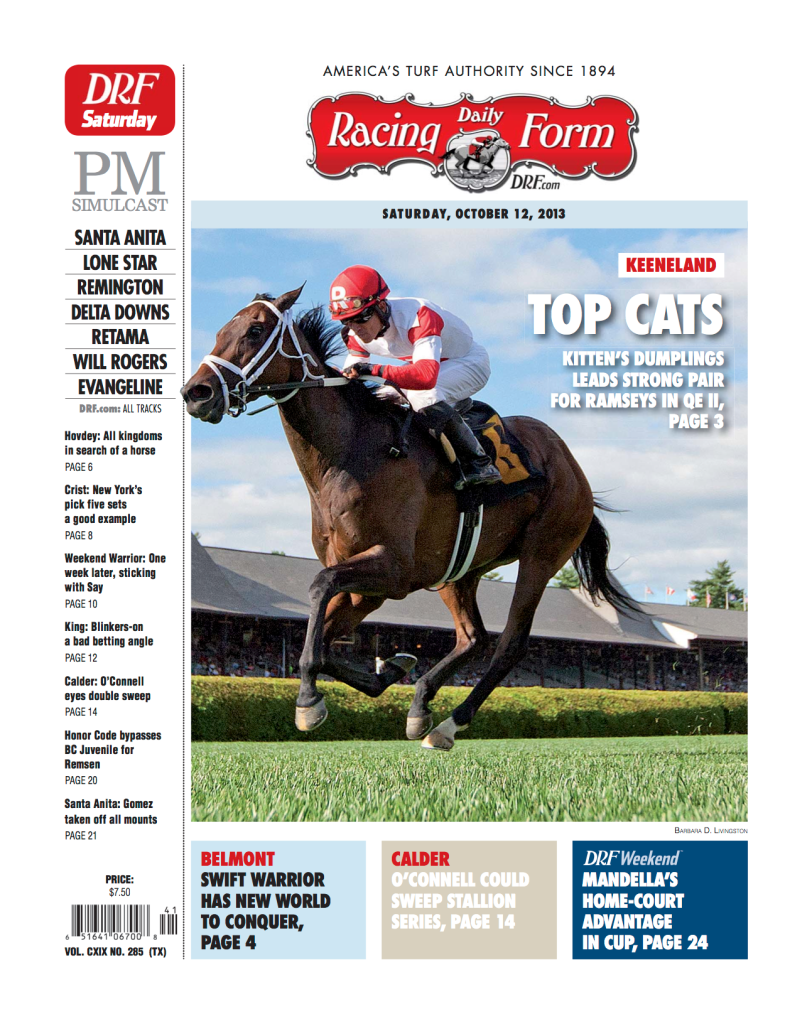
LUKE: Jess, this is serious. You’re flunking out. You’re looking at being in the eleventh grade for the rest of your life. You’re gonna be the kid in the back of the room with a beard and a Racing Form babbling incoherently about Steely Dan.
The Daily Racing Form, usually referred to as a “racing form” or just a “form”, is a tabloid newspaper which publishes statistics and past performances of racing horses to use as a betting guide. It was first published in Chicago in 1894.
Luke’s weirdly specific description of the “kid in the back of the room” suggests that he is basing it on an actual young adult who was held back at Stars Hollow High during his own school years.
LUKE: Why, you got a big Frisbee heist going down at six?
A Frisbee is a gliding toy made from moulded plastic that can be used in catching and throwing games. They were invented by Walter Morrison, who got the idea in 1937 when he and his future wife were tossing cake pan back and forth to each other on a beach, when someone offered it to buy it for five times its value.
The first aerodynamically improved plastic discs were manufactured in 1948 by Morrison and his business partner, Warren Francioni and sold as the Whirlo-Way (named after a famous racehorse), then the Flying Saucer, then the Pluto Platter.
In 1957, Morrison sold the rights to Wham-O, whose co-founders Richard Knerr and Arthur Melin called the disc a Frisbee, after the Frisbie Pie Company in Bridgeport, Connecticut. Frisbie supplied pies to Yale University, and students would throw empty pie tins to each other in a game they called Frisby.
The Frisbee’s real success came in 1964, when Wham-O’s vice president of marketing, Ed Headricks, redesigned the Frisbee to make it more accurate, and promoted it as an organised sport. When Headrick died, he was cremated and his ashes moulded into memorial discs. The Frisbee was inducted into the National Toy Hall of Fame in 1998.
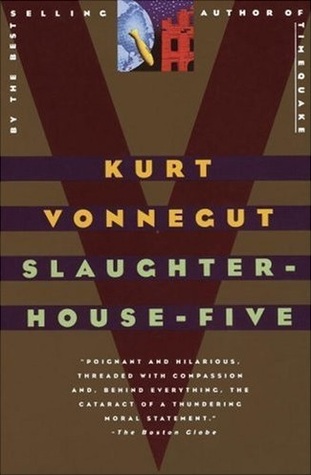
This is the book Jess is reading in this episode, that he tells Luke is not for school.
Slaughterhouse-Five is a 1969 semi-autobiographical science-fiction anti-war novel by Kurt Vonnegut. The story, told in a non-linear fashion by an unreliable narrator, relates the life and experiences of a man from upstate New York named Billy Pilgrim, from his early years to his service during World War II, and post-war years – his experiences include time travel and alien abduction. The book centres on Billy’s capture by the German Army, and his survival of the Allied firebombing of Dresden as a prisoner-of-war.
Categorised as a postmodern, metafictional novel, it is characterised by Vonnegut’s signature style, with simple sentences underpinning a text of irony, sentimentality, black humour, and instruction. The short, declarative sentences give the impression of reading a factual report, while the focus shifts between the writer’s perspective as someone who met Billy Pilgrim to an omniscient third person narrator. The first sentence is, “All this happened, more or less”. It is considered one of the best first lines in American fiction. The sentence, “So it goes”, is used as a repetitive refrain throughout.
Slaughterhouse-Five received mostly positive reviews, and became a bestseller, staying on the New York Times Bestseller List for sixteen weeks. It has been adapted for stage and radio, and been turned into both a film and a graphic novel.
The novel is controversial, with many attempts of censorship against it, especially in school and college libraries. This makes Jess’ reading of it at school seem like a deliberate attempt to draw attention to himself. A story about someone who has been through terrible trauma until they find life meaningless seems to be something which Jess relates to.
LORELAI: Suspense – ice skater falls in love with hired help. Well, at least now I know how Snow Dogs got made.
Snow Dogs, a 2002 adventure comedy film directed by Brian Levant, and inspired by the non-fiction book Winterdance by by Gary Paulsen. It stars Cuba Gooding Jr as an adopted dentist from Miami who travels through the Alaskan wilderness with a pack of sled dogs in search of his inheritance and the truth about his family origins. He finds love with a bar owner, played by Joanna Bacalso.
The film was panned by critics as mediocre, cliched, tiresome, and stale, but was a commercial success. Disney released the film in January that year, so Lorelai and Rory must have seen it within the last few months.
All the films that Lorelai mentions in Taylor’s catalogue are made by Monogram Pictures, a film studio that produced mostly low-budget films between 1931 and 1953, after which they were known as Allied Artists Picture Corporation. Lacking the resources to deliver high production values and big stars, they instead offered plenty of action and adventure. They launched the careers of many actors who went on to become stars, and provided a haven for good actors whose careers had stalled.
Monogram/Allied Artists continued until 1979; their library is now owned by Warner Bros, MGM, and Paramount, while a few are in the public domain – although none of the films listed here.
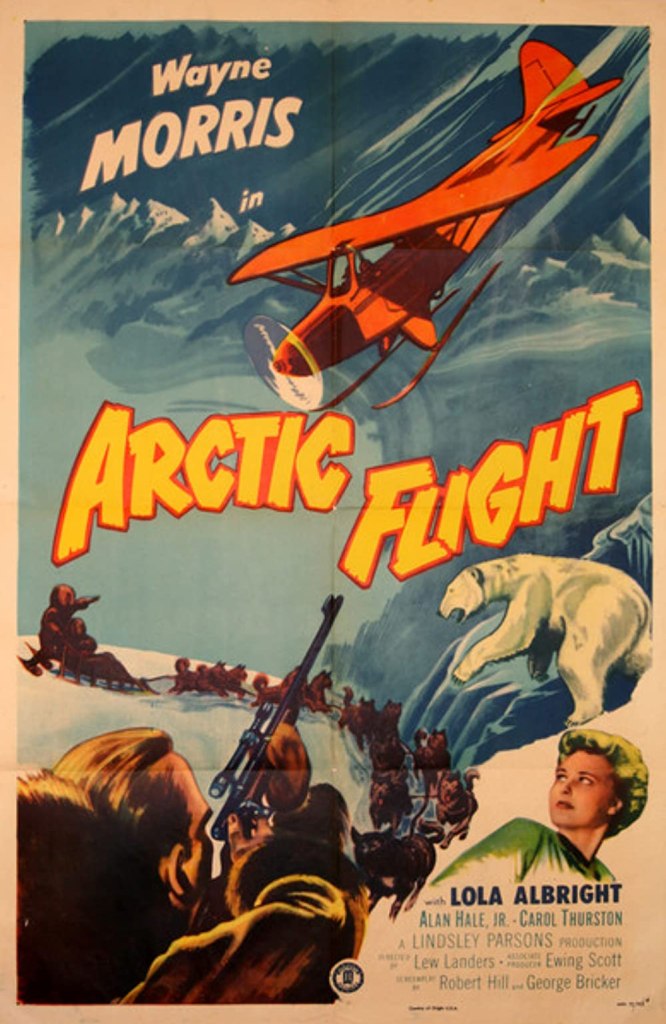
Arctic Flight [pictured] A 1952 drama film directed by Lew Landers, about a bush pilot, played by Mike Wein, flying in the Arctic. There is a Soviet spy adventure involving a polar bear hunter, and romance with a schoolteacher, played by Lola Albright. It’s a B movie, considered unpretentious and well-made.
Killer Shark A 1950 B movie directed by Budd Boetticher, and starring actor Roddy McDowell, who had been a successful child actor in England before moving to America with his family. He went on to star in some major films during the 1960s and 1970s, and had a lengthy career.
Where Are Your Children? A 1943 teenage crime film directed by William Nigh and starring former child star Jackie Cooper. It was more successful than the studio had expected, and they made a sequel the following year called Are These Our Parents?
Sudden Danger A 1955 film noir crime drama directed by Hubert Cornfield and starring Bill Elliot as the police detective investigating a possible murder, and Tom Drake as the man who hopes to clear himself by looking for clues on his own. The movie was part of a five-film series, and is considered a solid effort with a good cast.
Suspense A 1946 film noir ice skating film directed by Frank Tuttle, and starring Barry Sullivan and British former Olympic skater Belita. It was the most expensive film Monogram ever made, costing $1.1 million. It was panned by critics, but a box office success.
Lorelai and Rory love watching “bad” movies, but suddenly they get awfully snobbish about putting a B movie on in the town square. Apparently it’s fun to watch a B movie, but embarrassing to publicly screen one.
None of these films were terrible failures, or considered unwatchable. I’m not sure why they don’t seem like a viable alternative to watching The Yearling for the third year running.
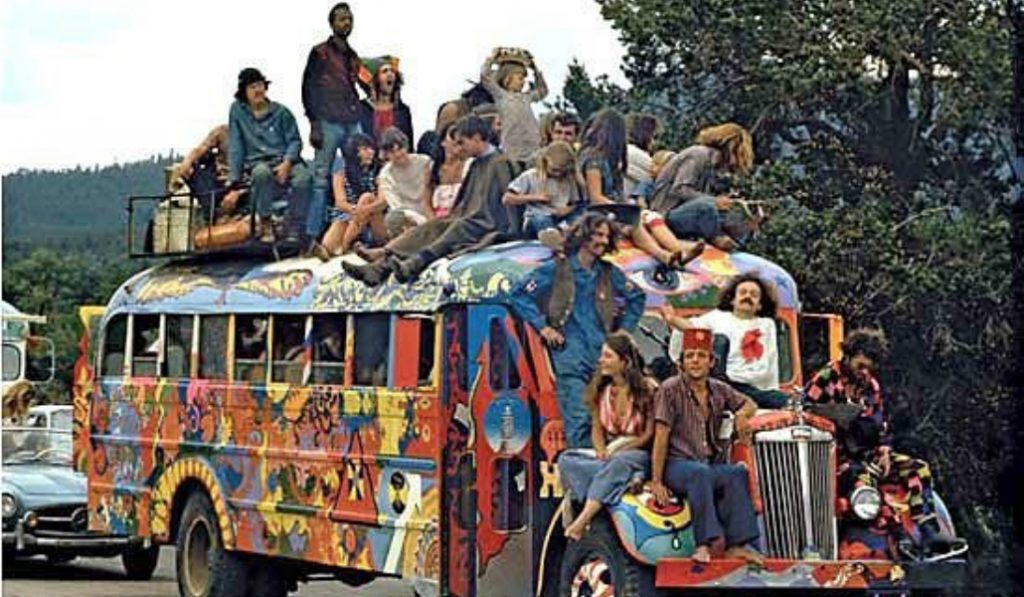
LORELAI: Maybe we should do like a movie marathon weekend. You know, just show one movie after the other for three days and charge everyone a fortune, gouge them for bottled water, have those really disgusting little bathrooms – it’d be like our own Woodstock.
Woodstock Music and Art Fair, commonly known as Woodstock, was a music festival held August 15-18 in 1969, held on a dairy farm in Bethel, New York, 40 miles from the town of Woodstock. It attracted an audience of 400 000, and 32 acts performed outdoors, despite sporadic rain. The festival has become widely regarded as a pivotal moment in popular music history as well as a defining event for the counterculture generation.
Albert Einstein (1879-1955), German-born theoretical physicist, widely acknowledged as one of the greatest physicists of all time. Einstein is best known for developing the theory of relativity, but he also made important contributions to the development of the theory of quantum mechanics – relativity and quantum mechanics are the two pillars of modern physics.
His intellectual achievements and originality resulted in the name “Einstein” becoming synonymous with the word “genius”, so that Luke is saying that he is the genius of his family. In fact, Jess looks to be the genius of the family we know so far, and in a future season, Luke will meet a previously unknown relative who appears to be the real family genius.
LUKE: Me? Oh, no, I’m not the one you want helping him. I went to this school – I’m sure there’s still a note stuffed in there about me with the words ‘trade school’ stamped in really big letters.
Trade school is a term in the US for a vocational college, technical school, or technical college, offering training in skills for specific job or career. In the US, they are government owned or supported, and require two years of study to fulfil requirements; they can sometimes replace the final two years of schooling. The number of such trade schools is declining significantly, but even so Luke would have had the choice of more than a dozen trade schools in Connecticut if he had wanted to attend one.






 The Annotated Gilmore Girls