Government Cheese

EMILY: But after twenty years, where is the woman’s sense of loyalty?

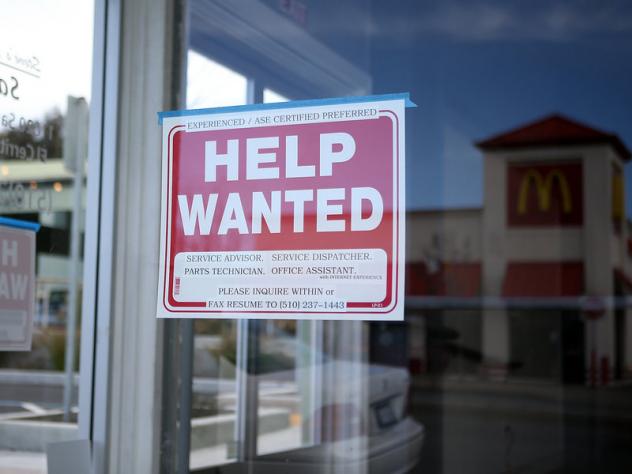
LORELAI: Oh, gee, I don’t know . . . maybe with the company that’s keeping her from having to stand in line for government cheese.

Government cheese is a processed commodity cheese controlled by the US federal government from World War II until the early 1980s, provided to welfare recipients and the elderly on Social Security, to maintain the price of dairy products. It was particularly associated with the Reagan administration. The cheese itself had a noticeable orange colour and melted easily.

Government cheese was removed in the 1990s when the dairy industry stabilised, so Margie wouldn’t be lining up for it in 2002, even if she lost her job completely. Either Lorelai or the writer doesn’t seem to be aware of that.
Largie Margie

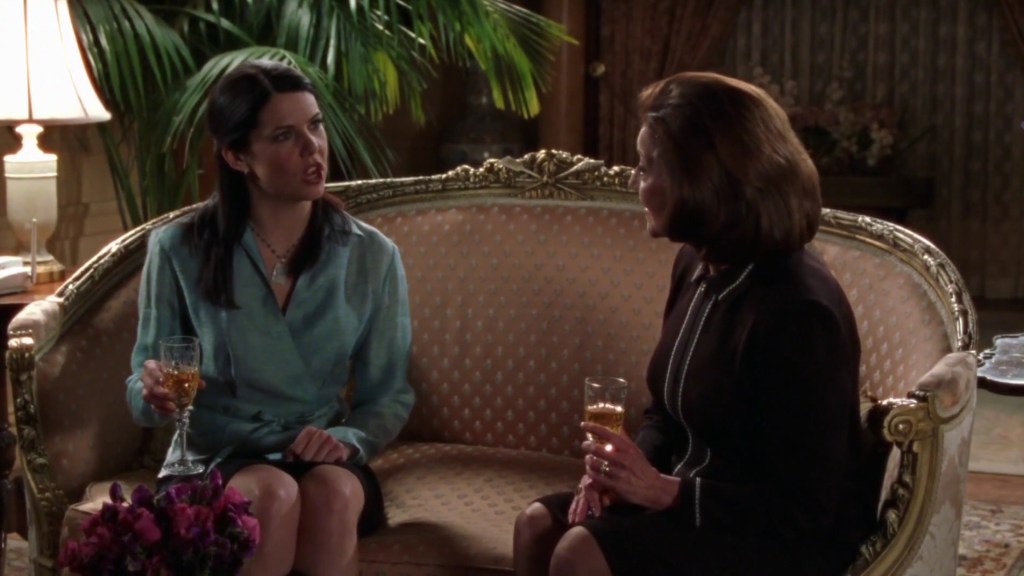
EMILY: You know very well who Margie is. She’s been your father’s secretary since you were a child.

LORELAI: Oh, Largie Margie . . . very clever when you’re six.

Daniel Palladino didn’t even write this episode, and Lorelai is once again a horrible child. Her joke is moronic even for a six year old. Emily calls Margie a “rotund ingrate”, so you don’t need to look far to see where Lorelai got her attitude from.

The Gilmore Group

EMILY: Your father is now the president and CEO of the Gilmore Group, an international insurance consulting firm.

LORELAI: Wow, that’s great. So, um, what’s the . . . like, how does . . . what’s his job? …

EMILY: Your father is an international insurance consultant … He consults on matters relating to international insurance.

Lorelai has no idea what an insurance consultant does, Emily doesn’t really know, and I’m not sure the writer (Allan Heinberg) knows either! I’m a bit in the dark too, because they usually work for an insurance company, and are basically sales agents. I presume an independent insurance consultant would help businesses choose from various insurance plan options, and sell insurance policies from a range of insurance carriers, rather than one. Don’t ask me how a single person can be a “group”.

Bunny Carlington-Munchausen

EMILY: I’m so sorry Rory isn’t feeling well. Is it that flu that’s been going around? … Horrible strain. Bunny Carlington-Munchausen has been bedridden for two straight weeks.

The show loves giving outrageous names to Emily’s society friends, and this one is pretty flamboyant. Bunny’s name seems to be an allusion to Munchausen Syndrome, a psychological disorder where people fake illnesses or deliberately make themselves sick in order to receive attention.

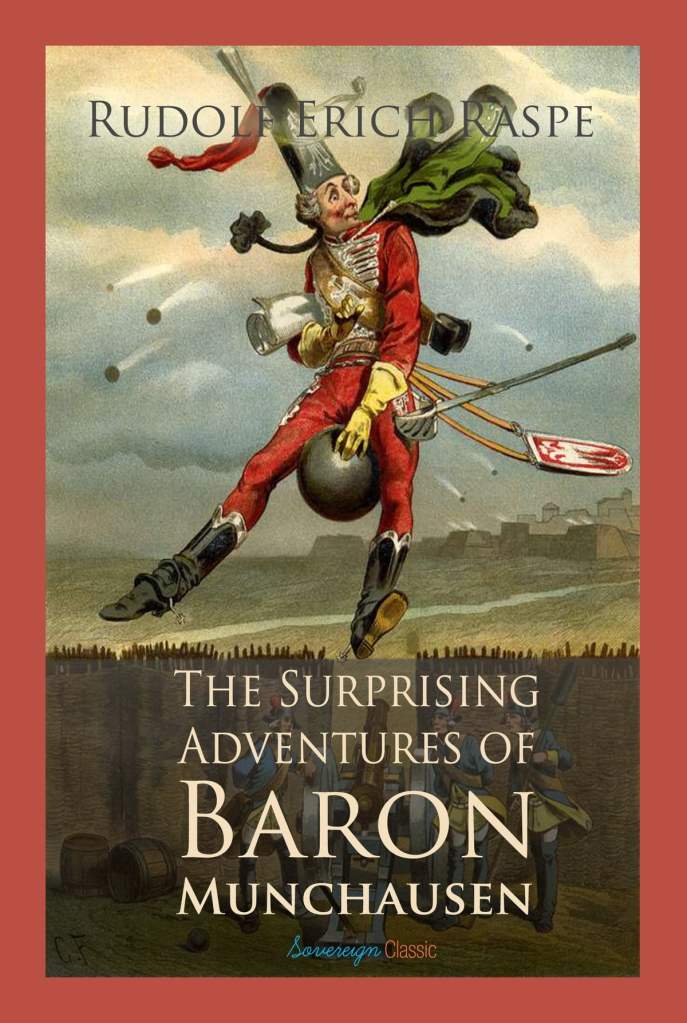
The name comes from the fictional character Baron Munchausen, created by German writer Rudolf Erich Raspe, in his 1785 book, Baron Munchausen’s Narrative of his Marvellous Travels and Campaigns in Russia. The Baron’s story of his exploits focuses on his supposed fantastical and impossible achievements, and the Baron himself is modelled on a real person, the German nobleman Hieronymus Karl Friedrich, Freiherr von Münchausen, known for his tall tales of derring-do. The book was turned into a 1988 film, The Adventures of Baron Munchhausen.

The name of the illness came to seem flippant and rather heartless, and it is now known, less colourfully, as factitious disorder imposed on self.

There may be a suggestion that Bunny is likewise exaggerating her flu symptoms for sympathy and attention, but it is almost certainly highlighting the factitious nature of Rory’s illness! This is the second person named Bunny in the show, the first one was a Gilmore relative who passed away.

The Hungry Diner

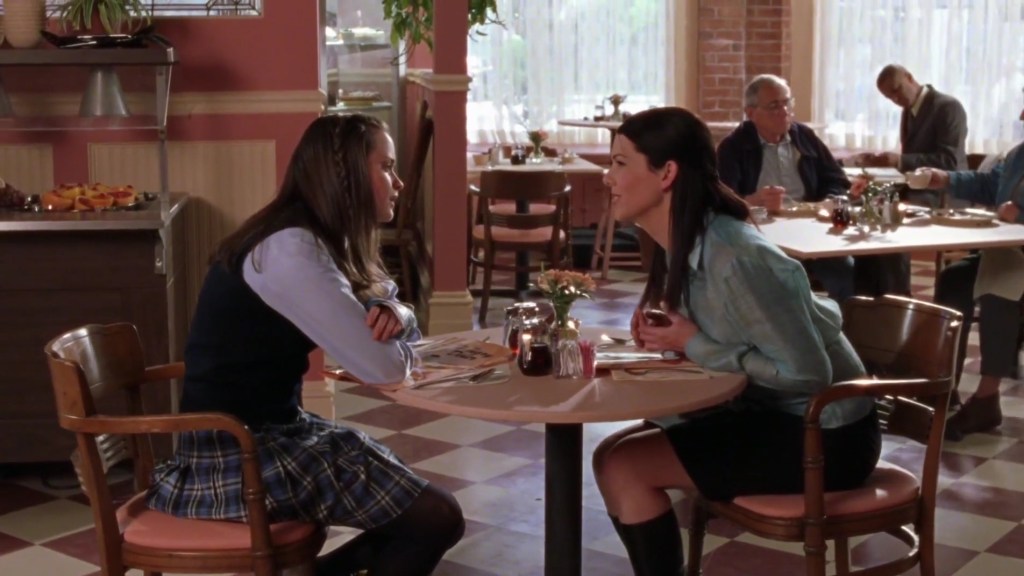
After his fight with Lorelai, and Jess going back to New York, Luke has closed the diner and gone fishing – something which has never happened before. Lorelai and Rory are forced to eat breakfast at a rival business we have not heard of until now called The Hungry Diner. The diner has a dark pink colour scheme, in contrast to the blue colour scheme of Luke’s Diner.

They are immediately miserable because The Hungry Diner makes people wait in line to be served, the menus have pictures on them, the coffee is undrinkable, and the coffee cups are tiny. It turns out that it is Michel’s regular breakfast place, because they make low-fat egg white omelettes (like the one Sookie refused to make him). Michel is reading a copy of GQ magazine, previously discussed.

Even though there was a big crowd of people waiting to get into Luke’s, The Hungry Diner is still mostly empty. Nobody else seems to have gone there, so either there is yet another place to have breakfast in Stars Hollow, or they all refused to eat out until Luke returns.

The Little Locksmith

RORY: The Little Locksmith!

LORELAI: And I got it at the bookstore, paid full price.

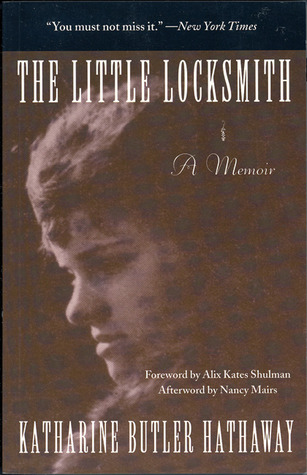
The Little Locksmith, a 1943 memoir by Katharine Butler Hathaway about the effects of spinal tuberculosis on her life. Hathaway was kept immobilised, strapped to a board, for ten years in a failed attempt to save her from becoming a hunchback, like “the little locksmith” in their community that her mother treated as a figure of horror. When the treatment ended at the age of fifteen, Hathaway was a hunchback after all, and no taller than a ten-year-old child. Overcoming her physical limitations, and the boundaries prescribed by society, she went on to attend college, forge enduring friendships, become a writer, and buy her own house in Maine, which she fashioned room by room as a creative space for guests, lovers, and artists.

The book was reprinted in 2000 by The Feminist Press, which would be the edition Lorelai bought. The book has been praised, not only for its author’s determination to find physical pleasure and creative fulfilment in a life that could have been a tragedy, but also for her poetic, unique voice. This is another example of unconventional female biography and memoir that Lorelai and Rory enjoy reading, with Lorelai buying it as a joke since Rory is also “disabled” by her hurt wrist.