Room Mates

LORELAI: They just force someone on you?
RORY: It’s all part of the socialising experience.
LORELAI: What if it’s a lemon?
RORY: Then I’m stuck with a lemon.
LORELAI: Hare Krishna banging a tambourine all night?
RORY: Then I have to get earplugs.
LORELAI: Serial murderer?
RORY: Then I sleep with a gat strapped to my ankle.

In American slang, a lemon is a worthless person or object. It dates from the early 20th century, and was originally criminal slang meaning “loser, simpleton” – perhaps with the idea that they were people that the criminal could “suck the juice from”.

In American slang, a gat is a gun. It is short for Gatling gun, the early machine gun invented by Richard Gatling for use during the American Civil War. The criminal slang was especially prevalent during the Prohibition era of the 1920s.

It is perhaps apt that Rory and Lorelai use criminal slang while trespassing.

In a later season, Rory does indeed get a college room mate forced upon her unexpectedly.

Happy Days and the Valley Girl Song

LORELAI (to two girls in the dormitories): Oh, cool. We’re just kinda hanging out between classes. We got Chef next. So, we’ll probably see you at the Phi Alpha Beta thing tomorrow, right?
GIRL 1: Maybe.
LORELAI: Yeah, I know, we’re not sure either. They can be so totally lame. Gag me.
GIRL 1: Yeah. See ya. [Students leave]
RORY: You do realize that all of your college kid jargon comes from Happy Days and the Valley Girl song?

Happy Days, previously mentioned, is an American sitcom that presented an idealised portrait of Midwestern life in the 1950s and ’60s. It starred Ron Howard as innocent teenager Richie Cunningham, and Henry Winkler as his friend Arthur “Fonzie” Fonzarelli, a cool biker and high-school dropout. Aired between 1974 and 1984, it became one of the biggest hits in television history, and was the #1 TV program in 1976-77. It turned Henry Winkler into a major star, and Fonzie into one of the most merchandised characters of the 1970s. It also spawned a number of spin-offs, including Joanie Loves Chachi, previously discussed. Happy Days is still on American television in reruns.

Valley Girl is a 1982 song by Frank Zappa and his daughter Moon Zappa, then aged 14. The song consists of Frank playing riffs on the guitar while Moon performs the lyrics in “Valspeak”, the slang and intonations of the teenage girls of the era from the San Fernando Valley. The song went to #32, and was Zappa’s only Top 40 single. Although intended as a savage parody, the song popularised the Valley Girl stereotype, and led to an increase in Valspeak. The fad directly inspired the 1983 Nicolas Cage movie Valley Girl.

Lorelai’s “They [frat parties] can be so totally lame. Gag me”, is pure Valspeak.

Dormitories

[Lorelai and Rory are walking past a dormitory.]
LORELAI: This is a dorm? Not bad, huh?
RORY: Pretty, actually.
LORELAI: Come on, let’s see what it looks like on the inside.
RORY: It says “Residents Only” in plain English.

Harvard University has seventeen dormitories for freshmen students in Harvard Yard. While some can be by no standards called “pretty”, a few of the older dormitories do have a certain charm to them. The dormitory may be intended to represent Wigglesworth Hall, which is near the Widener Library. Constructed in 1931, its past residents include Leonard Bernstein, Bill Gates, Ted Kennedy, and indie pop singer Naomi Yang.

It is of course almost inevitable that the Gilmore girls will decide that they are above the rules, and free to trespass wherever they so choose. They even go into someone’s room and take photos – despite photos of dorm rooms being available on the Harvard website.

Tuesdays with Morrie and Who Moved My Cheese?

RORY: Thirteen million volumes? I’ve read like, what, three hundred books in my entire life and I’m already sixteen? Do you know how long it would take me to read thirteen million books?
LORELAI: But honey, you don’t have to read every one of them. Tuesdays with Morrie? Skip that. Who Moved My Cheese? Just stuff you already know.

Tuesdays with Morrie, a memoir by Mitch Alborn, previously discussed (apparently Lorelai read it and wasn’t impressed).

Who Moved My Cheese?: An Amazing Way to Deal with Change in Your Work and in Your Life by Spencer Johnson is a motivational business fable first published in 1998. An immediate best-seller, it remained on the business bestseller list for five years, and spent 200 weeks on the non-fiction best-seller list. It remains one of the best-selling business books of all time. Lorelai’s appraisal of “just stuff you already know” is one of the milder criticisms the book has faced.

The Library

RORY: The biggest library I’ve ever seen.
LORELAI: Uh oh. Brace yourself.
RORY: What?
LORELAI: This is just one of the libraries.
RORY: One of the libraries?
LORELAI: This building is one component of a thirteen million volume collection housed in more than ninety different libraries. It’s the oldest library in the United States and the largest academic library in the world. Breathe, breathe.

Rory and Lorelai are talking about the Widener Library, full name The Harry Elkins Widener Memorial Library. Housing 3.5 million volumes, it is the centrepiece of the Harvard College Libraries in the Faculty of Arts and Sciences, and of the entire Harvard Library system. It honours 1907 Harvard graduate and book collector Harry Widener, who was drowned during the 1912 sinking of the RMS Titanic.

As Lorelai says, the Harvard Library system is the oldest library in the US, having grown from a bequest of 400 books by John Harvard in 1638. It is not only the largest university library in the world, but the largest private library.

Ginchy!

STUDENT: Okay. So I’ll see you in class. And maybe at that Phi Kap party tonight?
LORELAI: Ginchy!
STUDENT: Cool. Bye.

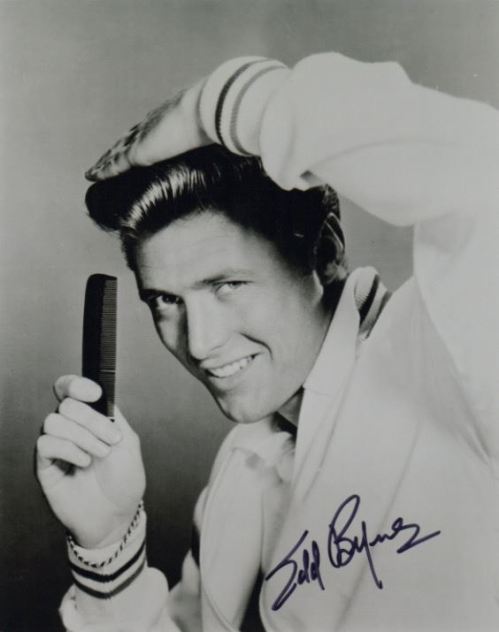
Ginchy is dated teen slang meaning “cool, neat, sexy”. The word was popularised by “Kookie” Kookson, played by Edd Byrnes, in the hit private detective television series 77 Sunset Strip, which aired from 1958 to 1964. Kookie, who was a wisecracking, hair-combing hipster and assistant to the detectives, is an obvious forerunner to the character of Arthur “The Fonz” Fonzarelli on Happy Days.

The word ginchy is 1930s slang related to ginch, meaning an attractive woman.

Existentialists

[Lorelai is reading accomodation notices on a bulletin board]
STUDENT: You looking for a place to live?
LORELAI: Uhh, maybe.
STUDENT: Well there’s a lot of choices. Something for everybody.
LORELAI: Yeah, yeah. Unless you’re one of those existentialists who can’t really figure out what they want.

Existentialism is a philosophical tradition associated with 19th and 20th century European philosophers, valuing the individual, freedom, and personal authenticity. The existentialist attitude is often seen as one of confusion, disorientation and dread in the face of a meaningless or absurd world. Philosopher Jean-Paul Sartre, earlier discussed, spoke of the “agony of decision”, hence Lorelai’s comment. She later says she always wanted to use the word existentialist in a sentence.

In real life, students would not be at Harvard University during mid-August, and already in their regular routines of classes and parties. The semester began in late August in 2001, and the first week would have been orientation activities.