LORELAI: Yeah, well, look how great that worked out for Sister Sledge.
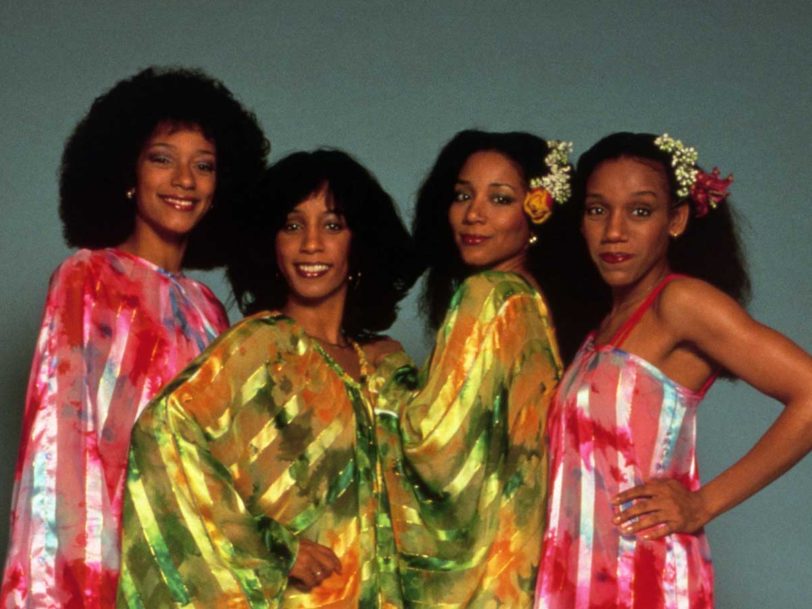
“We Are Family” by vocal group Sister Sledge, previously discussed, and now the third mention of this song on the show.
The group were made up of four sisters – Debbie, Joni, Kim, and Kathy Sledge, who began their musical careers in 1971. Lorelai makes it sound as if some terrible fate befell the Sledge sisters, but in fact “We Are Family” was a worldwide smash hit, and the group was named Billboard’s Best New Artists. They continued on to further career success, touring internationally, and performed at the White House for President Clinton in 2000, and for the Pope in 2015. Although Joni died in 2017, the other three sisters are still performing as Sister Sledge.
Lorelai is very possibly thinking of the period in the early 2000s when Debbie, Joni, and Kim produced solo works. Their final 2003 album remains unreleased, but by 2005 they’d got over this hitch, and performed at Glastonbury. In 2002, it might have seemed as if Sister Sledge was washed up, but they really did get through it all by sticking together as a family.
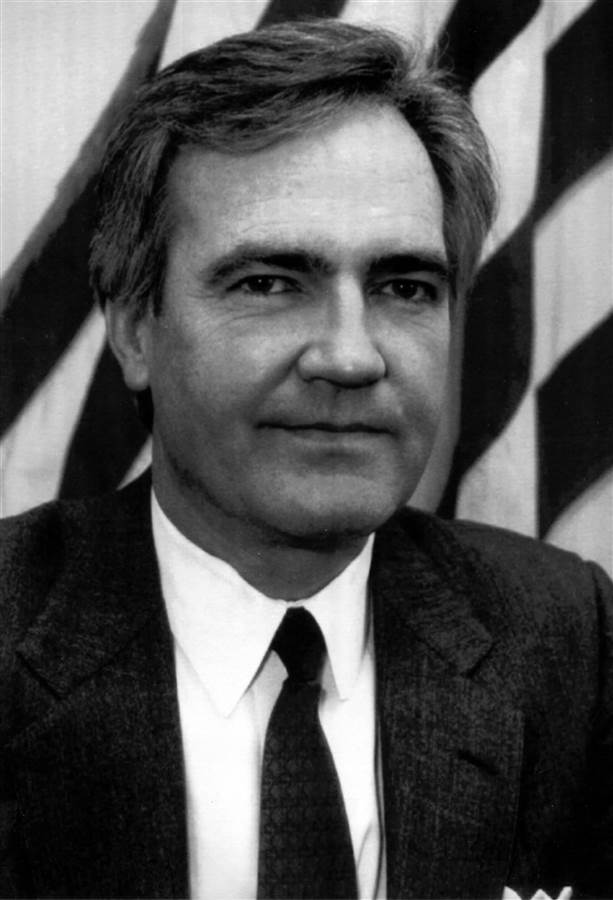
Vincent “Vince” Foster (1945-1993), attorney who served as deputy White House counsel during the first six months of the Clinton administration. A childhood friend of Bill Clinton, he was unhappy working in politics, and became severely depressed. He was found dead from a gunshot wound in Fort Marcy Park in Virginia, just outside Washington DC, with a torn up resignation letter in his briefcase. His death was ruled a suicide, but several tabloids and newsletters speculated that he had been murdered, possibly involving the Clintons themselves.
Lorelai jokingly questions Rory, as if she is expecting her to provide inside information on the case (because Rory is in student government now).
LORELAI: All right . . . we’re gonna have to move … Take off in the middle of the night, leave everything behind, assume different identities. I’ll join a local community theater and I’ll drive you to soccer. It’ll work for many years until the FBI comes to get me, and by that time, you’re on your own.
Lorelai jokes that rather than tell Kirk she’s not interested in dating him she will leave town and begin a new life (this is sounding a bit like when she dumped Max by immediately fleeing Stars Hollow to hide out in another state!).
Lorelai says that she will join a local community theatre – in fact, she takes part in amateur dramatics in Stars Hollow too, and received rave reviews for taking the lead in Fiddler on the Roof. Lauren Graham began her acting career by doing two years of summer stock in Michigan, suggesting that this may be an inside joke.
By the end, Lorelai seems to have forgotten the original reason she became a fugitive, saying that the FBI will eventually track her down, as if she has committed a crime, rather than simply moved towns to avoid Kirk.
LORELAI: “Hello Headmaster Charleston, this is my stepfather, Kirk. Please don’t make any sudden movements, he’s a fear biter.”
Fear biter is a term given to dogs who bite when they are scared or panicked, especially by strangers. The dog may be normally placid and submissive, but will react aggressively when put in a stressful situation.
RORY: I got home at ten and you were already asleep.
LORELAI: Well, I was trying to watch The Legend of Bagger Vance again.
The Legend of Bagger Vance, 2000 sports film directed by Robert Redford, based on the 1995 novel of the same name by Steven Pressfield. The plot is loosely based on an episode in the Bhagavad Gita, where the god Krishna helps a warrior find his path as the hero he was meant to be.
Set in 1931 Georgia, it is a film about golf starring Matt Damon as Rannulph Junuh, a noted golfer from a wealthy family who was a decorated captain in World War I, but became a broken-down alcoholic due to the trauma of seeing his entire company wiped out. Will Smith plays Bagger Vance, a mysterious traveller who becomes Junuh’s caddie in an important tournament, giving him advice that helps him during the game. He disappears as mysteriously as he arrived, then makes an even more mysterious appearance at the end of the film.
The Legend of Bagger Vance was a box office bomb, making back only half its budget, and received mixed to poor reviews. One of the main criticisms was how slow and boring the film is, explaining Lorelai’s inability to stay awake watching it. It was also heavily criticised for employing the “Magical Negro” trope, where a black person with vaguely mystical powers comes to the aid of white protagonists for no clear reason (the god Krishna is often depicted with black skin, so this part is taken straight from the source material). The racism of the American South in the 1930s is completely glossed over in the film.
LORELAI: Yes, you are, you’re all grown up and soon you’ll be going off into the world … And after you spread those wings and fly away, I won’t have the opportunity to give you this.
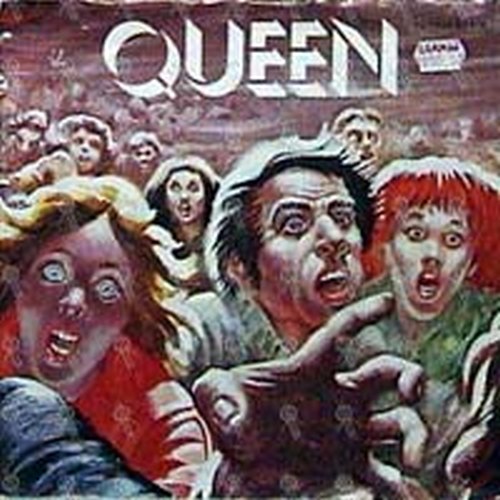
A possible reference to the 1977 song “Spread Your Wings” by English rock band Queen, from their album News of the World; the repeated line is, Spread your wings and fly away. The song was included on Queen’s 1979 live album, Live Killers. The single got to #34 in the UK, and was most popular in the Netherlands at #20. It wasn’t released as a single in North American, but the live version was the B-side to the 1979 song “Crazy Little Thing Called Love”, which went to #1 in the US.
MICHEL: I am doing nothing. Ben, however, has dropped dead from laughter.
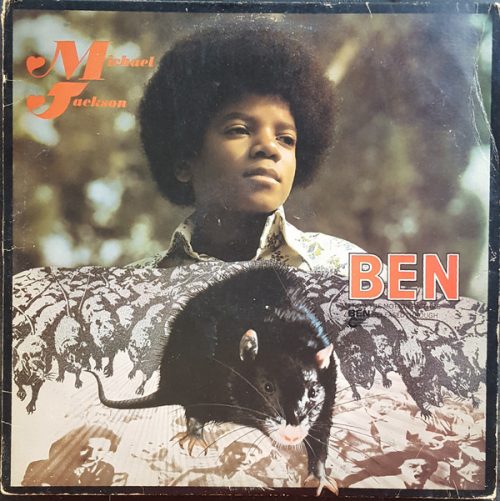
Michel refers to the 1972 drama-thriller film Ben, and its theme song. The film, directed by Phil Karlson, is about a lonely boy, played by Lee Harcourt Montgomery, who befriends Ben, the leader of a colony of rats. Ben becomes the boy’s best friend, protecting him from bullies and keeping his spirits up. However, Ben’s colony turns violent, resulting in several deaths. The rat colony is destroyed by the police, but Ben survives. The film is a sequel to the 1971 horror film Willard, based on the novel Ratman’s Notebooks by Gilbert Ralston.
The theme song, written by Don Black and Walter Scharf, is also called “Ben”. It was performed by Lee Harcourt Montgomery in the film, and by Michael Jackson over the closing credits. Although the film received mixed reviews, and was considered pretty oddball, listeners loved the tender theme. Jackson’s single reached #1 in the charts, making it his first #1 solo hit.
One of Jackson’s most re-released songs, often included on compilation albums, many people don’t realise the sweet song is addressed to a killer rat. It’s a little bit surprising that Michel knows – he didn’t live in the US when the film and song came out – but he seems to have quite an extensive knowledge of American pop culture.
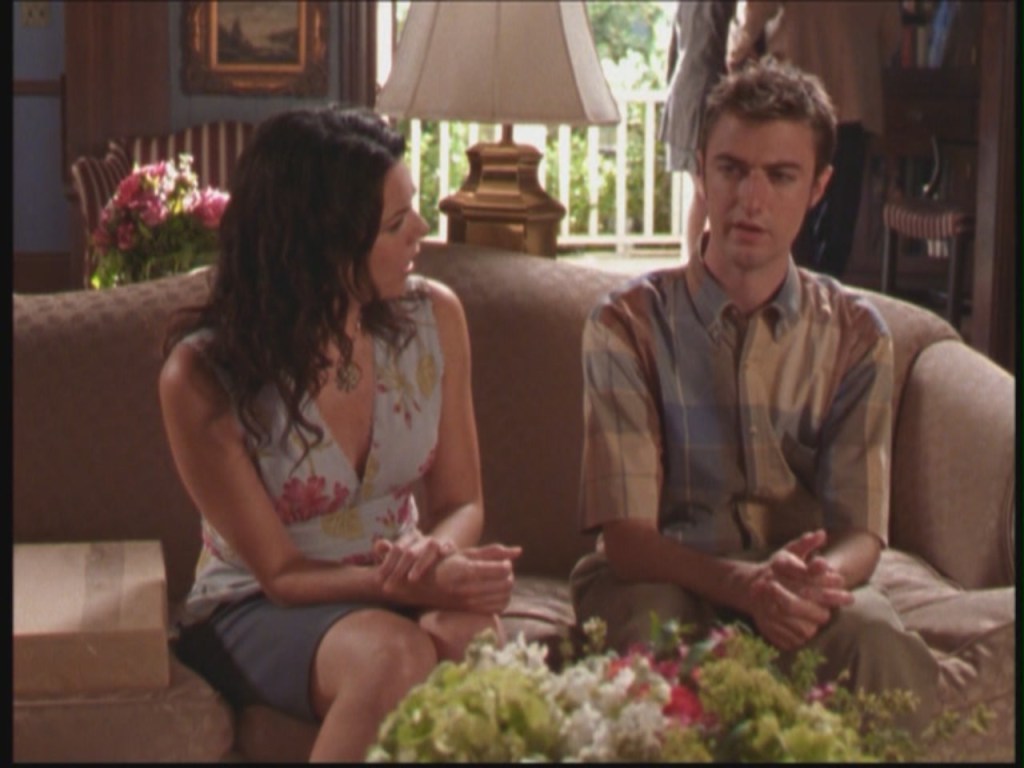
Lorelai has been through a lot of relationship angst lately, and the show now gives her a bit of comic relief in this area when Kirk asks her for a date while delivering a package to the inn. We know that Kirk is very lonely, and has been actively seeking a girlfriend at least since Sookie’s wedding (he is delivering her wedding photos, as a little reminder). It’s a chance for Lorelai and Rory to later joke about Kirk being Rory’s stepfather – this is the second time Rory jokes about Lorelai marrying Kirk.
However, despite plenty of humour at the expense of Kirk’s awkwardness, the situation is handled quite sensitively. Lorelai turns him down kindly, saying that she’s not ready to date anyone at the moment, and would prefer to keep Kirk as a friend. Kirk on his part takes the rejection gracefully, and without resentment. He tells Lorelai that she is the prettiest girl he has ever seen, except for models in pornographic magazines – and although this is a weird compliment from a rather strange person, I think at this point, Lorelai is quite flattered to receive it. She does seem willing to accept compliments from strange quarters when her ego has taken a bruising.
When Lorelai refers to Kirk as her friend, this seems to be the first time she has openly acknowledged him as such, and is a bit of a turning point in their relationship. From now on, Kirk feels less like the town weirdo, and more like Lorelai’s eccentric friend.
MICHEL: Why, no, what a wonderful idea. I was actually going to fasten a large wedge of cheese to my head and lay on the ground until Mickey gets hungry and decides to crawl out and snack on my face.
Mickey Mouse, animated cartoon character co-created in 1928 by Walt Disney and Ub Iwerks, and first voiced by Disney himself. The name “Mickey” was suggested by Walt Disney’s wife Lillian, to replace the character’s original name of Mortimer Mouse.
Mickey first appeared in the 1928 short film Plane Crazy, and made his feature film debut in Steamboat Willie, one of the first cartoons with sound. He has appeared in over 130 films, including The Band Concert (1935), The Brave Little Tailor (1938), and Fantasia (1940). In 1978, he became the first cartoon character to get a star on the Hollywood Walk of Fame.
Mickey has featured extensively in comic strips and comic books, in television series, and in other media, such as video games and merchandising, and appears as a character you can meet at Disney parks. He is one of the most recognisable fictional characters of all time.
This is the book Jess is reading when his girlfriend arrives to meet him.
A Confederacy of Dunces is a picaresque novel by John Kennedy Toole, written in 1963 but published in 1980, eleven years after Toole’s death by suicide. It became a cult classic, then a mainstream success, winning the Pulitzer Prize for Fiction in 1981. The title refers to an epigram from Jonathan Swift’s essay, Thoughts on Various Subjects, Moral and Diverting: “When a true genius appears in the world, you may know him by this sign, that the dunces are all in confederacy against him.”
The protagonist of the novel is Ignatius J. Reilly, an educated but lazy thirty-year-old man living with his mother in the Uptown district of New Orleans in the early 1960s. He has been called a modern Don Quixote, an eccentric and idealistic slob who disdains pop culture, and believes that his numerous failings are the working of a higher power. Due to a car accident his mother gets in, Ignatius must work for the first time in many years to pay off her damages bill, moving from one low-paid job to another and having various adventures with colourful characters in the French Quarter of the city.
The novel is famous for its rich depiction of New Orleans and its dialects, many locals seeing it as the best and most accurate fictional depiction of the city. A bronze statue of Ignatius J. Reilly is on Canal Street in New Orleans. It has been adapted for the stage, including as a musical comedy, and has often been planned as a film. These various attempts to adapt it for the screen have come to nothing (often with the slated lead actor dying, and once with a studio head being murdered, not to mention Hurricane Katrina devastating New Orleans in 2005), leading to the belief there is a “curse” on it as a film project.
The novel’s title is a comment on how Rory and Lorelai see Jess and his girlfriend in this scene, as a pair of “dunces” who can barely hold a conversation together. However, it is also believable as a modern American classic that Jess might read, complete with a male protagonist who is an intelligent failure railing against the world, his fate, and modern life. This seems to be the sort of hero that Jess can relate to. Note that it’s also set in the American South – a literary setting which Rory is also drawn to, underlining how much they have in common.




 The Annotated Gilmore Girls