Katharine Hepburn

EMILY: You know what, I’m not returning the gift. I’m going to put it away in a closet and you won’t know what it is until you do get married someday.
LORELAI: Tell me now!
EMILY: Sorry.
LORELAI: Come on! Mom, I may never get married. I may be a free spirit my whole life, or fall in love with a separated Catholic guy like Katharine Hepburn did, and then not get to go to his funeral when he dies.

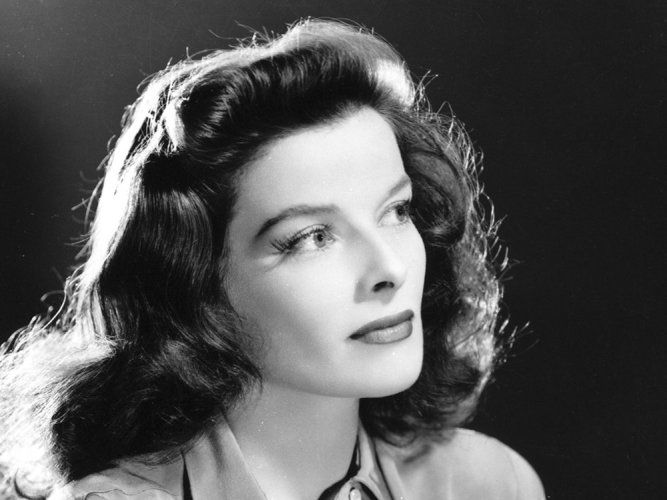
Katharine Hepburn (1907-2003) was an American actress who was born and grew up in Hartford; like Rory, she attended a private school there. A leading lady in Hollywood for more for 60 years, she received four Academy Awards for Best Actress – a record number for any performer. In 1999 Hepburn was named the greatest female star of Classic Hollywood Cinema by the American Film Institute.

After beginning her career in theatre, success on Broadway brought Katharine Hepburn to Hollywood, and she received her first Academy Award for her third film, Morning Glory (1933). This was followed by a series of failures, but she arranged her own comeback by buying the rights to the film The Philadelphia Story (1940), only selling them on condition of starring in itself. The film was a massive success, and is regarded as one of the best screwball romantic comedies of all time.

In the 1940s Hepburn was contracted by MGM, where she frequently played opposite film star Spencer Tracy (1900-1967); their screen partnership lasted 25 years, and produced nine movies. Hepburn and Tracy maintained a private relationship for 26 years, lasting until his death. Spencer Tracy was married, but had been separated from his wife for several years before beginning his relationship with Katharine Hepburn.

Spencer Tracy was a Catholic, but it is not clear if this was the reason for not divorcing his wife (who was an Episcopalian). From comments he made, it seemed more as if he was going along with the wishes of his wife, while Hepburn didn’t interfere and never pushed for marriage. After his death, Katharine Hepburn did not attend his funeral out of consideration for his wife and children.
“This coming weekend”

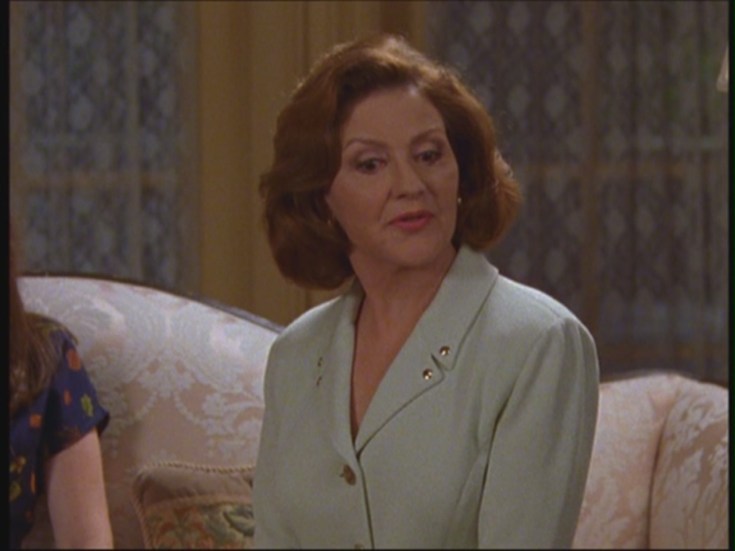
EMILY: And why would you go out of town now so soon before your wedding? Didn’t your fiancé mind?
LORELAI: Oh, well …
EMILY: I mean, you act as if this coming weekend is just going to be business as usual and not the most important day of your life.

As it’s Friday Night Dinner, Lorelai and Max were actually meant to be getting married the very next day – Lorelai leaves it until almost the last minute to tell her mother the wedding is off.

Glaucoma

EMILY: Focus the picture Lorelai … It’s hurting my eyes … It’s like I have glaucoma.

Glaucoma is a group of eye diseases in which the vision becomes clouded due to damage to the optic nerve. Vision loss and blindness can ensue if not treated.

We discover that Lorelai has had her camera for six years, so since 1995, and still can’t focus it.

Sever Hall

[Lorelai is showing slides of the road trip as Emily and Rory sit on the couch.]
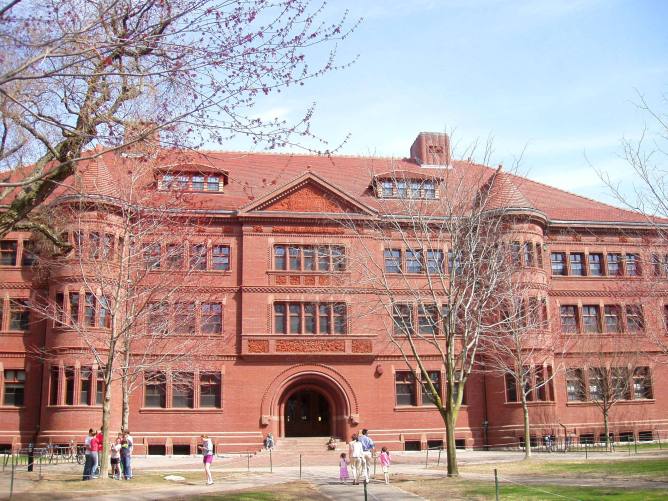
LORELAI: This is Sever Hall, one of the oldest buildings in Harvard.

Sever Hall is an academic building in Harvard Yard designed by the famous architect H.H. Richardson, and built in the late 1870s. It was a gift from Anne Sever in honour of her deceased husband James Warren Sever. It is used for classrooms and lecture halls in the humanities, so this is where Rory would have listened to the philosophy lecture.

“It never does”

RORY: Feels like we’ve been gone a long time.
LORELAI: You know what’s weird? Every time I leave town, even for just a little while, I always expect everything to look different.
RORY: And it never does.
LORELAI: It never does.

Lorelai and Rory were in Portsmouth for Monday and Tuesday night, so today is Wednesday and they’ve been gone for two or three days.

Their dialogue is a comment on the unchanging timelessness of Stars Hollow, providing a stable base for Lorelai and Rory.

Giant Foam Fingers and Wazoo

RORY: You know what I love most about Harvard?
LORELAI: No, what?
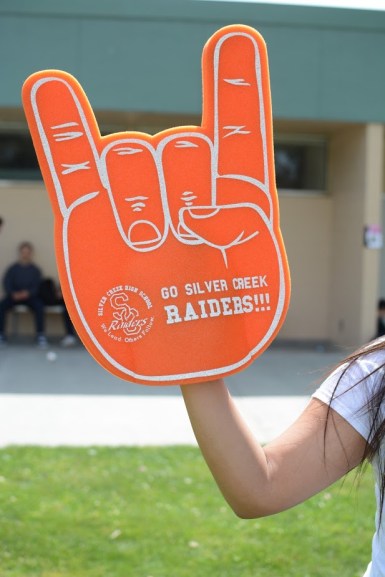
RORY: They don’t sell giant foam fingers.
LORELAI: No, they’ve got class out the wazoo.

Outsized hands cut out of foam are sports paraphernalia worn on the hand to show support for a particular team. They have been in use since the late 1970s.

The wazoo is American slang for “the anus”. To have a particular attribute “out of the wazoo” means to have it in abundance or to excess.

“Forget it Jake, it’s Chinatown”

LORELAI: There has not been one moment over our entire stay when she [Sammy] has not been right there.
LADAWN: On the stairs?
LORELAI: Yes.
LADAWN: Oh, she’s hardly ever on the stairs.
RORY: Forget it Jake, it’s Chinatown.

Rory is referencing the 1974 mystery film Chinatown, directed by Roman Polanski, with screenplay by Robert Towne, and starring Jack Nicholson as private investigator J.J. “Jake” Gittes. Set in 1937, the film was inspired by the Californian Water Wars, disputes over southern Californian water where Los Angeles interests gained water rights in the Owens Valley (in actuality, these occured at the beginning of the 20th century).

At the end of the film, the antagonists force Jake to drive them to Chinatown, where his love interest Evelyn (Faye Dunaway) has sought temporary refuge at the house of her butler. Police are already waiting to arrest Jake, and during the confrontation, they kill Evelyn. The police free Jake, and his associate Lawrence Walsh (Joe Mantell) advises him, “Forget it, Jake. It’s Chinatown”.

Chinatown is regarded as a classic film, and Robert Towne won the Academy Award for Best Original Screenplay. The screenplay has a legendary status among film makers, and is often cited as the greatest example of film writing.

In this scene, we discover that Sammy the cat is actually a female, with her name presumably short for Samantha.

“I was in college”

RORY: Did you see me?
LORELAI: Yes.
RORY: I was in college.
LORELAI: It was amazing!
RORY: Did I look like I belonged?
LORELAI: Completely. You’re a natural.

In fact Rory and Lorelai’s behaviour while at Harvard is absolutely cringe-worthy. Far from being a natural fit, neither of them have the slightest idea how to behave, and they have apparently based all their ideas about college life on film and television. It would be nice to think the writer is showing how absolutely unprepared for college Rory actually is, but you can’t help wondering if he is likewise basing his ideas about college on film and television.

Seneca

RORY: That’s because Stoicism was not about giving up things, of money and luxuries and stuff.
PROFESSOR: That’s right. By the time he was in his early forties, Seneca had earned enough money to acquire villas, farms, he ate well, he loved expensive furniture, but he didn’t consider that a non-philosophical way to live.

Seneca the Younger, born Lucius Annaeus Seneca, usually just known as Senca (c4BC-65AD) was a Roman Stoic philosopher, statesman, and playwright. A tutor and later adviser to the Emperor Nero, he was forced to take his own life for allegedly taking part in a conspiracy to assassinate Nero; Seneca was most likely innocent.

Senca was a prolific writer on Stoicism, a popular philosophy for upper-class Romans of his era. He wrote about the need to control the destructive emotions, to confront one’s own mortality, and be willing to practice poverty and use wealth wisely. His plays however, are all tragedies, and filled with intense emotions. Even while he was alive, Seneca was accused of hypocrisy because he was essentially a wealthy and powerful man advocating the simple life.

Highly popular in his day, Seneca’s enduring reputation is most likely because he was greatly admired by the early Christian church, which led to him becoming a favourite in the medieval era and during the Renaissance. Today he is seen as an important part of Western thought.

Note that Rory is very quick to grab onto the idea that wealth and luxury don’t preclude one from living an intelligent, rational, philosophically rich life.

Erika Hilson Palmer

On her way back from going to the toilet, Lorelai has a poignant moment looking at a display of past valedictorians, and makes a point of gazing longingly at Erika Hilson Palmer, the valedictorian for 1990. This is the year that Lorelai would have graduated from university if she’d gone straight from high school instead of having Rory, and it’s a reminder that Harvard was her dream first, and that she seems to have had high ambitions for herself.

In real life, Harvard University does not have class valedictorians.

Reader Sazz has noted that the surname Palmer seems like a nod to Twin Peaks, the television  show directed by Amy Sherman Palladino’s idol, David Lynch (mentioned a short time earlier in this very episode). Twin Peaks centres around solving the mystery of teenage Laura Palmer’s death.