Hamburger Helper

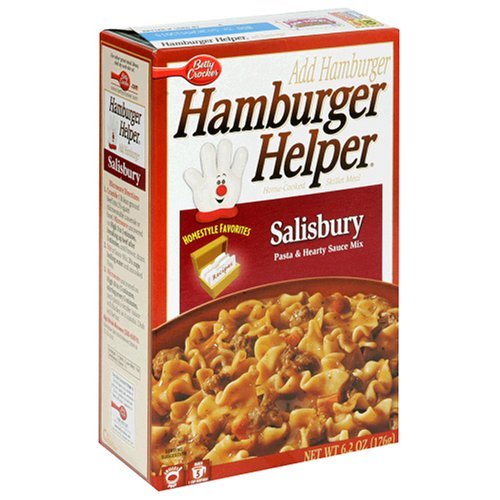
When Rory gets home, Lorelai is reading a box at the kitchen table. She’s holding a box of Hamburger Helper, a convenience food made by General Mills under the Betty Crocker brand, first introduced in 1971.

Hamburger Helper is a box of pasta packaged together with packets of sauces and seasonings. You’re supposed to combine the contents with cooked beef mince (hamburger) to create a complete meal. It’s a bit confusing for non-Americans, as hamburger usually refers to a hamburger patty; minced meat is just mince.

Three-month Anniversary

DEAN: There must be some other excuse that you could use.
RORY: Like what?
DEAN: Like it’s your three-month anniversary with your boyfriend.
RORY: It is?
DEAN: Yeah. Three months from your birthday. I mean, that’s when I gave you the bracelet and that’s when I figured this whole thing kinda started.
RORY: Wow. Three months.
DEAN: Actually, technically your birthday was on a Saturday, so really it should be Saturday, but I work Saturday and I planned out this whole big thing so I thought maybe we could do it on Friday.

There is no way that we are only three months from the night that Dean gave Rory her bracelet as a birthday present (despite what Dean says, it wasn’t her birthday, but the day after her birthday). That was in late October, so three months later would be late January. It’s now mid-March, so it’s roughly four and a half months from her birthday.

Frustratingly, it is about three months after another significant date in their relationship – the night of the Chilton Winter Formal on December 9, when Dean and Rory mutually agreed that they were boyfriend and girlfriend. It would have made a lot more sense if Dean decided that was the start of their relationship, and then we could have dated their anniversary dinner to March 9.

Dean says technically it should have held on the Saturday as Rory’s birthday was a Saturday (again, not her birthday, but her birthday party in Stars Hollow), but he has to work that night. That isn’t how anniversaries work – they are on the same date each time, not on the same day of the week. This one is just really perplexing. (It also shows that if there is any clash in their schedules, Dean expects Rory to change her schedule to suit him, rather than changing his schedule for her).

We’re probably meant to be struck by how much more invested in the relationship Dean is than Rory, as she paid no attention to the one-month and two-month anniversaries while he did. However, due to this sloppy and confusing writing, you can hardly hardly blame her for that.

Dean has arbitrarily decided what marks the start of their relationship, and has his own method of deciding what makes a month. Under these circumstances, any normal person would have been at a loss to keep up. Of course, it does show that Rory just hasn’t been paying attention to her relationship and is taking it for granted.
“Finally got off the septic tank system”

RORY: Well, this is a town that likes the celebrating. Last year we had a month long carnival when we finally got off the septic tank system.
DEAN: A month long? You’re kidding.
RORY: No. There were rides and a petting zoo and balloon animals and a freak show.
DEAN: Uh huh. Okay, you almost had me going there for a second.
RORY: Well, we did have a ribbon cutting ceremony.

A septic tank system is one where domestic sewage flows into for basic treatment. The “fecal sludge” (poo) does not break down fast enough, and will periodically need to be taken away in a truck. It’s an onsite sewage facility used in areas not connected to a sewerage system, especially rural areas, such as on farms.

From Rory’s comment we learn that Stars Hollow got off the septic tank system in early-ish 2000 to be connected to the main sewerage system. For some reason, that was retconned in the revival so that the town was still on the septic tank system.

“Relocated to a plastic bubble”

DEAN: Well, what if it’s for a really special occasion?
RORY: Well, that special occasion better include my being relocated to a plastic bubble if my grandmother’s gonna let me out of dinner.

Rory is referring to the disease severe combined immunodeficiency, a rare genetic disorder where the sufferer remains extremely vulnerable to infectious disease due to having an immune system so compromised it is effectively absent. It is sometimes called “bubble boy disease”, because high-profile patients became known for living in sterile environments.

The disease became well known after the 1976 television film The Boy in the Plastic Bubble, directed by Randal Kleiser, and with John Travolta in the title role. The film was inspired by the real-life cases of David Vetter (1971-1984) and Ted DeVita (1962-1980); DeVita actually had severe aplastic anemia, which is able to be better treated now.

Although the movie wasn’t shown on television during Rory’s childhood, bootleg copies were widely available on video, and Lorelai may have obtained one.

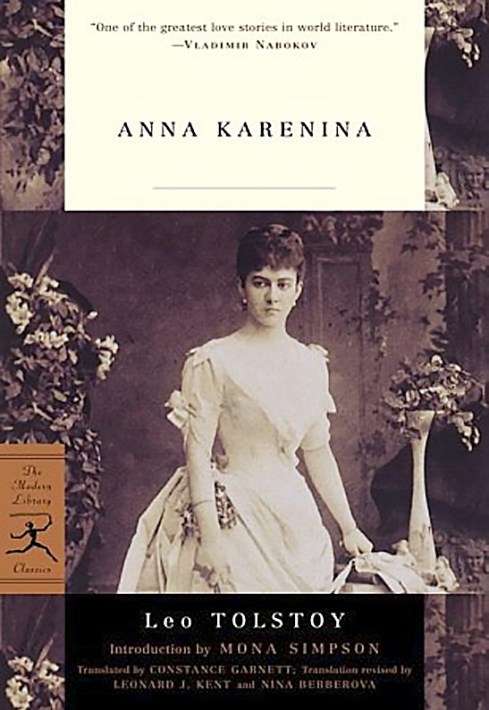
Anna Karenina

This is the book that Rory and Dean discuss after she lent it to him. Anna Karenina is a novel by Russian author Leo Tolstoy, first published in book form in 1878. It is the tragic story of Countess Anna Karenina, a socialite and married woman, and her doomed love affair with the wealthy Count Vronsky. It is widely regarded as a pinnacle of realist fiction, and one of the greatest novels of all time. Rory had to read the book for her English Literature class the previous semester.

Dean dutifully read it, but found it depressing as the heroine throws herself under a train, believing that suicide is the only way out of her relationship dilemmas. He thought the book was too long (it’s about a thousand pages), and too confusing as “every single’s person’s name ends in -ski” (in fact, of the main characters, only Count Vronsky and Anna’s brother Prince Oblonsky have names that end in this sound).

Dean believes the book is a little over his head, but Rory insists that Tolstoy wrote for the common man, and you don’t have to be a genius to understand him. Rory asks that Dean try reading the book again, as it is beautiful, and one of her favourite books. Dean actually agrees to this, which is a real sacrifice considering the length of the book and that he’d found it a difficult read. It seems Rory just won’t stop trying to force Dean to become a lover of classic literature.

Of course what Dean just isn’t picking up on is that Rory keeps romanticising heroines who cheat on their partners, from Anna Karenina to Emma Bovary to Lexie from Ice Castles. It’s a red flag of which Dean remains blissfully unaware. (More worryingly, both Anna and Emma commit suicide to escape their extra-marital woes – does Rory also romanticise self-destruction?)

The doomed love of Anna Karenina, and Rory and Dean’s very different appraisals of it, are a sign of things to come.

Tito Puente

MISS PATTY: Who wants to hear about the time I danced in a cage for Tito Puente?
KIDS: [raising hands] Me!
MISS PATTY: It was the summer of ’66 …

Ernesto “Tito” Puente (1923-2000) was an American singer, songwriter, big band leader, percussionist, and music producer. He is best known for his mambo, cha-cha-cha, and Latin jazz compositions, produced over a fifty year career, several of which were used in films. He was sometimes known as “The Musical Pope” and “The King of Latin Music”, and was at the peak of his popularity in the 1950s. He was posthumously awarded a Grammy Lifetime Achievement Award in 2003.

It is unclear where Miss Patty may have danced for Tito Puente. He was a fixture at the Palladium Ballroom in New York, a centre for Afro-Caribbean dance music, but that had just closed down, in May 1966. Maybe she means the spring of 1966?

The Stars Hollow Story

MISS PATTY: This, boys and girls, is the story of true love. A beautiful girl from one county; a handsome boy from another. They meet and they fall in love. Separated by distance and by parents who did not approve of the union, the young couple dreamed of a day that they could be together. They wrote each other beautiful letters. Letters of longing and passion. Letters full of promises and plans for the future. Soon the separation proved too much for either one of them to bear. So, one night, cold and black with no light to guide them, they both snuck out of their homes and ran away as fast as they could. It was so dark out that they were both soon lost and it seemed as if they would never find each other. Finally, the girl dropped to her knees, tears streaming down her lovely face. “Oh, my love. Where are you? How will I find you?” Suddenly, a band of stars appeared in the sky. These stars shone so brightly they lit up the entire countryside. The girl jumped to her feet and followed the path of the stars until finally she found herself standing right where the town gazebo is today. And there waiting for her was her one true love, who had also been led here by the blanket of friendly stars. And that, my friends, is the story of how Stars Hollow came to be, and why we celebrate that fateful night every year at about this time.

This is the foundation story of Stars Hollow, which is so romantic and magical that it immediately lifts Stars Hollow into the realm of fairy tale. It also gives special significance to the gazebo in the town square, which was built on the site of the young couple’s meeting, like a shrine to the power of love.

We know from the story that Stars Hollow is no ordinary place, but one founded by and constructed around love. There is something in the air which will always bring lovers together, no matter what obstacles stand in their way, or what trials they have to endure. The friendly stars above do not cross lovers, but light up the sky to show them the way and bring them together, creating a path to follow like the Yellow Brick Road, yet as warm and comforting as a blanket. Love here has the blessing of Heaven, focused upon the gazebo.

The Founders Firelight Festival is not a dull civic duty, but a joyful celebration of love which brings all the town together. In the scenes of the town preparing for the festival, you can see that Rory is one of the volunteers – smiling happily in the knowledge that she is a beautiful young girl who has found her own handsome lover, just like the town founders.

Star-Crossed Lovers and Other Strangers

The title references two different works. One is William Shakespeare’s Romeo and Juliet, previously and frequently mentioned. In the play, Shakespeare refers to the main characters as “star cross’d lovers”, meaning that their relationship is destined to fail no matter how hard they try. The phrase comes from astrology, meaning that the stars are working against them (in the same sense that we say “don’t cross me”, to mean “don’t interferere with my plans”).

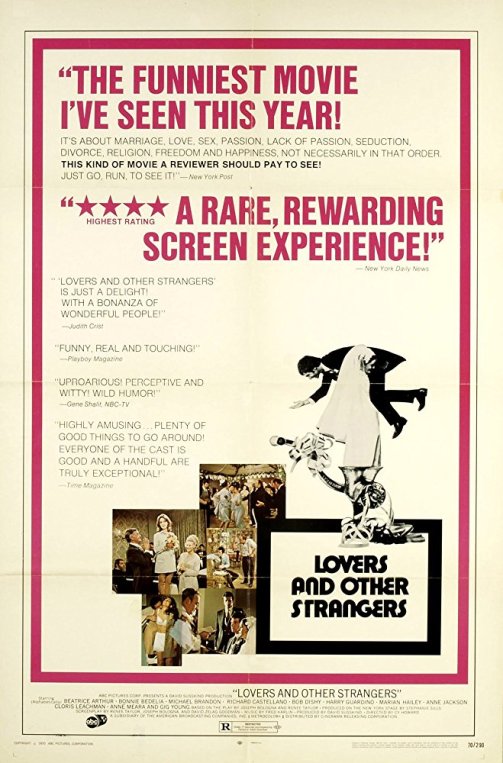
The other reference is to the 1970 comedy film Lovers and Other Strangers, directed by Cy Howard and based on the play of the same name by Renée Taylor and Joseph Bologna, who also co-wrote the screenplay for the film.

The movie revolves around the upcoming wedding of Mike (Michael Brandon) and Susan (Bonnie Bedelia), and the spotlight it shines upon the marriages of their family members. The film is notable for being the screen debut of actress Diane Keaton, who plays Mike’s sister-in-law. Lovers and Other Strangers was well-reviewed and successful at the box office; it won the Academy Award for Best Original Song (For All We Know).

Oxymoron

LORELAI: Curtains?
LUKE: No.
LORELAI: Manly curtains.
LUKE: Oxymoron.
LORELAI: What did you call me?

An oxymoron is a figure of speech in which two contradictory terms are linked together as an apparent paradox; the word comes from the Greek for “sharp foolish”, an oxymoron in itself as “sharp” and “foolish” are opposites. Common oxymorons include “love-hate relationship”, “deafening silence”, “working holiday”, “only choice”, “friendly fire”, and “sweet sorrow”.

I don’t know how many times the word has been used in comedy so that a character can take (or pretend to take) offence, as oxymoron sounds like an insult.

Later in the season, we discover that Luke is in fact rather fond of ruffled curtains, which he picked out for his own apartment.