Nancy Kerrigan and Tonya Harding

As they prepare for their ice skating date, Rory identifies herself as Nancy Kerrigan [pictured on the right], while Lorelai says she is Tonya Harding [left].

Nancy Kerrigan (born 1969) is a former figure skater, who became the US Champion in 1993. In 1994 she was clubbed in the knee by an assailant hired by the ex-husband of her rival Tonya Harding (born 1970), in an attempt to break her leg so that she would be unable to compete at the Winter Olympics.

The attack took place at the US Figure Skating Championships, ruling her out of the competition, which was won by Harding. Kerrigan made a good recovery from her injury (her knee was only bruised, not broken), and won silver at the 1994 Winter Olympics, held seven weeks later.

In March 1994, Harding pleaded guilty to conspiring to hinder prosecution of the attackers. She was fined and sentenced to community service, and was also forced to withdraw from the 1994 World Figure Skating Championships and to resign from the US Figure Skating Association. She was later stripped of her 1994 US Championships title and banned for life from participating in professional ice skating events in any capacity.

The fevered publicity generated by the scandal created a boom in professional ice skating, and may have even contributed to Rory’s interest in the skating film Ice Castles; like Lexie in the film, both Kerrigan and Harding came from modest backgrounds.

It is entirely within character that Rory identifies with the pageant-pretty “ice princess” Kerrigan who learned to fit in with the social conventions of the skating world, while Lorelai identifies with Harding – generally seen as an overly-dramatic emotional mess from the wrong side of the tracks. Harding also had issues with her mother, just as Lorelai does with Emily.
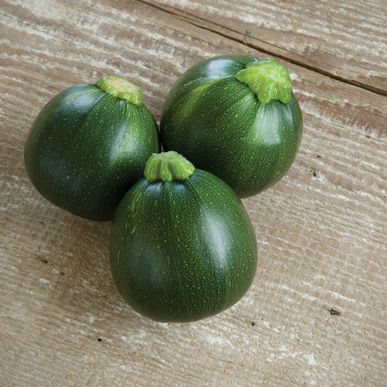

Zucchini Tush

JACKSON: Yes, great, I know, but all I’m asking you is to try stuffing something a little different this time huh? [holds up a funny-looking zucchini]
SOOKIE: A zucchini tush?
JACKSON: Just a temporary name.
SOOKIE: You want me to serve my customers a genetically engineered vegetable that’s named after a butt?
JACKSON: Hey this is an all natural vegetable hybrid that’s perfectly safe, completely delicious, and yes it looks a little odd but you can put in on the map!

Tush is American slang for “buttocks”, short for tochus, which is derived from the Yiddish word tokhes. It’s ultimately from the Hebrew for “beneath”.

Jackson says that his buttocks-shaped zucchini is a hybrid, but he doesn’t say of which other vegetable – maybe a summer squash. Unlike Jackson’s impossible rasquat, zucchini and summer squash cross-pollinate very easily, even with no human intervention. Sometimes the result looks like a short round zucchini, just like the one Jackson presents to Sookie, and a buttocks-shaped one sounds unusual but by no means impossible.

Max and Rory’s Code Names

When Rory says she is uncomfortable calling her teacher by his first name outside school, even though he is also her mother’s boyfriend, Max suggests they use code names for each other. He offers to call her “Rebecca” – probably just because it starts with the same letter as Rory, and was then a common name for girls of Rory’s age (it also has the same number of syllables as her full name, Lorelai).

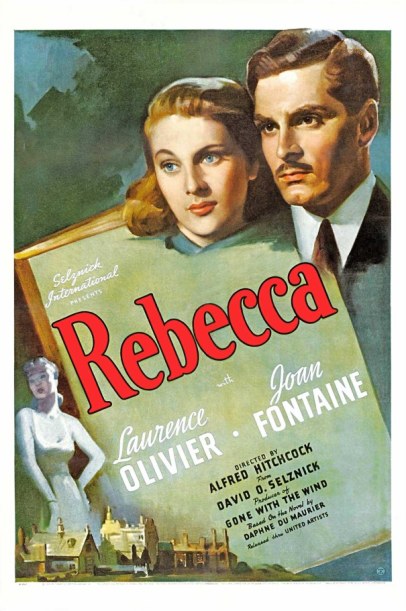
From their ensuing conversation, we can tell that Rory immediately links the name with the 1940 romantic mystery film Rebecca, directed by Alfred Hitchcock and based on the 1938 best-selling novel of the same name by Daphne Du Maurier. Rebecca was the #1 film of 1940, and won two Academy Awards, including Best Picture; it is still regarded as a classic of Gothic romance and psychological drama.

The character of Rebecca never appears in the film, as she is already dead, the first wife of Max De Winter (Laurence Olivier) whose memory continues to haunt him and his new wife (Joan Fontaine). Rory feels that, like Rebecca, she should never have been seen – her role was to disappear before Max arrived for his date, as per the “Gilmore Dating Rules”.

Disturbingly, Max De Winter in the film secretly hated Rebecca, who led a scandalous life, and was glad when a struggle between them ended with her death. You can’t help but feel that Rory subconsciously believes that Max would prefer it if she didn’t exist, and perhaps even that she is a “scandal” as Lorelai’s illegitimate child to another man – the cause of Rebecca and Max’s final fight was because she (falsely) claimed she was bearing another man’s child, who would inherit his estate.

Because Rory already has her mind on Hitchcock films, she offers to call Max “Norman”, saying that Psycho was on (television?) earlier that evening. (Note that she cannot call him by the film name from Rebecca, as he is already named Max).

Psycho is a 1960 thriller directed by Alfred Hitchcock, based on the 1959 novel of the same name by Robert Bloch. Filmed on a low budget, the film received mixed reviews on release, but was a massive box office success, and the #2 film of 1960. Now Hitchcock’s best known film, it is regarded as one of the most influential films of all time, and one of the greatest in its genre.

Rory calls Max after Norman Bates (Anthony Perkins), the murderer in the film. Norman Bates first appears to be a pleasant-looking, rather shy young man, but is subsequently exposed as a deranged killer who had a perverted relationship with his mother – one of his first victims. Rory could not make it clearer that she secretly fears Max wants her out of the way, and feels threatened by him dating her mother. Possibly Max’s pleasant manner to her is, in the depths of her mind, hiding something much more sinister.

Struggling to come up with another name, she can only think of “Alfred” after Alfred Hitchcock, the director of Rebecca and Psycho. Known for his voyeuristic camera style, his films often involve characters with a problematic relationship with their mothers, and beautiful yet icy women. Maybe Rory has already subconsciously picked up that there are problems between Lorelai and Max.


Marilyn Monroe-Arthur Miller Syndrome

MADELINE: I bet his [Max’s] girlfriend’s pretty.
LOUISE: I bet she’s dumb.
MADELINE: Why?
LOUISE: Dumb girls crave smart men. It’s that whole Marilyn Monroe-Arthur Miller syndrome.

Hollywood actress Marilyn Monroe and left-wing playwright Arthur Miller married in 1956, after meeting in the early 1950s and dating seriously since 1955. The media saw the marriage as a mismatch, because Monroe’s typecast screen persona was a “dumb blonde”: one headline read Egghead Marries Hourglass. The couple divorced in 1961.

Lorelai and Max do fit the Monroe-Miller stereotype, as Max is written as far more literary and intellectual than the vivacious Lorelai.

“It’s 8 o’clock”

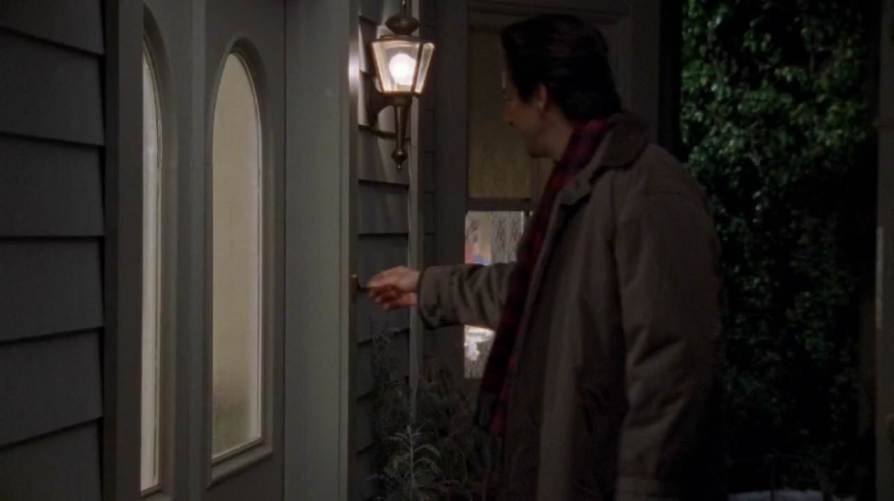
(Max rings the doorbell, arriving for his date with Lorelai)
LORELAI: It’s 8 o’clock. Who shows up at 8 o’clock for an 8 o’clock date?
RORY: I don’t know, maybe a Chilton teacher?
LORELAI: Everybody knows that 8 o’clock means 8:20, 8:15 tops!

Another mention of time and the problems it causes. Lorelai and Rory keep turning up late and getting into trouble for it; here someone else arrives on time and throws their schedule out.

Squab

EMILY: How’s the squab?
RORY: It’s good.
EMILY: Lorelai?
LORELAI: It’s the best tiny, weird bird I have ever eaten.

Squab is the meat of a young domestic pigeon, typically under four weeks old, served as a delicacy. In the US, squab is seen as a luxury food, and is expensive. It may be served roasted or grilled, and the meat is moister and richer in flavour than more common poultry.

“There’s a certain slant of light”

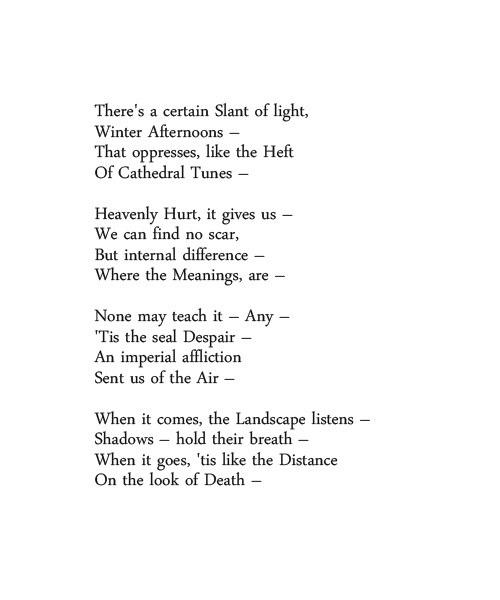
MAX: “There’s a certain slant of light, winter afternoons, that oppresses like the heft of cathedral tunes.” That, my friends is the first verse of a poem by Emily Dickinson. Now read some of those tonight, and as you do, consider the fact that Emily Dickinson writes convincingly about passion and about the world in spite of the fact that she lived as a virtual recluse. It’ll help you appreciate her mind.

Max is reading from the Emily Dickinson poem identified by its first line, There’s a certain slant of light, numbered as 258 in her collected works. It was written around 1861, although not published until after her death.

The poem is about the oppression and even despair brought on by the bleak New England winter. Max and Lorelai began their relationship on the first snowfall of the year – something which for Lorelai is imbued with an almost magical sense of joy and expectation.

As Max reads from this poem which describes the sense of impending doom and death brought on by winter, we can feel that their relationship is about to become much colder. We might also remember that on the day Max first asked Lorelai on a date, he mentioned her icy attitude toward him. Now is the time for that frosty snow queen to reawaken.

Swann’s Way

This is the book that Max loans Lorelai after she said she always wanted to read Proust.

It is the first volume of Marcel Proust’s In Search of Lost Time, and begins with the narrator’s childhood, centred on his family’s country house in the village of Combray. M. Swann is a neighbour of the family, with one of their favourite country walks being past his house – Swann’s Way. M. Swann will end up being a major character in the novel, and the narrator greatly attracted to his daughter, Gilberte Swann.

We learn later that it took Rory ages to read the book, having to renew it at the library ten times (if she’s not exaggerating, she may have taken 4-5 months to read it, depending on how long the library allows books to be checked out).

Lorelai tells Rory she only read the first sentence of Swann’s Way, which is: “For a long time I used to go to bed early”. That seems rather soon to give up, but later she tells Max she read the first twenty pages, which she exaggerates as all one sentence. The first twenty pages or so are the “Overture”, all of which are involved with that first going to bed.

Lorelai defends herself by saying she is too busy to begin reading the “longest book known to man”. Presumably she means the entire seven volumes, which are over 4000 pages long as a whole. It is indeed the longest novel in the world according to the Guiness World Book of Records.

Lorelai is not alone. Many readers have abandoned their attempt to read Swann’s Way, which has a beautiful style, but very lengthy, dense paragraphs with meticulous observations, and a plot so painfully slow, discursive, and ambiguous that it sometimes seems not to have one at all.

Those who complete it may take years to do so, and just managing to finish the book, let alone enjoy or understand it, is often considered a rare feat in itself.

(I don’t know whether one of the original titles for Gilmore Girls, The Gilmore Way, was an allusion to this book).

Michael Chrichton

LORELAI: Every now and then, I’m seized with an overwhelming urge to say something like, “As Marcel Proust would say …”, but of course I have no idea what Marcel Proust would say so I don’t even go there. I could do, uh, “As Michael Crichton would say ..”, but it’s not exactly the same, you know.

Michael Chrichton (1942-2008) was a best-selling American author, screenwriter, director, and producer. He is best known for his science fiction, thriller, and medical fiction novels. Many of his books have been adapted into action films. Lorelai has apparently read at least one of his books, but it is unclear which one/s, as he was a fairly prolific writer.

In 2001, his most recent novel would have been Timeline (1999), a thriller about time travel to medieval France. This is a rather amusing counterpoint to Proust’s masterwork In Search of Lost Time, which is also set in France and deals with the problem of time in a completely different way.