Marco Polo

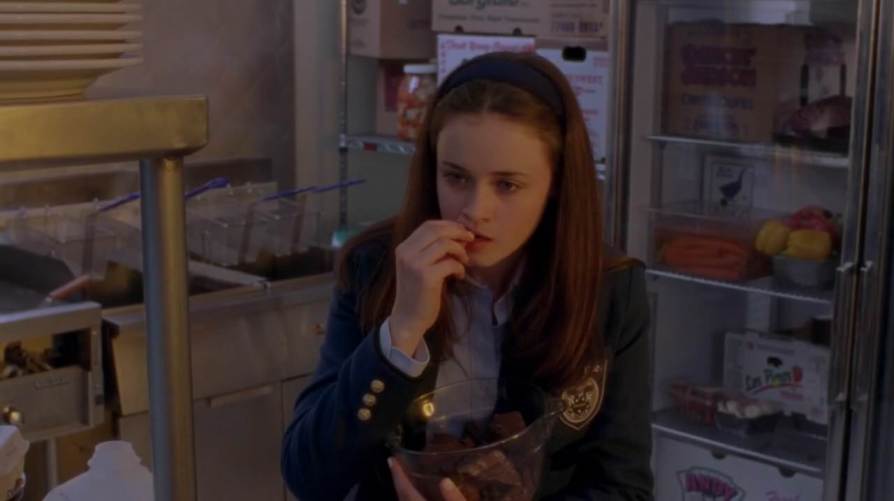
Rory and Lane call out to each other so that Rory can find Lane among the clutter of the overstocked antique store. Marco Polo is a game of tag played in a swimming pool which is similar to blind man’s buff. The player who is “It” closes their eyes and shouts “Marco!”, while attempting to find the other players by their voices, as they respond with “Polo!”. It is not known why the game uses the name of the explorer Marco Polo, and it apparently has no connection with the game of water polo. The game dates to perhaps the 1960s.

Run interference

LORELAI: Will you help me push other people out of the way if they’re going for my size [at the shoe sale]?
RORY: I’ll even run interference for you.

To run interference is a term from American football or gridiron, meaning to legally block opponents in order to create a clear path for the ball carrier. As as idiom, it means to help someone while they perform a task without directly intervening, such as deflecting attention away from them so they can work in peace. Rory may be literally planning to block people at the shoe sale though, giving Lorelai a clear path to the sales desk.

Sookie’s Reviewed Food

The restaurant at the Independence receives a rave review from food critic Lucent Mills – his name suggesting that he both shines a light on a situation, and relentlessly grinds out the facts. I’m not sure why he is shown naked in the magazine, but for some reason he apparently is (to indicate that he hands out the naked truth?)

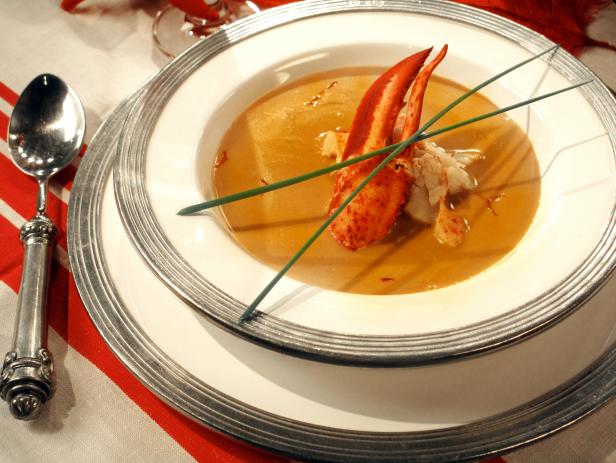
Bisque is a smooth, creamy soup of French origin, traditionally using crustaceans. Sookie made hers with lobster.

Entree is the American word for the main course, differentiated from the starter which is the appetiser. It’s slightly confusing, as in other countries entree is the word for the light first course, or appetiser.

Risotto is a rice dish from northern Italy, where the rice is cooked to a creamy consistency. It is traditionally coloured and flavoured with saffron, and often includes butter, wine, onion, and Parmesan cheese.

Handkerchief pasta is also known as silk handkerchief pasta, and in Italian called fazzoletti (“little handkerchiefs”). They are pasta noodles made into paper-thin square or rectangular shapes, often served with a very simple sauce, such as Sookie’s sage and butter one.

“The thing that reads a lot”

[Rory enters with lots of bags]
LORELAI: Oh, behold in theatres now, the thing that reads a lot.

A possible allusion to the 1951 sci-fi film The Thing from Another World, often referred to as just The Thing. Directed by Christian Nyby and produced by Howard Hawks, it is about an alien from a flying saucer crash found frozen in the ice and accidentally revived. It was a commercial success and is considered one of the great science fiction films of the decade.

High tea

MICHEL: Can I kill her [Drella]?
LORELAI: Not before high tea.

In Britain, high tea was a heavy meal served at the end of the working day, consisting of meat or fish dishes with vegetables, including roasts, pies, stews and casseroles. It was what most people would call “dinner” today, although in British English “tea” can still be used to denote the main evening meal.

In international usage, “high tea” is often used as a synonym for afternoon tea, and at an inn, has connotations of a fairly elaborate, formal spread.

“Wonder if Versace makes a pacifier”

MICHEL: These are $300 Italian loafers.
DRELLA: Wonder if Versace makes a pacifier.

Versace is an Italian luxury fashion company, founded by Gianni Versace in 1978. It is a favourite brand of numerous celebrities.

A pacifier is what Americans call the rubber teat with a plastic shield given to babies to suck on; in other countries it might be known as a dummy, teether, or soother.

Chevalier

DRELLA (to Michel): Back off, Chevalier.

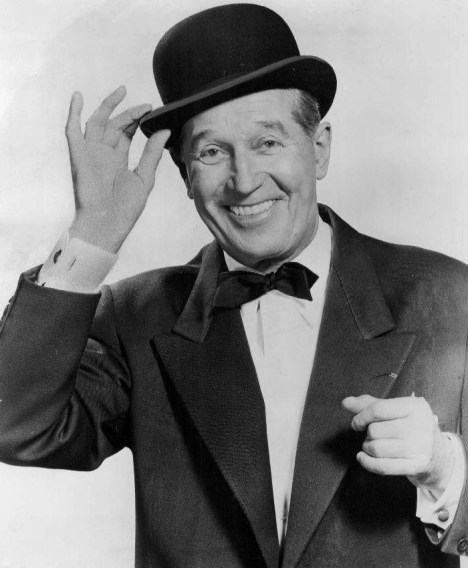
Drella is referring to French actor and singer Maurice Chevalier (1888-1972). He is best known for his signature songs, including Thank Heavens for Little Girls, from the 1958 musical film Gigi. At the peak of his career, he was the highest-paid actor in Hollywood.

When performing in English, Chevalier adopted a heavy “stage French” accent, although in everyday life he spoke fluent English with a slight American tone. Drella may be indicating that Michel is also “faking” his French accent.