Sweet potatoes are often called “yams” in North America. Candied sweet potatoes are a side dish sweetened with brown sugar, marshmallows, maple syrup, molasses, orange juice, candied chestnuts, or other sweet ingredients. It is often served at Thanksgiving.
LUKE: Well, that we’re not Native Americans who got their land stolen in exchange for smallpox infested blankets.
Luke refers to the commonly held belief that British colonists gave Native American tribes blankets that were infected with smallpox, as an act of genocidal biological warfare. There is only one recorded instance of this actually being planned, in Pennsylvania. It is unknown whether this cruel scheme was ever put into operation, and if so, whether the blankets made anyone ill – they were old, and may have no longer been infectious.
Nine months later, smallpox was raging in the community, but it was everywhere by then, and cannot be traced to a blanket. There is no suggestion that land was traded in exchange for the blankets (if they were given at all).
However, while Luke’s statement isn’t strictly correct, there is no denying the overall truth that Native Americans had their land taken from them, often brutally, and that their population was devastated by smallpox, to which they had no immunity.
SOOKIE: He should’ve just driven it out on a monster truck. He’s shamelessly catering to his demographic.
Monster truck, previously discussed. It seems to be used in Gilmore Girls as shorthand to describe people lacking sophistication. Jackson’s family were often characterised this way.
[Jackson pushes open the door and holds up the turkey]
JACKSON: Did someone say . . . Jackson?
[the crowd cheers]
LORELAI: Wow, it’s like Thunderdome in here.
Thunderdome is a fight-to-the-death gladiatorial arena in the 1985 Australian post-apocalyptic dystopian film Mad Max Beyond Thunderdome. It is the third instalment of the Mad Max series, and is directed by George Miller and George Ogilvie, starring Mel Gibson and Tina Turner. The film was a modest commercial success and received mostly positive reviews, with praise for the lead actors, and for the creative action and fight scenes.
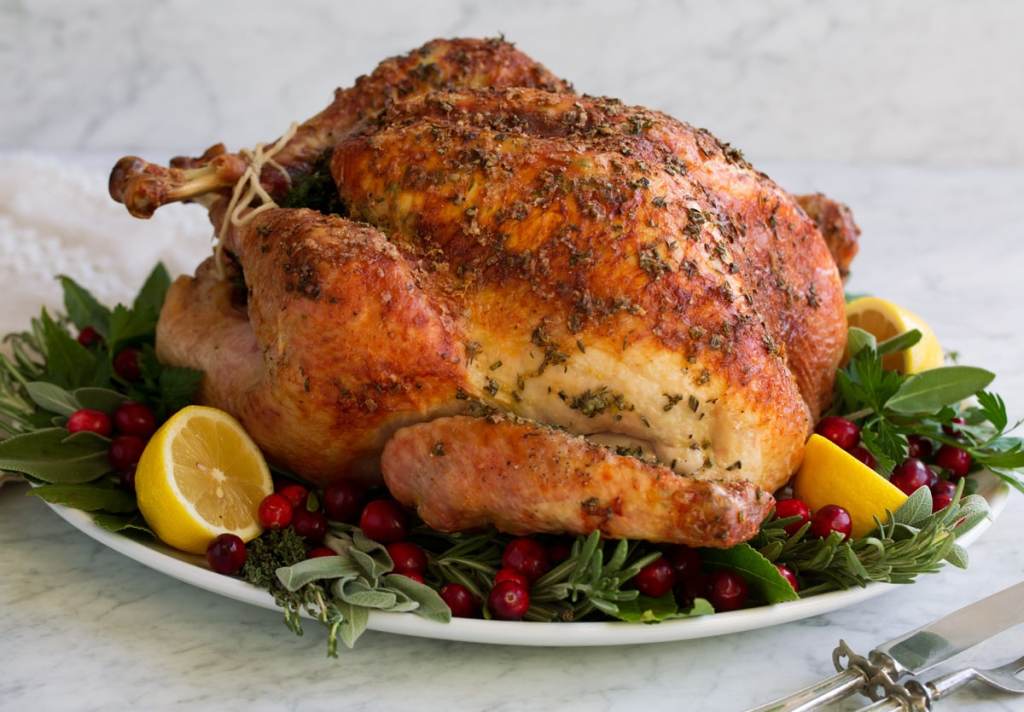
SOOKIE: A couple of days ago, Jackson asked me if he could cook the turkey. I thought he was gonna roast it, stick a couple of onions around it, something simple. So I said yes, figuring that the minute he put it in the oven and leaves the kitchen, I can sneak in and give it a nice herb butter rub and stuff it with a pancetta-chestnut stuffing.
Sookie allows Jackson to cook the Thanksgiving turkey when his family come for dinner, but with this couple’s typical rotten communication, what Sookie actually means is that as soon as she gets a chance she will secretly rub the turkey over with herb butter to keep it moist, and stuff it with chestnuts and pancetta (an Italian salt-cured pork belly meat product).
Although this sounds lovely, Jackson’s plan is actually to deep fry the turkey in peanut oil, much to Sookie’s dismay. Of course, he doesn’t share his plans with Sookie, and she doesn’t tell him how unhappy she is about it.
The Visigoths, an early Germanic people. Under their first leader, Alaric I, they invaded Italy and sacked Rome in 410. They later settled in southern Gaul and Hispania (modern France and Spain), and maintained a presence there from the 5th to the 8th century AD.
Lorelai refers to the popular idea of medieval castle defenders pouring boiling oil onto their assailants in order to protect themselves during a siege. There are only a few known instances of it actually happening (none against the Visigoths).
Historians think that the oil would have been hot, rather than boiling, and that it had the added advantage of making everything too slippery to climb. It probably wasn’t used very often, as oil was so expensive that hardly anyone had enough of it in stock. Boiling water and hot sand were far more commonly used.
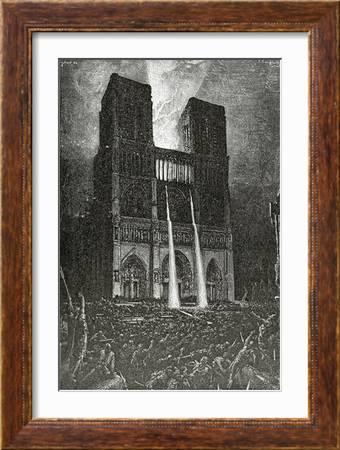
Quasimodo, the title character from The Hunchback of Notre Dame, previously discussed. In the book and the 1939 film, Quasimodo pours boiling oil from the cathedral onto his attackers – in the film, he uses the rain spouts on the gargoyles to do this.
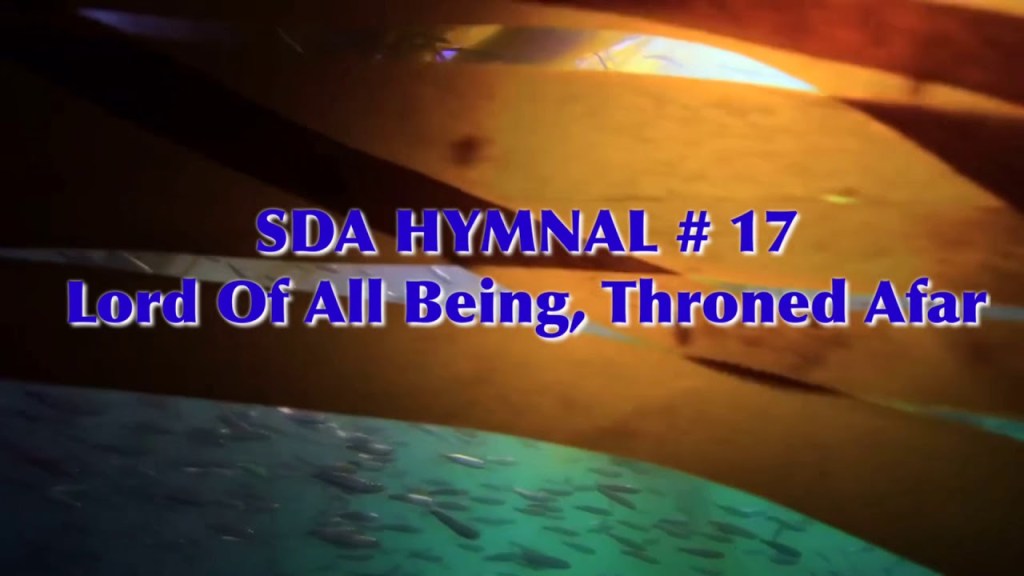
Mrs Kim asks Dave to play “Hymn 17” while they eat dinner. Lane was hoping to persuade her mother to let Dave eat Thanksgiving dinner with them, but alas, she has apparently hired Dave to play while they eat.
I’m not really sure about this one, but in the Seventh Day Adventist hymnal, No. 17 is “Lord of All Being, Throned Afar”, written and composed by Oliver Wendell Holmes . The lyrics are quite interesting if you read them as pertaining to Lane and Dave’s situation:
Lord of all being, throned afar, Thy glory flames from sun and star; Centre and soul of every sphere, Yet to each loving heart how near! Yet to each loving heart how near!
Sun of our life, Thy quickening ray Shed on our path the glow of day; Star of our hope, Thy softened light Cheers the long watches of the night, Cheers the long watches of the night.
Our midnight is Thy smile withdrawn; Our noontide is Thy gracious dawn; Our rainbow arch, Thy mercy’s sign; All, save the clouds of sin, are Thine, All, save the clouds of sin, are Thine.
Lord of all life, below, above, Whose light is truth, whose warmth is love, Before Thy ever-blazing throne We ask no lustre of our own, We ask no lustre of our own.
Grant us Thy truth to make us free, And kindling hearts that burn for Thee; Till all Thy living altars claim One holy light, one heavenly flame! One holy light, one heavenly flame!
Yes, their loving hearts are near (nearer than Mrs Kim realises!), and they hope for the day that truth will make them free. It feels like an ardent prayer for mercy upon them so that their “kindling hearts” will eventually be “one flame”.
Dave plays the opening riff to this David Bowie song just before he begins the hymn. It is a little nod to Lane, who is a Bowie fan, and possibly a reference to his own name.
“The Man Who Sold the World” is the title track to Bowie’s third studio album, which was released in 1970 in the US and 1971 in the UK. Its lyrics are cryptic and evocative, based on several poems, and the vocals are haunting. It wasn’t released as a single, and only gained attention when it was covered by other artists, such as Lulu, Midge Ure, and Nirvana, whose version brought it to a new audience. It is now considered one of Bowie’s best songs.