Hirschfeld

LORELAI: Why’d you get new menus?
LUKE: It was time.
LORELAI: But I had made little doodles with my name hidden in them on each one of the old ones just like Hirschfeld.

Albert “Al” Hirschfeld (1903-2003), caricaturist best known for his black and white portraits of celebrities and Broadway stars, in a career spanning nearly eight decades.

Hirschfeld had a daughter named Nina, born in 1945. Hirschfeld is known for hiding Nina’s name, written in capital letters (“NINA”), in most of the drawings he produced after her birth. The name would appear in a sleeve, in a hairdo, or somewhere in the background. The number of NINAs concealed is shown by the number written to the right of his signature. Generally, if no number is to be found, either NINA appears once, or the drawing was completed before she was born. Originally done to amuse his friends, the public quickly noticed and became obsessed with this little gimmick, sending angry letters when he tried stopping it.

Al Hirschfeld had died not long before this episode aired, so this mention feels like a little tribute to him.

Picasso

MRS. VAN WYCK: Then Picasso is obscene … It has six breasts.
TRIX: You cannot be sure if those are breasts. They could be cannons. He was quite obsessed with the Spanish Civil War for awhile.

Pablo Picasso (1881-1973), Spanish painter, sculptor, printmaker, ceramicist and theatre designer who spent most of his adult life in France. One of the most influential artists of the 20th century, he is known for co-founding the Cubist movement, the invention of constructed sculpture, the co-invention of collage, and for the wide variety of styles that he helped develop and explore.

Picasso painted a number of female nudes that Mrs Van Wyck might be looking at. Nude Woman With Necklace is one possibility, as at my first glance, I also was unsure how many breasts the figure has. On closer examination, some of them are her stomach and thighs. Remember that Mrs Van Wyck is peering at a tiny piece of transparent celluloid to view the painting.

One of Picasso’s most famous works is Guernica, a dramatic portrayal of the bombing of the Basque town of Guernica by German forces during the Spanish Civil War.

Andy Warhol

JESS: Find someone who vaguely resembles me. Take him. Just don’t kiss him goodnight.
RORY: That’s not going to work.
JESS: Andy Warhol did it all the time.

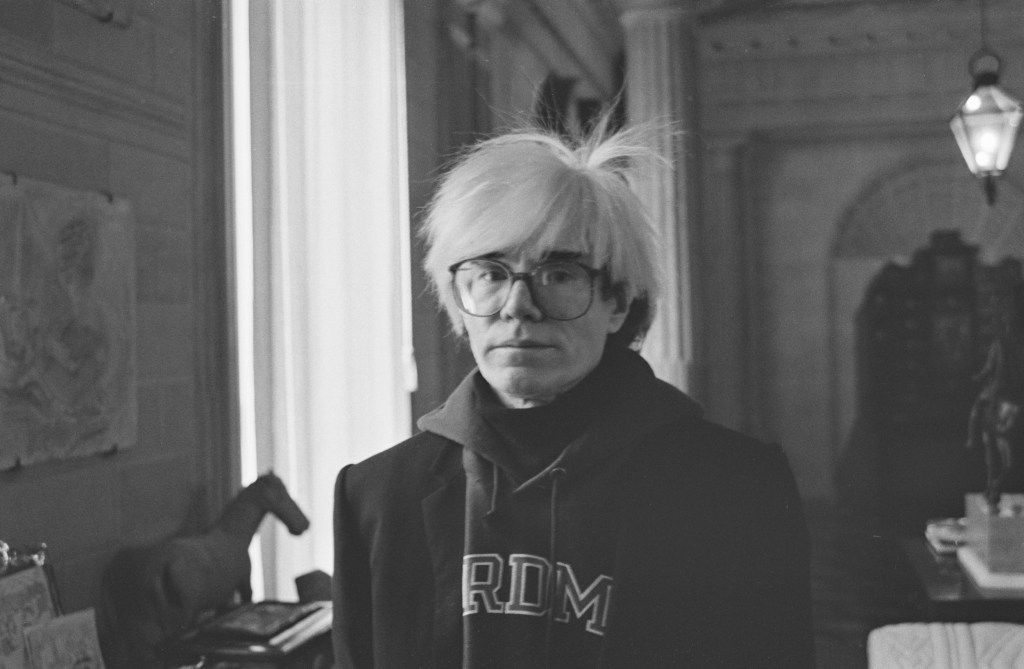
Andy Warhol, born Andrew Warhola Jr (1928-1987), artist, film director, and producer who was a leading figure in the art movement known as Pop Art. His works explore the relationship between artistic expression, advertising, and celebrity culture that flourished by the 1960s, and span a variety of media.

I’m not completely sure what Jess is referring to here, except that Andy Warhol did have something of a “type” when it came to his lovers and muses, both male and female. If anyone has any more specific ideas, please write in!

Napoleon III and Chagall

LORELAI: Okay, then, it’s settled. We’re not staying at any place that wasn’t built for Napoleon the Third’s doctor or doesn’t have a Chagall in the bathroom.

Napoleon III, born Charles Napoléon Bonaparte (1808-1873) the first President of France from 1848 to 1852, and the last monarch of France as Emperor of the French from 1852 to 1870. A nephew of Napoleon I, he was a popular monarch who oversaw the modernisation of the French economy and filled Paris with new boulevards and parks. One of his doctors was the surgeon Félix-Hippolyte Larrey; he owned a small castle, but I have been unable to learn if he had a house built for him.

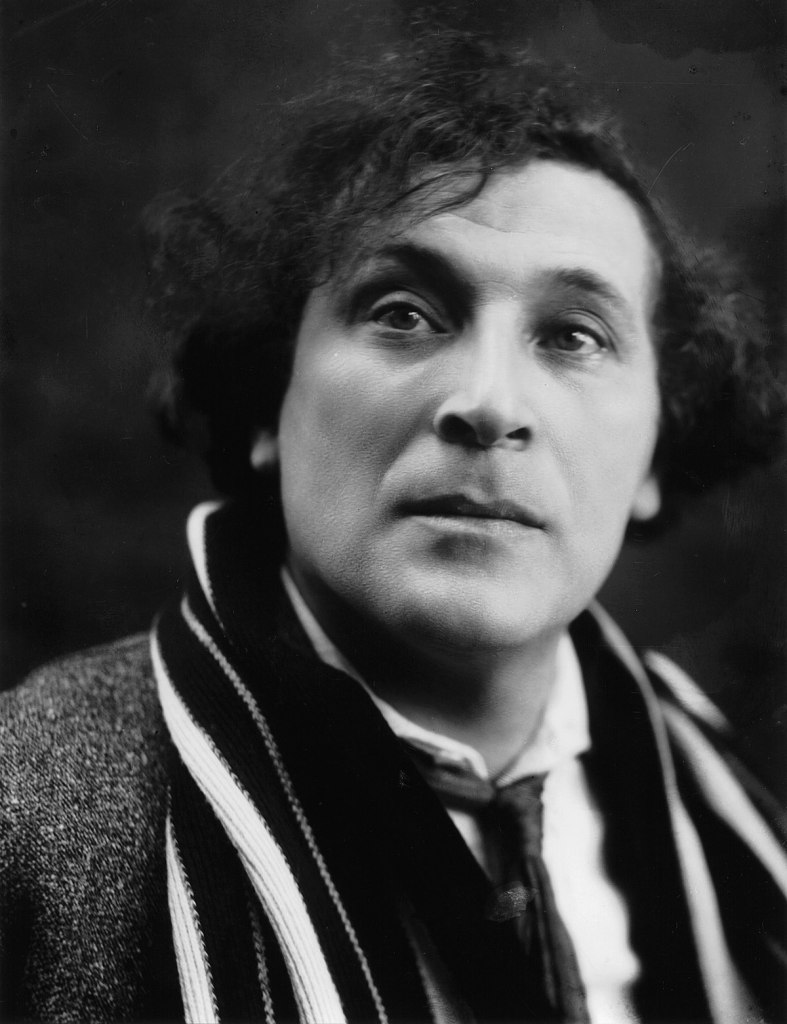
Marc Chagall [pictured], born Moishe Shagal (1887-1985), Russian-French artist. An early modernist, he was associated with several major artistic styles and created works in a wide range of artistic formats, including painting, drawings, book illustrations, stained glass, stage sets, ceramics, tapestries and fine art prints.

Eloise at the Plaza

PARIS: I knew that suggestion box was a bad idea. Watch Choate get Joan Didion while we’re being read “Eloise at the Plaza”.

Paris refers to Eloise: A Book for Precocious Grown-Ups, a 1955 book by Kay Thompson, illustrated by Hilary Knight. Originally marketed to adults, in 1969 it was released as a children’s book as Eloise, with no changes to the text or illustrations.

Eloise is a mischievous six-year-old girl who lives in the penthouse of the Plaza Hotel in New York City with her nanny, pet pug dog and pet turtle. Thompson based Eloise on an imaginary friend she had in childhood, although it has been speculated that her goddaughter Liza Minelli may have been a possible model. There are several books in the Eloise series, but Eloise never ages. In April 2003, a Disney television film was broadcast called Eloise at the Plaza, with Sofia Vassilieva in the title role.

A fan theory, which you may take with as many grains of salt as you wish, is that Louise was named after the character Eloise. I cannot think of any way that could be confirmed or denied, but it doesn’t seem that implausible. Louise and Eloise both have blonde hair, are rich and spoiled, rather bratty, and have unavailable, neglectful parents.

Kay Thompson died in 1998, so could not have been the commencement speaker, and famously hated her fans, so would be unlikely to agree to it anyway. Hilary Knight is still alive, but it doesn’t seem likely that he would have done it either.

“The student surpasses the master”

LORELAI: Not as impressive as my mother making four green beans last an hour and a half …. When she finally got to the last bean, she cut it in six pieces. I swear, I thought Gran was gonna lunge across the table at her.

RORY: The student surpasses the master.

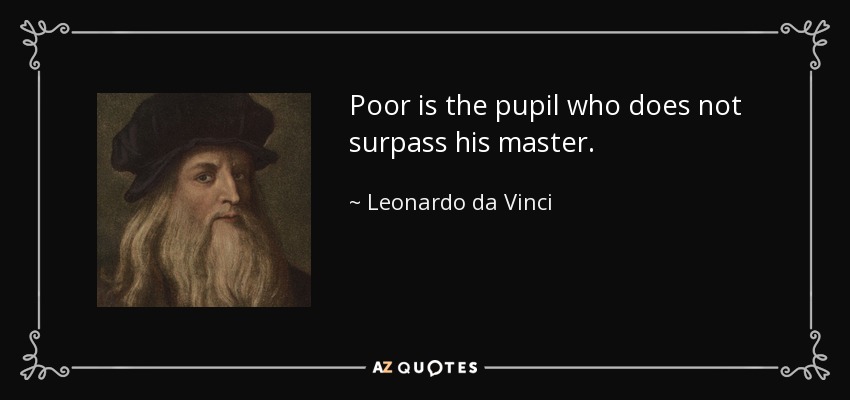
As far as I know, this comes from a quote attributed to the Renaissance artist and inventor Leonardo da Vinci: “Poor is the pupil who does not surpass his master”.

Clemenceau

RICHARD: And this is our international contingent, Claude and Monique Clemenceau. They’re just in from France.

The Clemenceaus have been given the same surname as Georges Clemenceau (1841-1929), Prime Minister of France from 1906-1909, and again from 1917-1920, leading France through the end of World War I.

It is surely not a coincidence that Georges Clemenceau has a Connecticut connection. He fled France in 1865 due to involvement in radical politics during the regime of Napoleon III. He ended up teaching at a girl’s school in Stamford, Connecticut, where he fell in love with one of his students, Mary Plummer (1849-1922). They married in 1869 and moved to France a year later. They separated in 1876 and divorced in 1891, after which Clemenceau had Mary sent back to the US. From his time in the US, Clemenceau developed a strong faith in American democratic ideals.

Georges Clemenceau was a friend, biographer, and supporter of the famous French artist Claude Monet. Given Claude’s first name, this also does not seem like a coincidence. Notice that the name Monique sounds similar to Monet, as if both French guests have been named after the painter.

Claude is played by Michael des Barres, an English marquis, actor and rock singer. He played Murdoc in the original Macgyver and had a lead role in the show’s reboot, and replaced Robert Palmer in the band The Power Station, fronting the band at the 1985 Live Aid concert. He has had roles in numerous TV series and some films, including To Sir With Love, Pink Cadillac, and Mulholland Drive. A long-term campaigner against drug abuse, he is currently a radio host for Sirius XM.

Monique is played by Lydie Denier, a French-American model, singer, and actress. She has appeared in a few films and a number of TV programs, including General Hospital, Melrose Place, and Spin City.

Titian

EMILY: And then he’d talk about the paintings he had seen in Paris and the colors of Titian, and by the end of the date, you thought he was the most brilliant man in the entire world.

LORELAI: Using Titian to score. Even Titian didn’t do that.

Tiziano Vecelli, known in English as Titian (c.1489-1576), Italian painter of the Renaissance and considered the most important artist of the 16th century Venetian school. Titian was one of the most versatile of Italian painters, equally adept with portraits, landscape backgrounds, and mythological and religious subjects. His painting methods, particularly in the application and use of colour, exercised a profound influence not only on painters of the late Italian Renaissance, but on future generations of Western artists.

[Painting shown is Titian’s Bacchus and Ariadne].

Fauvism

DARREN: Anyone know the artistic movement Matisse championed and referred to as the Wild Beasts?

JENNIFER: Oh, Fauvism!

Fauvism is the artistic style of les Fauves (“the wild beasts”), a group of early twentieth century modern artists whose works emphasised seemingly wild brush strokes and strong colours. Henri Matisse was one of the leaders of the movement.

[Picture is The Red Room by Henri Matisse, 1908].

Matisse

LORELAI: So, that painting there, wow. The colors are so great, I can’t stop staring at it. It’s just beautiful.

DARREN: It is. It’s by a student of Matisse. I think he caught the master’s colors wonderfully.

Henri Matisse (1869-1954), French artist known for his intense use of colour and fluid, original draughtsmanship. He is commonly regarded as one of the leading figures of modern art.

From 1907 to 1911 he taught art at the Academie Matisse in Paris. Most of his pupils were American or Scandinavian. I have been unable to identify the painting shown as the work of any of his students, or to discover its provenance. If anyone knows what it is, please leave a comment!