MRS. KIM: This is Young Chui … He will take you to the prom.
Mrs Kim agreed that Lane could go to prom if she could approve the date. Lane thought that meant she had plenty of time to convince her mother that Dave would make a suitable escort for the prom. Instead, Mrs Kim blindsides her by suddenly producing a nice suitable Korean Seventh Day Adventist boy to take her.
Young Chui is a Korean boy’s name meaning “eternally firm”. The role of Young Chui is played by Samson Yi, who has had a few TV roles, and made his own comedy film.
Throughout this scene, Rory and Lane do the hair up and make-up for cousin James’ bride from Korea – a woman who remains nameless, and is played by Jessica Shim in her first role. She would go on to a smattering of small TV roles.
The bride is unable to speak English, but Lane speaks Korean, and exchanges a few words with her, asking if she likes her hair (not really, is the answer), and getting her water when she asks for it. Neither Lane nor Rory make any attempt to include her in their conversation, give her any comfort, or even try to teach her just one or two words of English.
She has come from another country, doesn’t speak any English, and is marrying a stranger described as “quiet and skulky”, which sounds like code for lacking the social skills to attract a wife among his peers. Cousin James is played by stand-up comedian and actor E.K., and whatever James’ possible faults, he is at least attractive.
Lane and Rory discuss an unhappy marriage which began with a wedding at the Kim house, between Min Cha, and the “mean man” she married, Wan Nam. There were seven years of Min Cha being told she was stupid and ordered around like a slave before she snapped and attacked her husband. They now live separate lives in the same house, still married.
The chances of the Korean bride having a happy marriage and happy life in America seem quite slim, yet Rory and Lane express no pity over her situation (and not really any for Min Cha either). She is marrying into Lane’s family, yet receives little welcome or signs of kindness from anyone. Mrs Kim doesn’t even bother speaking Korean to her, or in front of her, while talking about her.
It’s rather chilling that Rory and Lane get to have a heartwarming bonding scene together all while virtually ignoring this young woman, doing her up like a doll, and treating her as if she barely exists. She is a prop in the scene, rather than another actor.
[Luke points to the small inflatable pool he has set up in the yard] LORELAI: Uh! You’re putting me in the kiddie lake?
Luke teaches Lorelai how to fish in a kiddie pool he sets up in the front yard. As well as being very cute, this also meant they didn’t have to find an actual snowy lake to film at, or use the Warner Bros Jungle Pool yet again!
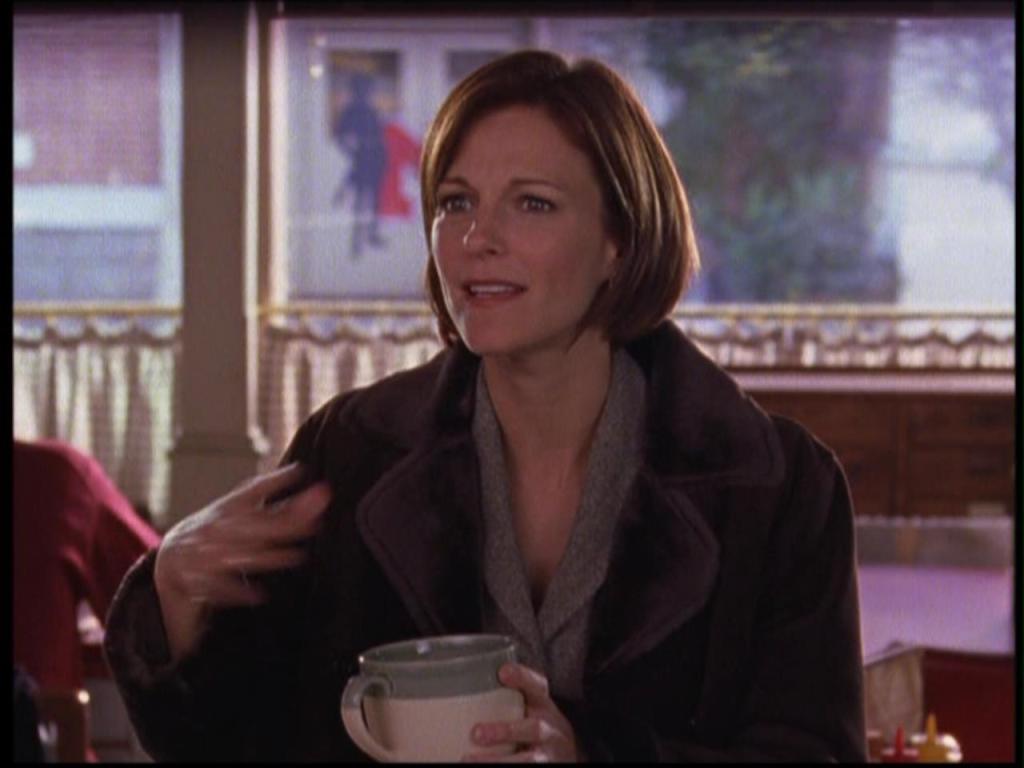
NICOLE: Well, hello Luke Danes, I’m Nicole Leahy, I’m Taylor Doose’s attorney.
Nicole Leahy is portrayed by Tricia O’Kelley. She began her acting career in Chcago, starting out in television commercials, and running a service centre for actors. After moving to Los Angeles, she had minor roles in several TV shows, including Frasier, Suddenly Susan, The Young and the Restless, and Everybody Loves Raymond, before joining the cast of Gilmore Girls. She continues to find roles on TV.
Note that Nicole has the same surname as the writer of this episode, Janet Leahy, who was also a consulting producer on the show.
The Kim family are planning a wedding for Lane’s cousin James, said to be “quiet and skulky”, so the family arranged a marriage for him with a girl from Korea who “doesn’t speak a word of English”.
This sounds absolutely awful for the young woman, coming to a country where she doesn’t speak or understand the language, to marry someone she’s never met. Amazingly, Rory and Lane express zero sympathy or concern for her, Rory even quipping that she hopes they make air holes in the box she’s shipped out in, as if she’s an animal.
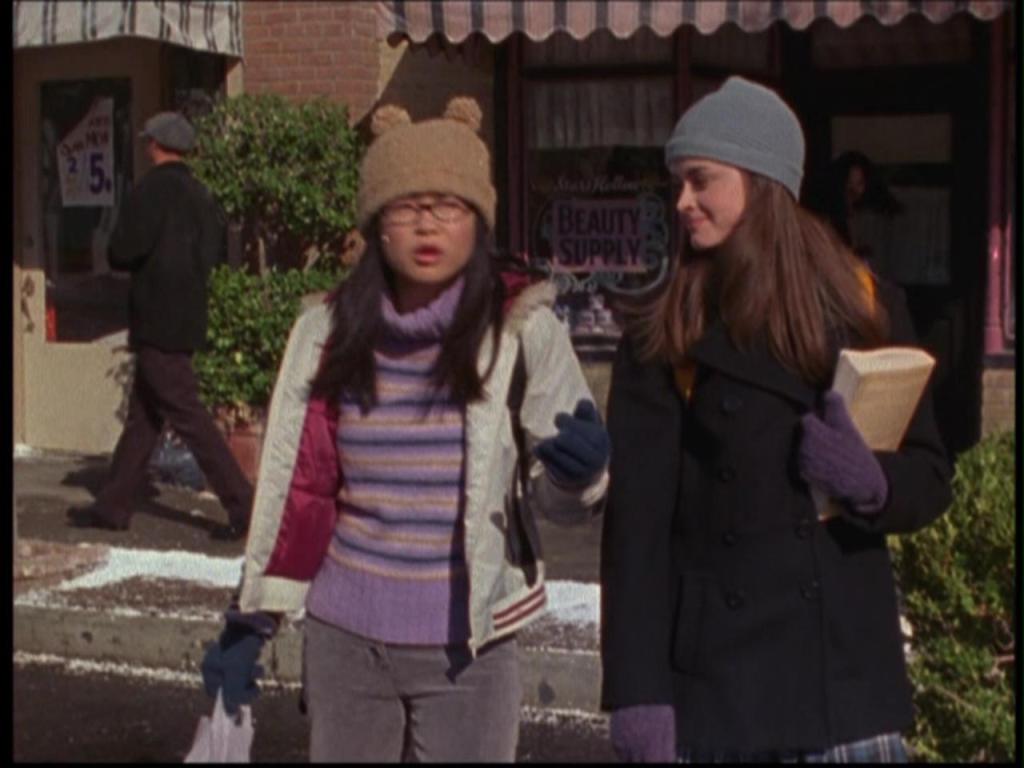
Dave will be playing at the wedding, and during the conversation, it turns out that Rory has attended many weddings at the Kim household – so many that Lane says she is accepted as an honorary member of the family. We don’t see Rory and Lane together that much, so this is a nice way to tell us that in fact they are very close and have shared many important times that aren’t shown onscreen. It doesn’t really gel with the way Mrs Kim treats Rory in the show – certainly not like a family member (mind you, she’s not very warm to her actual family members).
Notice that the book Rory is carrying in this scene is Secrets of the Flesh: A Life of Colette by Judith Thurman. Rory is shown reading this book all the way back in “Red Light on the Wedding Night”, so eighteen months later she is either still reading it, or is re-reading it. Although re-reading books is common, is re-reading biographies all that common, I wonder? I feel as if they are getting a bit lazy in finding new books for Rory to read (or be shown reading).
LORELAI: Do you need any help, please? RORY: I’m good, Pamela Des Barres.
Pamela Des Barres (born Pamela Miller in 1948), rock and roll groupie, writer, musician, and actress. She is also a former member of the experimental Frank Zappa-produced music group, the GTOs.
Des Barres is best known for her 1987 memoir, I’m with the Band: Confessions of a Groupie, which details her experiences in the Los Angeles rock music scene of the 1960s and 1970s, and she was the model for the Penny Lane character, played by Kate Hudson, in Almost Famous.
Pamela was married to English actor and singer Michael Des Barres from 1977 to 1991. You may recall that Michael Des Barres played the role of Claude in “A Deep-Fried Korean Thanksgiving”.
Rory calls Lorelai this as a tease because Zack is flirting with her. Lorelai does everything she can to deflect this unwanted attention, even though she was flattered when Dean’s dimwitted friend Todd fancied her, and he was a few years younger than Zack is now. She must be feeling a lot more confident about herself now.
TAYLOR: All the more reason to have a professional take a little looksee, huh? I mean, there’s a reason they say good lawyers make for good neighbors. LUKE: Who the hell said that?
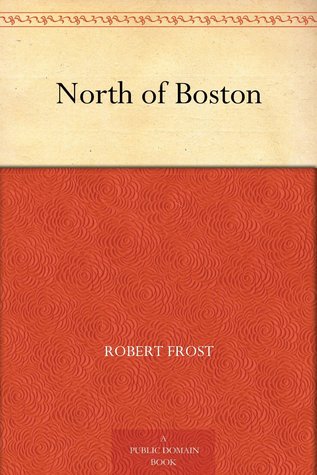
Taylor (deliberately?) misquotes the famous 1914 Robert Frost poem “Mending Wall”, which says, “Good fences make good neighbours”. Although widely quoted as a pithy piece of commonsense wisdom, the person who actually says this line in the poem is not viewed sympathetically by the poem’s narrator. (Just as Taylor is not viewed very sympathetically by the writers of the show).
Originally published in Frost’s second collection, North of Boston, it is one of the most commonly analysed and anthologised poems in modern literature.
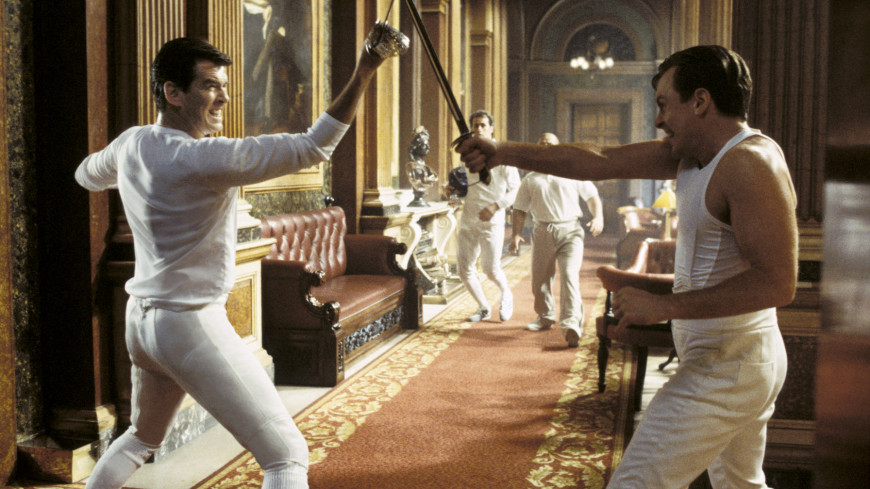
It doesn’t seem like a coincidence that the James Bond film Die Another Day had come out the previous year, in 2002, directed by Lee Tamahori, and starring Pierce Brosnan as the title character.
It has a notable fencing scene in it [pictured], where James Bond has an unexpectedly aggressive fencing bout with the villain, Gustav Graves, played by Toby Stephens. The fencing instructor in the film is played by Madonna, one of Lorelei’s favourite celebrities (she also sings the film’s theme song). Less than a month after this movie’s release, UK fencing clubs saw an increase in the number of people interested in taking up the activity.
Die Another Day was a box-office smash, and the #6 film of 2002. It received reasonable reviews at the time, but is now considered one of the worst of the films in the series. It was heavily criticised by Pierce Brosnan.
The fencing instructor at Chilton is played by Teigh McDonough, whose background was in the Chicago theatre scene.
SOOKIE: How do you hand out that kind of rejection? I could tell him I’ve become a lesbian!
A possible in-joke referencing the fact that Sookie’s character was originally conceived as a lesbian, until network executives knocked the idea on the head.
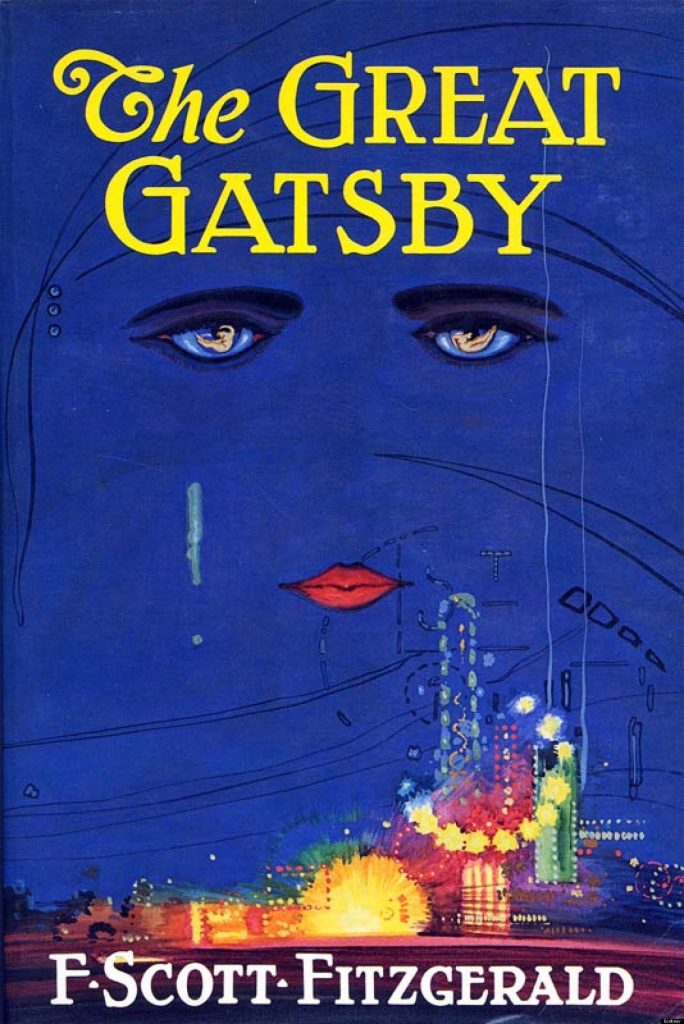
LORELAI: He’s liked you for ten years? … Wow. That is some serious Great Gatsby pining … You’re his Daisy.
The Great Gatsby, 1925 novel by F. Scott Fitzgerald. Set in the Jazz Age on Long Island, near New York City, the novel depicts first-person narrator Nick Carraway’s interactions with mysterious millionaire Jay Gatsby, and Gatsby’s obsession to reunite with his former lover, Daisy Buchanan. The novel was inspired by a youthful romance Fitzgerald had with a socialite named Ginevra King, and the riotous parties he attended on Long Island’s North Shore in 1922.
The novel received generally favourable, if restrained, reviews, but was a commercial disappointment, selling less than 20 000 copies in the first six months. When F. Scott Fitzgerald died in 1940, be believed himself a failure, and his work forgotten.
During World War II, the novel experienced an abrupt surge in popularity when the Council on Books in Wartime distributed free copies to American soldiers serving overseas. This new-found popularity launched a critical and scholarly re-examination, and the work soon became a core part of most American high school curricula and a part of American popular culture. Numerous stage and film adaptations followed in the subsequent decades.
Gatsby continues to attract popular and scholarly attention. Contemporary scholars emphasise the novel’s treatment of social class, and its cynical attitude towards the American Dream. The Great Gatsby is widely considered to be a literary masterwork and a contender for the title of the Great American Novel.
The 1974 film version of The Great Gatsby, starring Robert Redford as Gatsby, featured Richard Hermann, who plays Richard Gilmore, in the minor role of Ewing Klipspringer, the mooching party guest who decides to simply never leave.




 The Annotated Gilmore Girls