Touché

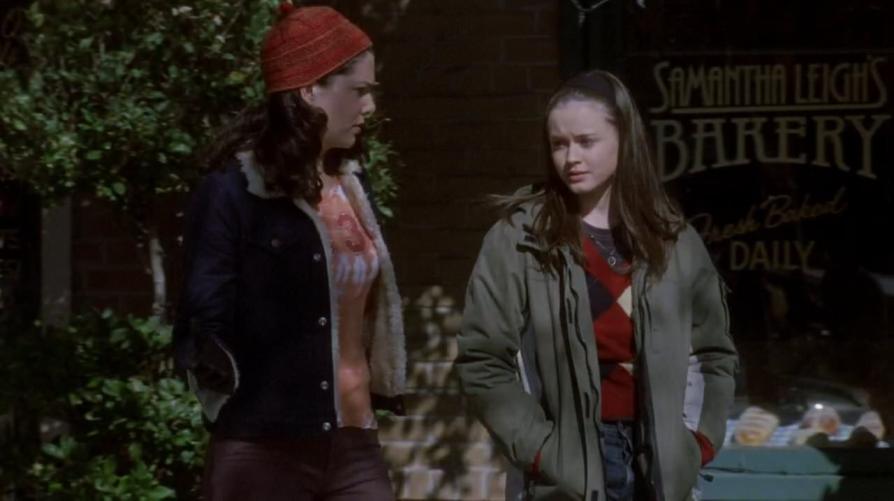
LORELAI: The both of you are going directly to hell, I hope you know that.
RICHARD: Well, at least we’ll be well rested.
LORELAI: Touché.

In the sport of fencing, touché is said to acknowledge a hit made by your opponent; it means “touch” in French. In colloquial use, it acknowledges during a conversation that the other person has made a good point at your expense. This is a slight callback to Richard’s fencing prowess in college, mentioned earlier.

Flower Girl of Bordeaux

This instrumental piece by Mexican band leader and composer Juan García Esquivel, often known by his surname only, is the “interesting music” which is playing when Dean first arrives at Babette’s and finds Rory in costume. It is from the CD that Rory got from Lane’s “miscellaneous” section, and which she described as “the weird one”.

Esquivel is considered to be the king of late 1950s-early 1960s quirky instrumental pop, or lounge music – Rory’s choice of his music shows that while she has tried to be faithful to period, she is doing so with her own idiosyncratic style, and subverting conventional expectations.

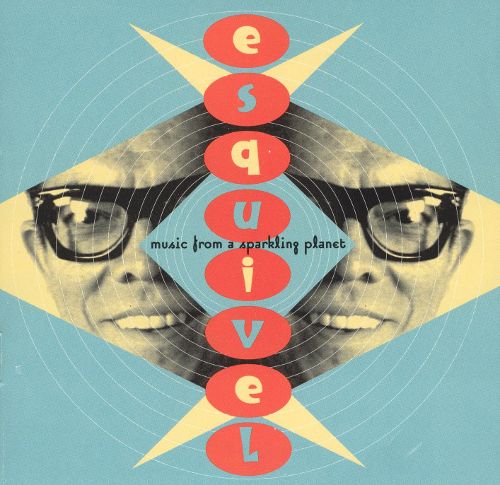
Esquivel’s music was released on a series of CDs in the 1990s; Flower Girl of Bordeaux is from the 1995 compilation album Music From a Sparkling Planet.

Notice how this is a slight callback to the “kick ass” Bordeaux wine drunk earlier in the episode; perhaps an allusion to how intoxicating Rory appears to Dean.

“Narcolepsy!”

The episode opens with Lorelai and Rory playing a word game to determine which of them has to clean out the refrigerator. Each having to pick in turn a disease to match a letter of the alphabet, Lorelai picks “narcolepsy” for the letter N – a callback to the previous episode, when Dean was re-named “Narcolepsy Boy” after falling asleep with Rory at Miss Patty’s. Even though she made peace with Dean and Rory, Lorelai is still not letting this one go.

Later in the episode we see Lorelai cleaning out the refrigerator, so presumably she lost the contest. She may have had to forfeit as a result of rushing over to the pet fair and saying, “Puppies!” on the letter P, instead of a disease.

Sausalito

EMILY: If she doesn’t want to go it must be because of something you said.
LORELAI: Mom, I promise. All I ever said to her about dances is that you go, you dance, you have punch, you eat, you take a picture, and then you get auctioned off to a biker gang from Sausalito.

Sausalito is a town in the Bay Area of San Francisco, on the north side of Golden Gate Bridge. It’s big claim to fame is that it is “the dock of the bay” in the song by Otis Redding, who once lived there. It’s also mentioned in Jack Kerouac’s On the Road as being a little fishing village full of Italians.

Lorelai’s joking explanation for Rory’s fear of dances sounds suspiciously similar to the plot of the 1967 film The Born Losers, where teenage girls are kidnapped, raped, and beaten by the Born Losers motorcycle gang in a small Californian town. We learn later that it is one of Lorelai and Rory’s favourite films. The story was based on a real life incident in Monterey, California, involving the Hells Angels, which was the impetus for Hunter S. Thompson’s first book:  Hell’s Angels: The Strange and Terrible Saga of the Outlaw Motorcycle Gangs (1966). Could this have been the book that Dean lent to Rory?