LORELAI: Hey, what’s with Narcoleptic Nate over there?
[Jackson, who is leaning against the counter with his eyes closed, moans]
SOOKIE: He’s not much of a morning person.
Slightly unbelievably, Jackson, a market gardener, isn’t much good in the mornings, and needs at least an hour of sitting around semi-comatose in his pyjamas before he wakes up. Shouldn’t he be getting up at dawn every day for work? I feel as if market gardeners are, by the nature of their profession, early risers, especially in spring. You can’t just wander in at 9.15 am with a cup of coffee, saying, “Wow traffic was really bad this morning, huh?” to the tomatoes.
RORY: Arrived where? [looks up] Aw, you are without shame.
Somehow Lorelai has led Rory all the way to Sookie’s house without Rory having the slightest idea where they are going. This is even less believable than the time Lorelai took her right to the very gates of Harvard before Rory suspected where they were. How can Rory not remember where Sookie lives?
Once again, we see that Sookie seems to live a long walk from Lorelai’s house, yet somehow it is too close to get in the car and drive to it. Rory says they are in the opposite direction to the business district, and even wonders if they are walking to the next town, suggesting that Sookie lives on the outskirts of Stars Hollow. Yet the area doesn’t look any more rural than Lorelai and Rory’s street – which makes sense, because in real life, Sookie’s house was right next to Lorelai’s!
Lorelai cannot go to the diner for breakfast, because she and Luke are still in a fight over Jess. The show doesn’t make it clear whether Lorelai arranged in advance to have breakfast at Sookie’s, or if they have turned up unannounced first thing in the morning expecting to be fed (which would not be out of character). Either way, Sookie is delighted to have extra people to cook for.
LANE: I’ve almost nailed the fill in “Ramble On”. I just have to stop hitting my face with the sticks when I pull my arms back.
RORY: John Bonham had that same problem.
“Ramble On”, 1969 song by English rock band Led Zeppelin, from their album Led Zeppelin II. The lyrics were influenced by J.R.R. Tolkien’s The Lord of the Rings, previously mentioned. It is regarded as one of of Led Zeppelin’s greatest songs.
John Bonham (1948-1980), English musician, best known as the drummer for Led Zeppelin. Esteemed for his speed, power, fast single-footed kick drumming, distinctive sound, and feel for the groove, he is regarded as one of the greatest and most influential rock drummers in history. He has influenced numerous drummers, including Dave Grohl and Neil Peart. He was posthumously inducted into the Rock and Roll Hall of Fame in 1995 as a member of Led Zeppelin.
Even though Lane is being allowed to practice on real drums twice a week, she is getting in extra practice by banging on Lorelai’s pots and pans, to show how keen she is.
LORELAI: I don’t know, didn’t they feed lead to our jumping frog or something?
RORY: Oh yeah, right after they stoned the woman who won the lottery.
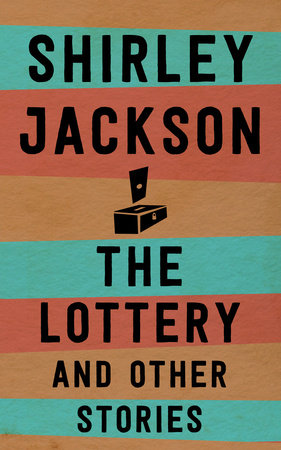
Rory references the 1948 short story, “The Lottery”, by Shirley Jackson. Set on a beautiful summer day in an idyllic New England village (based on Jackson’s own home of Bennington, Vermont), the story tells of an annual ritual known as “the lottery”, an old tradition carried into modern times, and seemingly practised to ensure a good harvest.
People draw slips of paper from a box, and a wife and mother named Tessie Hutchinson eventually “wins” by drawing the marked piece of paper. The entire village begins stoning her to death as she screams of the injustice of the lottery – an injustice that only bothers her when she is the scapegoat marked for death.
The story was first published on June 26 in The New Yorker, and proved so unsettling at the time that The New Yorker received a torrent of letters, the most mail they ever received about a story. Jackson herself received about 300 letters about the story that summer, much of it abusive or hate mail. (Some asked where they could go to watch the “the lottery” take place!).
Since then, “The Lottery” has been analysed in every possible literary and sociological way, its careful construction and symbolism noted, and its themes linked with everything from mob mentality, the military draft, and the death penalty. It is one of the most famous stories in American literature, often reprinted in anthologies and textbooks, and has been adapted for radio, television, film, graphic novel, and even (to Shirley Jackson’s bafflement) a ballet.
Apart from being a short story often read for high school English classes, this seems like a story Rory would enjoy. She has a taste for dark and “gloomy” themes, and is a fan of American Gothic. Like Tessie, Rory is from an idyllic New England town, and has been singled out for special treatment – but in her case, it’s to be loved and glorified by the town.
The story reminds us that even the most charming small towns have a dark side, and that includes Stars Hollow. Rory is no doubt thinking of Jess, vilified and forced to leave because of a minor car accident. (The name Jess even sounds a bit like Tessie).
LANE: Twice a week, on Wednesday and Friday nights at six o’clock, I could come and practice here …
SOPHIE: Please, go home.
LANE: I can’t. I can’t go home until you say yes. I have to rock, I have to! Please, I’m so begging you – let me rock!
Lane begs and pleads and cajoles and bargains, and finally gets Sophie to agree to let her practice twice a week at the music store in the evening. It’s an incredible gift Sophie has given Lane, apparently touched by her overwhelming need to live a musical life and with no one to help her.
Rory gets opportunities handed to her on a platter, while Lane has to beg a virtual stranger to let her practice drums. She’s not getting free lessons, she will have to teach herself, but at least she is going to be allowed to touch some actual drums on a regular basis.
According to Lane, her mother goes to Bible group alone on Wednesday and Friday evenings at 6 pm. In “It Should’ve Been Lorelai”, Lane has to accompany her mother to Bible class every Saturday morning, but Bible class and Bible group seem to be two different things. Perhaps Bible class is for instruction, while Bible group is for discussion. Throw in Thursday evening hymns, and most of the week seems to be taken up with religious activities.
Notice how Lane pleads with Sophie as if in the throes of passionate prayer. I can imagine Lane has prayed constantly for any chance to play music, and after many years, her prayers have been answered.
RORY: I’m sick of this. I’m sick of everyone treating me like I’m some kind of mindless idiot being led around by a guy … Everyone in my life, including you, is refusing to believe that I was just as responsible for what happened that night as Jess was.
Rory has always been treated as some sort of perfect girl that all adults love to an almost insane degree. She’s “the sweetest kid in the world“, she’s the Gilmore family’s “great white hope“, she’s the princess of Stars Hollow, daughter of the queen bee.
Now she expresses her resentment at being forced into this stifling role, because it means that she can never be granted agency or bear any consequences for her actions. If she gets into a car accident, then it isn’t Rory’s fault – she’s been led astray by “that boy”. Rory is smart enough to see that it means nobody is actually treating her as a person, that her thoughts and actions don’t matter to them – what matters to them is the imaginary Rory they have in their heads of the perfect girl.
Rory explains to Lorelai that she agreed to go for ice cream with Jess, she let him drive the car, she asked him to keep driving instead of going straight back to the diner. She was having fun with Jess, she enjoyed driving with him until the accident occurred, and she knows that she bears at least some of the responsibility for what happened.
Unfortunately, nobody listens to her at all. Lorelai stills blames Jess. Her grandparents still blame Lorelai and Dean. It’s Rory’s tragedy that she is never brought to account for her mistakes and errors, even when she demands it, and eventually this will have big consequences when she becomes an adult.
EMILY: It was that car, wasn’t it? The one her boyfriend made. Richard was dead set against letting her drive that death-mobile.
Richard’s concerns about the car now seem pretty valid. Not that a different car would have stopped Jess from swerving to hit a small animal, but a new car would have had airbags and modern safety features that might have stopped Rory from getting hurt at all in a minor accident. It’s also possible Rory would have been more wary of letting Jess drive a new car. And if Lorelai had forbidden Rory from having a car at all, then obviously there would have been no way for Jess to crash it.
Lorelai wouldn’t let her parents buy Rory a new car when she started attending Chilton, which now seems a bit unfair. She allowed Dean, her seventeen-year-old boyfriend, to build her a car instead, which was actually a much bigger gift from him than a new car from her grandparents, with way more strings attached. To an extent, Emily is justified in her anger, and correct that Lorelai, however unwittingly, helped bring the situation about by the choices she made.
Note that Emily calls a dangerous car a “death-mobile”, in a similar way to Lorelai’s description of a black limo as a “Luca Brasi-mobile“.
LORELAI: She [Karen] seems to be working out well.
RICHARD: Well, she’s no . . . Margie, but we’ll see.
Richard comes this close to saying his efficient new secretary, Karen, is “no Lorelai”. Because although Lorelai was just meant to assist Richard get started in his new business, the “help wanted” of the title was, of course, Lorelai herself.
Richard has come to have a new respect for Lorelai as a working woman, after many years of seeing her as a failure. At last he can see that running an inn does actually require business skills! He’s always had a tendency to see the executive manager of an inn as little more than a maid with higher salary.
LORELAI: Well, you scheduled this beer bash during rush hour.
A beer bash is slang for an informal party, often organised in the context of a university or office social event. It seems to be used particularly in Commonwealth countries like Canada, and doesn’t appear to be common in the US. Emily doesn’t rise to the bait of having her corporate event described as a “bash”.
Rush hour, the name given to the time of day when traffic is heaviest, the times of day when most people are going to or from work. Unlike its name, it usually lasts more than an hour, and far from rushing, traffic is generally slow.
LORELAI: Dad, I cannot come back here tomorrow … I didn’t mean that to sound so harsh. I just . . . I meant –
RICHARD: I know exactly what you meant to say, Lorelai. I got the message. Well, I won’t keep you any longer, I know how busy you are.
Lorelai only offered to give her father a hand with his office for one Saturday afternoon, but it is now Thursday, and Lorelai is still there. She has helped him buy office supplies, set up the phone system and the heating system, arranged for a DSL line to be installed, got him a tab at the lunch place across the road, and organised interviews for secretarial candidates while filling in as a secretary herself.
Now Karen has come along, who seems like she would make a perfect secretary, and Lorelai’s job is surely done. Yet Richard doesn’t want her to leave. He’s being selfish and completely unreasonable – Lorelai has an actual job to do, for a start – but you can see he is adoring having Lorelai around, and learning to appreciate her briskly efficient head for business. This is the flip-side to “Richard in Stars Hollow” when he did nothing but criticise his daughter. With “Lorelai in Hartford”, suddenly Lorelai has become indispensable to him.
This is the second time in less than a month Lorelai has taken off from her own job in order to work for free for a friend or relative! How is she doing this?






 The Annotated Gilmore Girls