Terms of Endearment

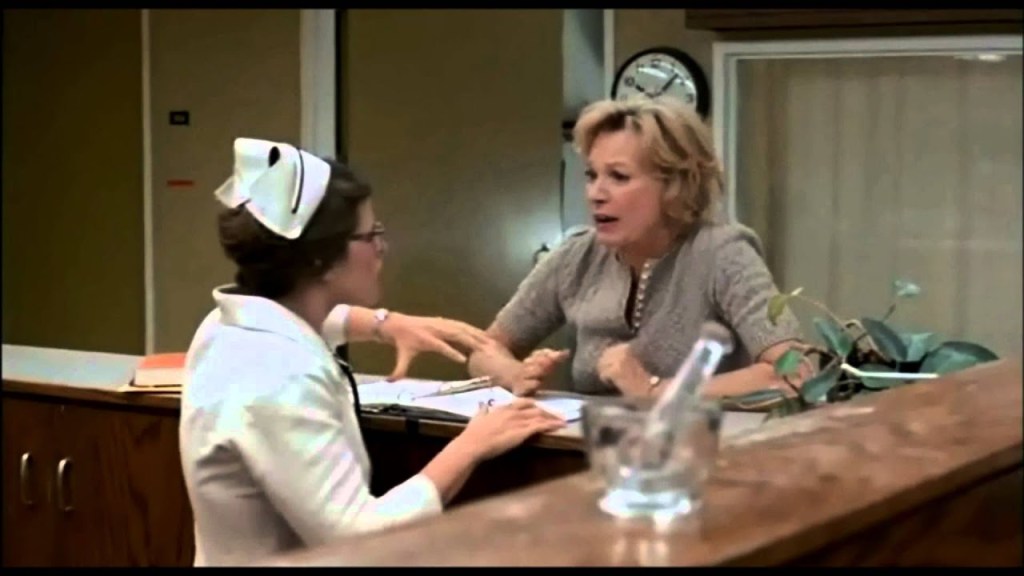
LORELAI: Hey, do you remember in Terms of Endearment, that scene where Shirley MacLaine is in the hospital and freaks out because they won’t give her daughter a shot? She got that from me and she toned it down a little.

Terms of Endearment, a 1983 family comedy-drama film directed, written and produced by James L. Brooks, and adapted from the 1975 novel of the same name by Larry McMurty. The film covers thirty years of the relationship between Aurora Greenway, played by Shirley MacLaine, and her daughter Emma, played by Debra Winger.

Terms of Endearment received critical acclaim and was the #2 film of 1983. It received five Academy Awards, including Best Picture, Best Director, and a Best Actress Award for Shirley MacLaine.

In the film, Aurora and Emma have a difficult but very close relationship. Emma is diagnosed with a terminal illness, and Aurora stays by Emma’s side throughout her treatment and hospitalisation, proving to be a fierce advocate on her behalf. There is a memorable scene where Aurora screams at a nurse, insisting that her daughter receive a shot (of pain relief) immediately when she felt they were being too slow to administer it.

Note that Lorelai does the same thing Emily did at the hospital when Richard was admitted, even using a movie reference to get her point across.

Overseas Correspondent

JESS: You’re gonna be an overseas correspondent? … You’re gonna crawl around in trenches and stand on top of buildings and have bombs going off in the background and some wars raging all around you?

RORY: What, you don’t think I can do it?

JESS: No, I do. Just sounds a little too …. Just sounds a little too rough for you.

Jess is the first person to suggest that Rory doesn’t have what it takes to be a foreign correspondent or war correspondent, like her hero, Christiane Amanpour. He’s not trying to put Rory down, and he specifically says that she is capable of it, he genuinely doesn’t think it’s a good fit for her, or be something she’d enjoy.

Of course, he’s right – Rory has led a very sheltered life in the safe haven of Stars Hollow, and according to Lorelai, hates the outdoors so much she wouldn’t walk on wet grass until she was three. And Rory actually met a journalist who travelled to dangerous international locations, Rachel, and she doesn’t seem to have bothered even talking to Rachel about it.

Kurt Cobain and Courtney

RORY: Do not give me that whole ‘I’m so misunderstood, Kurt Cobainy’ thing. You are way stronger than that and I don’t even wanna hear it. You have to go to college …

JESS: So, Courtney, what about you?

Kurt Cobain (1967-1994), singer, songwriter, and musician, frontman of the grunge rock band Nirvana, serving as the band’s lead vocalist, guitarist, and primary songwriter. Through his angst-fuelled songwriting and anti-establishment persona, Cobain’s compositions challenged the conventions of rock music. He was often heralded as a spokesman for Generation X and is considered one of the most influential musicians in the history of alternative rock.

Cobain struggled with depression, heroin addiction and the pressure of fame, and was found shot dead at the age of 27, apparently by his own hand. He was posthumously inducted into the Rock and Roll Hall of Fame, along with his fellow band members, in 2014.

Courtney (Love), Cobain’s wife, previously discussed.

Rory pretty much gives Jess the same talk that Lorelai did when he arrived in Stars Hollow – if anything, she is less sympathetic, telling him to quit the “misunderstood act”, and saying he is way too strong to be dragged down by his circumstances.

Jess is far more receptive to hearing this from Rory. He probably appreciates not being pitied, and likes the suggestion he is tough enough to survive anything. Rory may be the first person to openly tell Jess he can achieve anything he wants, and once again, she is very keen to urge a male love interest to attend college.

Note that as Rory casts Jess in the role of Kurt Cobain, he is equally quick to cast her as Kurt’s wife – an obvious suggestion that Jess considers her to be his “other half” that Rory surely cannot miss. As Kurt and Courtney were something of a doomed, destructive couple, it doesn’t feel like a good omen for Jess and Rory.

Jess’ Magic Trick

RORY: Get your books or I’m going home.

JESS: Wait there. [does magic trick]

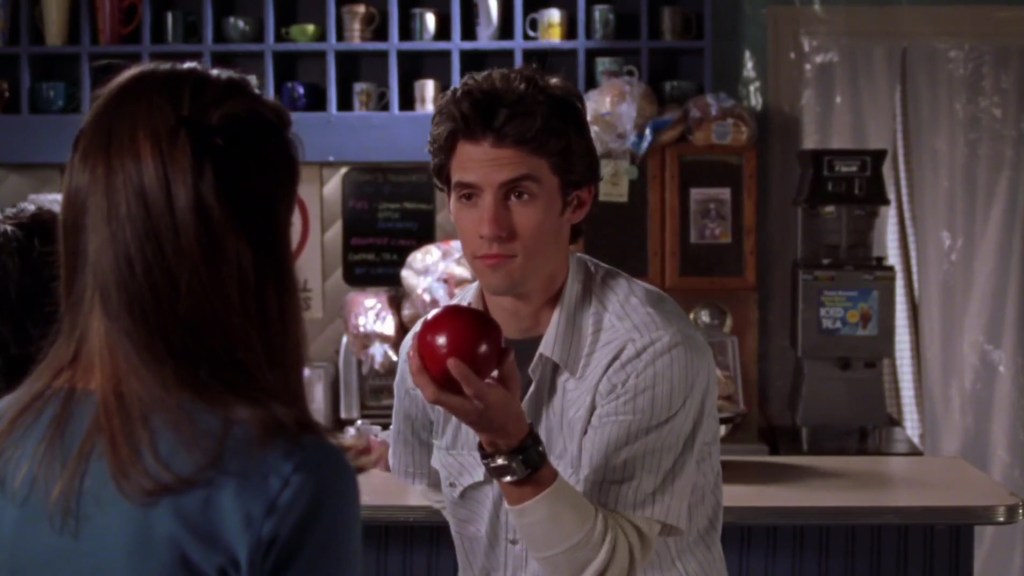
At the end of the trick, Jess presents Rory with an apple by sleight of hand. It’s an apple for the teacher, but also a potent symbol of sexual temptation – Jess is the cunning serpent in the Paradise of Stars Hollow. Although Rory receives it with a bashful smile, clearly charmed, she never takes a bite from the apple – she’s a virginal Eve, not ready to give into temptation.

“A mind is a terrible thing to waste”

JESS: Well, hurry – a mind is a terrible thing to waste.

A mind is a terrible thing to waste is the marketing slogan of the United Negro College Fund, adopted in 1972, and one of the most widely recognised advertising slogans in the US. Despite its name, the UNCF has scholarships open to people of all ethnic backgrounds, although the majority of recipients are African-American.

This is something said as a joke which is all too true. On some level, Jess must realise that he is letting his good mind go to waste, or that it is being wasted.

Lying to Dean

RORY: Listen, just in case, and I don’t think he will, but if Dean calls, will you tell him I’m with Lane? ….

LORELAI: How come I have to lie to Dean?

Lorelai balks at lying to Dean, and suggests to Rory that if she feels as if she needs to lie to Dean about tutoring Jess, then maybe she shouldn’t be tutoring him. Yet when Rory lost her bracelet, Lorelai encouraged her to lie to Dean. Has she realised the error of her ways, or is she simply being sulky and stubborn, and trying to stop Rory spending the evening alone with Jess?

Lorelai says that if Rory needs to lie about Jess, maybe she shouldn’t tutor him. She never considers saying that if Rory is too frightened to be honest with Dean, then maybe she shouldn’t be with him.

“I love the blue collar work”

KIRK: Don’t get me wrong, I love the blue collar work. I enjoy the plight of the everyman. But as much as the mail letter delivered and the DSL line installed and the latest J. Lo flick rented fills me with a deep sense of pride …

Although something of an inside joke, this does provide confirmation that the “Mick” who was going to install a DSL line for Lorelai was in fact Kirk. Perhaps he got the job using a fake name, or stole/was given someone else’s name tag?

It also confirms that Kirk is doing all his jobs simultaneously, as he refers to delivering mail, installing DSL lines, and working at the video store as all jobs he is currently doing. Although he mentions it now, we don’t see Kirk working as a mailman until a later season.

Kirk’s numerous jobs are a tribute to Amy Sherman-Palladino’s father Don Sherman, who likewise took on a multiplicity of jobs to support his family while working as a comedian.

Slaughterhouse-Five

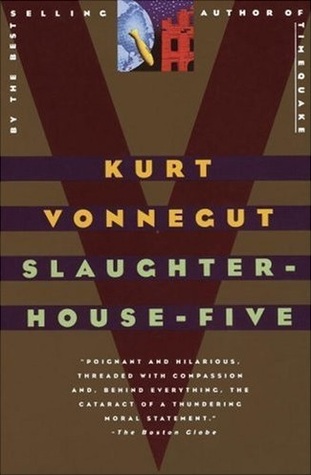
This is the book Jess is reading in this episode, that he tells Luke is not for school.

Slaughterhouse-Five is a 1969 semi-autobiographical science-fiction anti-war novel by Kurt Vonnegut. The story, told in a non-linear fashion by an unreliable narrator, relates the life and experiences of a man from upstate New York named Billy Pilgrim, from his early years to his service during World War II, and post-war years – his experiences include time travel and alien abduction. The book centres on Billy’s capture by the German Army, and his survival of the Allied firebombing of Dresden as a prisoner-of-war.

Categorised as a postmodern, metafictional novel, it is characterised by Vonnegut’s signature style, with simple sentences underpinning a text of irony, sentimentality, black humour, and instruction. The short, declarative sentences give the impression of reading a factual report, while the focus shifts between the writer’s perspective as someone who met Billy Pilgrim to an omniscient third person narrator. The first sentence is, “All this happened, more or less”. It is considered one of the best first lines in American fiction. The sentence, “So it goes”, is used as a repetitive refrain throughout.

Slaughterhouse-Five received mostly positive reviews, and became a bestseller, staying on the New York Times Bestseller List for sixteen weeks. It has been adapted for stage and radio, and been turned into both a film and a graphic novel.

The novel is controversial, with many attempts of censorship against it, especially in school and college libraries. This makes Jess’ reading of it at school seem like a deliberate attempt to draw attention to himself. A story about someone who has been through terrible trauma until they find life meaningless seems to be something which Jess relates to.

The Movies from Taylor’s Catalogue

All the films that Lorelai mentions in Taylor’s catalogue are made by Monogram Pictures, a film studio that produced mostly low-budget films between 1931 and 1953, after which they were known as Allied Artists Picture Corporation. Lacking the resources to deliver high production values and big stars, they instead offered plenty of action and adventure. They launched the careers of many actors who went on to become stars, and provided a haven for good actors whose careers had stalled.

Monogram/Allied Artists continued until 1979; their library is now owned by Warner Bros, MGM, and Paramount, while a few are in the public domain – although none of the films listed here.

Arctic Flight [pictured]
A 1952 drama film directed by Lew Landers, about a bush pilot, played by Mike Wein, flying in the Arctic. There is a Soviet spy adventure involving a polar bear hunter, and romance with a schoolteacher, played by Lola Albright. It’s a B movie, considered unpretentious and well-made.

Killer Shark
A 1950 B movie directed by Budd Boetticher, and starring actor Roddy McDowell, who had been a successful child actor in England before moving to America with his family. He went on to star in some major films during the 1960s and 1970s, and had a lengthy career.

Where Are Your Children?
A 1943 teenage crime film directed by William Nigh and starring former child star Jackie Cooper. It was more successful than the studio had expected, and they made a sequel the following year called Are These Our Parents?

Sudden Danger
A 1955 film noir crime drama directed by Hubert Cornfield and starring Bill Elliot as the police detective investigating a possible murder, and Tom Drake as the man who hopes to clear himself by looking for clues on his own. The movie was part of a five-film series, and is considered a solid effort with a good cast.

Suspense
A 1946 film noir ice skating film directed by Frank Tuttle, and starring Barry Sullivan and British former Olympic skater Belita. It was the most expensive film Monogram ever made, costing $1.1 million. It was panned by critics, but a box office success.

Lorelai and Rory love watching “bad” movies, but suddenly they get awfully snobbish about putting a B movie on in the town square. Apparently it’s fun to watch a B movie, but embarrassing to publicly screen one.

None of these films were terrible failures, or considered unwatchable. I’m not sure why they don’t seem like a viable alternative to watching The Yearling for the third year running.

Einstein

LUKE: Believe me, I’m the Einstein of the clan.

Albert Einstein (1879-1955), German-born theoretical physicist, widely acknowledged as one of the greatest physicists of all time. Einstein is best known for developing the theory of relativity, but he also made important contributions to the development of the theory of quantum mechanics – relativity and quantum mechanics are the two pillars of modern physics.

His intellectual achievements and originality resulted in the name “Einstein” becoming synonymous with the word “genius”, so that Luke is saying that he is the genius of his family. In fact, Jess looks to be the genius of the family we know so far, and in a future season, Luke will meet a previously unknown relative who appears to be the real family genius.