Beethoven

Todd tells Lane that his favourite movie is Beethoven, and Lane incredulously asks, “The one with the dog?”.

Beethoven is a 1992 family comedy film directed by Brian Levant and written by John Hughes (as Edmond Dantès). It is about the antics of a big friendly St Bernard dog named after the composer Ludwig van Beethoven, and the way he protects the family who have adopted him. The movie received tepid reviews but was enough of a commercial success to spawn numerous sequels and a television series.

Todd describes his favourite scene as the one where a little dog is running around with a cabbage in its mouth. During the movie, Beethoven’s family help him escape from an experimental lab run by an evil vet, and they release all the other dogs who have been held there. As the evil vet’s henchmen chase the dogs through a marketplace, a Golden Retriever puts an entire cabbage in his mouth, and spends the rest of the scene hanging onto it.

It’s one of those blink-and-you’d-miss-it funny background scenes, so this actually provides a glimmer of hope in regard to Todd’s intelligence. He clearly has a keen eye for detail (although Golden Retrievers are not really “little dogs”; maybe he means it in an affectionate way.) In the Gilmore Girls universe, perhaps even the dimmest people have a knowledge of obscure movie trivia!

“Major in Gym”

TODD: If I major in gym, I only have to take four classes my senior year.
LANE: Oh, cool
[Pan to Rory and Dean]
RORY: Gym?
DEAN: We work on our bikes together. He’s got the good tools.

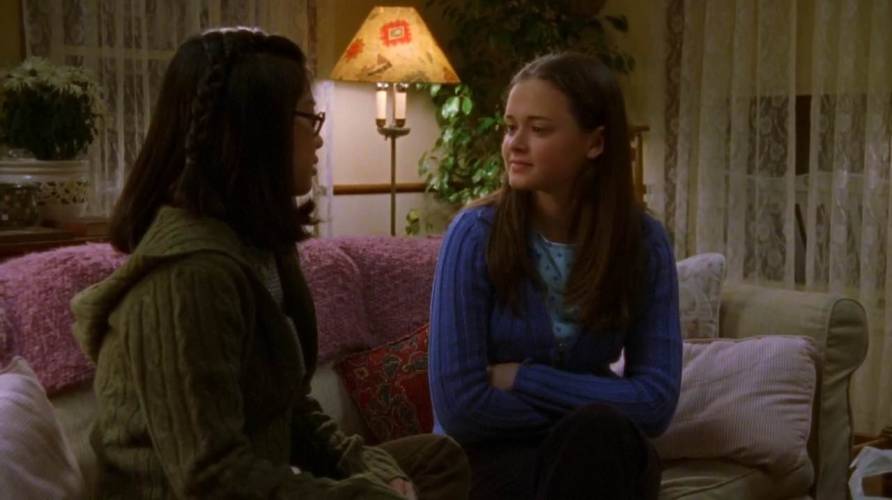
Lane is clearly frustrated by Todd’s apparent lack of intelligence, but their conversation is also making Rory (who has been eavesdropping) doubt Dean’s intellectual capacity. Having Todd as a best friend probably devalues Dean as a boyfriend in Rory’s eyes, despite his excuse that Todd has all the good tools to work on their bikes together.

This comment also reveals that Dean actually does have a motorbike, even though he told Lorelai that he didn’t in Kiss and Tell. Lorelai didn’t believe him, showing that she has excellent instincts. If the motorbike is still not in working order, or wasn’t then, he may have convinced himself he was technically telling the truth.

“Really nice thing”

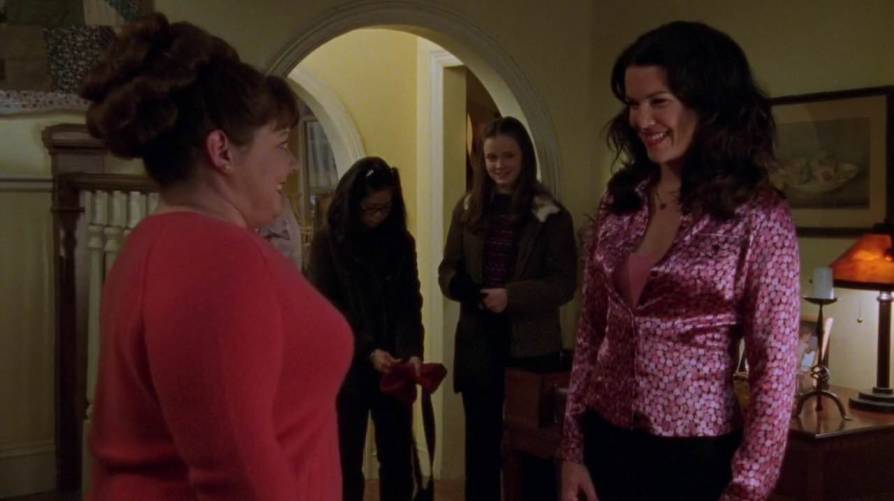
SOOKIE: This is a really nice thing you’re doing for me.
LORELAI: Anytime Sookie.

Lorelai might not have done anything to promote the relationship between Sookie and Jackson, but now that Sookie has made her choice, Lorelai is doing everything she can to make their night special. She goes above and beyond for Sookie in this episode, showing that she really can be a good friend and is determined to make up for her thoughtless comment about Sookie’s single status in the previous episode.

“Your name wouldn’t be Lithium?”

[Rory sitting on a bench reading. Dean come out, sees her and goes and sits with her]
DEAN: Is there anything in there about me?
RORY: I don’t know. You name wouldn’t be Lithium would it?

Rory is reading The Unabridged Journals of Sylvia Plath, edited by Karen V. Kukil. It was first published in 2000. The American poet, novelist, and short story writer Sylvia Plath (1932-1963) suffered from clinical depression which at times was severe.

Plath was hospitalised in a psychiatric ward for several months while in college, receiving electroconvulsive therapy, and required intermittant psychiatric support for the rest of her life. She died a suicide at the age of 30.

Rory may have been drawn to Sylvia Plath’s life story because she was highly driven academically, and a star student in both high school and college. She easily won prizes for poetry, short story-writing, and journalism, and one of her early writing achievements was being chosen as part of a group of college-aged guest editors for fashion magazine Mademoiselle.

On a darker note, among the several factors that pushed Plath into her first suicide attempt was a rejection from a Harvard summer school writing class. Sylvia Plath is a potent example to Rory of the pressures an ambitious young woman might face at college.

I’m actually not sure what Rory means by her comment, as to my knowledge Sylvia Plath was never treated with lithium. It may be an error by the writer (Amy Sherman-Palladino). In any case, it’s impossible not to feel that her quip is completely wasted on Dean.

Lane’s Date with Todd

LANE: So anyhow, I was wondering if you could talk to Dean about maybe talking to Todd about me.
RORY: I guess.
LANE: And then maybe you could ask Dean to ask him out – for me.

It’s something of a puzzle why Lane doesn’t already know Todd well enough to ask him out herself since they have been attending the same small town high school for two years together. It’s possible that Todd is a relatively new student, starting the same year as Dean, in September 2000. Even so, she’s still had several months to talk to him a few times and decide whether she really likes him, or is just attracted to him. We must assume that Lane’s social skills with the opposite sex are very poor, as the incident with Rich Bloomenfeld demonstrated.

Yoko Ono

LANE: A very misunderstood artist and the Beatles would’ve broken up anyways.
RORY: Have you shared this theory with anyone?
LANE: I know it, Yoko knows it, Sean knows it. Julian’s still in denial but what can you do?

Yoko Ono (born 1933) is a Japanese artist, singer, songwriter, peace activist, performance artist, and film-maker. She is famous for being the second wife of British singer-songwriter John Lennon, one of the Beatles. They met in 1966 and began a relationship while John was still married to his first wife, Cynthia, and were married in 1969.

The Beatles disbanded in 1970, and it is common to blame Yoko Ono as one of the primary causes of the band’s break up. Lennon and Ono spent all their time together, even when The Beatles were recording, which went against the band’s unspoken agreement not to allow wives or girlfriends into the studio. Ono frequently made comments and suggestions on the recording process, encouraged by Lennon, but to the other band members’ irritation.

However, The Beatles had experienced a number of stresses, including the death of their manager Brian Epstein in 1967, and the rise of George Harrison as a composer in his own right, with each member of the band beginning to have solo projects of their own. Although Ono placed further pressure on the band and contributed to feelings of ill-will, Lane is correct that The Beatles would have broken up anyway.

Sean Lennon (born 1975) is the son of John Lennon and Yoko Ono, while Julian Lennon (born 1963) is the son of Lennon and his first wife Cynthia. One reason why Lane says Julian might be “in denial” is that Julian was excluded from his father’s will, with the majority of the estate going to Ono; Julian sued the estate and in 1996 reportedly accepted a settlement of £20 million.

Despite the many factors working against their relationship, Julian is said to be on polite terms with Yoko Ono, and gets on very well with Sean. I’m not sure Julian has ever expressed an opinion on whether Ono broke up The Beatles (and by this stage, probably doesn’t care anyway).

Yoko Ono made several albums in collaboration with John Lennon, while also releasing solo albums – her solo debut album was in 1970. Although critics dismissed her work for many years, in November 2001 she brought out a concept album which was critically acclaimed, so Lane (and the show) was slightly ahead of the trends by recognising her as a misunderstood genius.

Once again, Lane demonstrates a sympathy for creative artists of Asian heritage. Perhaps she can picture herself as another Yoko Ono, bringing out avant-garde pop music with a feminist slant to it.

Lane’s New CDs

For the purposes of this episode, it is important that we understand Lane is a fanatic about popular music. Just in case we forgot that, the episode begins with Lane visiting Rory to show her the big stack of new CDs she has just bought.

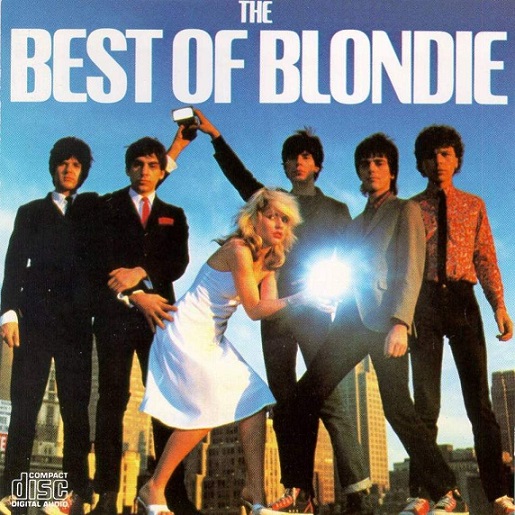
The Best of Blonde is the first compilation album from the American new wave band Blondie, which was released in 1981. The album went to #30 in the US, but was much more successful around the world, getting to #4 in the UK, and #1 in Australia and New Zealand.

Kraftwerk is a German electronic music band formed in 1969, founded by Ralf Hütter and Florian Schneider. Pioneers in electronic music, they were among the first to popularise the genre, and has been highly influential in synthpop, techno, ambient, hip-hop, and club music. Their 1974 album Autobahn was their first to fully embrace the electronic sound, and the title track became a surprise hit around the world. The album got to #7 in Germany, #5 in the US and #4 in the UK.

Young Marble Giants were a Welsh post-punk band formed in 1978, with Alison Statton providing vocals for the instrumentation of brothers Philip and Stuart Moxham. Their minimalist sound was in sharp contrast to the aggressive punk rock dominating the era. They only released one album – Colossal Youth, which came out in 1980. It is one of the most highly-regarded indie recordings of all time and a major influence on Nirvana.

Among the CDs you can see a copy of Up on the Sun, the 1985 album by American rock band the Meat Puppets. The album has a more psychedelic feel to their earlier hard rock punk albums. The band was a great influence on bands such as Nirvana, Soundgarden, and Dinosaur Jr.

You might wonder how Lane managed to afford all the CDs she bought. She worked part-time at the antiques store, and later we learn her parents paid her $100 a month in wages. It seems that Lane also bought most of her music second-hand, and says that she loves a bargain. Later on, we find that Lane buys her CDs from Amazon, the same place Rory buys her books.

“Ask Skippy”

LORELAI: I freaked out. I’m so sorry. I never meant to treat you like that; I’m not very good at this, ask Skippy.

When she apologises to Max for the awful way she treated him, she mentions Skippy the hamster, that she abandoned rather than care for. Skippy was also treated appallingly, and Lorelai recognises that the hamster is symbolic of the way that she tends to dump people rather than deal with any problems in the relationship.

“Would you like to go out to dinner some time – with me?”

Sookie and Jackson have been shown doing nothing but bicker over the quality of his produce since the start of the show. In the conventions of romantic comedy, when two people keep arguing “like an old married couple”, the audience knows they are destined to be together some day.

Sookie is genre-savvy enough to know that the person she has been bickering with must be her romantic destiny: Jackson even acted like a jealous lover when Sookie checked out somebody else’s fruit. She takes immediate action, showing that she really is quite the relationship expert.

Her choice of Jackson is a practical one for another reason: she said she didn’t have time to meet people as she was so busy at the inn, so it makes sense for her to ask out someone she knows through work.

It is notable that while Sookie is always interested in Lorelai’s potential relationships, and gently pushes her toward Luke (her obvious romantic destiny in the show), Lorelai doesn’t reciprocate. She’s never said anything to Sookie except to grumpily tell her that as a long-term single, her opinion on relationships is worthless, and has never given her the tiniest nudge towards Jackson, who they both see nearly every day.

New Poems of Emily Dickinson

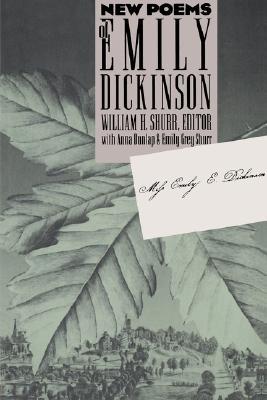
This is the book that Rory is reading in the school cafeteria just before she confront Paris about the the gossip she has been spreading about Lorelai and Max.

New Poems of Emily Dickinson, edited by William H. Shurr and others, presents 500 new poems that were found embedded in Emily Dickinson’s correspondence. The book was first published in 1993, and republished in 1999.

This isn’t the textbook that the English Literature class used to study Emily Dickinson, and that assignment is over anyway. It shows that Rory continues to follow up and expand on things she learns at school for her own interest and satisfaction – one sign of an excellent student.