“We could hurt Rory”

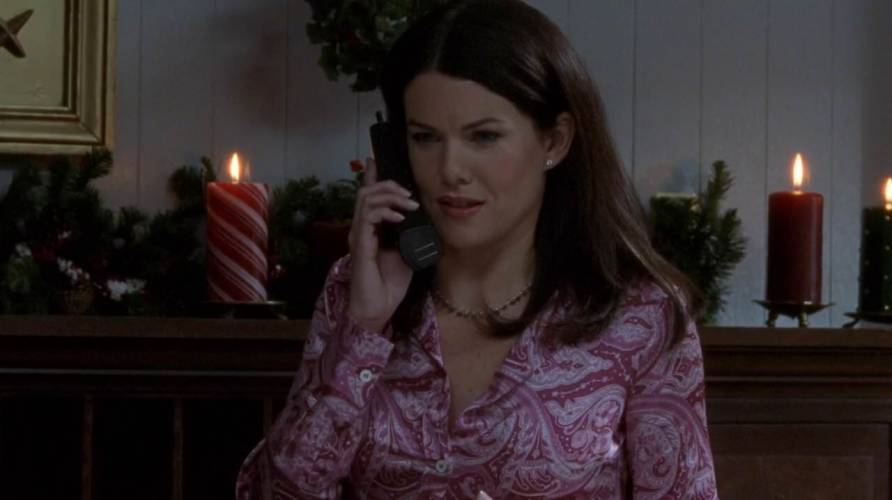
LORELAI: Look it is what I’ve been trying to tell you all along. This is a family. Rory and I, you walked into a family, but you weren’t listening and now she’s getting attached and I’m afraid she’s gonna get hurt.
MAX: So you solution to all of this is not to return my calls
LORELAI: It just took me a while to figure things out and it all came clear when I realized how much we could hurt Rory.
MAX: Don’t you mean how much we could hurt Lorelai?

After deciding that Rory is old enough for Lorelai to openly date men with her full knowledge, Lorelai suddenly panics when she worries how a break up with Max might affect Rory. It’s a little bit unbelievable, as Rory has hardly “got attached” to Max – apart from seeing him at school, they had one very brief conversation together when he came to pick Lorelai up for a date.

Max immediately calls her out on it, seeing that what Lorelai really fears is getting hurt herself. It’s Lorelai who is “getting attached” to Max, and fears the consequences to herself if they ever broke up. Once again, she is using Rory as an excuse to avoid a long-term committed relationship.

Rory later says she can’t believe Lorelai is “blaming her” for her relationship difficulties with Max, showing that she doesn’t appreciate being used an excuse.

When Lorelai meets Max at the cafe, she admits that worrying about Rory very soon jumped to worrying about herself.

Nancy Kerrigan and Tonya Harding

As they prepare for their ice skating date, Rory identifies herself as Nancy Kerrigan [pictured on the right], while Lorelai says she is Tonya Harding [left].

Nancy Kerrigan (born 1969) is a former figure skater, who became the US Champion in 1993. In 1994 she was clubbed in the knee by an assailant hired by the ex-husband of her rival Tonya Harding (born 1970), in an attempt to break her leg so that she would be unable to compete at the Winter Olympics.

The attack took place at the US Figure Skating Championships, ruling her out of the competition, which was won by Harding. Kerrigan made a good recovery from her injury (her knee was only bruised, not broken), and won silver at the 1994 Winter Olympics, held seven weeks later.

In March 1994, Harding pleaded guilty to conspiring to hinder prosecution of the attackers. She was fined and sentenced to community service, and was also forced to withdraw from the 1994 World Figure Skating Championships and to resign from the US Figure Skating Association. She was later stripped of her 1994 US Championships title and banned for life from participating in professional ice skating events in any capacity.

The fevered publicity generated by the scandal created a boom in professional ice skating, and may have even contributed to Rory’s interest in the skating film Ice Castles; like Lexie in the film, both Kerrigan and Harding came from modest backgrounds.

It is entirely within character that Rory identifies with the pageant-pretty “ice princess” Kerrigan who learned to fit in with the social conventions of the skating world, while Lorelai identifies with Harding – generally seen as an overly-dramatic emotional mess from the wrong side of the tracks. Harding also had issues with her mother, just as Lorelai does with Emily.

Max and Rory’s Code Names

When Rory says she is uncomfortable calling her teacher by his first name outside school, even though he is also her mother’s boyfriend, Max suggests they use code names for each other. He offers to call her “Rebecca” – probably just because it starts with the same letter as Rory, and was then a common name for girls of Rory’s age (it also has the same number of syllables as her full name, Lorelai).

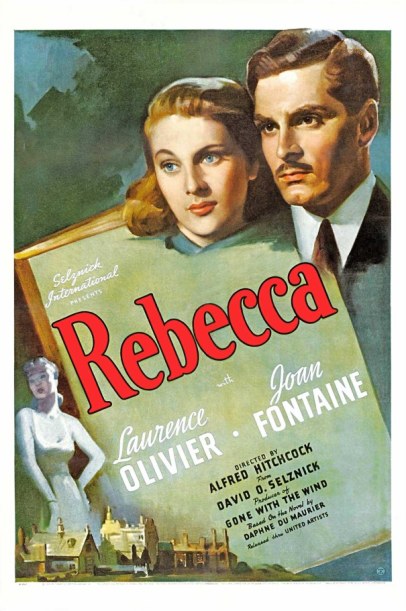
From their ensuing conversation, we can tell that Rory immediately links the name with the 1940 romantic mystery film Rebecca, directed by Alfred Hitchcock and based on the 1938 best-selling novel of the same name by Daphne Du Maurier. Rebecca was the #1 film of 1940, and won two Academy Awards, including Best Picture; it is still regarded as a classic of Gothic romance and psychological drama.

The character of Rebecca never appears in the film, as she is already dead, the first wife of Max De Winter (Laurence Olivier) whose memory continues to haunt him and his new wife (Joan Fontaine). Rory feels that, like Rebecca, she should never have been seen – her role was to disappear before Max arrived for his date, as per the “Gilmore Dating Rules”.

Disturbingly, Max De Winter in the film secretly hated Rebecca, who led a scandalous life, and was glad when a struggle between them ended with her death. You can’t help but feel that Rory subconsciously believes that Max would prefer it if she didn’t exist, and perhaps even that she is a “scandal” as Lorelai’s illegitimate child to another man – the cause of Rebecca and Max’s final fight was because she (falsely) claimed she was bearing another man’s child, who would inherit his estate.

Because Rory already has her mind on Hitchcock films, she offers to call Max “Norman”, saying that Psycho was on (television?) earlier that evening. (Note that she cannot call him by the film name from Rebecca, as he is already named Max).

Psycho is a 1960 thriller directed by Alfred Hitchcock, based on the 1959 novel of the same name by Robert Bloch. Filmed on a low budget, the film received mixed reviews on release, but was a massive box office success, and the #2 film of 1960. Now Hitchcock’s best known film, it is regarded as one of the most influential films of all time, and one of the greatest in its genre.

Rory calls Max after Norman Bates (Anthony Perkins), the murderer in the film. Norman Bates first appears to be a pleasant-looking, rather shy young man, but is subsequently exposed as a deranged killer who had a perverted relationship with his mother – one of his first victims. Rory could not make it clearer that she secretly fears Max wants her out of the way, and feels threatened by him dating her mother. Possibly Max’s pleasant manner to her is, in the depths of her mind, hiding something much more sinister.

Struggling to come up with another name, she can only think of “Alfred” after Alfred Hitchcock, the director of Rebecca and Psycho. Known for his voyeuristic camera style, his films often involve characters with a problematic relationship with their mothers, and beautiful yet icy women. Maybe Rory has already subconsciously picked up that there are problems between Lorelai and Max.
 

“The doggy version of you”

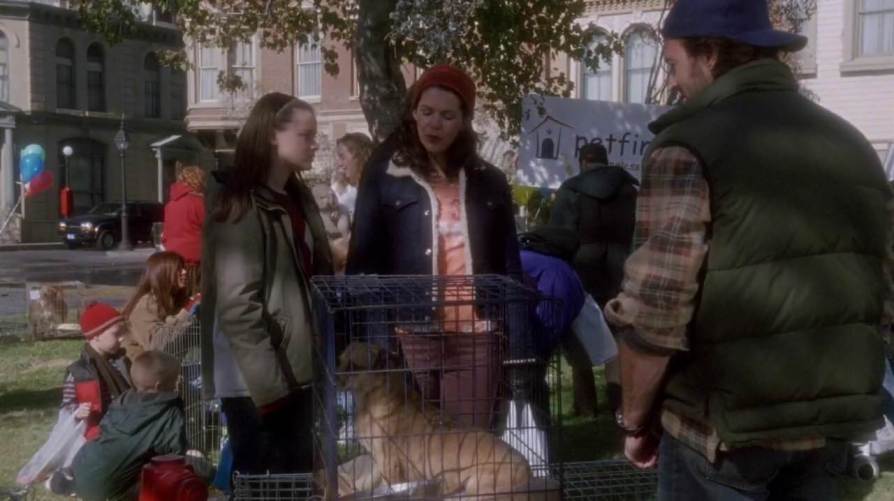
RORY (reading from card): “Buttercup is a special dog. She’s extremely skittish and tends to react badly towards blonde haired females, brunet males, children of either sex, other animals, red clothing, cabbage, or anyone in a uniform.”
LORELAI: (to Luke) Hey, we just found the doggy version of you.

Naturally Lorelai would be attracted to a dog version of Luke – who is of course doggedly loyal to Lorelai.

The dog Lorelai eventually gets is even more neurotic and weird than Buttercup.

“You are your mother’s daughter”

RORY: Nothing like that [she and Dean being out all night] will ever happen again. I swear.
LORELAI: Don’t swear.
RORY: Why not?
LORELAI: Because you are your mother’s daughter.
RORY: What does that mean.
LORELAI: It means things can happen, even when you don’t really mean for them to happen.

Even though Lorelai believes Rory when she says nothing happened between her and Dean, she still doesn’t trust her daughter. That’s because she sees Rory as Lorelai Mark II, and as she doesn’t trust herself, she doesn’t trust Rory. Unfortunately she is setting Rory up to fail at relationships and birth control with her “no matter how hard you try, you will still screw things up” message.

Christmas Wrapping

Lorelai has this song playing in the background while she waits for her pizza to arrive, until Dean knocks on the window.

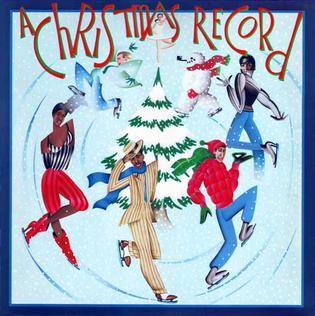
Christmas Wrapping is a Christmas song by American new wave band The Waitresses. It was written for a 1981 compilation album called A Christmas Record, put out by ZE Records, a New York “hipster” record label. The album was re-released in a “special edition” in 1982. Christmas Wrapping didn’t chart in 1981, but reached #45 in the UK after the 1982 re-release. It has often been included on Christmas albums in the UK, and re-recorded several times.

The song is about a busy single woman who decides not to bother with Christmas that particular year, turning down invitations and planning to spend the day alone. On Christmas Eve she runs into a man she had earlier made a connection with, and winds up having a happy Christmas with him after all.

Lorelai is also planning to give the Christmas party a miss to be alone for the evening, but she does end up spending time, not just with a man that she likes, but with her daughter and parents as well. The song is letting us know that a happy ending is ahead.

(Lorelai’s choice of Christmas music is also a nice contrast with her parents’)

“The world doesn’t always revolve around you”

LORELAI: Well Mom, there’s been a lot going on around here lately, your Christmas shindig’s not exactly high on my list of things to obsess about.
EMILY: Well I’m sorry if the timing is bad Lorelai, but the world doesn’t always revolve around you.

A lesson that Lorelai could never learn – probably because Emily’s example taught her the opposite so well.