Luke’s Program to Turn Jess Around

Give up smoking

No stealing

Pay people back for what has been taken

Attend school and graduate high school

Work in the diner after school until the diner closes

Homework will be done between the diner closing and bedtime

Weekends are for chores and pre-approved social outings

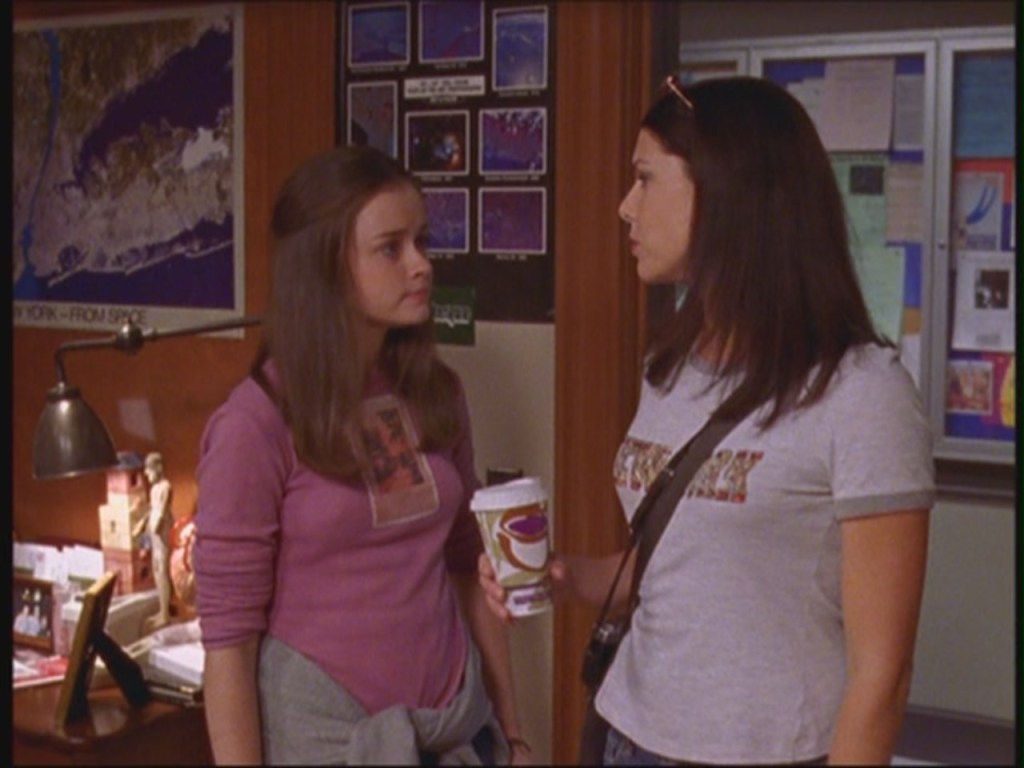
I wonder whether Luke’s plan of only allowing Jess to attend school, work at the diner, do homework at night, and chores on weekends, is an indication of how his father brought him up. It certainly gave Luke a strong work ethic, although it also drove Liz away. It might explain why Luke seems to lead a rather joyless existence, with a distrust or even dislike of having any fun.

Jess’ response is to immediately make like his mother and leave, and when Luke asks where he is going, he says, “Out”. Yes, he’s done a Liz and gone off to do “God knows what”.

Luke mutters, “Well, at least I asked”, showing that he’s not expecting to become the world’s best parental substitute overnight.

(Note that Jess is wearing a completely different outfit in this scene – because his other clothes got wet when Luke pushed him into a lake).
“This coming weekend”

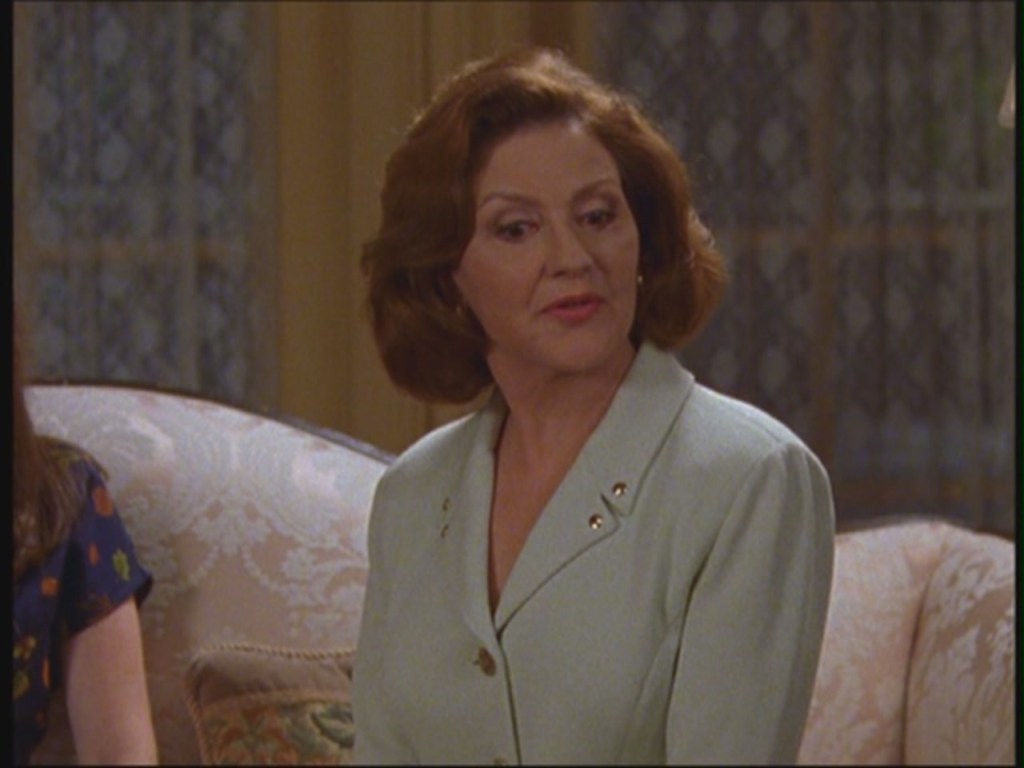
EMILY: And why would you go out of town now so soon before your wedding? Didn’t your fiancé mind?
LORELAI: Oh, well …
EMILY: I mean, you act as if this coming weekend is just going to be business as usual and not the most important day of your life.

As it’s Friday Night Dinner, Lorelai and Max were actually meant to be getting married the very next day – Lorelai leaves it until almost the last minute to tell her mother the wedding is off.

“Forget it Jake, it’s Chinatown”

LORELAI: There has not been one moment over our entire stay when she [Sammy] has not been right there.
LADAWN: On the stairs?
LORELAI: Yes.
LADAWN: Oh, she’s hardly ever on the stairs.
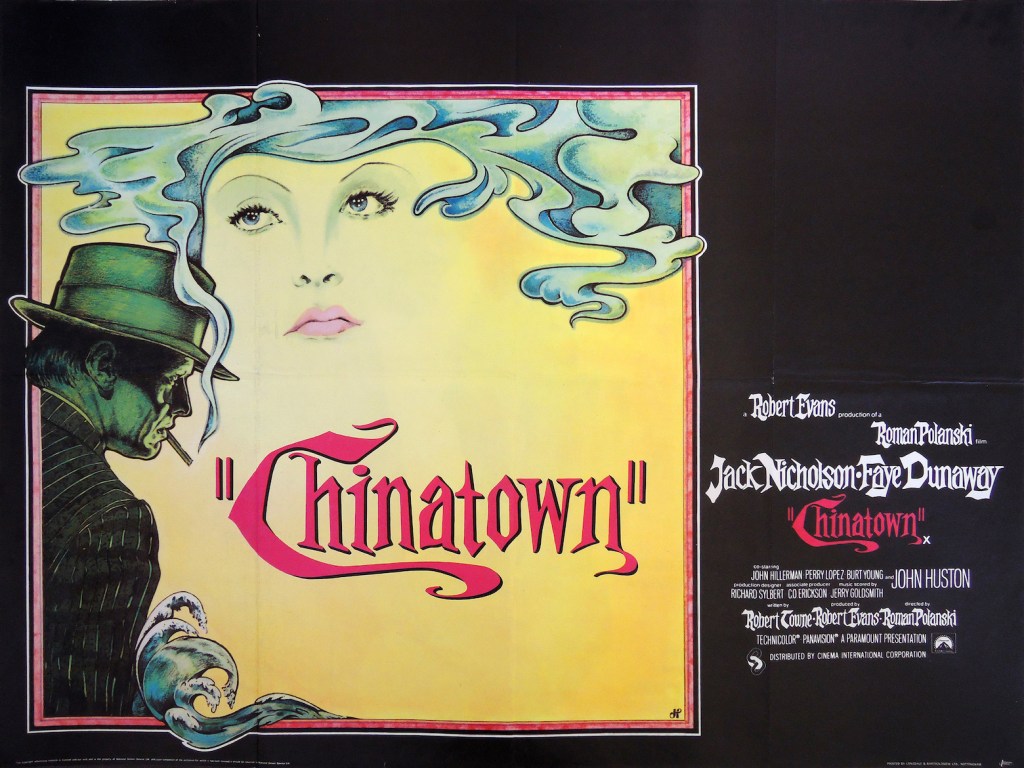
RORY: Forget it Jake, it’s Chinatown.

Rory is referencing the 1974 mystery film Chinatown, directed by Roman Polanski, with screenplay by Robert Towne, and starring Jack Nicholson as private investigator J.J. “Jake” Gittes. Set in 1937, the film was inspired by the Californian Water Wars, disputes over southern Californian water where Los Angeles interests gained water rights in the Owens Valley (in actuality, these occured at the beginning of the 20th century).

At the end of the film, the antagonists force Jake to drive them to Chinatown, where his love interest Evelyn (Faye Dunaway) has sought temporary refuge at the house of her butler. Police are already waiting to arrest Jake, and during the confrontation, they kill Evelyn. The police free Jake, and his associate Lawrence Walsh (Joe Mantell) advises him, “Forget it, Jake. It’s Chinatown”.

Chinatown is regarded as a classic film, and Robert Towne won the Academy Award for Best Original Screenplay. The screenplay has a legendary status among film makers, and is often cited as the greatest example of film writing.

In this scene, we discover that Sammy the cat is actually a female, with her name presumably short for Samantha.

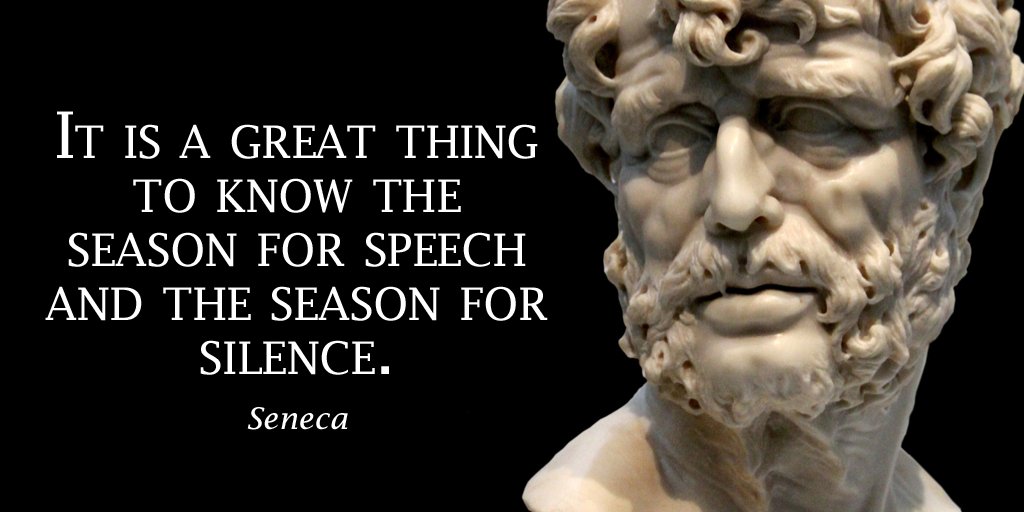
Seneca

RORY: That’s because Stoicism was not about giving up things, of money and luxuries and stuff.
PROFESSOR: That’s right. By the time he was in his early forties, Seneca had earned enough money to acquire villas, farms, he ate well, he loved expensive furniture, but he didn’t consider that a non-philosophical way to live.

Seneca the Younger, born Lucius Annaeus Seneca, usually just known as Senca (c4BC-65AD) was a Roman Stoic philosopher, statesman, and playwright. A tutor and later adviser to the Emperor Nero, he was forced to take his own life for allegedly taking part in a conspiracy to assassinate Nero; Seneca was most likely innocent.

Senca was a prolific writer on Stoicism, a popular philosophy for upper-class Romans of his era. He wrote about the need to control the destructive emotions, to confront one’s own mortality, and be willing to practice poverty and use wealth wisely. His plays however, are all tragedies, and filled with intense emotions. Even while he was alive, Seneca was accused of hypocrisy because he was essentially a wealthy and powerful man advocating the simple life.

Highly popular in his day, Seneca’s enduring reputation is most likely because he was greatly admired by the early Christian church, which led to him becoming a favourite in the medieval era and during the Renaissance. Today he is seen as an important part of Western thought.

Note that Rory is very quick to grab onto the idea that wealth and luxury don’t preclude one from living an intelligent, rational, philosophically rich life.

Room Mates

LORELAI: They just force someone on you?
RORY: It’s all part of the socialising experience.
LORELAI: What if it’s a lemon?
RORY: Then I’m stuck with a lemon.
LORELAI: Hare Krishna banging a tambourine all night?
RORY: Then I have to get earplugs.
LORELAI: Serial murderer?
RORY: Then I sleep with a gat strapped to my ankle.

In American slang, a lemon is a worthless person or object. It dates from the early 20th century, and was originally criminal slang meaning “loser, simpleton” – perhaps with the idea that they were people that the criminal could “suck the juice from”.

In American slang, a gat is a gun. It is short for Gatling gun, the early machine gun invented by Richard Gatling for use during the American Civil War. The criminal slang was especially prevalent during the Prohibition era of the 1920s.

It is perhaps apt that Rory and Lorelai use criminal slang while trespassing.

In a later season, Rory does indeed get a college room mate forced upon her unexpectedly.

Lorelai and Rory’s Road Trip

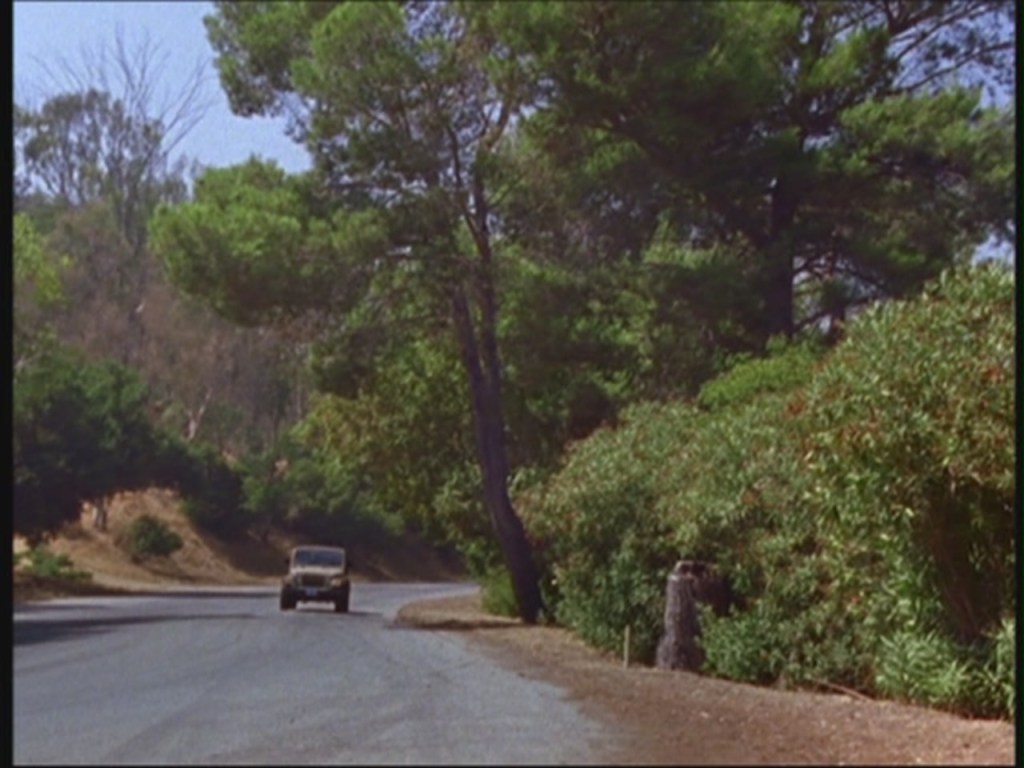
We see Lorelai’s road trip plan in action – she is driving aimlessly around, and neither she nor Rory know where they are. It’s an obvious metaphor for how lost Lorelai feels at the current moment, and how she has no plans on how to navigate her life or move forward from here.

It’s also an opportunity to show Lorelai and Rory’s different outlooks on life, with Rory becoming increasingly alarmed and panicked at their lack of planning and direction. Interestingly, Lorelai makes an offhand remark about driving into the Pacific Ocean of the west coast rather than the Atlantic Ocean of the east coast – have her thoughts naturally wandered to Christopher in California? Or perhaps it’s a sly meta-comment about the road trip obviously being filmed in California rather than New England.

Lorelai Phones Christopher

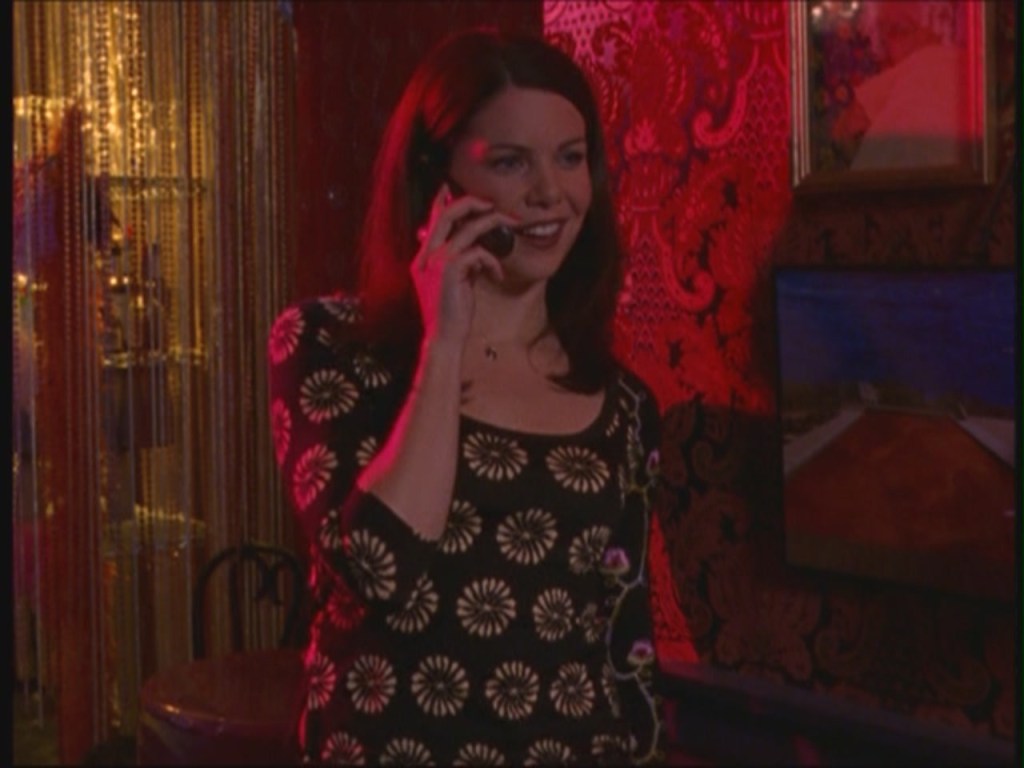
While Sookie calls Jackson, and Rory sends Dean a message using her pager, Lorelai slips away to make a phone call as well. Everyone assumes that she is going to call Max, being as struck with the romance of her mother’s wedding as they are, but in fact she secretly phones Rory’s father, Christopher.

It’s interesting that Lorelai begins the conversation by pretending to be a girl named Trixie. Trix is her grandmother’s nickname, and as they are both named Lorelai, the made up nickname has a strange sort of sense.

This is the first time Christopher hears that Lorelai is about to get married, and the viewer can tell that this isn’t welcome news. Lorelai hadn’t even told him that she and Max were together, although he had heard of their relationship through Rory (Rory doesn’t seem to have updated her dad on the coming nuptials, perhaps thinking it wasn’t her place to do so).

Christopher ends by giving her very conditional congratulations, by saying he wishes her well if she has found the right guy, and that he can certainly picture her married – to the right guy. He expresses some doubts as to whether Max is the “right guy” for Lorelai.

Like Luke, he is intent on planting serious doubts in Lorelai’s mind about her decision to marry Max, but is far more successful, as he is naturally more wily and manipulative than Luke. Luke’s clumsy attempts pushed Lorelai into an engagement, while Christopher’s cleverly sown doubts will bear fruit quite soon. The tragedy for him is that he doesn’t know it until it is too late.

Emily’s Wedding to Richard

Emily reminisces about the preparations for her own wedding to Richard. She says that she and Richard have been married for 34 years, so since 1967 – the year before Lorelai was born (it’s interesting that they had Lorelai so quickly, yet never had any other children).

In The Third Lorelai, Emily complained of having received terrible gifts from Richard’s mother Trix for 35 years, so presumably that includes the year between their engagement and their wedding, and they got engaged in 1966.

Emily’s story is very romantic, with her unable to eat for the week before the wedding due to nerves, being weak in the knees and trembling, and thinking of Richard constantly. Each night she would secretly dress in her wedding finery, and glory in how safe she felt – marriage to Richard meant not only being with the love of her life, but gaining complete security as well.

Nearly everyone at the table is enthralled and touched by her story, and Sookie and Rory immediately have to contact their respective boyfriends, as if this love story brings home to them how important security is in a relationship.

Lorelai, however, acts bored and nonchalant, stuffing her mouth with free peanuts while Emily recalls her week without appetite, and even loudly yawning at one point. And while Sookie and Rory are contacting Jackson and Dean, Lorelai doesn’t call her husband-in-waiting Max, but Christopher.

Cocktails

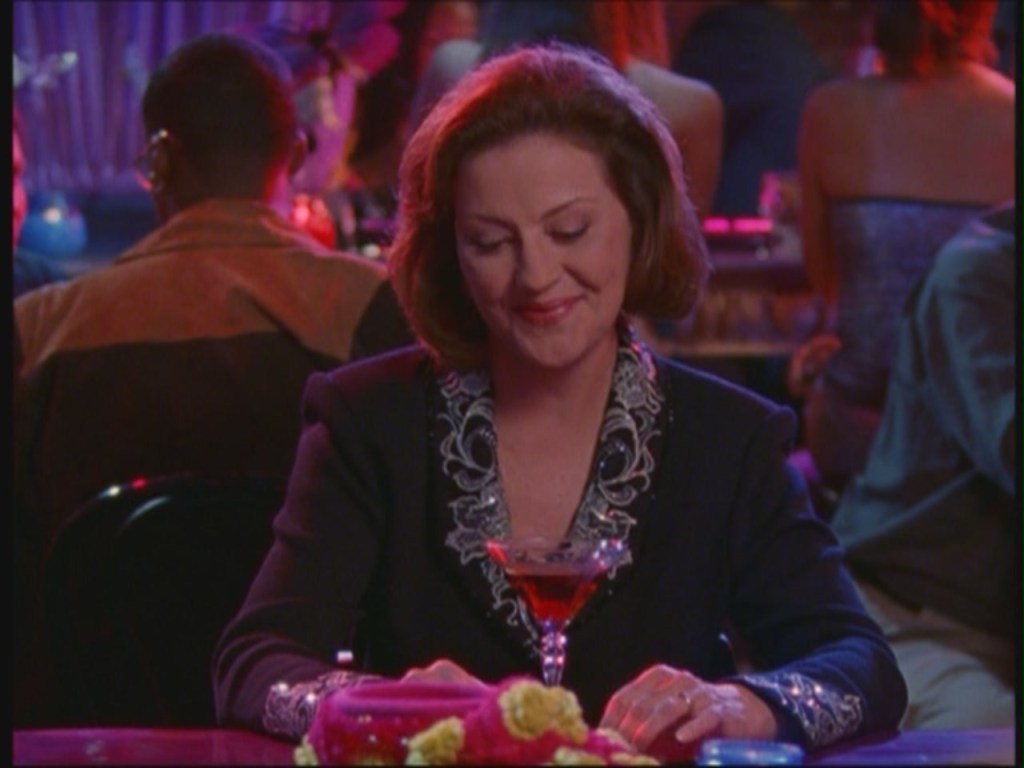
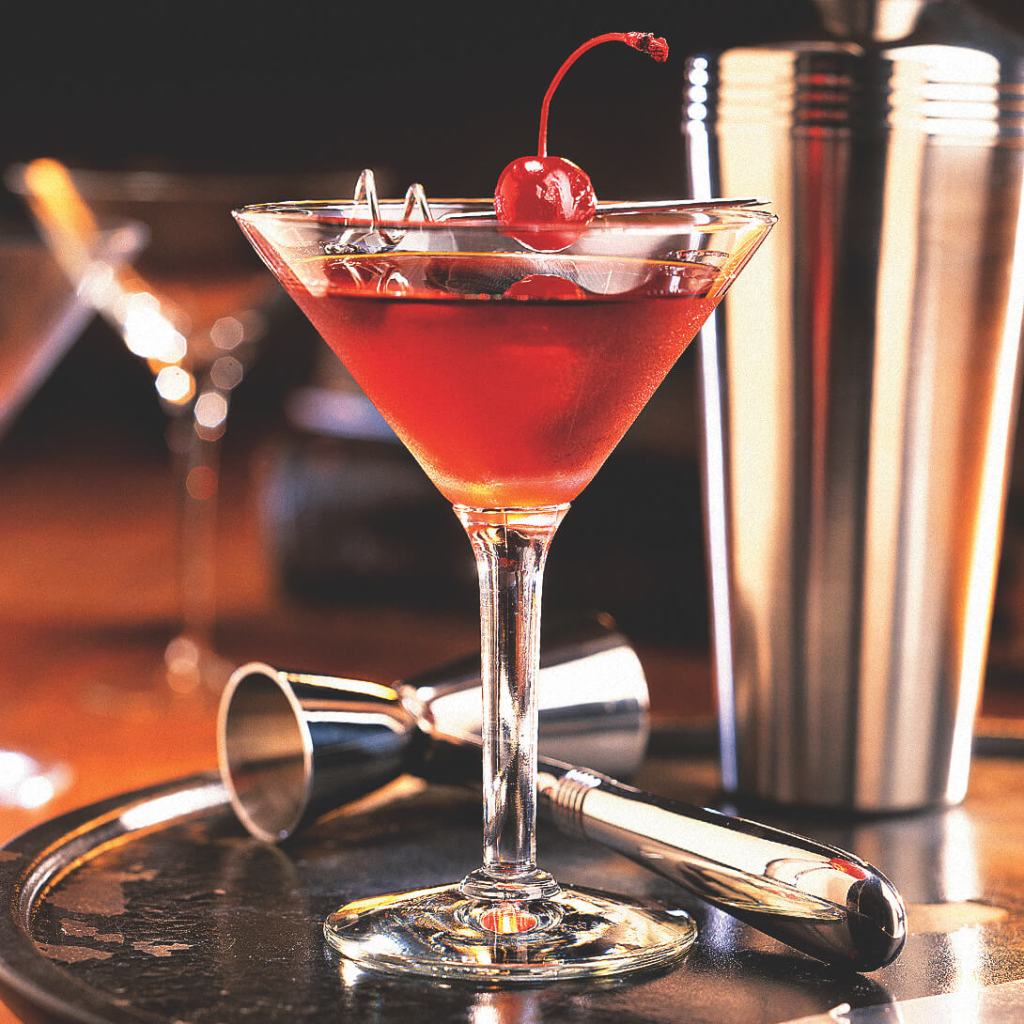
Emily is already drinking a Manhattan [pictured]; a cocktail made from whiskey, vermouth, and bitters, usually served in a cocktail glasss with a Maraschino cherry. It seems to date from the mid-19th century, and to have originated in bars around the Manhattan area. There are many variations on the drink. Because Emily praises her Manhattan for not being too sweet, it may be a Dry Manhattan made with dry vermouth, or a Perfect Manhattan, made with a mixture of dry and sweet vermouth.

Lorelai orders a Rum and Coke; it is not certain who for, but because she orders it first and without asking, it may be for Sookie. Rum and coke is a mixture of rum and cola with a dash of lime juice served with ice. It originated in Cuba, where it is called a Libre Cuba (“Free Cuba”), and dates to the early 20th century after Cuba won its independence in the Spanish-American War of 1898.

Lorelai orders a Margarita without salt, possibly for Miss Patty. A margarita is a mixture of tequila, Cointreau, and lime juice, traditionally served in a special cocktail glass that looks like a champagne glass. Originating in Mexico (its name is Spanish for “Daisy”), it became popular in the 1930s, when Prohibition gave Americans a reason to go over the border into Mexico to get a drink.

Lorelai orders a Martini with an olive, previously discussed. I feel that the martini may be for Michel – as he didn’t tell Lorelai what he wanted, she may have chosen the standard cocktail at the elder Gilmore residence for him.

Lorelai orders a Shirley Temple, previously discussed. This now seems to be Rory’s go-to mocktail, which she drinks with ice. Note that even as a supposed 18 year old, Rory is unable to drink alcohol in a bar, as the drinking age is 21 in the US. As Rory is the only person not drinking, I presume she is the designated driver.

Lorelai orders herself a giant Long Island Iced Tea. This drink is a mixture of vodka, tequila, rum, triple sec, gin, and a splash of cola, which gives it the amber tea-colour it gets its name from, often decorated with a lemon and a straw. It has a very high alcohol content, due to the small amount of mixer in it.