The Hungry Diner

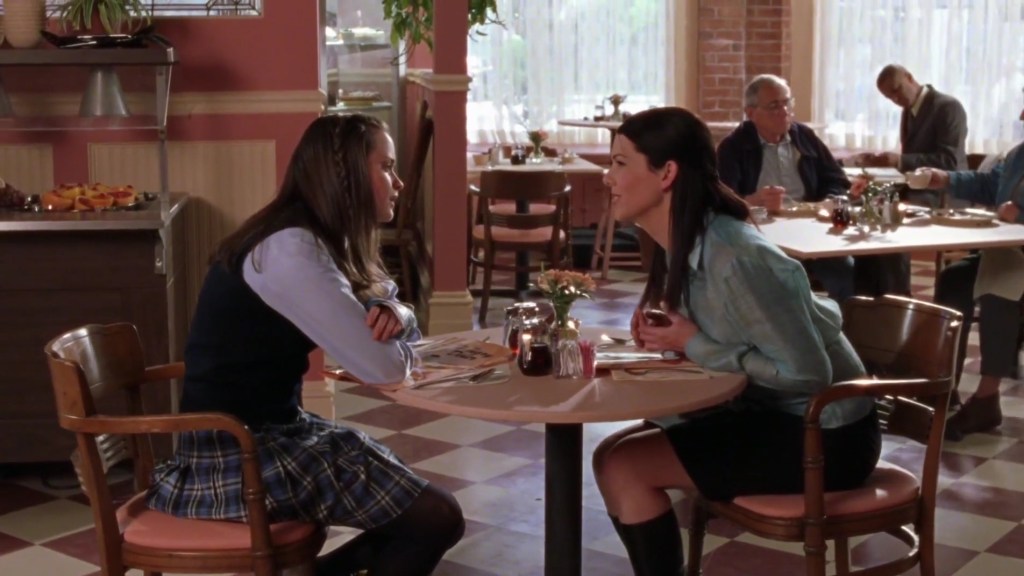
After his fight with Lorelai, and Jess going back to New York, Luke has closed the diner and gone fishing – something which has never happened before. Lorelai and Rory are forced to eat breakfast at a rival business we have not heard of until now called The Hungry Diner. The diner has a dark pink colour scheme, in contrast to the blue colour scheme of Luke’s Diner.

They are immediately miserable because The Hungry Diner makes people wait in line to be served, the menus have pictures on them, the coffee is undrinkable, and the coffee cups are tiny. It turns out that it is Michel’s regular breakfast place, because they make low-fat egg white omelettes (like the one Sookie refused to make him). Michel is reading a copy of GQ magazine, previously discussed.

Even though there was a big crowd of people waiting to get into Luke’s, The Hungry Diner is still mostly empty. Nobody else seems to have gone there, so either there is yet another place to have breakfast in Stars Hollow, or they all refused to eat out until Luke returns.
Car Song

This song plays while Jess and Rory are in the car, driving back from buying ice cream cones (because Luke’s only serves ice cream in bowls, which doesn’t count).

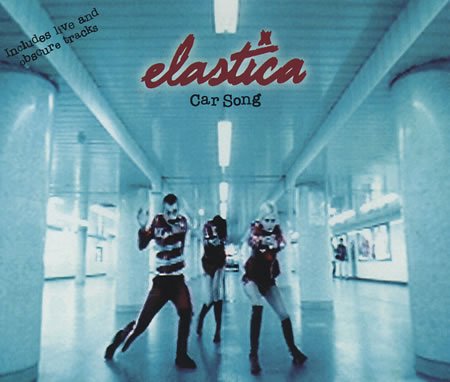
“Car Song” is a 1995 song by Britpop group Elastica, written by Justine Frischmann, the band’s lead singer. From their self-titled debut album, it was only released as a single in North America and Australia in 1996, and went to #106 in Australia, while it charted on the US Alternative Songs Chart at at #33, and #14 on the Canadian Alternative Rock Chart. The song was well-reviewed, described as sexy and charming.

The song is about having sex in a car, to make it clear where Jess and Rory’s minds are going, and the subtext of them being in a car together. Although there’s no suggestion that they actually had sex in the car offscreen, or even kissed, their car trip is a symbolic lovemaking experience as it is so emotionally intimate. Compare it to the first time Rory was in the car with Dean, when she couldn’t even tell him how she felt, after dating for months.

Here we go again
I’m riding in your car
Let me count to ten
‘Cause it’s gone way too far
Up my street to nowhere
You know what detours are
Here we go again
And it’s gone way too far

The lyrics are a good description of what’s going on – they’ve taken a detour on a street to nowhere (driving aimlessly), and going around in circles (“here we go again”). And although they’ve gone nowhere much, they have “gone way too far” – because they should never have got in the car to begin with.

New Bag Boy

LORELAI: Oh, hey, look, new bag boy.

RORY: Oh yeah, that’s Marty. He’s subbing for Dean while he’s out of town.

Dean is suddenly visiting his grandmother out of town in this episode – doesn’t he have to attend school? Considering how upset Dean was at the end of the last episode, it’s possible he has gone to stay with his grandmother to have a break from Stars Hollow and Rory, or to think things through.

Teach Me Tonight

Teach Me Tonight, previously discussed.

This jazz standard is the perfect title for an episode all about an evening of tutoring. The lyrics say:

Did you say I’ve got a lot to learn?
Well, don’t think, I’m tryin’ not to learn
Since this is the perfect spot to learn
Oh, teach me tonight

Let’s start with the A B C of it
Roll right down to the X Y Z of it
Help me solve the mystery of it
Teach me tonight

The sky’s a black board
High above you
If a shooting star goes by
I’ll use that star to write I love you
A thousand times across the sky

One thing isn’t very clear, my love
Should the teacher stand so near, my love?
Graduation’s almost here, my love
Come on and teach me tonight

A very romantic “hot for teacher” song, making it clear how strongly this student feels about his tutor – and that his feelings are returned. As in the song, this episode takes place close to the end of the school year – although not literally near graduation.

Intra-school Business Fair

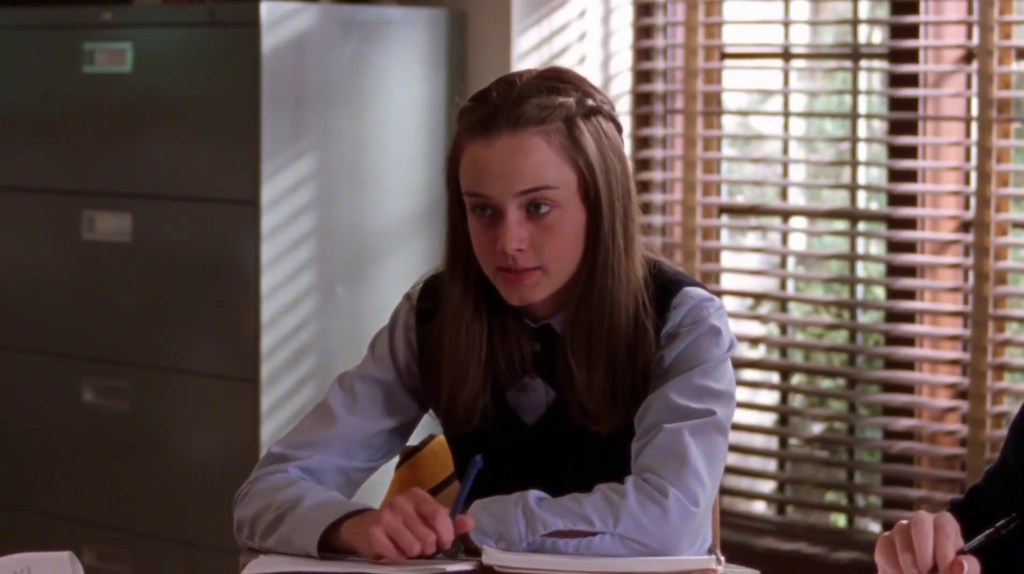
RORY: There’s going to be an intra-school business fair in three weeks. Each group has to come up with a consumer product that’s geared toward high school kids … So we pick our product and we make a prototype of it, then we use our imaginary million dollar budget to mass produce, market, and distribute it, and we’ll present all of this at the fair.

Rory quickly tells their group, and the viewer, what’s happening in this episode. Their Economics class has put them into groups to compete against the other Economics classes at Chilton at a business fair. They have to think of a product that high school students will buy, make a prototype that can be displayed, then use a fictional million dollar budget to manufacture, market, and distribute it, presenting it at the fair to be judged.

And the business fair is only three weeks away, so they need to get started immediately, yet somehow, they don’t seem to do that. A lot must happen behind the scenes.

Back in the Saddle Again

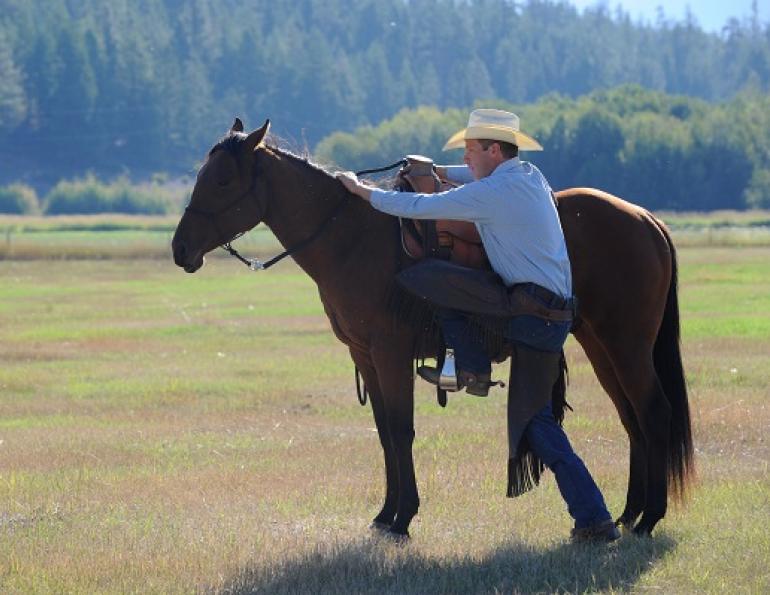
To “get back in the saddle” means to return to something after a break or absence, often after some kind of failure or setback. The phrase originated in the early 19th century, and referred to cowboys and other professional riders who had suffered an injury, but were now recovered and “back in the saddle” to continue their normal lives. By the late 19th century, it had begun to be used in the more general sense, to mean returning to any activity.

This episode is about Richard “getting back in the saddle” as he comes out of retirement.

Halloween and Trick-or-Treating

CY: So, like I say, it’s Halloween, right, and we’re lucky Louie doesn’t have razor wire around his yard, you know how he is. So finally one of the neighborhood kids, he gets all courageous and he goes sauntering up to the door and he goes ‘trick or treat!’.

Halloween is a contraction of All Hallows Evening, the night before All Hallows Day, which is November 1 (so Halloween is October 31). Alluded to several times already in the show as an important date on the calendar, it is a day for remembering the dead with a Christian name but with probable pagan roots.

Halloween customs were brought to North America in the 19th century by Scottish and Irish immigrants. In return, the American influence on Halloween has spread around the world in the 20th and 21st centuries.

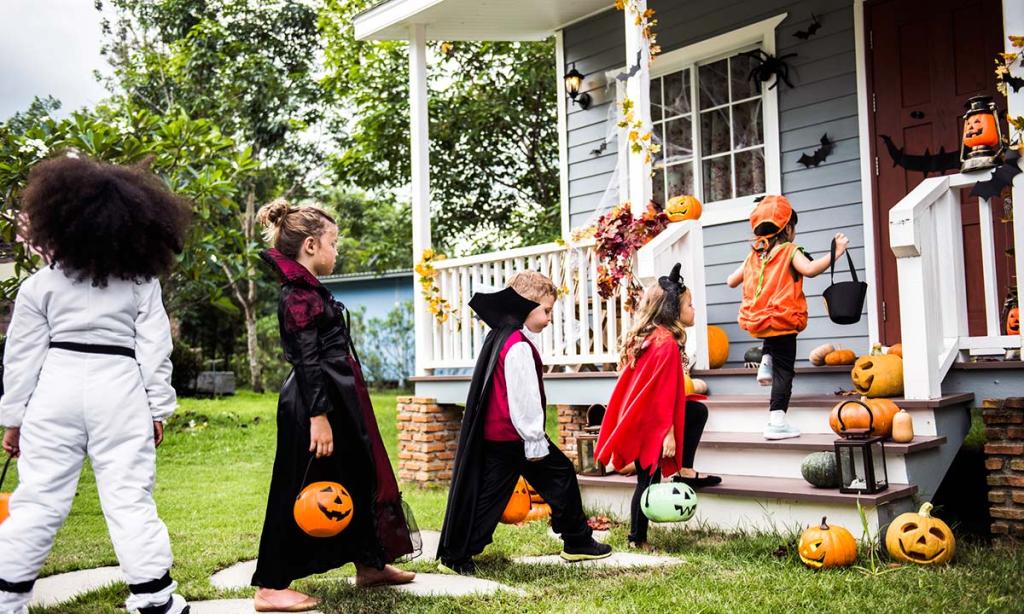
Trick-or-treating is a Halloween tradition where children dress in costumes and travel from house to house, asking for treats, with the phrase, “Trick or treat?”. The “trick” is a threat, usually idle, to commit some small act of mischief on the homeowner should no treat be provided.

The custom goes back to at least the 16th century in Scotland and Ireland, where it was called guising. In America, trick-or-treating has been a tradition since the 1920s; the earliest known example is from Canada in 1911.

It is apt that one of the last things that happen in this episode is a memory shared of Louie’s behaviour on Halloween, since it is day for the remembrance and honour given to the dead.

“Why did you put me through all that?”

TAYLOR: Why did you put me through all that hoohah at the town meeting if your vegetable business was just temporary?

TROUBADOUR #2: Actually, you put yourself through it, Taylor. You put yourself through it.

The vegetable stall sub-plot comes breezily to a close with Second Troubadour telling Taylor that he was only doing it on a very temporary basis, selling off all the excess produce from his garden in a few days to make a bit of extra money. How he managed to grow such a large amount of vegetables and fruit all at once is something of a headscratcher, although its superior quality is plausible, since home grown produce is nearly always better than that sold in supermarkets.

It seems that apart from making money, his motivation was to get revenge on Taylor for not allowing him to become a Town Troubadour in Stars Hollow. By setting up a rival fruit and vegetable business across the street from Doose’s Market, he took business away from Taylor and made him panic. And as he says, Taylor “put himself through it”, he knew enough of Taylor to understand how to push his buttons. Why he originally wanted to be a Troubadour in Stars Hollow remains a mystery.

The sub-plot of the bountiful spring harvest is to underscore the death of Louie Danes, who is “harvested” by the Reaper, and buried in the soil, part of the natural cycles of time and the earth.

Emily’s Wedding Plans for Lorelai

Imperial Russian Winter theme

Snow white roses

Trees with white lights and candles

Snow everywhere

Lorelai arrives in a silver sleigh pulled by white horses

This actually doesn’t seem like a totally crazy idea for Lorelai’s wedding. Lorelai loves the snow, and she adores horses. She organised a horse-drawn sleigh ride for the Bracebridge Dinner, sharing a ride with Luke. It does sound very beautiful and romantic, and I think Emily has picked up on a least a couple of things her daughter would like.

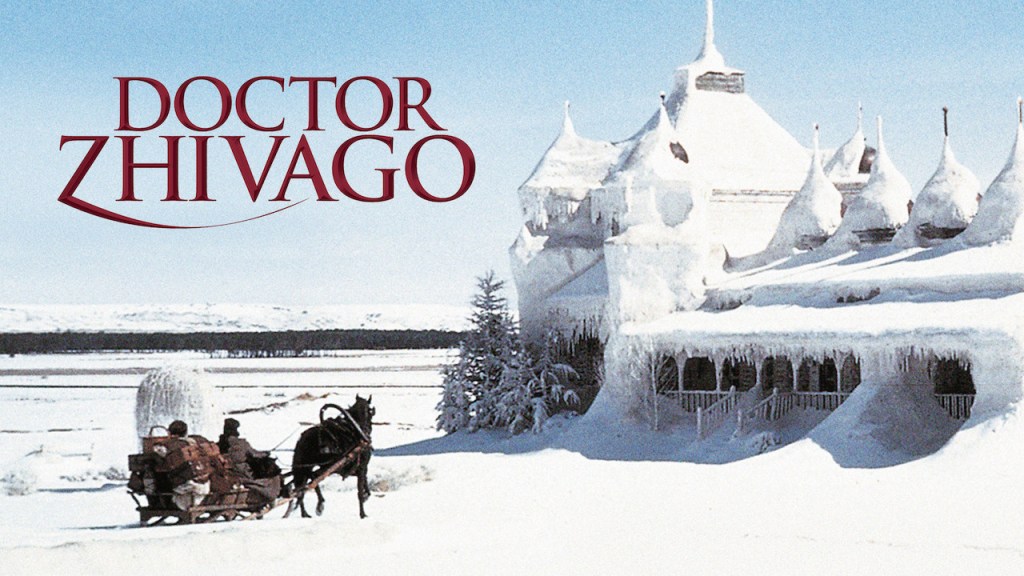
Emily’s Russian-themed winter wedding may have been influenced by the 1965 historical romance film, Dr Zhivago, directed by David Lean, set in Russia during World War I and the Russian Civil War, and based on Boris Pasternak’s autobiographical novel of the same name. The film is beautifully shot and features a sleigh ride through the snow, as well as an “ice palace”.

Dr Zhivago was highly popular, especially with female audiences, the #2 film of the year, and a big influence on mid-1960s fashion. It may have even been Emily’s dream for her own wedding, which she hoped to one day create for her daughter.

In this episode, Emily becomes the first person to predict that Lorelai and Luke will be married one day, showing that she knows her daughter better than Lorelai believes.