Johnny Yune

LANE: We practice for two hours, I’m home in time to watch reruns of Johnny Yune’s talk show on Korean television with my mom, who thinks I hooked up with you guys – which I did, so I’m not even lying.

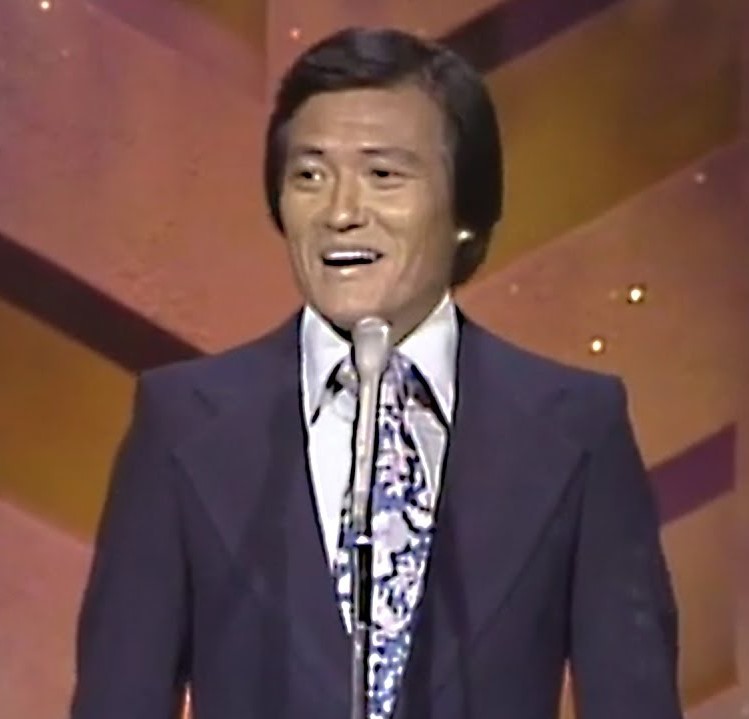
Johnny Yune, born Yoon Jong-seung (1936-2020), Korean-American actor, singer, and comedian. He began performing stand up in 1964, and got his big break appearing on The Tonight Show With Johnny Carson in 1979. He was one of the show’s most frequent comedy guests. He is best known for playing the lead role in the 1980s comedy films, They Call Me Bruce, and They Still Call Me Bruce.

From 1989-90, he hosted The Johnny Yune Show, the first Americanised talk show in Korea The show was a hit, but after only a year, Yune decided to leave due to limited freedom of the media.

Mrs Kim is watching reruns of his talk show on KBS America, the local platform for Korean Broadcasting System, South Korea’s national broadcaster.
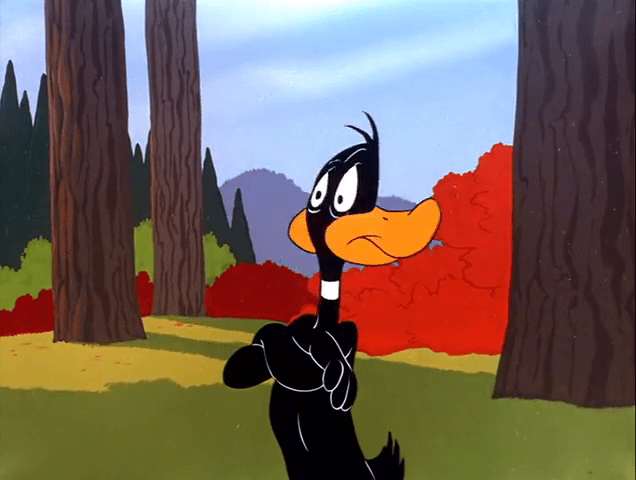
Daffy Duck

LORELAI: Now, this last one’s a little more gory. I’m out hunting … And my gun backfires and my whole face spins around a bunch of times and winds up in the back of my head like Daffy Duck.

Daffy Duck, animated cartoon character created for Leon Schlesinger Productions by animators Tex Avery and Bob Clampett. He first appeared in the short film Porky’s Duck Hunt in 1937, and is a staple character in the Looney Tunes and Merrie Melodies cartoon series. He is an assertive, combative figure whose lisp never stops him from putting forward his strong opinions.

A common gag is for Daffy to get shot in the face (quite often accidentally by himself), and his face spins around so that his bill ends up behind his head.

Harry Potter

RORY: I’ve dreamt of going to Harvard since I was a little girl.

CAROL: Yeah, a lot of four year olds dream of that. It comes right after meeting Harry Potter.

Harry Potter, the schoolboy wizard who is the protagonist of the popular Harry Potter book and film series, the novels written by English author J.K. Rowling, previously mentioned. In the films, he is played by English actor Daniel Radcliffe.

Rory was four years old in 1988-1989, and the first Harry Potter book was published in 1997, so Rory could hardly have been interested in him as a toddler anyway. Presumably Carol is thinking of her young clients in the present day.

There’s a little mistake in the writing here. Rory never actually tells Carol that she’s been dreaming of Harvard since she was four – only that she was a little girl. We know she was four because Lorelai told Max in Season 1, but somehow Carol knows about it too.

“Holed up in the Chelsea”

RORY: I don’t know. Your parents just made it sound like . . .

CAROL: Like I was holed up in the Chelsea with a needle sticking out of my arm screaming “Sid” at the top of my lungs?

A reference to Nancy Spungen (1958-1978), American girlfriend of English punk rocker Sid Vicious, and a figure of the 1970s punk rock scene. The two of them were habitutal heroin users, and eventually Nancy’s body was found in the bathroom of their room at the Hotel Chelsea in New York, stabbed to death. Sid Vicious died of an overdose before he could be brought to trial.

Their story is told in the film Sid and Nancy, previously discussed [pictured]. Carol seems to have all the same references as Lorelai as well.

Dr. Seuss

LORELAI: Oh, that would be the year the pumpkins arrived late.

DARREN: Sounds like a Dr. Seuss book.

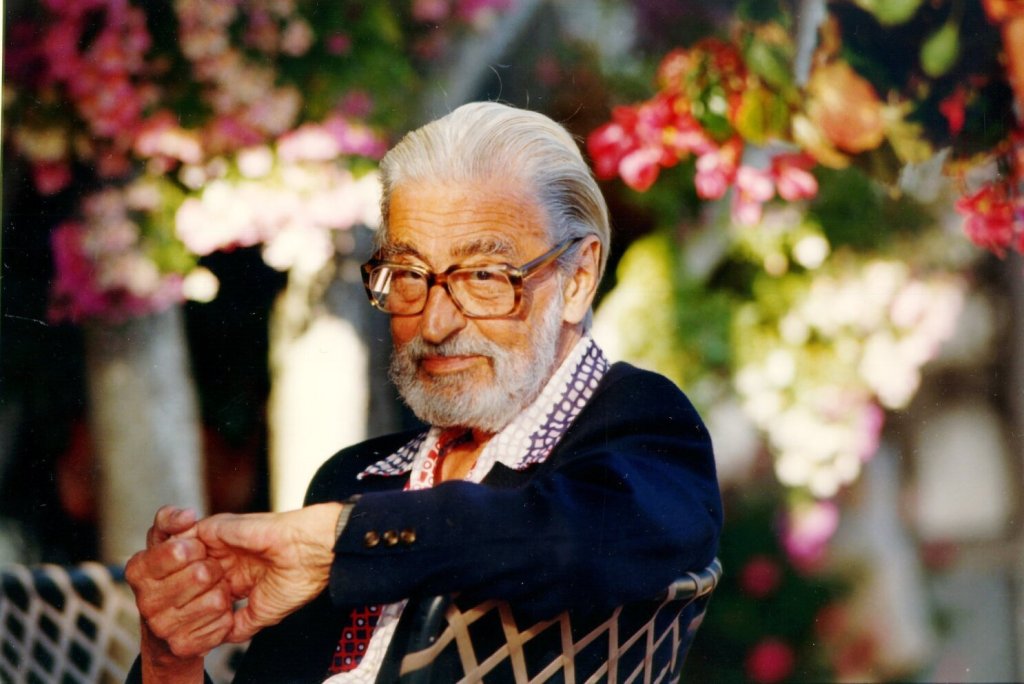
Dr. Seuss, the pen name of Theodor Seuss Geisel (1904-1991), children’s author and cartoonist. His work includes many of the most popular children’s books of all time, selling over 600 million copies and being translated into more than 20 languages by the time of his death. He has won the Lewis Carroll Shelf Award for his works Horton Hatches the Egg (1958), and To Think That I Saw It On Mulberry Street (1961). His birthday, March 2, has been adopted as the date of National Read Across America Day, an initiative on reading created by the National Education Association.

He is the author of How the Grinch Stole Christmas, which was made into the 2000 family film The Grinch, previously discussed. To me, The Year the Pumpkins Arrived Late doesn’t really sound very much like the title of a Dr. Seuss book.

People pronounce his pen name as “Soose”, to rhyme with moose, but his middle name is actually said “Zoice”, to rhyme with choice.

Ish Kabiddle

RORY: Ish Kabibble.

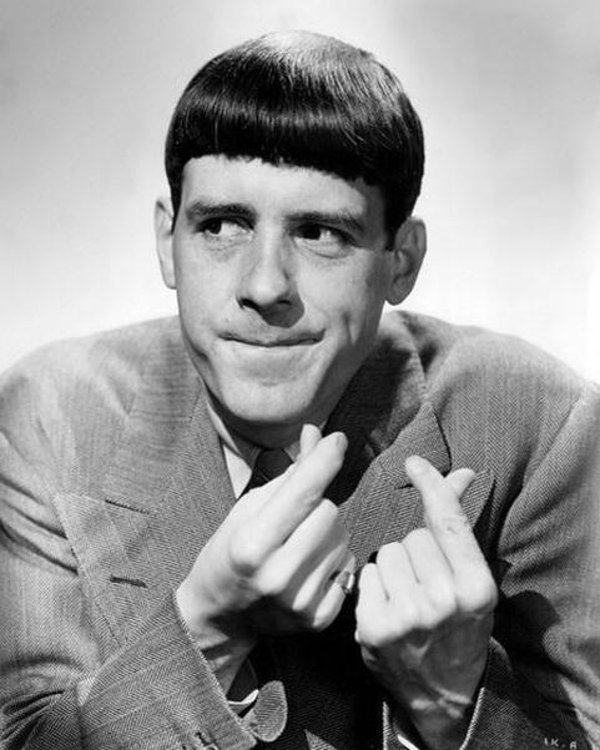
Ish Kabibble, born Merwyn Bogue (1908-1994), comedian and cornet player. He appeared in ten films between 1939 and 1950, and although his stage persona was a gangly goofball, he was also a notable cornet player. He performed with bandleader Kay Kyser, and was the manager for the Kay Kyser Orchestra. After the band broke up in 1950, he worked as a solo act until 1961, when he became a real estate agent. He has become an icon of American comedy, often referenced in popular culture.

His stage name came from the lyrics to one of his comic songs, “Isch ga-bibble.” It’s a mock-Yiddish expression, supposedly meaning, “I should worry?”. In fact, it isn’t Yiddish at all, although there’s a Yiddish phrase nisht gefidlt meaning “it doesn’t matter to me,” from which the term “isch ga-bibble” may have been derived.

I’m not sure if Rory is simply answering one name from Jewish culture with another, or if she is literally saying, “I’m not worried”, or “It doesn’t matter right now”.

Westport, Connecticut

Westport is a town of 27 000 people in Connecticut on Long Island Sound, part of Connecticut’s affluent “Gold Coast”. Only 50 km or so from New York City, it is the ninth richest city in the US. It would be about an hour’s drive from Stars Hollow.

It is a favourite location in fictional works – it was the home of Samantha and Darrin Stephens on Bewitched, and Lucy and Ricky Ricardo move here to start a new life in I Love Lucy. It also features in the film The Man in the Gray Flannel Suit.

Dogtown and Z-Boys

TAYLOR: I’m telling you, Luke, if we don’t quickly furnish these skateboarding Z-boys with a moral distraction, they’re gonna turn Stars Hollow into Dogtown.

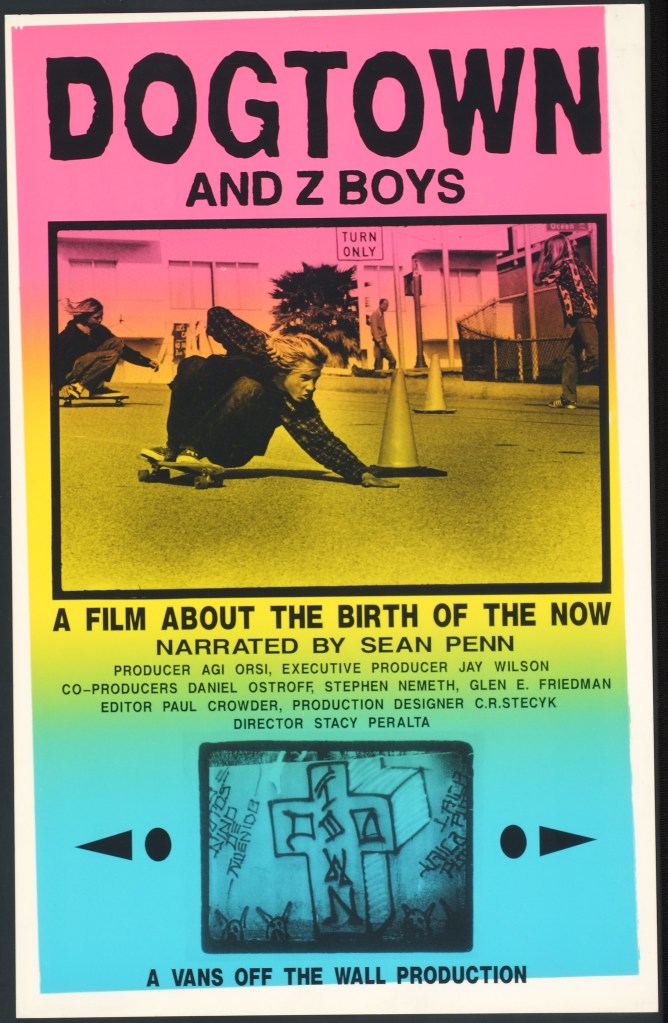
Taylor refers to the 2001 documentary, Dogtown and Z-Boys, directed by Stacy Peralta and narrated by Sean Penn. It explores the pioneering Zephyr skateboarding team in southern California of the 1970s (of which Peralta was a member), using archival footage, contemporary interviews, and a rock and roll soundtrack. The documentary received good reviews, and won two awards at the Sundance Film Festival, as well the Independent Spirit Award for Best Documentary. It was also a commercial success, making over a million dollars at the box office by 2002, and selling almost 2 million videos and DVDs by 2004.

I can only speculate that Taylor watched the documentary in order to familiarise himself with the horrors of youth culture – a sort of “know your enemy” information session. It clearly gave him a disturbing glimpse into what depths Stars Hollow could sink without his intervention.

Kate Hudson

EMILY: I was watching TV and that insipid Kate Hudson was talking about going to a university. If she decides to go to Harvard, she’ll get right in over Rory, who we know is more qualified.

Kate Hudson (born 1979), actress, the daughter of actress Goldie Hawn and singer and actor Bill Hudson, although raised by her mother and stepfather, actor Kurt Russell. Her film debut was in Desert Blue (1998), and at this stage, her best known film was Almost Famous (2000) [pictured]. Her most recent movie in 2002 was the war film The Four Feathers, released in September, around the same time as the events of this episode, which was panned by critics. She went on to greater success during the 2000s, and has won several awards.

Kate Hudson was accepted into New York University’s Tisch School of the Arts in 1997, but turned it down to concentrate on her acting career. I don’t know what television program Emily could have been watching – by this stage, Kate Hudson was 23, and not exactly college aged.

The Brat Pack

EMILY: And now it’s the in thing for young Hollywood celebrities to go to universities. What do they call themselves, the Brat Pack?

LORELAI: About a hundred years ago.

The Brat Pack, a nickname given to a group of young actors who frequently appeared together in teen coming-of-age films in the 1980s. It was first mentioned in a 1985 New York magazine article, used to describe Emilio Estevez, Rob Lowe, Judd Nelson, and most of the cast of The Outsiders. Later on, the definition (somehow?) seems to have narrowed to refer to those actors who starred in The Breakfast Club and/or St Elmo’s Fire. But there is no set definition of who was in the Brat Pack and who wasn’t.

The label brought negative attention to the actors, who hated it, and they stopped socialising together. It certainly was not something they called themselves, but an unwanted label foisted upon them. The journalist who coined the expression later admitted he shouldn’t have done it.

The name “Brat Pack” was coined in imitation of the “Rat Pack”, an informal group of A-List show business friends in the 1940s and ’50s, centred on Frank Sinatra, Dean Martin, and Sammy Davis Jr. It is important to note that the Rat Pack is what the group called themselves, the Brat Pack was a name created by the media.