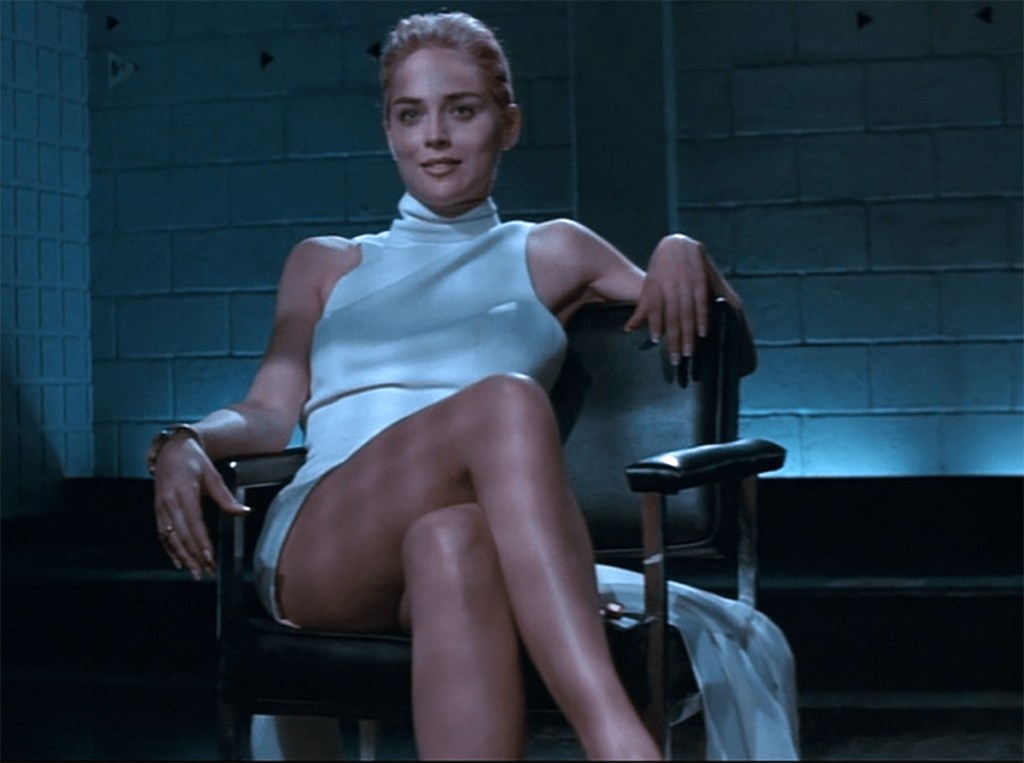
Sharon Stone/Basic Instinct

PARIS: Just make sure you mention that Schatzi pulling the Sharon Stone/Basic Instinct bit was a cheap attempt to distract the whole student body from my mandatory recycling program.

Basic Instinct, a 1992 neo-noir erotic thriller directed by Paul Verhoeven. It stars Michael Douglas as a San Francisco police detective investigating the brutal murder of a rock star. During the investigation, he becomes involved in a torrid relationship with the prime suspect, a crime novelist who is played by Sharon Stone.

Basic Instinct was the #4 film of 1992. Reviews at the time were mixed, and it garnered controversy for its graphic sexuality and violence, including a rape scene. Gay and bisexual rights activists protested the film, saying it followed a pattern of negative depictions of queer characters in film. It was later recognised for its groundbreaking depiction of sexuality in mainstream cinema and its transgressive nature in the film noir genre. Sharon Stone received praise for her performance.

Paris refers to a notorious scene when Sharon Stone’s character crosses her legs while wearing a short dress without panties during her interrogation, so that her vulva briefly appears on film. Stone and Verhoeven have differing versions of how consensual the filming of it was, but are apparently still on good terms.
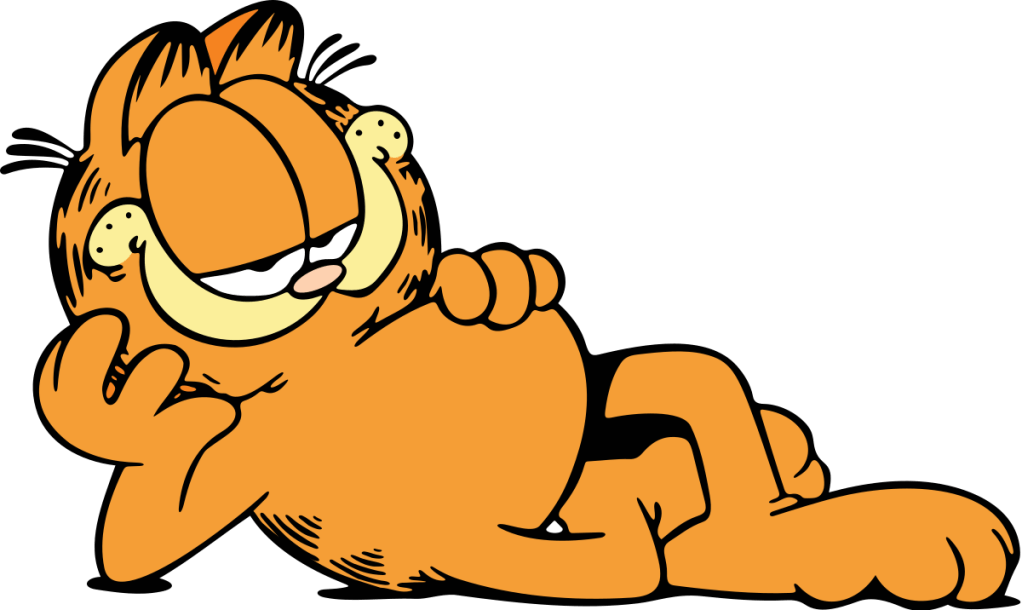

Garfield

LUKE: Read your note … It was very well-written … I also enjoyed the Garfield stationery. That’s one funny cat.

Garfield, a comic strip created by Jim Davis featuring a lazy, fat, cynical orange tabby cat named Garfield, noted for his love of lasagne, coffee, and sleeping. Originally published as Jon (the name of Garfield’s owner) in 1976, it was syndicated nationally from 1978. It holds the Guinness World Record for being the world’s most syndicated comic strip, being published in more than 2000 newspapers and journals.

Garfield has been turned into comic books, TV shows, films, and video games, and been used for merchandise (such as the stationery) which earns up to $1 billion per year.

Mr Freeze

LORELAI: You’re pulling a Mr. Freeze on me.

Mr Freeze (Dr Victor Fries) is a supervillain from the Batman comics, created by Dave Wood and Sheldon Moldoff in 1959, and originally called Mr Zero. Mr Freeze was a rogue scientist whose design for an ice gun backfired, spilling cryogenic chemicals on himself, so he needed sub-zero temperatures to survive. The Batman television series gave him a more sympathetic back story, making him a complex, tragic character. He was portrayed by Arnold Schwarzenegger in the 1997 Batman film.

Another example of Lorelai using comic books as a reference point.

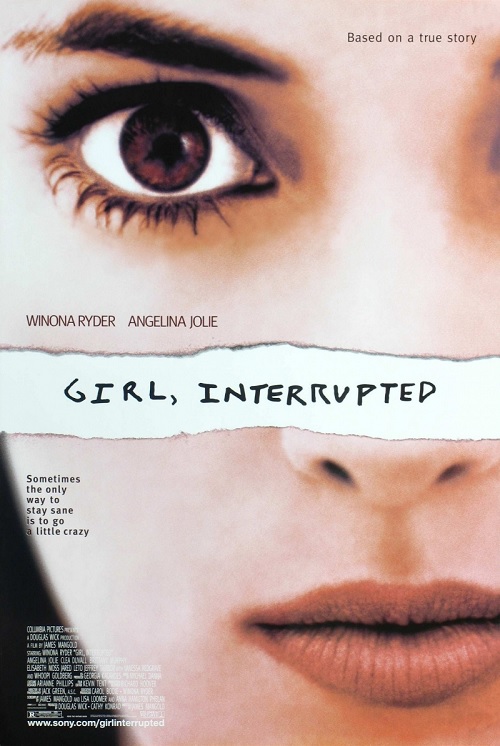
Girl, Interrupted

RORY: I’ll tell you what, Sookie. How about Lane and I come up with a few more suggestions for you? Still melodic, but not quite as Girl, Interrupted.

Girl, Interrupted, a 1999 psychological drama film directed by James Mangold, and based on the 1993 memoir of the same name by Susanna Kaysen. The memoir’s title comes from the Vermeer painting, Girl, Interrupted at Her Music. The film is set in New England in the 1960s, and follows a young woman, played by Winona Ryder, who spends 18 months in a psychiatric facility after a suicide attempt.

The film received only lukewarm reviews, with most of the praise for the performance of Angelina Jolie, who plays a sociopath. Jolie won the Academy Award for Best Supporting Actress. The author, Susanna Kaysen, didn’t like the film, accusing James Mangold of adding too many invented, melodramatic scenes. Mangold rewrote the story as a parallel to The Wizard of Oz.

It seems possible that Rory could have read the book, either before or after the film came out. Not only does she enjoy female memoir and autobiography, but Susanna Kaysen was admitted to the same private psychiatric hospital where Sylvia Plath and Anne Sexton were treated, as well as John Nash.

Annie Sullivan

SOOKIE: Oh, who listens to the lyrics?

LORELAI: Anybody not hanging out with Annie Sullivan by the water pump.

Anne Sullivan (1866-1936), the visually impaired teacher and lifelong companion of deaf, blind and mute student Helen Keller (1880-1968). She was the only person able to get through to Keller and help her learn to communicate with the outside world, and a result, both women became inspirational figures.

At first Sullivan made little progress with her student, until a breakthrough occurred when Sullivan held Keller’s hand under the water pump and repeatedly spelled out W-A-T-E-R into her palm. With great effort, Keller hesitantly said, “Wah-wah”, her first spoken word. Keller then touched the earth, asking for its name as well, and by the end of the day she had learned thirty words. It was the beginning of her learning to read, write, and speak.

These events are depicted in the film The Miracle Worker, previously discussed [pictured].

I Can’t Get Started

This is the song that Sookie has chosen for her wedding, and is playing it for Lorelai, Rory, and Michel to hear.

“I Can’t Get Started” is a 1936 popular song, composed by Vernon Duke with lyrics by Ira Gershwin. It was introduced in the film Ziegfield Follies of 1936, performed by Bob Hope and Eve Arden. The 1937 version by jazz trumpeter Bunny Berigan went to #10 in the charts and was inducted into the Grammy Hall of Fame in 1975.

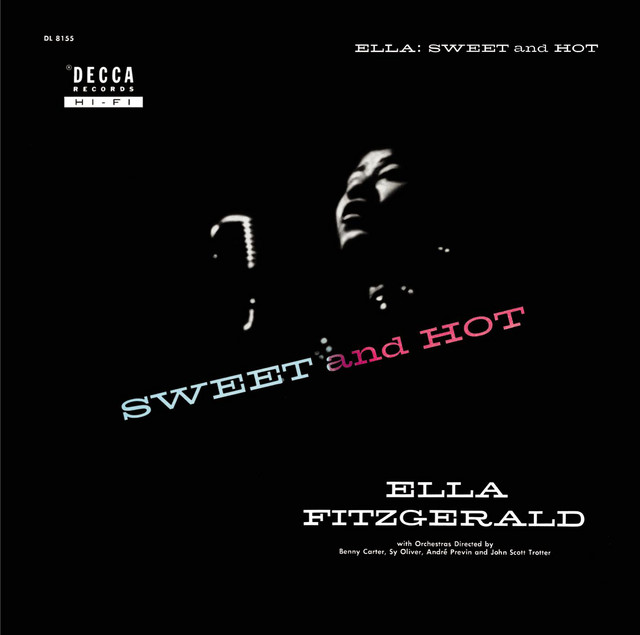
Sookie is playing Ella Fitzgerald’s version, which was included on her 1953 album, Sweet and Hot. It’s also on her 1973 live album, Newport Jazz Festival: Live at Carnegie Hall. This album also includes her song, “A-Tisket, A-Tasket”, which was previously used as an episode title on Gilmore Girls.

Lorelai protests that the lyrics are far too depressing for a wedding song, being about a relationship that will never get off the ground:

I’ve flown around the world in a plane
I’ve settled revolutions in Spain
The North Pole I have charted, but I can’t get
Started with you

Around the golf course I’m under par
And all the movies want me to star
I’ve got a house, a show place, but I get no
Place with you

You’re so supreme, lyrics I write of you
Scheme, just for a sight of you
Dream, both day and night of you
And what good does it do?

In 1929 I sold short
In England I’m presented at court
But you’ve got me downhearted, cause I can’t get
Started with you

You’re so supreme, lyrics I write of you
Scheme, just for a sight of you
Dream, both day and night of you
And what good does it do?

It’s been chosen as the title of the episode, so we know that the season will end with at least one romantic whump!

Baz Luhrmann

ZACH: It’s like a Baz Luhrmann movie out there.

Mark “Baz” Lurhmann (born 1962), Australian director, writer and producer of films, television, opera, theatre, music and recording. He is the most commercially successful Australian director, with four of his films in the top ten highest worldwide grossing Australian films of all time. He is best known for his “Red Curtain” trilogy of films: Strictly Ballroom (1992), William Shakespeare’s Romeo + Juliet (1996), and Moulin Rouge! (2000). His films are known for their eccentric and flamboyant style, lavish sets, bright colours, fast-paced camera cuts and zooms, and highly choreographed, hyperbolic sequences.

Woody Allen in “Annie Hall”

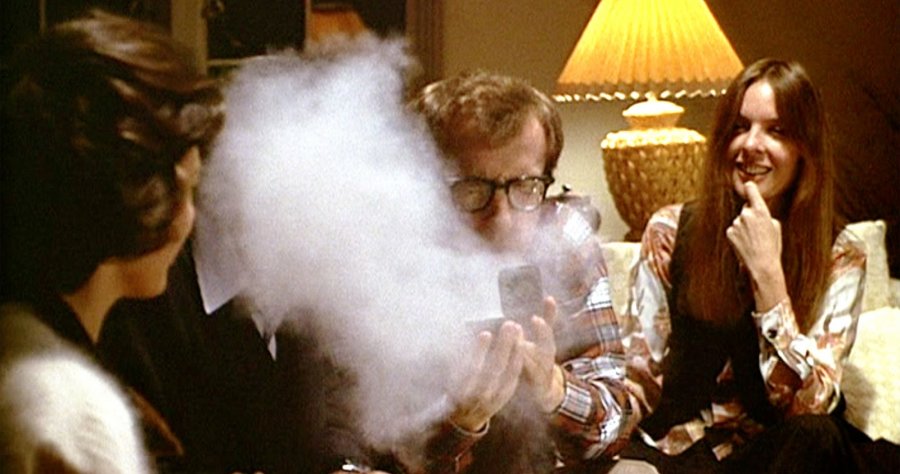
[Lorelai is fixing her makeup near the chalkboard. She sneezes and stirs up a cloud of chalk dust.]

LORELAI: Great, I’m Woody Allen in Annie Hall.

Annie Hall, 1977 satirical romantic comedy-drama film co-written and directed by Woody Allen, who also stars opposite Diane Keaton in the title role. It follows comedian Alvy Singer as he tries to understand why his relationship with Annie Hall ended a year ago. In real life, Diane Keaton’s original surname was Hall and her nickname was Annie; Allen and Keaton had dated several years before the film came out, and Annie Hall is at least partly autobiographical.

Annie Hall met with widespread critical acclaim upon its release, and was a commercial success – Allen’s biggest box office hit, adjusted for inflation. It won four Oscars, including Best Picture and Best Director, with a Best Actress for Keaton. It also won five BAFTAs and a Golden Globe. It is regarded as one of the best comedies, one of the best romantic comedies, one of the best screenplays, and one of the greatest films of all time.

Lorelai is referring to the scene where Allen’s character Alvy is talked into trying cocaine, only to wind up sneezing so that thousands of dollars of white powder goes everywhere.

High Fidelity

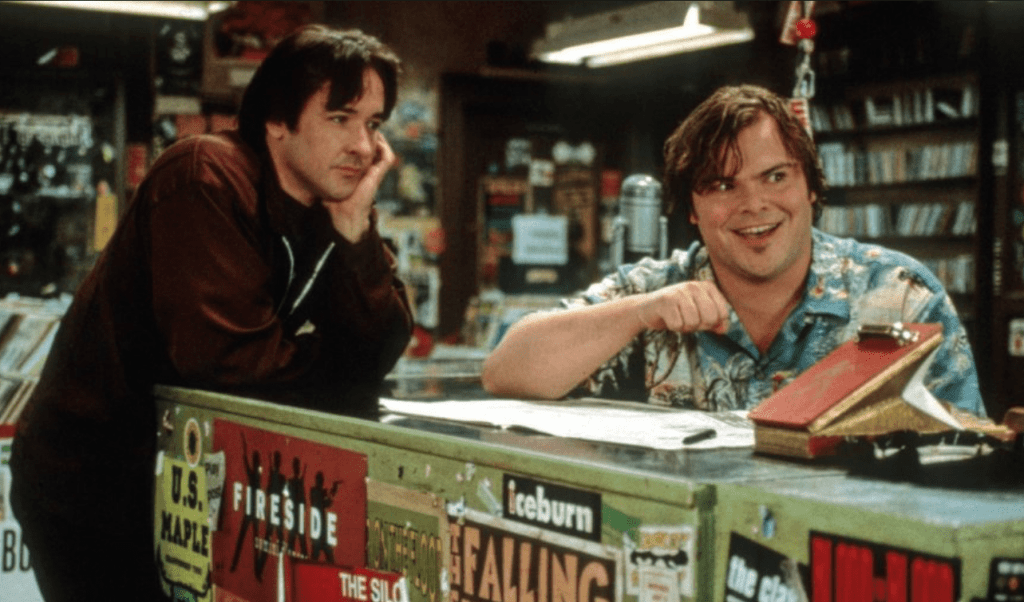
JESS: There’s a record store you should check out. It’s run by this insane freak who’s like a walking encyclopedia for every punk and garage-band record ever made. Catalog numbers . . . it’s crazy. The place is right out of High Fidelity.

High Fidelity, 2000 romantic comedy-drama film directed by Stephen Frears, based on the 1995 British novel of the same name by Nick Hornby, with the film’s action moved from London to Chicago, but otherwise faithful to the book.

The film stars John Cusack as a music-lover named Rob with little understanding of women who owns a record store called Championship Vinyl. He and his employees Dick and Barry (played by Todd Louiso and Jack Black), armed with an encyclopedic knowledge of music, compile “Top 5” lists for every occasion, and openly mock their customers’ tastes. Eventually, Rob is able to produce a mixtape to please his girlfriend, Laura (played by Iben Hjejle).

High Fidelity was a commercial and critical success, receiving praise for its witty dialogue, strong performances and solid soundtrack. It’s been voted one of the best romantic comedies, and one of the greatest films of all time. It was made into a 2020 television series.

It’s interesting that Jess compares the record store he is taking Rory to with one out of a romantic comedy – especially one where a smart but emotionally obtuse young man learns to express his feelings.

EDIT: Thank you to High Fidelity fan Alisa for supplying the correct name of the actress playing Laura.