[They ring the doorbell, Sookie answers] SOOKIE: There they are, my little termite whisperers.
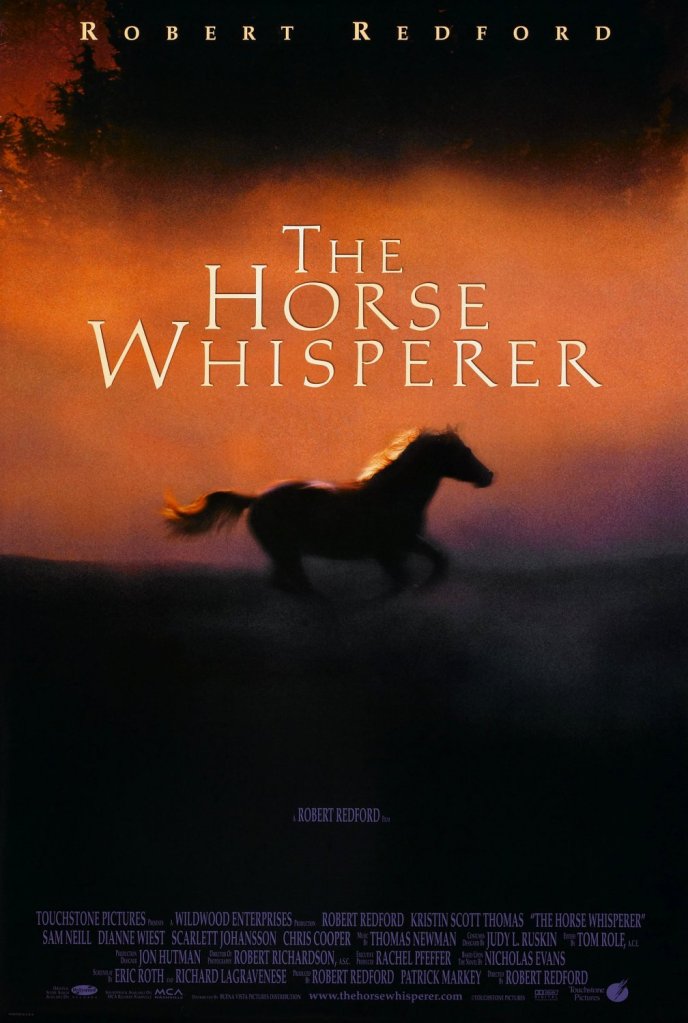
Sookie references the 1998 drama film The Horse Whisperer, based on the 1995 novel of the same name by Nicholas Evans. The film is directed by Robert Redford, who also stars in the title role, and is about a “horse whisperer” who is able to train horses through kind, gentle methods.
The Horse Whisperer was a commercial success and well received. It led to anyone having a supposedly ability to handle a difficult creature, person, or situation as a “[whatever] whisperer”, just the way Sookie does. Even though Lorelai and Rory haven’t handled them well at all!
Note that the horse whisperer in the film is a horse trainer from Montana. This is so suspiciously like Bootsy’s claim in the previous episode that he spent a summer training horses in Montana that I think he either chose his vacation after watching the film, or simply made the story up, inspired by the film.
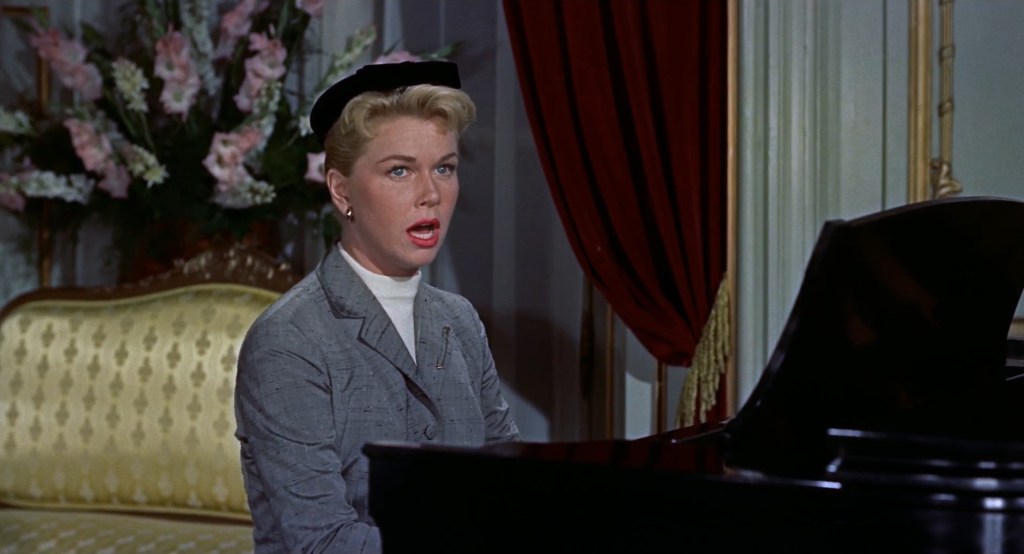
This song plays as Lorelai wakes up happy, gets coffee, goes outside, and falls through the porch. It was written by Jay Livingston and Ray Evans, published in 1955. It was introduced in the 1956 Alfred Hitchcock film, The Man Who Knew Too Much, sung by Doris Day. Her rendition went to #2 in the US and #1 in the UK, and the film received the Academy Award for Best Song. It became Doris Day’s signature song, and is regarded as one of the best songs in cinema history.
The song popularised the phrase que sera sera to indicate a sort of cheery fatalism, although the phrase itself was used as a heraldic motto as early as the 16th century. It is an English mistranslation of “what will be, will be” from the Spanish; in Spanish it would be lo que será, será. No such similar phrase is known of in Spanish or Italian, it has always been an English saying.
In The Man Who Knew Too Much, Doris Day sings the song in the hopes that her kidnapped son will hear it. The song’s message of hope is often used in film and television juxtaposed against disastrous events to create a moment of black comedy, of which we see a very mild version in Gilmore Girls. The joke is that Lorelai has no idea what is coming.
(It might seem unusual to go out on your porch in the your pyjamas early in the morning in the depths of winter to drink your coffee, but Lorelai has that special relationship with snow. And they’re actually in California).
LORELAI: I am Magenta, Rory usually opts for Janet, and I … was thinking that you could put on some fishnet stockings, a leather teddy, some platform boots, and go with us as Dr. Frank-N-Furter.
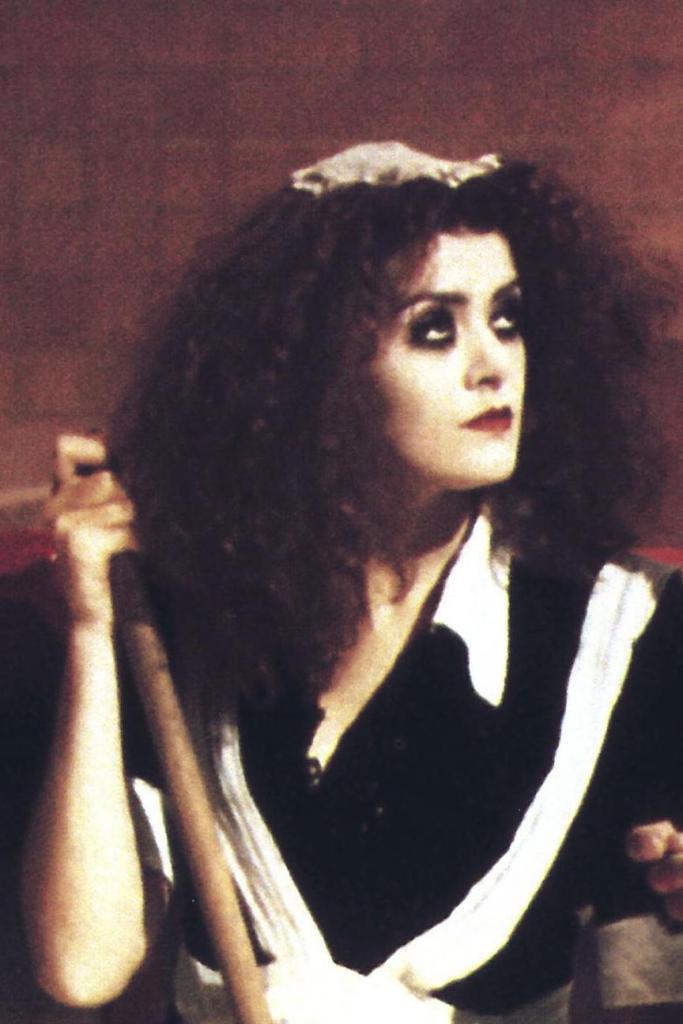
Magenta (played by Patricia Quinn) [pictured] is the maid at the castle inThe Rocky Horror Picture Show. A popular choice for dress-ups, she has wild frizzy reddish-brown hair, heavy Goth make-up, and a maid’s uniform. Apart from referencing Lorelai starting at the inn as a maid (she possibly still has her old uniform to wear as a costume), she really would look great as Magenta.
Janet Weiss (played by Susan Sarandon) is the innocent young woman who comes to the castle. She has a girl-next-door look with pink dress, white cardigan, and white handbag. Rory would make a convincing Janet as the seemingly wholesome girl with a deeply repressed sexual side just waiting to be unleashed. Note that Janet is unfaithful to her fiance, Brad – the show keeps linking Rory with infidelity.
Dr Frank-n-Furter (played by Tim Curry), previously discussed, and described by Lorelai.
LORELAI: Okay. So we should celebrate. Hey, how about we get all dressed up tonight and hit The Rocky Horror Picture Show?
The Rocky Horror Picture Show, the 1975 musical comedy horror film, previously mentioned. Directed by Jim Sharman, it is based on the 1973 stage production of The Rocky Horror Show, with music, book, and lyrics by Richard O’Brien (who co-wrote the film’s screenplay and plays Riff Raff in the film).
The film begins with a young engaged couple named Brad and Janet who get lost one night and end up at the castle of a cross-dressing bisexual mad scientist named Dr Frank-n-Furter, who is from another planet. The film both parodies and celebrates science fiction and horror films from the 1930s to the 1970s, set against the backdrop of the glam rock era, which allowed much exploration and transgression of gender and sexuality.
The quirky film originally struggled to find an audience, but midnight screenings soon led to it gaining a cult following, especially in the LGBT community. Free admission was often given to those who arrived dressed as the characters, so it became an early example of cosplay fandom, and there is traditionally strong audience participation, with the audience encouraged to sing, dance, and shout lines from the film. Can you see why this is a film Lorelai would love?
The Rocky Horror Picture Show continues to be shown in cinemas, making it the longest-running release in cinema history. Midnight screenings are still popular, but Stars Hollow is showing it at the sensible time of 8 pm. Even so, I don’t believe Mrs Kim would have approved of Lane seeing the film on a school night, although Rory intends to invite her.
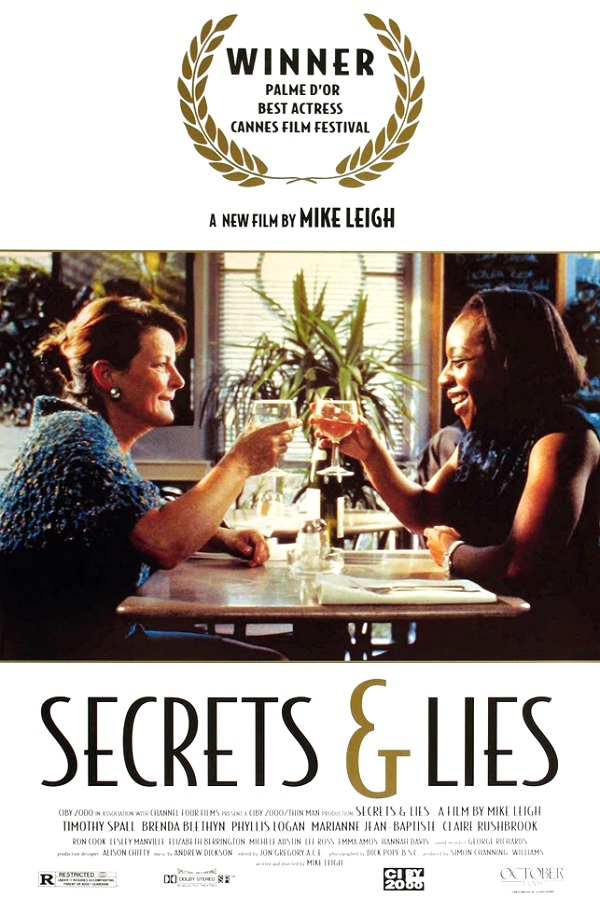
The episode title is a reference to the 1996 British drama film Secrets & Lies, directed by Mike Leigh. The film is about an adopted woman who seeks out her birth mother, and the many secrets and lies involved in the process (indeed, one of the biggest questions in the film remains a secret, although with some tragic hints as to its answer).
Secrets & Lies received rave reviews from critics, and is regarded as one of the best British films of all time. It was showered with international awards, including Best Film at the BAFTAs and the Palm d’Or at the Cannes Film Festival. It was praised for bringing to light important issues surrounding adoption.
The episode doesn’t have much to do with the film’s subject matter, except that it involves secrets between mothers and daughters.
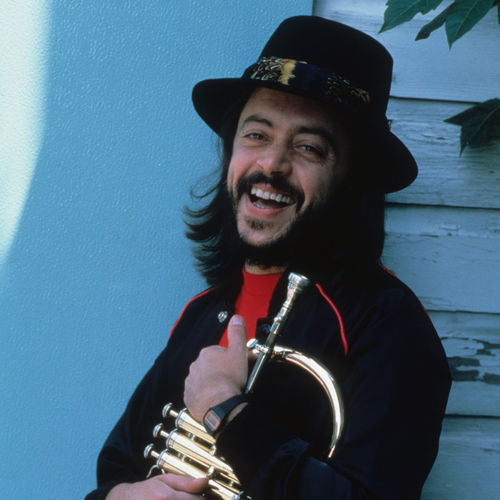
RUNE: Welcome Lords and Ladies. I call upon these sprightly horns to commence our proceedings. [horns play] Hey Chuck Mangione, you wanna back up a step?
Charles “Chuck” Mangione (born 1940) is a flugelhorn player, trumpeter, and composer. He came to prominence in the 1960s as a member of Art Blakey’s jazz band, then formed The Jazz Brothers with his brother Gaspare “Gap” Mangione. He has released more than sixty albums, and achieved international success with his 1977 jazz-pop single, Feels So Good. His compositions have been used in films and for the Olympic Games. He played himself as a voice actor on animated sitcom King of the Hill (1997-2010).
LORELAI: Your pod Grandpa is still happy as a clam.
Pod Grandpa: A reference to the film Invasion of the Body Snatchers [pictured], previously discussed. Once again, Luke and Lorelai are shown using the same reference points.
Happy as a clam: American phrase meaning “happy and content”. It’s a shortened form of the 19th century simile, happy as a clam at high tide. It’s only at low tide that clams can be gathered for a meal, so at high tide they should be happy and safe.
JESS: Hey, what do you and Dean talk about? … I mean, does he know Björk? RORY: I’ve played him some stuff. JESS: Hm. So you got a teacher-student thing going?
Rory completely throws Dean under the bus at this point. She could have said, “Dean is a fan of Nick Drake, he actually got me into Pink Moon. And he loves Liz Phair and The Sugarplastic”.
She doesn’t mention that Dean likes old movies, and that they originally bonded over Rosemary’s Babywhen they met, or watched Willy Wonka on their first date. She doesn’t tell him that Dean recommended Hunter S. Thompson to her.
The fact that she makes no attempt to defend Dean’s intellect, or even to tell Jess to butt out of her relationship with her boyfriend, is extremely telling. She does tell Jess that, despite his scepticism, Dean is exactly her sort of guy, but it doesn’t sound very enthusiastic – especially considering Rory couldn’t think of one thing she and Dean talk about.





 The Annotated Gilmore Girls