NC-17

MAX: I’m the one that started the kiss.
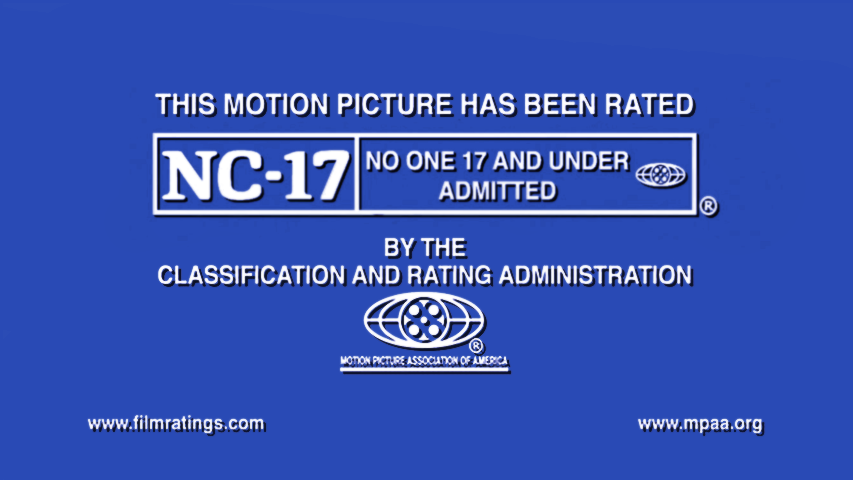
LORELAI: And I’m the one that knocked it up to NC-17.

In the US, a rating of NC-17 means that a film is not suitable for children, and nobody aged 17 or under will be admitted to a movie theatre. It replaced the X-rating on films in the 1990s.

Lorelai is saying that their kiss is something the children shouldn’t have been allowed to see.

Oscar and Felix

While arguing over whether to eat leftover pizza from the garbage bin – it was only just thrown out and is still in the box – Rory calls Lorelai “Oscar”, and she counters by calling Rory “Felix”.

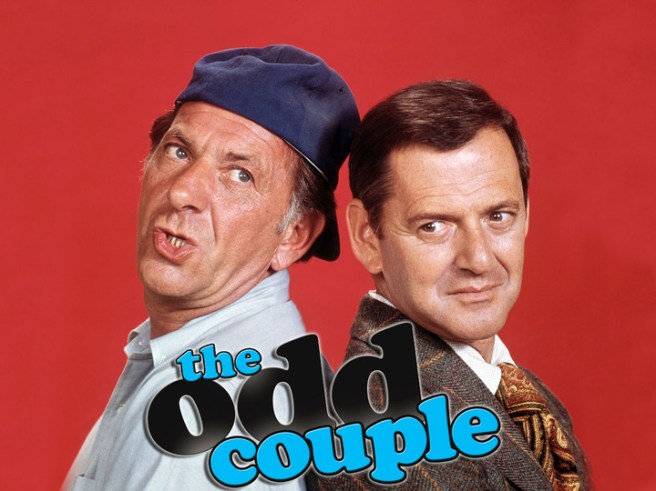
This is in reference to Oscar Madison and Felix Ungar, the main characters from The Odd Couple, originally a 1965 Broadway play written by Neil Simon. In the story, the pair are friends sharing an apartment, with the slovenly Oscar and neat-freak Felix constantly clashing.

The Odd Couple was made into a comedy film in 1968, directed by Gene Saks, and with Walter Matthau and Jack Lemmon starring as Oscar and Felix respectively. Given rave reviews by critics, it was the #4 film of 1968.

It was then made into a television sitcom with Jack Klugman and Tony Randall as Oscar and Felix, originally airing from 1970 to 1975, but still on American television in reruns. This may be the version of The Odd Couple that Lorelai and Rory is most familiar with.

It seems to be an old joke between Lorelai and Rory to see themselves as “the odd couple” – mismatched housemates who nevertheless are very fond of each other.

(Note that Lorelai cleaning out the refrigerator is a call back to the contest she and Rory had at the start of the episode to see who had to clean out the fridge – apparently Lorelai lost).

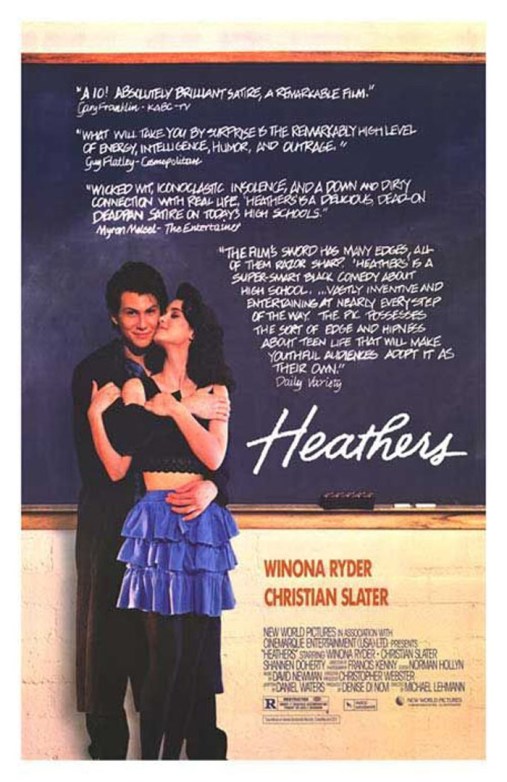
“The new Heather”

RORY (referring to Louise and Madeline greeting her): Normal, friendly, no acts.
LORELAI: Wow, you’re the new “Heather”.

Lorelai is referring to the 1988 black comedy film Heathers, directed by Michael Lehmann. The film stars Winona Ryder as Veronica, a popular girl at an Ohio high school, who hangs out with a clique of beautiful, wealthy girls all named Heather (Shannen Doherty, Lisanna Falk, and Kim Walker).

Despite being the most popular students at the school, the Heathers are feared and hated, and Veronica wants to get away from them. When a new student named JD (Christian Slater) becomes Veronica’s boyfriend, he manipulates her into helping him kill one of the Heathers and making the death looks like suicide. After the death, the next Heather in line assumes her role. Lorelai is saying that with Paris apparently toppled from her role as head mean girl, Rory can now step into her shoes.

Heathers was widely praised by critics on release for its cynical and subversive tone, and the director and screenwriter both won awards. It wasn’t a big success at the box office, but developed a cult following after being released on video in 1989.

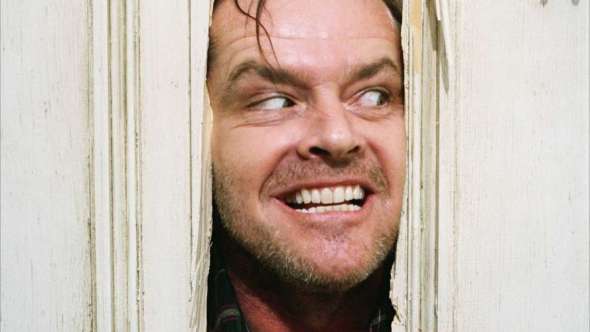
“Here’s Johnny”

RORY: Well, Madeline and Louise, Paris’ best friends, they said hello to me the other day.
LORELAI: Really? Like a normal hello? Not like a “Here’s Johnny” kind of hello?

Another reference to the horror film The Shining, earlier discussed. In one memorable scene of the movie, the sanity-challenged Jack Torrance hacks through a bathroom door with an axe in an attempt to kill his wife and son. Jack Nicholson, who played Torrance, adlibbed the line “Here’s Johnny!”, which he shouts in a terrifyingly deranged manner with his head through the broken door. It is regarded as an iconic film moment.

Jack Nicholson took the line from the long, drawn-out catchphrase used by Ed McMahon when introducing the host on The Tonight Show Starring Johnny Carson, which ran from 1962-1992. It’s one of the best known catchphrases in history.

Rick James and Hugh Grant

RORY: Her [Paris’] dad’s like this big wig at a huge pharmaceutical company and they’re printing all the sordid details about it [his divorce] in the paper.
LORELAI: Ooh how sordid?
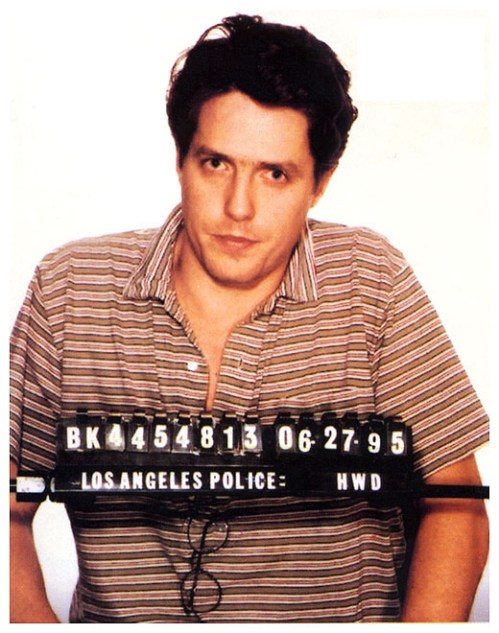
RORY: Well, it’s not the Rick James incident, but Hugh Grant should be feeling pretty good about himself.

American R&B singer Rick James (1948-2004) had several public scandals. In 1991, he and his wife were accused of holding a woman hostage for several days during a cocaine binge, tying her up, and forcing her to perform sexual acts. In 1993, while out on bail, he and his wife were accused of kidnapping and assaulting a female business associate for several hours. He was found guilty in both cases, sentenced to two years prison, and ordered to pay his second victim $2 million in damages in a civil suit. Released from prison in 1996, he was accused of sexually assaulting a woman in 1998, but charges were later dropped. It may be this final “incident” that Rory is alluding to.

British actor Hugh Grant (born 1960) [pictured] was arrested in Los Angeles in 1995 for receiving oral sex in a car from a Hollywood prostitute named Divine Brown. He was fined, placed on two years probation, and ordered to complete an AIDS education program. The incident occurred just before his film Nine Months was released, but he was able to gain public appreciation by speaking honestly about what he’d done and not making any excuses for his behaviour. As a result, no major damage was done to his career or reputation.

Mr. Geller’s scandalous exploits are apparently significantly worse than an encounter with a prostitute, but not as bad as the sexual assault allegations levelled at Rick James. We know that they must be sexual in nature, and of enough public interest to be reported in the newspaper. Other than that, they must be left to our imaginations.

Max and Rory’s Code Names

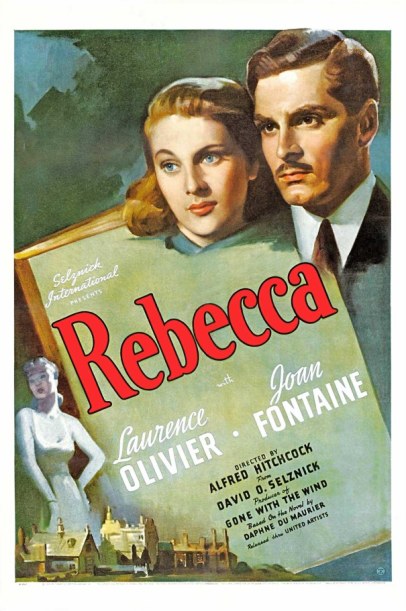
When Rory says she is uncomfortable calling her teacher by his first name outside school, even though he is also her mother’s boyfriend, Max suggests they use code names for each other. He offers to call her “Rebecca” – probably just because it starts with the same letter as Rory, and was then a common name for girls of Rory’s age (it also has the same number of syllables as her full name, Lorelai).

From their ensuing conversation, we can tell that Rory immediately links the name with the 1940 romantic mystery film Rebecca, directed by Alfred Hitchcock and based on the 1938 best-selling novel of the same name by Daphne Du Maurier. Rebecca was the #1 film of 1940, and won two Academy Awards, including Best Picture; it is still regarded as a classic of Gothic romance and psychological drama.

The character of Rebecca never appears in the film, as she is already dead, the first wife of Max De Winter (Laurence Olivier) whose memory continues to haunt him and his new wife (Joan Fontaine). Rory feels that, like Rebecca, she should never have been seen – her role was to disappear before Max arrived for his date, as per the “Gilmore Dating Rules”.

Disturbingly, Max De Winter in the film secretly hated Rebecca, who led a scandalous life, and was glad when a struggle between them ended with her death. You can’t help but feel that Rory subconsciously believes that Max would prefer it if she didn’t exist, and perhaps even that she is a “scandal” as Lorelai’s illegitimate child to another man – the cause of Rebecca and Max’s final fight was because she (falsely) claimed she was bearing another man’s child, who would inherit his estate.

Because Rory already has her mind on Hitchcock films, she offers to call Max “Norman”, saying that Psycho was on (television?) earlier that evening. (Note that she cannot call him by the film name from Rebecca, as he is already named Max).

Psycho is a 1960 thriller directed by Alfred Hitchcock, based on the 1959 novel of the same name by Robert Bloch. Filmed on a low budget, the film received mixed reviews on release, but was a massive box office success, and the #2 film of 1960. Now Hitchcock’s best known film, it is regarded as one of the most influential films of all time, and one of the greatest in its genre.

Rory calls Max after Norman Bates (Anthony Perkins), the murderer in the film. Norman Bates first appears to be a pleasant-looking, rather shy young man, but is subsequently exposed as a deranged killer who had a perverted relationship with his mother – one of his first victims. Rory could not make it clearer that she secretly fears Max wants her out of the way, and feels threatened by him dating her mother. Possibly Max’s pleasant manner to her is, in the depths of her mind, hiding something much more sinister.

Struggling to come up with another name, she can only think of “Alfred” after Alfred Hitchcock, the director of Rebecca and Psycho. Known for his voyeuristic camera style, his films often involve characters with a problematic relationship with their mothers, and beautiful yet icy women. Maybe Rory has already subconsciously picked up that there are problems between Lorelai and Max.
 

Marilyn Monroe-Arthur Miller Syndrome

MADELINE: I bet his [Max’s] girlfriend’s pretty.
LOUISE: I bet she’s dumb.
MADELINE: Why?
LOUISE: Dumb girls crave smart men. It’s that whole Marilyn Monroe-Arthur Miller syndrome.

Hollywood actress Marilyn Monroe and left-wing playwright Arthur Miller married in 1956, after meeting in the early 1950s and dating seriously since 1955. The media saw the marriage as a mismatch, because Monroe’s typecast screen persona was a “dumb blonde”: one headline read Egghead Marries Hourglass. The couple divorced in 1961.

Lorelai and Max do fit the Monroe-Miller stereotype, as Max is written as far more literary and intellectual than the vivacious Lorelai.

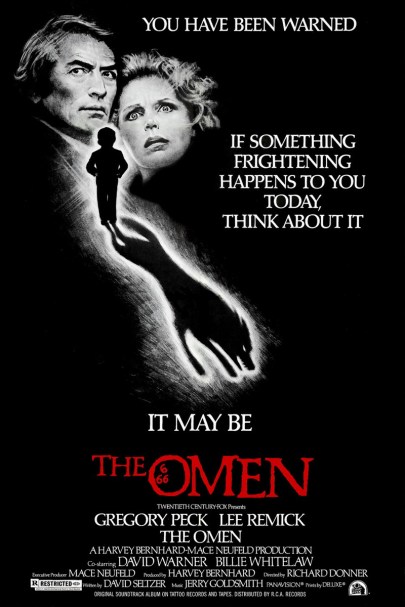
Damien

LORELAI: Look, I know it [her treatment of Skippy] was bad, but this was a vicious hamster. This was like a Damien hamster with little beady eyes and a big forked tail and … a cape with a … hood …

Lorelai is referring to the 1976 horror film The Omen, directed by Richard Donner. It is about a little boy named Damien (Harvey Spencer Stephens) who appears to be the Antichrist, and around whom numerous unexplained tragedies take place. The Omen was the #5 movie of 1976 and received excellent reviews; it also gained an Academy Award for its score. Today it is recognised as a horror classic.

Interestingly, Rottweiler dogs feature in the film as a mysteriously evil force. Buttercup is part-Rottweiler, suggesting that, like Skippy, she may have ended up being another “bad pet” that Lorelai would have had to abandon if Lorelai had adopted her.

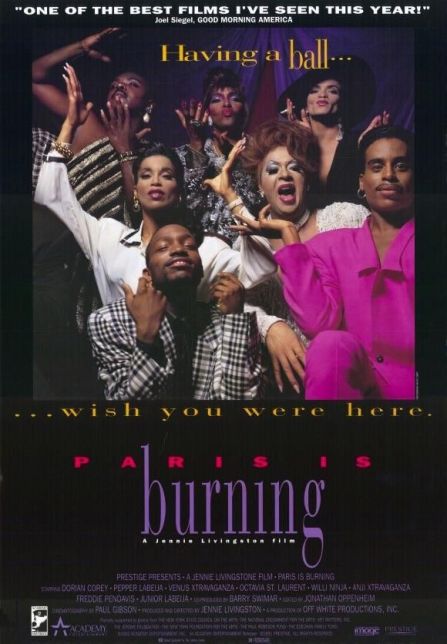
Paris is Burning

The episode title may be a reference to the 1990 documentary film Paris is Burning, directed by Jennie Livingston. The documentary is about the drag ball culture in New York City, and the drag competitions which take place at the balls. The documentary film received rave reviews and several awards at film festivals; it remains relevant in discussions on LGBT, youth, class, and racial issues.

The film’s title comes from drag performer Paris Dupree (1950-2011), who gave a drag ball with the name. It may have been partially inspired by Adolf Hitler’s reported question during World War II, “Is Paris burning?”, when he wished the city to be completely destroyed rather than re-taken by the Allies.

This episode centres on Paris Geller, who we learn more about in this episode, and who does indeed “burn down” or destroy the relationship between Lorelai and Max. She does so to deflect public attention from her own problems, thus playing a role like the drag performers in the film.

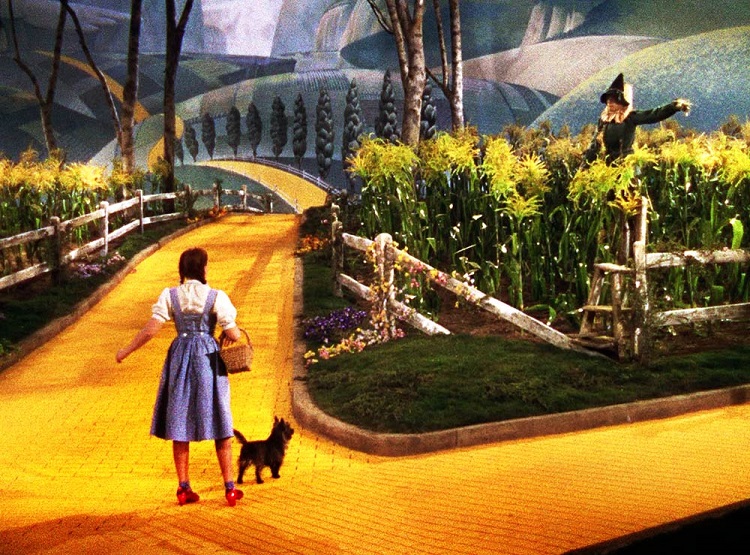
“Where’s the scarecrow?”

LUKE: Okay, we’re supposed to follow the blue line, around the corner and then we should be –
LORELAI: Where’s the scarecrow when you need him?

Lorelai is referring to the 1939 musical fantasy film The Wizard of Oz, produced by Metro-Goldwyn-Mayer, and based on L. Frank Baum’s 1900 children’s book The Wonderful Wizard of Oz. It was the #9 film of 1939, and a critical success on release, although so expensive to make that it didn’t make much of a profit for MGM. It won two Academy Awards for its music. After being broadcast on TV in 1956, and annually from 1959 to 1991, the film became one of the most famous in history, and is recognised as a cultural icon and one of the best films ever made.

Luke’s comment about following the blue line seems to remind Lorelai of the song Follow The Yellow Brick Road, where Dorothy (Judy Garland) is sent on her journey to find the Wizard by the diminutive Munchkins, after she is given the instruction to follow the Yellow Brick Road by Glinda the Good Witch of the North (Billie Burke). The Scarecrow (Ray Bolger) makes his appearance in the next scene, when the Yellow Brick Road branches off in two different directions, just as the hospital’s blue line does.

There will be many more references to the movie throughout the run of Gilmore Girls, and it serves as an inspiration for the show. Like The Wizard of Oz, Gilmore Girls creates a specifically American fantasy land which is both cosy and uncomfortable, with a story line which contains comedy and drama. Like Gilmore Girls, The Wizard of Oz is a quirky journey of growth where the lesson to be learned is that you already have everything you need before you even set out.