Florida People and Anita Bryant

RICHARD: Oh, I always start my breakfast off with half a grapefruit.
LORELAI: Hm, do the Florida people know about you? Because Anita Bryant left this huge gap that has yet to be filled.

Anita Bryant (born 1940), previously mentioned. Singer who had a string of hits in the late 1950s and early 1960s, and was Miss Oklahoma 1958.

In 1969, she was chosen as the ambassador for the Florida Citrus Commission, with commercials featuring her singing Come to the Florida Sunshine Tree, and saying the tagline, “Breakfast without orange juice is like a day without sunshine”.

In 1977 she became a controversial figure as an anti-gay rights activist, leading a coalition of conservative Christians who wished anti-discrimination legislation to be repealed. They were successful, but earned the ire of gay-rights activists, who organised a ban against orange juice. She became an object of ridicule, and after her divorce in 1980, the Florida Citrus Commission allowed her contract to lapse. This is the “huge gap” that Lorelai suggests Richard might like to fill. It also seems to be another comment about censorship.
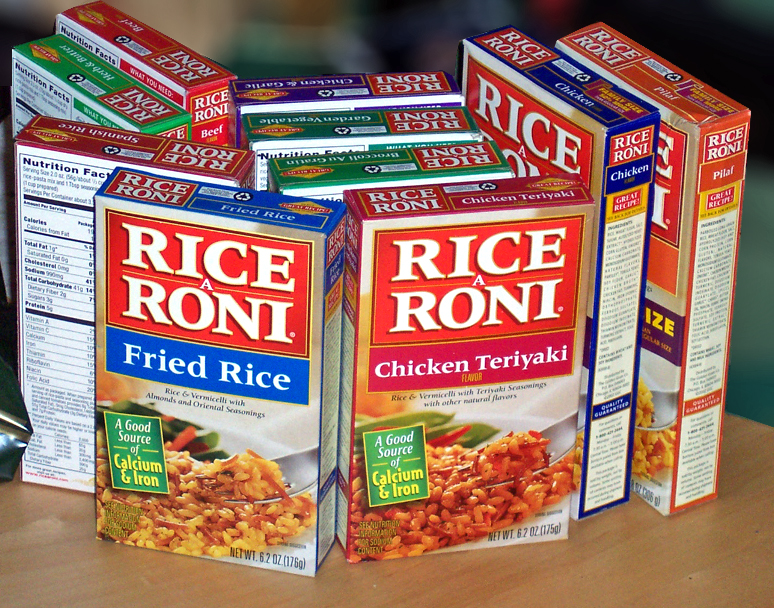
Rice-a-Roni

LOUISE: It’s just a contest, Paris. It’s not like you get a car or a lifetime supply of Rice a Roni.
MADELINE: God, I love that stuff.

A boxed food mix containing rice, vermicelli pasta, and seasonings. It’s prepared by browning it in butter, then adding water and simmering until cooked, so you end up with something a bit like pilaf. It’s made by Quaker Oats, a subsidiary of PepsiCo.

It was invented by Vince DeDomenico in 1958, inspired by a home recipe of his sister-in-law Lois, who had received it from an Armenian immigrant friend named Pailadzo Captanian. Originally called The San Francisco Treat, and later Pasta Roni, it was bought by Quaker Oats in 1986.

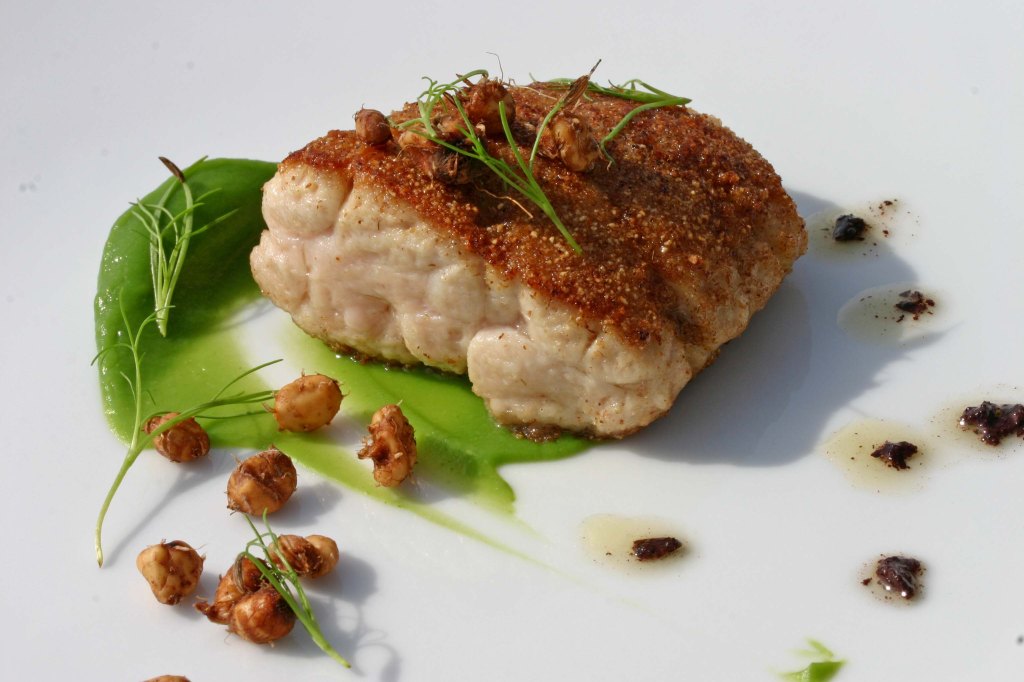
Sweetbreads

LORELAI: Okay, I give. What is this?
EMILY: Sweetbreads.
LORELAI: Sweetbreads. So that’s uh . . .
EMILY: Pancreas.

Lorelai breaks her own rule never to ask what something unfamiliar yet tasty is, in case the answer puts her off eating it again. Earlier she told Rory that she enjoyed eating snails, until she discovered what they were. Presumably this is another time that a delicious meal is ruined for her.

In cooking, sweetbread is the name for the thymus or pancreas, usually from a calf or lamb (lamb is considered superior). Pancreas sweetbreads can also come from beef or pork. They are often prepared by soaking in salt water, then poaching in milk to remove the outer membrane. Once dried and chilled, they can then be breaded and fried. A squeeze of lemon over them is a classic way to serve, and they match well with mushrooms and truffles, as well as legumes like beans and peas. They are considered to be a delicacy, and the origin of the name is not entirely clear.

Mallomars

LORELAI: I got your note.
RORY: Yeah, well pinning it to the Mallomars is always a safe bet.

Mallomars are graham cracker biscuits overlaid with marshmallow, then coated in dark chocolate. First introduced in 1913, they are manufactured by Nabisco and produced in a factory in Ontario, Canada (like the pilot episode of Gilmore Girls). They are a seasonal item, only available from October to April, so it fits that Lorelai and Rory are eating them in the middle of winter.

Jackson once gave Lorelai a recipe which sounded very much like home made Mallomars with jam instead of marshmallow.

Cup-a-Soup and Slim Jims

RORY: Four people asked me when we were tenting, two people asked me if we were moving, and one person asked me if we were atheists.
LORELAI: See, we have to stop talking to people. We have to stay at home with the curtains drawn collecting stacks of old newspapers, muttering to each other, eating nothing but Cup-a-Soup and Slim Jims.

Cup-a-Soup [pictured]: an instant soup mix sold in sachets, added to boiling water and stirred in a cup or mug. Comes in minestrone, chicken noodle, tomato, and chicken and vegetable flavours. In North America, it is made and marketed by Unilever’s Lipton brand.

Slim Jim: a processed meat snack in stick form that is basically a fermented sausage, very popular in the US, manufactured and sold by Conagra. It was invented by Jack Cornella in Philadelphia in 1929, and developed for production in the 1940s.

Fritos

These are the chips that Louise and Madeline are eating in the school dining hall for lunch, counting each one to make sure they don’t go over their (obviously tiny) calorie limit. Fritos are a brand of corn chips created in Texas in 1932 by Charles Elmer Doolin and since 1961 produced by the Frito-Lay division of PepsiCo.

“What’s the white stuff?”

JESS: What’s the white stuff?
LUKE: I think it’s cheese – or cream.
JESS: And the green stuff?
LUKE: I think it’s … best picked off.

This is another “mirroring” scene for Jess and Luke, showing them side by side, dressed alike, and gazing at their soup with the same expression of confusion and distrust. It doesn’t make a lot of sense though. Luke runs a successful diner – surely he can tell the difference between cream cheese and cream? And why is he so horrified by fresh herbs? (I think it’s sage, but I’m not sure).

Luke is always telling Lorelai and Rory off for eating meat and junk food, advocating a healthy plant-based diet. It’s nonsensical that he would be unable to identify a herb and unwilling to eat it, or look disgusted by a bowl of butternut squash soup. I mean, if he hates meat, and he hates vegetarian food, what exactly does Luke eat?

“Your pod Grandpa is still happy as a clam”

LORELAI: Your pod Grandpa is still happy as a clam.

Pod Grandpa: A reference to the film Invasion of the Body Snatchers [pictured], previously discussed. Once again, Luke and Lorelai are shown using the same reference points.

Happy as a clam: American phrase meaning “happy and content”. It’s a shortened form of the 19th century simile, happy as a clam at high tide. It’s only at low tide that clams can be gathered for a meal, so at high tide they should be happy and safe.

Cotton Candy

EMILY: Fine. You go and I’ll wait and hold your cotton candy for you.

Cotton candy, otherwise known as candy floss or fairy floss, is a spun sugar confection, often coloured pink or blue and carried on a stick. The machine-made variety was invented by a dentist named William Morrison and a confectioner named John Wharton in 1897; it was first widely made available to the public at the World’s Fair in 1904. It’s a traditional treat sold at circuses, fairgrounds, and carnivals.