Elizabethan government

PARIS: I think that the basic structure of the Elizabethan government is relatively sound. The division of power between the monarchy, the privy council, and the parliament all seem to work.

Elizabethan government was that in England under the reign of Queen Elizabeth I (reigned 1558-1603). Her government was extremely structured and complex, and made up of:

The Monarch – Queen Elizabeth herself, who ruled by divine right. She is generally regarded as one of England’s best monarchs, which is probably why Paris thinks her government would be the best to emulate.

The Privy Council – the queen’s advisors. They gave advice to the queen, but she could rule against them if she preferred. They handled routine administration.

Parliament – was made up of the House of Lords (nobility and upper level clergy) and The House of Commons (ordinary people who were elected to their position). Unlike today, it had very little power, and was mostly there to handle the financial side of things, such as taxes.

Local government – very important in Elizabethan times. Counties, cities, and towns all had their own governments to deal with issues on a local level, while the nobility ran their own manors.

Courts – the justice system was made up of a number of courts, all dealing with different types of crimes, from the most serious offences to petty matters. The wealthy and the poor had different court systems to try them, and there were separate courts for financial and religious issues.
“Camelot is truly dead”

LORELAI: Do you know that butt models make $10,000 a day? [Rory chuckles]
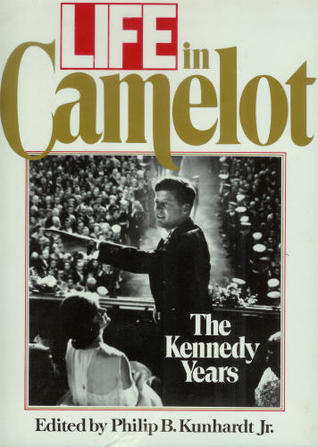
EMILY: Camelot is truly dead.

Camelot is the name of King Arthur’s castle and court in Arthurian legend. Americans use the term to refer to the presidency of John F. Kennedy, which was first applied by his widow Jacqueline Kennedy after his assassination in 1963.

Jackie referenced a line from the 1960 stage musical Camelot: “Don’t let it be forgot, that once there was a spot, for one brief, shining moment, that was known as Camelot”. Indicating that this was one of John F. Kennedy’s favourite lyrics from the musical, she added, “There will be great presidents again, but there’ll never be another Camelot again”.

I’m not sure where Lorelai received her information from, but butt models in the movies actually make about $500 a day, double that if they go nude. Outside the movies, it might be as little as $200 a day – they get paid by the hour, and let’s face it, hardly anybody wants to film a single butt all day. These days, a butt model could make as much as $5000 from just one Instagram post, but that isn’t the norm, and the option didn’t exist in 2001.

“Peace out, Humphrey”

EMILY: Everyone’s awfully quiet tonight.
LORELAI: Sorry Mom, I’m just tired.
RORY: Me too – school.
LORELAI: Work.
RORY: Life.
LORELAI: Dig it, man.
RORY: Peace out, Humphrey.

The audience knows why Lorelai and Rory are so quiet. Rory is depressed about breaking up with her boyfriend Dean, and Lorelai’s relationship with Max has hit an impasse: they reunited and both love each other, but the problems that ended their relationship are still there with no solutions in sight.

Lorelai says, “Dig it, man”, which is hippie slang from the 1960s meaning, “Get it, understand it, know it”. The hippies might have added the “man”, but “dig it” goes back at least to the 1930s as African-American slang, and even in the 19th century Americans spoke about “digging” in the sense of knowing or studying something.

Rory responds in a similarly counter-culture way by saying “Peace out, Humphrey”. “Peace out” is hippie slang meaning “Goodbye, go in peace”, influenced by the radio sign-off, “Over and out”.

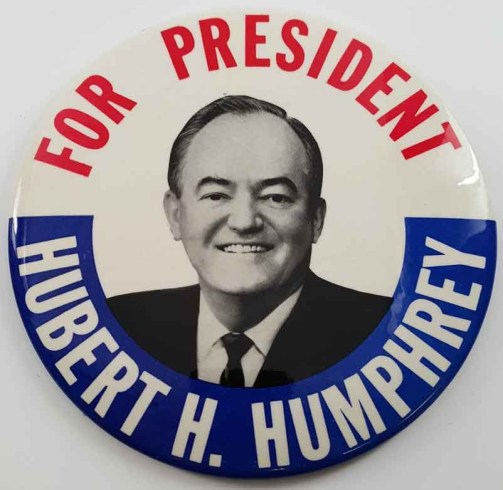
Rory is possibly referring to Hubert Humphrey (1911-1978) who was the Vice President under President Lyndon Johnson from 1965 to 1969. The main author of the Civil Rights Act of 1964, he introduced the initiative of the Peace Corps and the National Peace Agency. Sceptical of the war in Vietnam, he was forced to support it in loyalty to Johnson. He was the Democratic nominee in the 1968 presidential election but lost to Richard Nixon – you could say that he “peaced out”.

Madame Curie and Jennifer Lopez

PARIS: Yeah well, I doubt highly that Madam Curie was voted most likely to dress like Jennifer Lopez.

Marie Curie, born Maria Skłodowska (1867-1934) [pictured] was a Polish-born French physicist and chemist who conducted pioneering research on radioactivity. She was the first woman to win a Nobel prize, the first person and only woman to win it twice, and the only person to win it in two different sciences. The Curie family, including Marie, her husband Pierre, daughter Irène Joliot-Curie, son-in-law Frédéric Joliot-Curie, and son-in-law Henri Labouisse, has won more Nobel Prizes than any other family. She was the first woman to become a Professor at the University of Paris, and the first woman to be entombed at The Panthéon in Paris on her own merits.

Jennifer Lopez (born 1969) is an American actress, singer, dancer, and fashion designer. She began her career in 1991 as a dancer on television before branching into acting in 1993 (although she’d made her film debut as a teenager in a low-budget film). Her first starring role was in Selena (1997); she went on to star in other films in the 1990s, becoming the highest-paid Latina actress in Hollywood. She ventured into the music industry in 1999, with her debut album On the 6, which had two Top Ten singles. In January 2001, a few weeks before the events of this episode, she brought out her second album, J.Lo, around the same time as the release of her romantic comedy, The Wedding Planner, becoming the first woman to have a #1 album and #1 film in the same week.

We learn here that Paris’ ambition is to work in medical research toward the better understanding and treatment of cancer. It apparently doesn’t work out that way. Oddly enough, Liza Weil, who plays Paris, would later play a character who dies from cancer on medical drama Grey’s Anatomy.

Beirut

RORY: You brought me to Beirut?
DEAN: It’s a salvage yard.
RORY: Ah. And yet it looks so much like Beirut.

Beirut is is the capital of Lebanon, a seaport of more than a million people located on a peninsula. It is one of the oldest cities in the world, having been inhabited for more than five thousand years, and was voted as one of the New7Wonders Cities of the world.

Rory thinks the salvage yard looks like Beirut because of the Lebanese Civil War, which lasted from 1975 to 1990, and was partly caused by changing demographics due to the conflict in Israel and the Palestinian territories leading to further instability in the Middle East region. Since the war, Beirut has undergone reconstruction and, despite further conflicts, is now a major centre for commerce and tourism.

DAR

RICHARD: Emily, I didn’t know we were having company for dinner.
EMILY: Oh well, it was just sort of a spur of the moment thing. Chase’s mother and I are in the DAR together and he just moved back to Hartford, and it just seemed like a nice idea.

DAR stands for Daughters of the American Revolution, an organisation for women who are directly descended from someone involved in the United States’ efforts towards independence, especially the Revolutionary War.

The DAR works to promote historic preservation, education, and patriotism, with a motto of “God, Home, and Country”. It was founded in 1890 as a sister organisation to the Sons of the American Revolution, and was supported by First Lady Caroline Harrison, the wife of President Benjamin Harrison. It currently has around 180 000 members organised into about 300 chapters.

In real life the DAR is basically a genealogy-based service organisation which does worthy things like raise funds for historic buildings, give scholarships, conduct essay contests, volunteer to support veterans, participate in citizenship ceremonies, and hold exhibitions.

However, in the Gilmore Girls universe, the DAR is a highly exclusive women’s club whose wealthy members seem to spend most of their time having tea parties and looking down on others. I suspect this reflects more how the DAR might have been in the 1930s and ’40s – it now works very hard to promote diversity and tolerance.

In real life, the DAR has a chapter in both Hartford and West Hartford that Emily might have belonged to.

Palestinian and Israeli Families

LORELAI: Why were you in the Mideast?
RACHEL: I was doing a photo story on how Palestinian and Israeli families have been affected by the violence.

From this statement, we know that Rachel’s trip to the Middle East was specifically to Israel and the Palestinian territories of the Gaza Strip and the West Bank.

In 1948 the Jewish Agency declared the independence of the state of Israel, immediately followed by the 1948 Arab-Israeli War, which saw Israel established while the West Bank and Gaza were held by Arab states. Since the Six-Day War of 1967, Israel has occupied territories such as the West Bank, Gaza, and Golan Heights.

It is the world’s longest military occupation in modern times, with no peace agreement in sight. The violence of the conflict is well known around the world, and casualties extend to civilians as well as the military. Most of the casualties have been Palestinian.

Chernobyl and the Hindenburg

CHRISTOPHER: So …. last night.
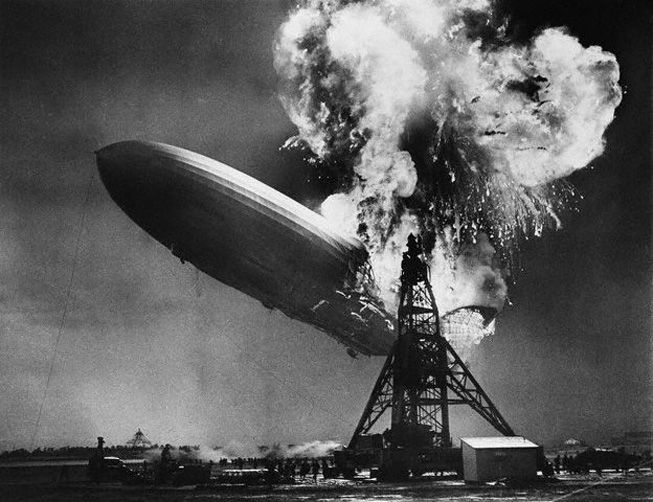
LORELAI: Ah, last night was Chernobyl and the Hindenburg combined.
CHRISTOPHER: Right, just checking.

Chernobyl was a city in the Ukraine which is now a ghost town. It is infamous as the site of the Chernobyl Disaster when a reactor exploded at the nuclear power plant; it is the worst nuclear disaster in history. The city was evacuated on April 27 1986, and the area around it is now restricted. (Weirdly enough, some people still choose to live there, and since 2004 it has become something of a tourist site).

The LZ 129 Hindenburg [pictured] was a German airship operated by the German Zeppelin Airline Company. First launched in March 1936, it was destroyed by fire on May 6 1937 while attempting to land at Lakehurst Naval Air Station in New Jersey at the end of its first transatlantic American flight. Known as the Hindenburg Disaster, it was the last of the great airship disasters, with 36 lives lost, and effectively spelled the end of airships as a form of transportation.

By his manner, Christopher seems to want to know how Lorelai felt about them having sex the previous evening, but her reactions makes it clear she considers the entire night a disaster of epic proportions. He seems subdued and disappointed in his response.

Catherine the Great

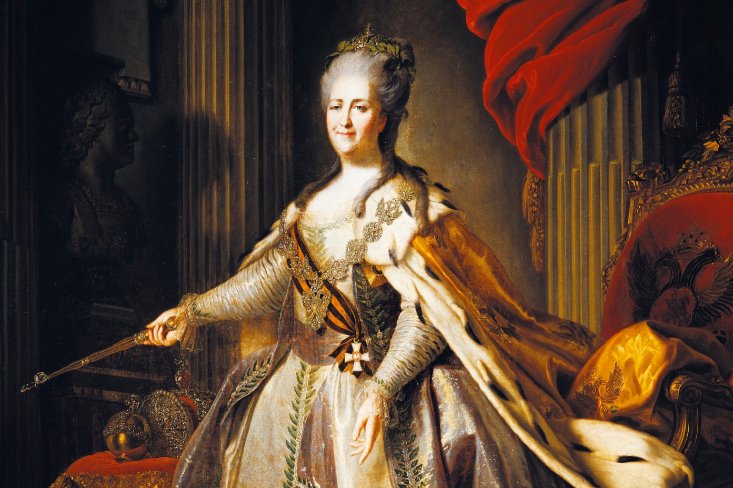
While Lorelai is mending her Chilton school sweater, Rory studies for a History test (her midterm exam?), reading through index cards on Catherine the Great.

Catherine II (1729-1796), also known as Catherine the Great, was Empress of Russia from 1762 to 1796, the country’s longest-ruling female leader. Under her reign, Russia grew larger and stronger, and was recognised as one of the great powers of Europe, while the period of her rule is considered the Golden Age of the Russian Empire and the Russian nobility. As patron of the arts, she presided over the Russian Enlightenment, and decreed the first state-funded institute of higher learning for women.

As Rory’s notes say, she was born Princess Sophie Friederike Auguste von Anhalt-Zerbst-Dornburg in Prussia. Although Lorelai jokes that everyone called her Kitten, her nickname was Figchen, a short form of her middle name Friederike. She received the name Yekaterina (Catherine) in 1744 on converting to the Russian Orthodox faith in preparation for her marriage.

Catherine married her second cousin Peter von Holstein-Gottorp, Duke of Holstein-Gottorp (that’s in north-west Germany) in 1745 – not 1754 as Rory says. Their marriage was indeed unhappy, and Catherine detested Peter at first sight. He had a difficult personality, and both of them were unfaithful to each other, with Catherine taking many lovers during her lifetime.

Peter became Peter III, Emperor of Russia in 1762, but six months later was deposed and possibly assassinated as the result of a conspiracy led by his wife Catherine, who succeeded him to the throne.

In an episode focused on women’s roles, this is a reminder of one of history’s most powerful female leaders.

“Italians’ feet”

LORELAI Mmm. Kick-ass wine.
EMILY: How poetic.
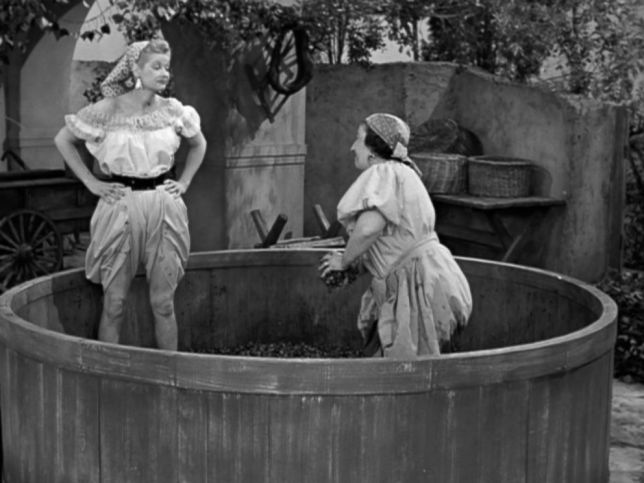
LORELAI: It’s got a nice smell: earthy, vibrant. I can taste the Italians’ feet.

Lorelai is referring to grape-stomping or pieage, a traditional winemaking technique where the grapes are crushed by human feet – evidence of the practice can be found in pictures from ancient Egypt and ancient Rome. Since the Middle Ages this part of the winemaking process is nearly always done by machinery, and even in ancient times there were wine presses to do most of the work.

However, grape stomping has never been completely abandoned, and survives in small pockets. These days it is often a fun event at cultural festivals and wine festivals, and some vineyards will charge you for the pleasure of partaking in the activity.

The popular idea of grape stomping being part of the winemaking process can probably be traced back to I Love Lucy. In the 1956 episode Lucy’s Italian Movie, while on a trip to Rome a film producer suggests Lucy audition for his new movie called Bitter Grapes. Lucy thinks it must be about winemaking, so finds the only winery left in the area that still makes wine using grape-stomping so she can practice the technique in advance.

This probably explains why Lucy-loving Lorelai immediately connects the wine to Italian feet in particular.