Thanksgiving

Thanksgiving is a public holiday in the United States celebrated on the fourth Thursday in November – in 2000, Thanksgiving was on November 23. Originating as a harvest festival, it has been celebrated nationally since 1793, and was declared a federal holiday in 1863.

It is clear that the Autumn Festival celebrates the lead up to Thanksgiving. Interestingly, the word “Thanksgiving” is never mentioned in the episode, yet it is obvious that it is the theme of the festival from context. Notice how often the words “thank you” are used in this episode – Rory even thanks Dean for giving her a kiss!

Especially in the early part of the episode, many of the symbols of Thanksgiving are in evidence or discussed.

Autumn leaves: suitable decorations for the season of the year.

Pilgrims: Americans trace the First Thanksgiving to a 1621 celebration in Plymouth (now in Massachusetts). The Pilgrims, who were English Dissenters, were given help by the local Native American people in catching and growing food, and added to their stores when supplies were low. The Pilgrims invited the local people to their harvest supper, which lasted for days and was held somewhere between late September and early November.

Indians: Lorelai tells Rory to save her apologies for the Indians, referring to the devastating effects of European settlement on the Native American population and culture. Because of it, Native Americans of New England have held a National Day of Mourning as a protest on Thanksgiving since 1970.

Turkey: This poultry native to the Americas plays a central role in Thanksgiving dinner, usually served roasted and stuffed. It is said to be one of the foods served at the semi-legendary First Thanksgiving, making it a traditional choice (they also ate a ton of eel, cod, and venison, but nobody cares much about that).

Pumpkin: A food native to the Americas in season in autumn, and a symbol of the harvest. Pumpkin pie is a traditional dessert for Thanksgiving dinner (which sounds wrong as a sweet, but tastes really nice).

Squash: Like pumpkin, autumn squash are native to the Americas and ripe for the season, making them a natural choice for Thanksgiving dinner.

Horn of plenty: Also known as a cornucopia, this has been a symbol of prosperity and abundance from classic times, and has long been connected with the harvest season. In the US, this has made it a natural fit as a Thanksgiving symbol, and is often a decorative wicker basket filled with fruits and vegetables.

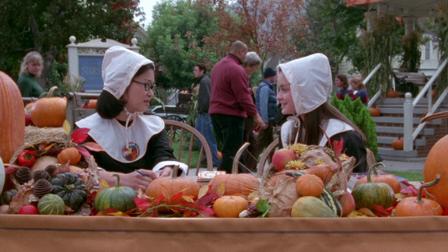
Canned goods drive: Donating canned goods to the less fortunate in a common charitable cause at Thanksgiving. In Stars Hollow, the collection point for the canned food drive is actually called the Horn of Plenty. Rory and Lane both volunteer to work at the Stars Hollow canned goods drive, for which they dress in Pilgrim costumes, with an Autumn Festival badge

The “Mayflower” and Plymouth Rock: Taylor and Dean attempt to make a display of canned soup look like either the Mayflower, or when that fails, Plymouth Rock. The Mayflower was the ship on which the Pilgrims arrived in the New World in November 1620, and Plymouth Rock in Plymouth Harbor was traditionally where they disembarked. Both are items of great veneration.

The Queen of England

EMILY (showing Lorelai a hat): Oh, isn’t this lovely?
LORELAI: Oh, yeah. As soon as we have her crowned Queen of England we’ll give it to her.

The throne of England actually came to an end in 1707; after this the kingdoms of England and Scotland merged into the Kingdom of Great Britain. In 1801 this merged with the Irish kingdom to become the Kingdom of Great Britain and Ireland. After most of Ireland left the union, its name was changed to the Kingdom of Great Britain and Northern Ireland, otherwise known as the United Kingdom. The last Queen of England was Queen Anne (1665-1714; became queen in 1702).

The Queen of the United Kingdom is Elizabeth II (born 1926), which was also the case in 2000. By tradition, the Queen (like other royals and the upper classes generally) always wears a hat in public during formal occasions. That’s probably why Lorelai connects hat-wearing with royalty. Her opinion is not shared by Amy Sherman-Palladino, who is a notorious wearer of hats.

Georgian desk

RICHARD: Take a look at that desk in my office. It’s a really fine Georgian piece.

The Georgian era was a period in British history lasting from 1714 to 1830, named so because all the kings on the British throne were named George during these years – from George I to George IV. However, when people say Georgian in regard to antiques, they often mean it’s from 1714-1800, the regencies of the first three Georges, with 1800-1830 identified as late Georgian.

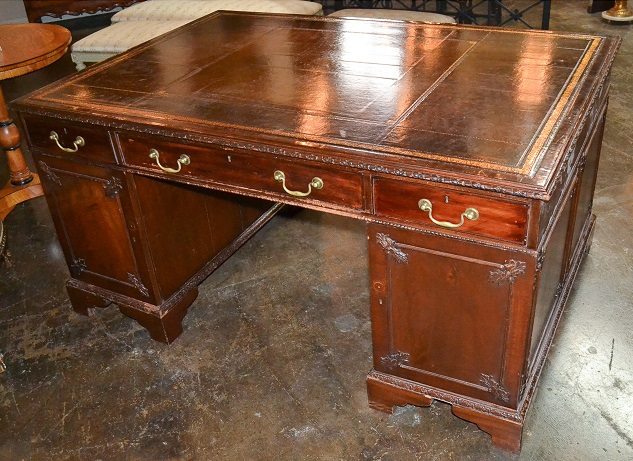
Georgian furniture tends to be solid and practical, made from quality wood, and with a fine attention to detail. A genuine Georgian desk of the sort Richard has in his office might be worth more than ten thousand dollars. (Of course it’s just part of the set, and not really Georgian at all – it doesn’t even look Georgian).

Iran-Contra

LORELAI: I kept information from you … Information that would have come out eventually. Like the Iran-Contra scandal.
RORY: So you’re Oliver North.
LORELAI: No, I’m Fawn Hall.
RORY: Mom.
LORELAI: Well, she was much prettier.

The Iran-Contra affair was a political scandal in the United States which took place during the second term of the Reagan Administration. Senior administration officials secretly facilitated the sale of arms to Iran, which was the subject of an arms embargo. They planned to fund the Contras in Nicaragua  through the arms sale, while at the same time negotiating the release of several US hostages held in Lebanon.

Lieutenant Colonel Oliver North [pictured] devised the scheme to fund the Contras, and was convicted in the Iran-Contra scandal in the late 1980s; however all charges against him were dismissed in 1991. Fawn Hall was North’s secretary who testified against him in court and was given immunity from prosecution in exchange for her testimony.

Hemlock and Arsenic

MAX: (to waitress) Do you have any hemlock back there? Arsenic, something quick?

Both potentially deadly poisons. The plant hemlock was used to execute the philosopher Socrates after he was found guilty of impiety. Arsenic was once a popular choice as a murder weapon because it is odourless and not easily detected, until a test for it was devised in the 19th century.

Henry the Eighth

MAX (looking at Lorelai’s table at the bake sale): Very Henry the Eighth.

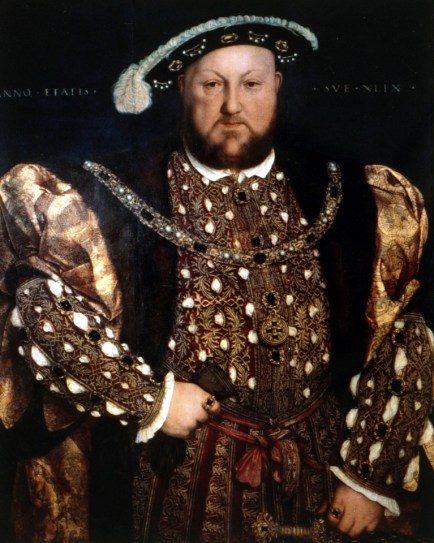
Henry VIII (1491-1547) was King of England from 1509 until his death. He is known for his lavish feasts with every delicacy imaginable, as a demonstration of his wealth and power. It may have been Sookie’s swan carved out of watermelon that made Max think of Henry VIII – a centrepiece of the banquets was food made to look like something completely different, such as a peacock made from marzipan.

The Two Koreas

LORELAI: Where does your mother think you are?
LANE: Oh, on a park bench contemplating the reunification of the two Koreas.

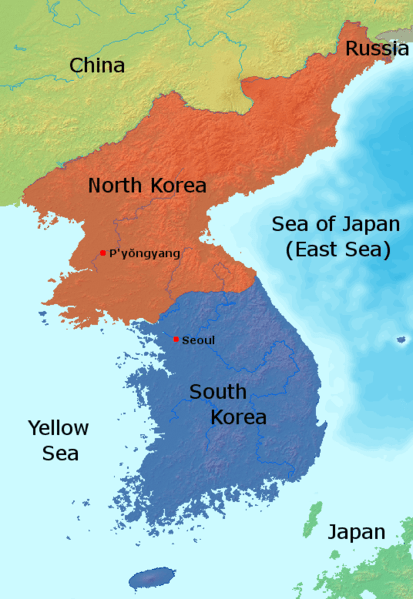
The country of Korea, which emerged in the 7th century, was annexed by Japan in 1910. At the end of World War II, after the surrender of the Japanese, it was divided into North and South Korea in 1945, with the North under Soviet control and the South under US occupation.

Tensions between the North and South led to the Korean War in 1950, ending in a stalemate in 1953 without a peace treaty. Each country contends that it is the sole legitimate government of Korea, and refuse to recognise the other. To date, there seems little chance of them reunifying.

Nazis

LORELAI: Germany. Is Dad’s firm insuring Nazis now?
EMILY: Your father doesn’t know any Nazis.

The National Socialist German Worker’s Party was a far-right political party active in Germany between 1923 and 1945, notorious for their belief in an “Aryan Master Race”, and the hideous consequences of that when they came to power.

They were abolished at the end of World War II, and there are strict laws in Germany about displaying Nazi symbols and using hate speech. Despite Lorelai’s (not very funny or clever) joke, there are far more Nazis in the United States, where laws exist to protect them, than in Germany.