Censorship in a Small Town

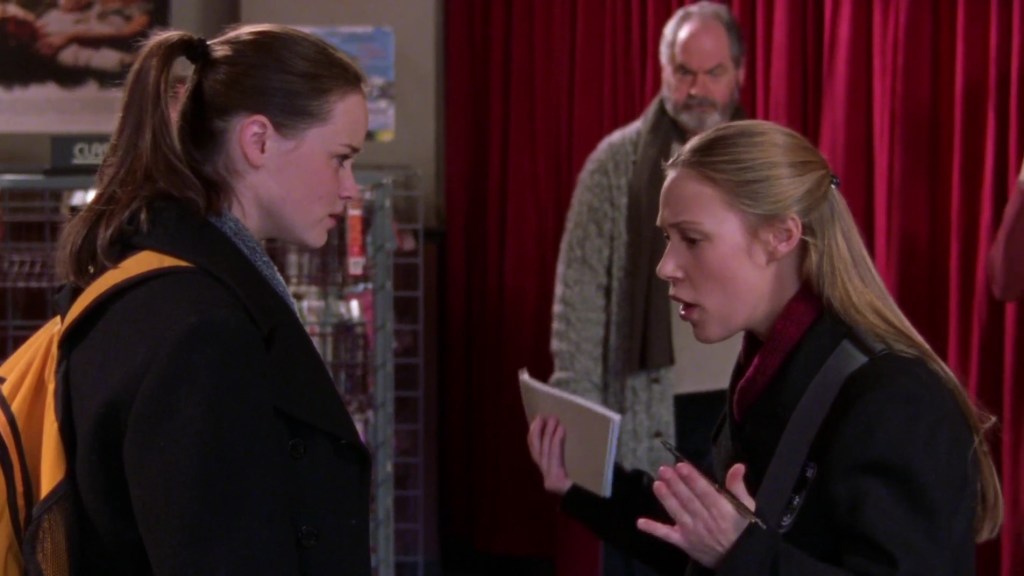
PARIS: Our story. Censorship in a small town, it’s perfect.
RORY: Paris, stop it. You know I don’t believe in censorship.
PARIS: Even better, small town minds run amok.

Paris is right – this is actually an interesting story, showing how in small towns, a tiny minority of people (Kirk and Taylor) can wield enough power to crush free speech entirely. Rory says she doesn’t believe in censorship, but she literally asked for an R-rated DVD to be put in a different section of the video store. That’s censorship!

The Franklin’s “Competition”

PARIS: Flescher Prep Gazette, Broadmouth Banner, Richmond Heights Chronicle – these publications are not our competition … The New York Times, the Wall Street Journal, the Washington Post – these publications are our competition.

The high school magazines Paris mentions are fictional, while the competition she identifies are major news publications, all previously discussed.

The Oppenheimer Award for Excellence

PARIS: The Oppenheimer Award for Excellence in school journalism is not a contest. It’s a statement. It says you’re the best. The best writers, the best reporters, the best editors. It says that you have crushed all others who have dared to take you on. It says that every other single school in the United States of America is feeling nothing but shame and defeat and pain because of the people who won the Oppenheimer plaque. I wanna be those people, I wanna cause that pain.

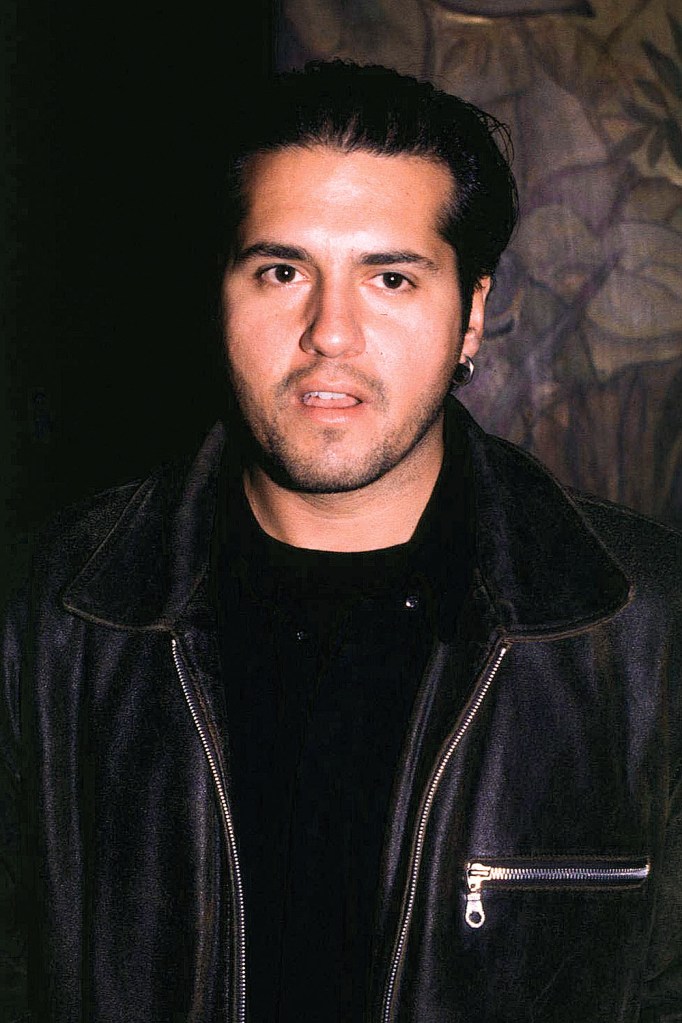
The Oppenheimer Award for Excellence seems to have been named in honour of Jess Oppenheimer (1913-1988) [pictured], the creator, producer, and head writer of the sitcom I Love Lucy, starring Lucille Ball. Lucille Ball called him “the brains” behind Lucy, and he was the creative driving force of the show. (Jess may also be named after Oppenheimer!).

In real life, there are the National Pacemaker Awards in student journalism, which has a category for high school newspapers. They are administered by the National Scholastic Press Association. Founded in 1927, they are the student equivalent of the Pulitzer Prizes, and for that category the deadline is in June. There is no plaque handed out as a prize.

We never discover whether The Franklin won the award, but it is never mentioned again, suggesting that it didn’t.

Robert Benchley at The Algonquin

RORY: Fine, but we have a real problem here.
LORELAI: Oh, you think I don’t know that? You think I sit around all day swapping witticisms with Robert Benchley at The Algonquin? No! I am thinking and worrying and using the computer, and I hate using the computer!

Robert Benchley (1889-1945), a humorist best known as a newspaper columnist and film actor. He began writing for The Harvard Lampoon while at Harvard University, before writing for Vanity Fair, and most famously, The New Yorker, where his absurdist essays proved highly influential. He made several appearances in films, and his 1935 film How to Sleep, won an Academy Award in the Short Film category.

The Algonquin Hotel is a historic hotel in Manhattan, which first opened in 1902. It had a reputation for hosting a number of literary and theatrical celebrities, including The Algonquin Round Table (or as they called themselves, “the Vicious Circle”). This group of New York writers, critics, actors, and wits met for lunch each day at The Algonquin from 1919 to 1929, engaging in witticisms which were disseminated across the country through their newspaper columns.

Robert Benchley was one of its most prominent members, and Lorelai is probably referencing the writer and critic Dorothy Parker, previously discussed. Dorothy Parker was a close friend of Robert Benchley, and one of the founding members of The Algonquin Round Table.

[Picture shows a painting of Dorothy Parker at The Algonquin Round Table by Carl Purcell]

A.J. Benza

LOUISE: Princess Grace didn’t go to college.
PARIS: Thank you for the history lesson, A.J. Benza.

Alfred Joseph “A.J.” Benza (born 1962) is an American gossip columnist and television host. He began as a gossip columnist on the New York Daily News, and in the mid-1990s began appearing on The Gossip Show on E! Entertainment Television, leading to appearances on several chat shows. From 1998 to 2001 he was the host of Mysteries and Scandals on the E! Network.

“Mr. Cosell”

EMILY: She [Rory] got home from school, but she just went right upstairs. Now she didn’t want a snack, but I had Rosa make her one anyway. I haven’t checked to see if she’s eaten it. She had a decent breakfast this morning, but she did seem a little tired, and when I went into her bathroom the aspirin bottle was out, so I assume she had a headache. Now, I don’t know if it was last night or …
LORELAI: Excuse me, Mr. Cosell. I appreciate the play-by-play but I just want to talk to my daughter now.

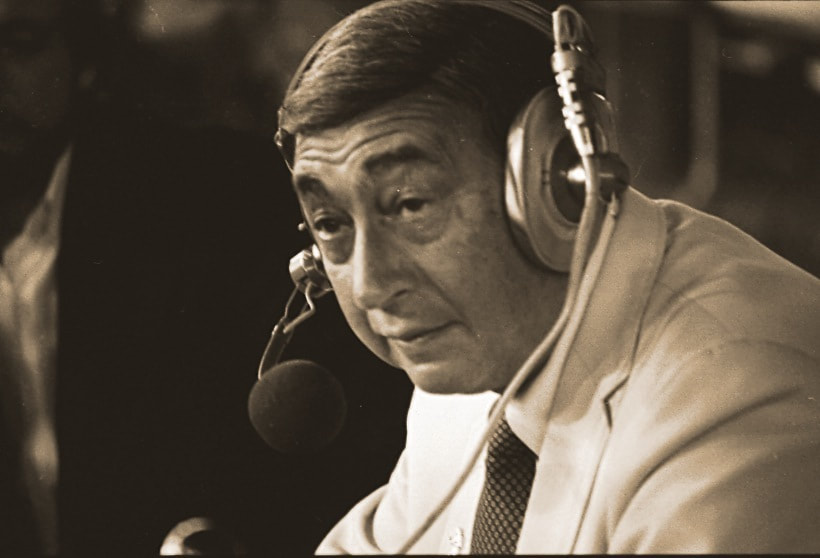
Howard Cosell, born Howard Cohen (1918-1995) was an American sports journalist who entered sports broadcasting in the 1950s, and in the 1970s became the commentator for Monday Night Football on ABC. He completely changed the style of sportscasting towards one of context and analysis, similar to hard news journalism, and is regarded as the greatest American sports commentator of all time. Lorelai compares Emily’s blow-by-blow account of Rory’s activities to Cosell’s in depth analysis of a football game.

Emily’s speech shows her hyper-controlling style of micromanagement. Rory has only been home from school for around an hour, but has had her every move and mood scrutinised, been given a snack after saying she didn’t want one, and had her bathroom searched after leaving it. It’s a telling insight into what Lorelai’s childhood must have been like, and into what Rory’s would have been like if Lorelai had remained living with her parents after becoming a mother.

Emily allows no autonomy, choice, or privacy, and keeps people under surveillance as if they are in prison (remember Lorelai, an adult, could not even say she was going to the toilet without being followed?). It’s really hard to blame Lorelai for fleeing her childhood home because of these circumstances, fearing that Rory would have to endure the same childhood she did.

Miss Manners

LORELAI: You gave me a second hand present, like something you got at the junk store.
EMILY: You’re being a little dramatic. It was still in the crate.
LORELAI: You actually went, “Huh, what should I get Lorelai this year? You know what, I can’t be bothered. Let’s give her something we don’t want anymore”.
EMILY: You’re not funny.
LORELAI: What would Miss Manners say about this?

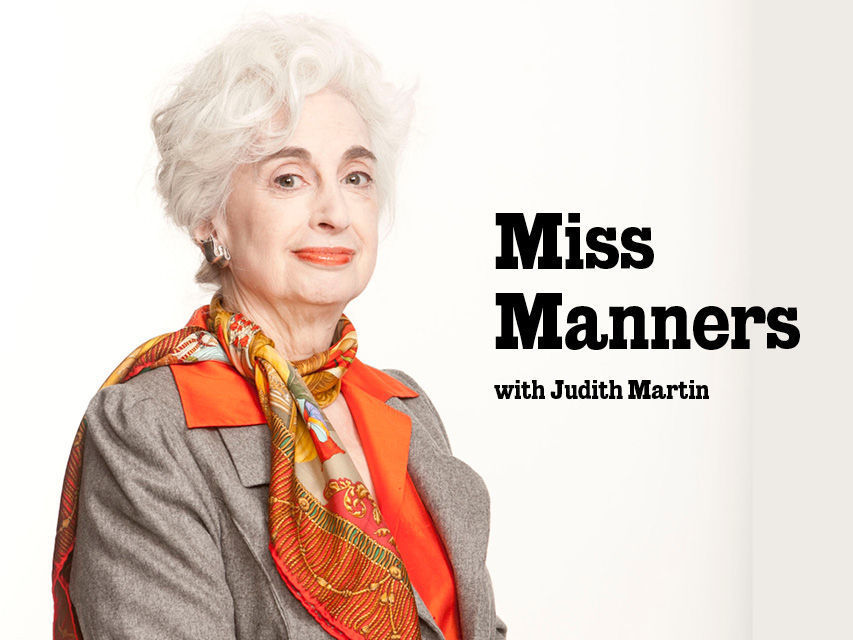
Miss Manners (born Judith Perlman in 1938, now Judith Martin) is an American journalist, author, and etiquette expert. Since 1978 she has written an advice column which is published in over 200 newspapers around the world.

Miss Manners does give her blessing to regifting, as long as the present is still new (not used), and that the recipient never finds out. She would think it quite okay that Lorelai received the unwanted hat rack from her mother still in its crate – the real rule of etiquette Emily has broken is telling Lorelai that her gift was previously given to her. Although as Emily says, she would probably understand if she met Richard’s mother.

The Franklin

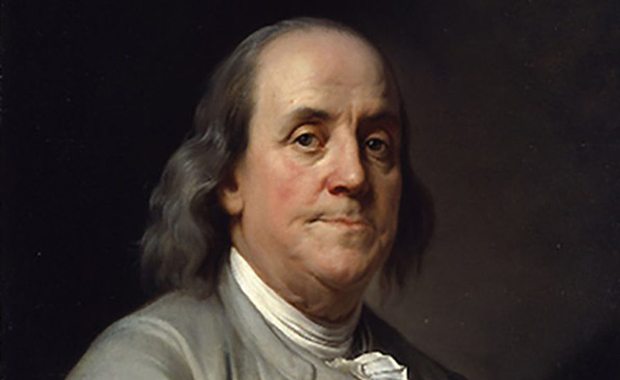
Chilton’s school newspaper, The Franklin, is named for Benjamin Franklin (1706-1790), who was one of the Founding Fathers of the United States, widely revered for his numerous and wide-ranging achievements. A scientist and inventor, he was also a political theorist, diplomat, and activist who campaigned to unify the thirteen colonies of 18th century America.

Benjamin Franklin was a successful newspaper printer and editor, becoming wealthy as the publisher of the Pennsylvania Gazette. This is the reason for honouring him in the title of the school newspaper.

“Not Cokie Roberts”

HEADMASTER: Not Cokie Roberts?
RORY: No.
HEADMASTER: Not Oprah, Rosie, or one of the women from The View?
RORY: No.

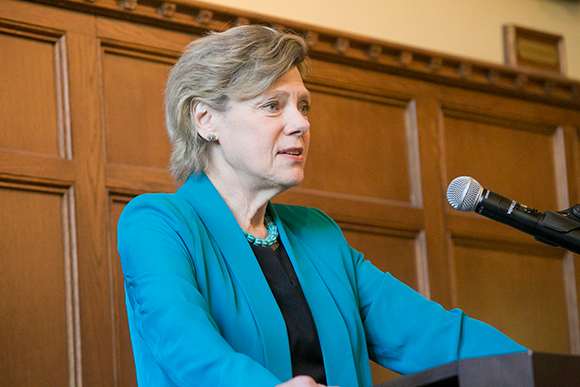
Mary Martha Corinne “Cokie” Roberts (born 1943) is a multi-award-winning American journalist. Since 1992 she has been the senior news analyst at National Public Radio (NPR), and since 1988 has been with ABC News as a political commentator.

Oprah Winfrey (born 1954) is an American talk show host, actress, media owner, and philanthroptist. She is best known for her talk show The Oprah Winfrey Show, which ran from 1986 to 2011. The highest-rated talk show in American history, it was extremely influential and won so many Daytime Emmy Awards that Winfrey eventually stopped submitting it so someone else had a chance. Through her media work, Winfrey became a billionaire and a major celebrity in her own right.

Rosie O’Donnell (born 1962) is an American comedian, actress, author and TV personality. Her talk show, The Rosie O’Donnell Show, ran from 1996 to 2002 and won multiple Emmy Awards. During the show’s run she became known for her light-hearted banter with celebrity guests, and for her promotion of Broadway musicals.

The View is an American morning talk show, broadcast since 1997. Its panel of female co-hosts discuss a range of political, social, and pop cultural topics, followed by celebrity interviews. It has won a number of Daytime Emmy Awards. In 2000, panelists on The View were Barbara Walters, Joy Behar, Meredith Vieira, Star Jones, and Lisa Ling.

Headmaster Charleston is questioning the sincerity of Rory’s journalistic aspirations by suggesting she just wants to get her face on television. However Rory corrects him by letting him know she could also write books or articles: as long as she can see the world and be a part of something big.