LANE: I’ve almost nailed the fill in “Ramble On”. I just have to stop hitting my face with the sticks when I pull my arms back.
RORY: John Bonham had that same problem.
“Ramble On”, 1969 song by English rock band Led Zeppelin, from their album Led Zeppelin II. The lyrics were influenced by J.R.R. Tolkien’s The Lord of the Rings, previously mentioned. It is regarded as one of of Led Zeppelin’s greatest songs.
John Bonham (1948-1980), English musician, best known as the drummer for Led Zeppelin. Esteemed for his speed, power, fast single-footed kick drumming, distinctive sound, and feel for the groove, he is regarded as one of the greatest and most influential rock drummers in history. He has influenced numerous drummers, including Dave Grohl and Neil Peart. He was posthumously inducted into the Rock and Roll Hall of Fame in 1995 as a member of Led Zeppelin.
Even though Lane is being allowed to practice on real drums twice a week, she is getting in extra practice by banging on Lorelai’s pots and pans, to show how keen she is.
Michael Landon, born Eugene Orowitz (1936-1991), actor and filmmaker best known for his roles in the television series Bonanza (1959-1973), Little House on the Prairie (1974-1982), and Highway to Heaven (1984-1989).
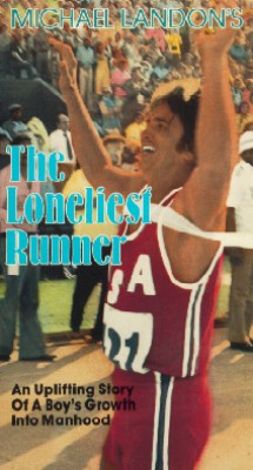
Michael Landon made an autobiographical television film in 1976, called The Loneliest Runner. The story is about a teenage boy named John Curtis, based on Landon himself, who still wets his bed. His mother publicises his problem by hanging the stained sheets from his bedroom window for all to see.
Every day, John runs home from school to take the sheets down before his friends see them. He starts running with the junior track team to channel his anger and forget the shame and hurt of his dysfunctional family life. Ten years later, he is a gold-medal winning Olympic champion, who credits his mother for his athletic success. Landon plays the adult Curtis himself.
Like John Curtis, Michael Landon wet the bed until he was 14, and his mother Peggy hung the sheets out to shame him. He had Olympic ambitions as a javelin-thrower, but a shoulder injury ended his athletic career, which propelled him into acting.
His unauthorised 19991 biography by Aileen Joyce, Michael Landon: His Triumph and Tragedy, relates that the bedwetting was brought on by the stress of having a suicidal mother. As a child, Michael Landon had to save his mother from drowning herself during a beach vacation.
LORELAI: I don’t know, didn’t they feed lead to our jumping frog or something?
RORY: Oh yeah, right after they stoned the woman who won the lottery.
Rory references the 1948 short story, “The Lottery”, by Shirley Jackson. Set on a beautiful summer day in an idyllic New England village (based on Jackson’s own home of Bennington, Vermont), the story tells of an annual ritual known as “the lottery”, an old tradition carried into modern times, and seemingly practised to ensure a good harvest.
People draw slips of paper from a box, and a wife and mother named Tessie Hutchinson eventually “wins” by drawing the marked piece of paper. The entire village begins stoning her to death as she screams of the injustice of the lottery – an injustice that only bothers her when she is the scapegoat marked for death.
The story was first published on June 26 in The New Yorker, and proved so unsettling at the time that The New Yorker received a torrent of letters, the most mail they ever received about a story. Jackson herself received about 300 letters about the story that summer, much of it abusive or hate mail. (Some asked where they could go to watch the “the lottery” take place!).
Since then, “The Lottery” has been analysed in every possible literary and sociological way, its careful construction and symbolism noted, and its themes linked with everything from mob mentality, the military draft, and the death penalty. It is one of the most famous stories in American literature, often reprinted in anthologies and textbooks, and has been adapted for radio, television, film, graphic novel, and even (to Shirley Jackson’s bafflement) a ballet.
Apart from being a short story often read for high school English classes, this seems like a story Rory would enjoy. She has a taste for dark and “gloomy” themes, and is a fan of American Gothic. Like Tessie, Rory is from an idyllic New England town, and has been singled out for special treatment – but in her case, it’s to be loved and glorified by the town.
The story reminds us that even the most charming small towns have a dark side, and that includes Stars Hollow. Rory is no doubt thinking of Jess, vilified and forced to leave because of a minor car accident. (The name Jess even sounds a bit like Tessie).
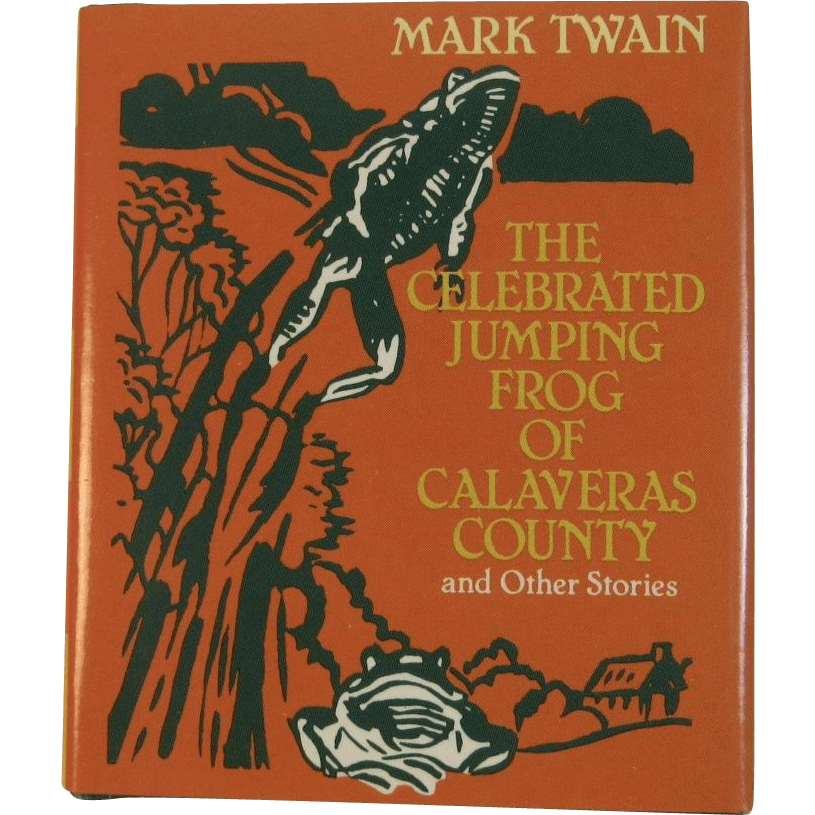
An inveterate gambler named Jim Smiley catches a frog and spends months training it to jump. He bets a stranger that his frog can out-jump any frog the stranger can find, but when the time comes, Smiley is dismayed to find his frog has been beaten. He pays up and the stranger departs, but Smiley later discovers that the stranger has poured lead shot down the frog’s throat, making it too sluggish to jump. He chases after the cheating stranger, but is unable to catch him.
First published in The New York Saturday Press as “Jim Smiley and His Jumping Frog”, the story was an immediate success and made Twain’s name as a writer. Later that year it was published in The Californian under its current title. Twain used the story in his first book, The Celebrated Jumping Frog of Calaveras County and Other Stories, published in 1867.
LORELAI: So, um, what just went down there? … Just now, the handshake with the man in the gray flannel suit – did you score a deal?
The Man in the Gray Flannel Suit, 1956 drama film directed by Nunnally Johnson, based on the 1955 novel of the same name by Sloan Wilson. The film focuses on a young World War II veteran, played by Gregory Peck, trying to support his family in Connecticut in a high-pressure job while dealing with post-traumatic stress syndrome from the war.
The film received mixed reviews at the time, but was very popular with the public for its critique of the increasing demands of corporate organisations upon white-collar workers, striking a chord with 1950s audiences.
LORELAI: [walks toward the drinks] Oh boy, I should’ve brought bread crumbs.
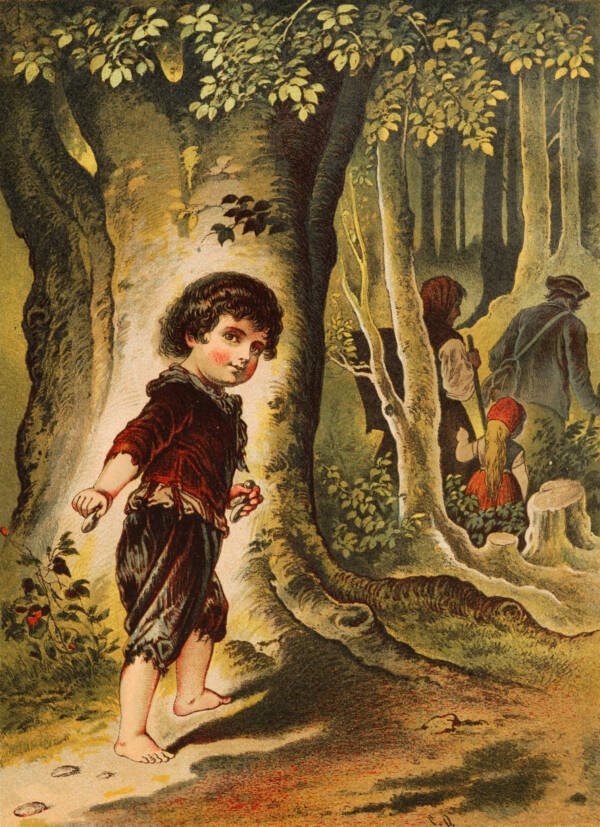
A reference to the fairy tale Hansel and Gretel, previously discussed. In the story, Hansel leaves a trail of breadcrumbs in the hopes that he and his sister will be able to find their way home by following them. Unfortunately, the birds eat the breadcrumbs so the children become lost in the forest.
RICHARD: Hm, maybe we should start a tab with them so we don’t have to pay cash everyday.
LORELAI: Already done.
RICHARD: Amazing. You’re like the tiny fellow on that M*A*S*H* program, always anticipating.
M*A*S*H* (an acronym for Mobile Army Surgical Hospital), a war comedy-drama television series set during the Korean War in the early 1950s which aired from 1972 to 1983. It was adapted from the 1970 film of the same name, which in turn was based on the novel MASH: The Story of Three Doctors by Richard Hooker, based on the author’s own experiences as a doctor in a field hospital in Korea.
Richard refers to the character Corporal Walter “Radar” O’Reilly on the TV sitcom M*A*S*H*, portrayed by Gary Burghoff. He seems to have extra-sensory perception, appearing at his commander’s side, with whatever paperwork is required, before being called, and finishing his sentences before the officer is anywhere near the end of them. Young and naïve, Radar tends to look up to his superiors as father figures, something Richard would probably like from Lorelai.
Although M*A*S*H* took a while to find its feet, by its second season it was one of the top 10 programs of the year, and stayed in the top 20 for the rest of its run. Becoming an allegory for the Vietnam War, it is considered one of the greatest TV shows of all time, and is still broadcast in syndication.
RORY: Nobody has, which is a shame because she wrote sixteen amazing novels, nine plays, and there are some who actually claim that it was Powell who made the jokes that Dorothy Parker got credit for.
Dawn Powell, previously discussed. Rory has already read her Selected Letters, and now is reading Novels 1930-42. Published in 2001 and edited by Tim Page, the five novels included in the single volume are Dance Night, Come Back to Sorrento, Turn Magic Wheel, Angels on Toast, and A Time To Be Born.
Powell’s novels are either witty, cynical bohemian works set in New York City, or earnestly sincere stories set in small town Ohio. This has led critics to wonder which was the “real Dawn Powell”, but I can understand Rory both longing for the sweet small town life, while aspiring to the intellectual rigours and fashionable life of the city. Like Powell, she is equal parts cynicism and sincerity, and like Powell, she was a precocious child and avid reader. No wonder Powell is her literary heroine.
It was critic Diana Trilling who reportedly said that Dawn Powell was the “answer to the old question ‘Who really makes the jokes that Dorothy Parker gets credit for?'”.
EMILY: I’m so sorry Rory isn’t feeling well. Is it that flu that’s been going around? … Horrible strain. Bunny Carlington-Munchausen has been bedridden for two straight weeks.
The show loves giving outrageous names to Emily’s society friends, and this one is pretty flamboyant. Bunny’s name seems to be an allusion to Munchausen Syndrome, a psychological disorder where people fake illnesses or deliberately make themselves sick in order to receive attention.
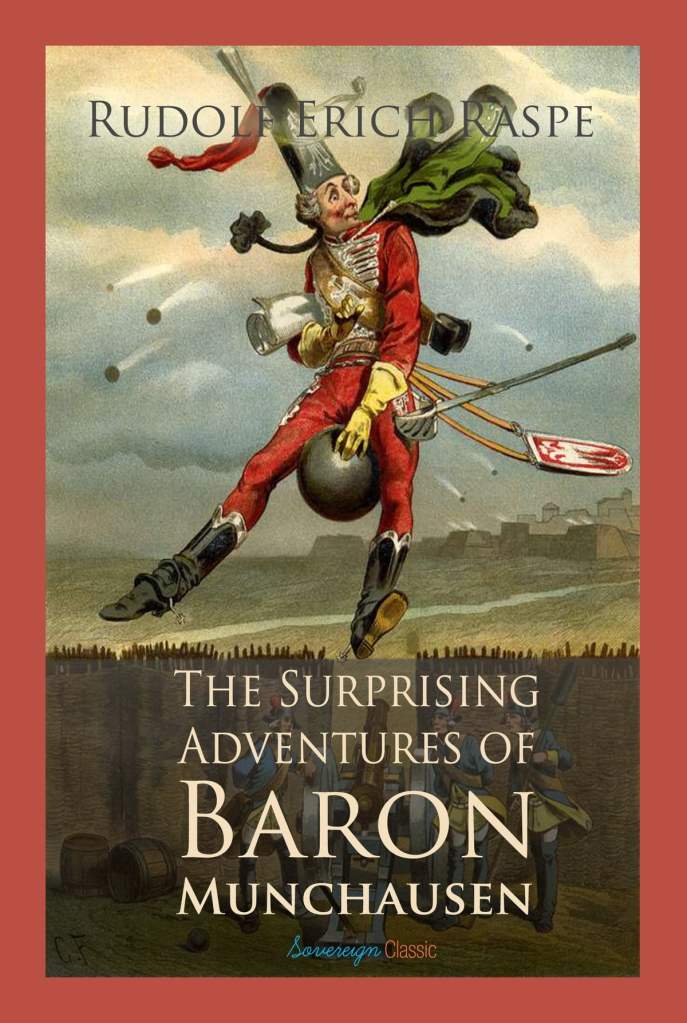
The name comes from the fictional character Baron Munchausen, created by German writer Rudolf Erich Raspe, in his 1785 book, Baron Munchausen’s Narrative of his Marvellous Travels and Campaigns in Russia. The Baron’s story of his exploits focuses on his supposed fantastical and impossible achievements, and the Baron himself is modelled on a real person, the German nobleman Hieronymus Karl Friedrich, Freiherr von Münchausen, known for his tall tales of derring-do. The book was turned into a 1988 film, The Adventures of Baron Munchhausen.
The name of the illness came to seem flippant and rather heartless, and it is now known, less colourfully, as factitious disorder imposed on self.
There may be a suggestion that Bunny is likewise exaggerating her flu symptoms for sympathy and attention, but it is almost certainly highlighting the factitious nature of Rory’s illness! This is the second person named Bunny in the show, the first one was a Gilmore relative who passed away.
LORELAI: And I got it at the bookstore, paid full price.
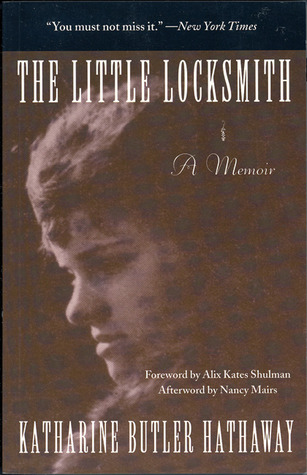
The Little Locksmith, a 1943 memoir by Katharine Butler Hathaway about the effects of spinal tuberculosis on her life. Hathaway was kept immobilised, strapped to a board, for ten years in a failed attempt to save her from becoming a hunchback, like “the little locksmith” in their community that her mother treated as a figure of horror. When the treatment ended at the age of fifteen, Hathaway was a hunchback after all, and no taller than a ten-year-old child. Overcoming her physical limitations, and the boundaries prescribed by society, she went on to attend college, forge enduring friendships, become a writer, and buy her own house in Maine, which she fashioned room by room as a creative space for guests, lovers, and artists.
The book was reprinted in 2000 by The Feminist Press, which would be the edition Lorelai bought. The book has been praised, not only for its author’s determination to find physical pleasure and creative fulfilment in a life that could have been a tragedy, but also for her poetic, unique voice. This is another example of unconventional female biography and memoir that Lorelai and Rory enjoy reading, with Lorelai buying it as a joke since Rory is also “disabled” by her hurt wrist.




 The Annotated Gilmore Girls