Nancy Drew

LORELAI: Honey, he did not plan an entire romantic evening complete with dinner and a junkyard, which we’ll get back to later, and then suddenly decide to dump you for no reason.
RORY: How do you know?
LORELAI: Because I have read every Nancy Drew mystery ever written. The one about the Amish country, twice. I know there’s more to the story than what you’re telling me.

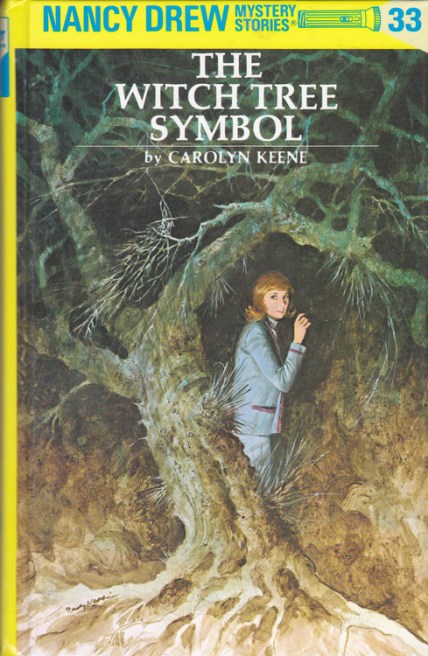
Nancy Drew is a fictional girl detective who first appeared in the 1930 novel, The Secret of the Old Clock. She was created by publisher Edward Stratemeyer as a feminine version of the Hardy Boys mysteries he published, and the books are written by various ghostwriters under the name Carolyn Keene. For her independence and forthright nature, Nancy Drew is often seen as a positive role model for girls. Nancy Drew books are universally popular, and still being published.

The book that Lorelai refers to is The Witch Tree Symbol, first published in 1955, and the 33rd volume in the series. It is set in Pennsylvania Dutch country, and the Amish play an important part in the plot.

Christine

RORY: Dean, what is this [the junk yard filled with car wrecks]?
DEAN: Okay. Uh, did you ever see Christine?
RORY: Yes.
DEAN: Well, it’s nothing like that.

Christine is a 1983 film directed by John Carpenter, and based on the 1983 novel of the same name by Stephen King. The story is about a a red and white vintage car named Christine which is both sentient and violent, and how it affected its teenage owner. Although it received tepid reviews, it has since become a cult classic.

The New Yorker

DEAN: Well, come on, you always bring a book with you and I was just wondering, what’s the three month anniversary book?
RORY: Actually, I brought The New Yorker.
DEAN: A magazine. Really?
RORY: It’s the Fiction Issue.

The New Yorker is an American magazine, first published in 1925, which comes out 47 times a year. Although often focused on the cultural life of New York City, it has a wide audience around the country and internationally. It’s well known for its commentaries on popular culture, rigorous journalism on political and social issues, and attention to modern fiction.

Some of the famous authors who have written for The New Yorker include Alice Munro, Truman Capote, John Cheever, Vladimir Nabokov, J.D. Salinger, Shirley Jackson, James Thurber, John Updike, Eudora Welty, Stephen King, and Dorothy Parker.

The New Yorker traditionally brings out their Fiction Issue during the summer. The June 19 2000 edition was for debut authors, and that Fiction Issue included works by Marisa Silver, David Schickler, Akhil Sharma, and ZZ Packer.

Was the fifteen-year-old Rory who bought that magazine in her summer vacation just looking for great new stories to read, or was she also dreaming of one day being a first-time writer published in The New Yorker herself?

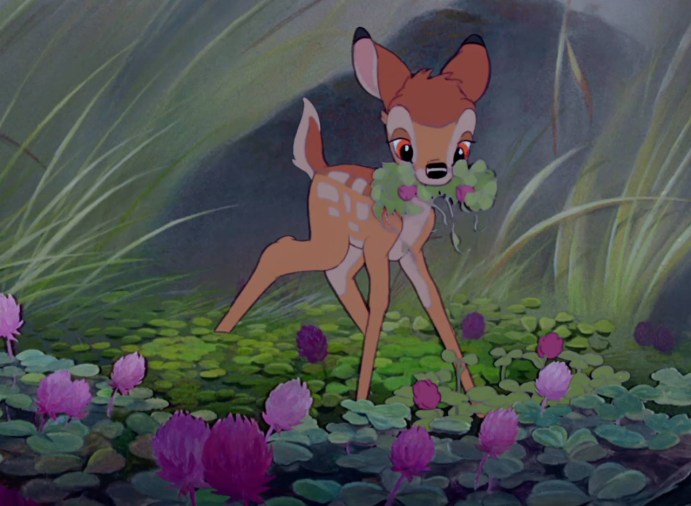
Bambi

DEAN: Well, you eat cute.
RORY: I do not eat cute. No one eats cute. Bambi maybe, but he’s a cartoon.

Bambi is a 1942 animated film produced by Walt Disney, and based on the 1923 children’s book Bambi, a Life in the Woods by Austrian author Felix Salten. Bambi is a deer, and the film shows him growing up from a newborn fawn to being the Great Prince of the Forest. As a fawn, he does indeed eat in a cute way. Although harshly reviewed by critics at the time, Bambi is now regarded as a classic and one of the best animated films of all time.

This is the second time in the episode that Rory has been compared to a Disney cartoon animal.

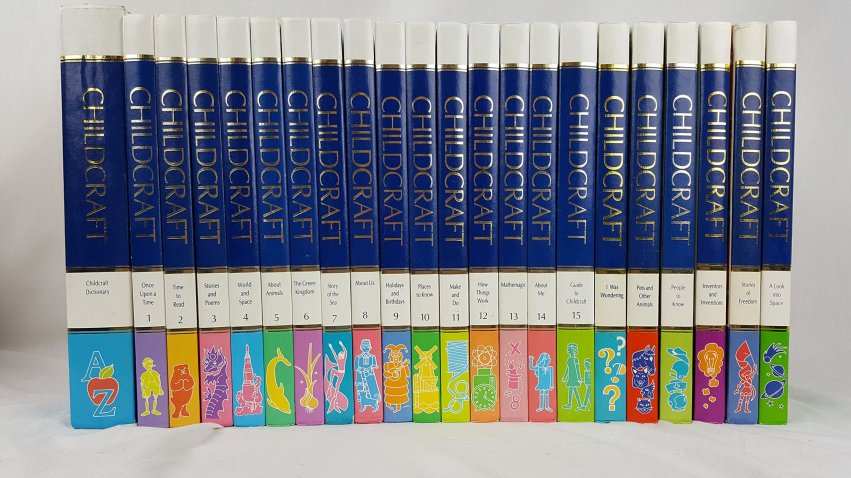
“Set of illustrated encyclopedias”

RORY: You did all this for me.
DEAN: It’s not over yet.
RORY: This is just like that Christmas when I got a full set of illustrated encyclopedias. [Dean gives a confused look] I wanted them.

Another example of Dean and Rory just aren’t on the same page. When she says the experience of the anniversary dinner is just like getting a set of encyclopedias, Dean is confused – to him that means a really boring present. Rory has to explain that getting a full set of illustrated encyclopedias is actually a wonderful thing that made her happy. Apparently all the clues Rory has given him about loving books and knowledge still haven’t quite sunk in.

“Me and Morrie”

EMILY: So are we having a nice chat?
LORELAI: Yeah, we’re having a great conversation, me and Morrie.

Lorelai is referring to the best-selling 1997 memoir Tuesdays With Morrie by Mitch Albom. The memoir describes how Albom, a sports journalist in Detroit, reconnected with his terminally ill sociology professor from Brandeis University, Morrie Schwartz. Meeting at Morrie’s house in Boston each Tuesday, Morrie is able to keep teaching Mitch valuable lessons about living and dying.

On the Best Seller List for 205 weeks, Tuesdays with Morrie is one of the best-selling memoirs of all time, and was made into a highly-praised television movie in 1999 with Hank Azaria and Jack Lemmon as Mitch and Morrie. In the next season, Lorelai seems to indicate that she was thinking of the book though.

Lorelai humorously contrasts her awkward silence with her father with the meaningful conversations shared by Mitch and Morrie. It’s obviously even harder for Lorelai and Richard to communicate after their argument the previous week.

Elizabeth Barrett Browning

SUMMER: So, meet me after biology?
TRISTAN: And if I don’t?
SUMMER: You will.
TRISTAN: Oh, yes I will. Ah. To be young and in love.
PARIS: What a shame Elizabeth Barrett Browning wasn’t here to witness this. She’d put her head through a wall.

Elizabeth Barrett Browning (1806-1861) was an English poet, very popular in the Victorian era and a great influence on American poet Emily Dickinson. Her first volume of poetry, Poems, was published in 1840 to immediate success.

Paris may be unfavourably comparing Tristan and Summer’s conversation with Barrett Browning’s famous love poem Sonnet 43 which begins, “How do I love thee? Let me count the ways”. It was published in her 1850 collection Sonnets from the Portuguese.

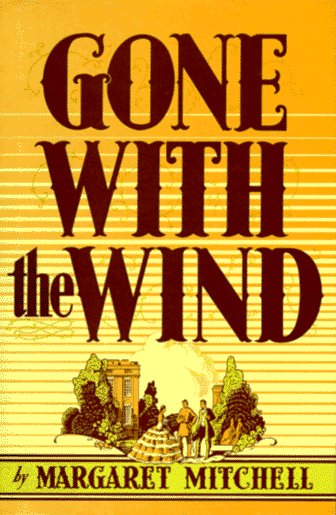
Belle Watling

RORY: I’m assuming your locker’s in there somewhere also.
PARIS: Yup. Right behind Belle Watling.

Belle Watling is a character in the 1936 best-selling historical novel Gone With the Wind by American author Margaret Mitchell. Set in the south during the American Civil War, it won Mitchell the Pulitzer Prize, and was the #1 book of both 1936 and 1937 before being adapted into a hit film in 1939. It is still one of America’s favourite books, and is considered one of the Great American Novels.

In the novel, Belle Watling is a prostitute and the local brothel owner, so Paris is just saying that Summer is behaving like a whore by kissing Tristan so openly in public.

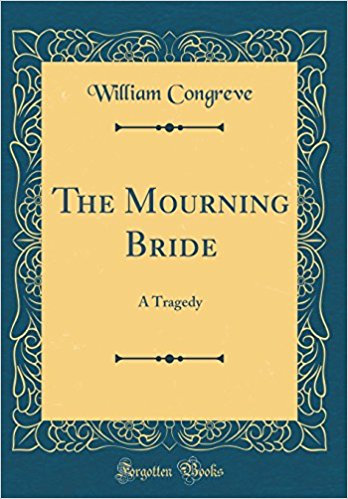
“Hell hath no fury”

PARIS: Thank you for the “where to make out” list, I just need to get my books.
LOUISE: Hell hath no fury.

Louise is referencing the very well known phrase, “Hell hath no fury like a woman scorned”. It comes from the 1697 tragedy The Mourning Bride by English playwright William Congreve. The exact quote is: “Heav’n has no Rage, like Love to Hatred turn’d/Nor Hell a Fury, like a Woman scorn’d”.

Louise is saying (accurately) that Paris is only angry because Tristan prefers another girl to her.

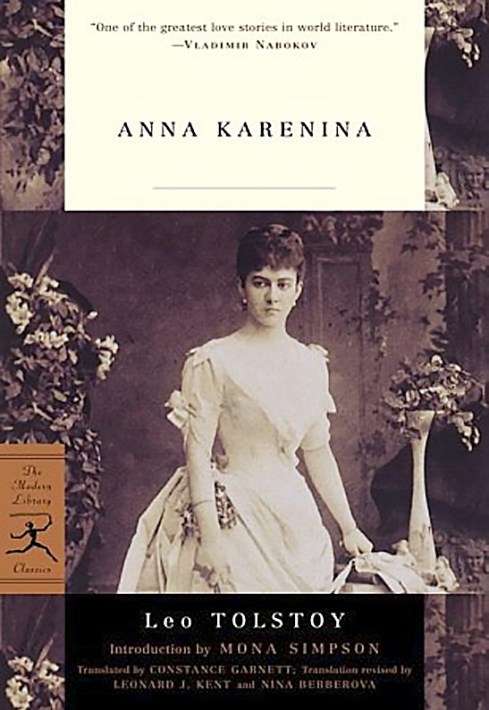
Anna Karenina

This is the book that Rory and Dean discuss after she lent it to him. Anna Karenina is a novel by Russian author Leo Tolstoy, first published in book form in 1878. It is the tragic story of Countess Anna Karenina, a socialite and married woman, and her doomed love affair with the wealthy Count Vronsky. It is widely regarded as a pinnacle of realist fiction, and one of the greatest novels of all time. Rory had to read the book for her English Literature class the previous semester.

Dean dutifully read it, but found it depressing as the heroine throws herself under a train, believing that suicide is the only way out of her relationship dilemmas. He thought the book was too long (it’s about a thousand pages), and too confusing as “every single’s person’s name ends in -ski” (in fact, of the main characters, only Count Vronsky and Anna’s brother Prince Oblonsky have names that end in this sound).

Dean believes the book is a little over his head, but Rory insists that Tolstoy wrote for the common man, and you don’t have to be a genius to understand him. Rory asks that Dean try reading the book again, as it is beautiful, and one of her favourite books. Dean actually agrees to this, which is a real sacrifice considering the length of the book and that he’d found it a difficult read. It seems Rory just won’t stop trying to force Dean to become a lover of classic literature.

Of course what Dean just isn’t picking up on is that Rory keeps romanticising heroines who cheat on their partners, from Anna Karenina to Emma Bovary to Lexie from Ice Castles. It’s a red flag of which Dean remains blissfully unaware. (More worryingly, both Anna and Emma commit suicide to escape their extra-marital woes – does Rory also romanticise self-destruction?)

The doomed love of Anna Karenina, and Rory and Dean’s very different appraisals of it, are a sign of things to come.