“Your name wouldn’t be Lithium?”

[Rory sitting on a bench reading. Dean come out, sees her and goes and sits with her]
DEAN: Is there anything in there about me?
RORY: I don’t know. You name wouldn’t be Lithium would it?

Rory is reading The Unabridged Journals of Sylvia Plath, edited by Karen V. Kukil. It was first published in 2000. The American poet, novelist, and short story writer Sylvia Plath (1932-1963) suffered from clinical depression which at times was severe.

Plath was hospitalised in a psychiatric ward for several months while in college, receiving electroconvulsive therapy, and required intermittant psychiatric support for the rest of her life. She died a suicide at the age of 30.

Rory may have been drawn to Sylvia Plath’s life story because she was highly driven academically, and a star student in both high school and college. She easily won prizes for poetry, short story-writing, and journalism, and one of her early writing achievements was being chosen as part of a group of college-aged guest editors for fashion magazine Mademoiselle.

On a darker note, among the several factors that pushed Plath into her first suicide attempt was a rejection from a Harvard summer school writing class. Sylvia Plath is a potent example to Rory of the pressures an ambitious young woman might face at college.

I’m actually not sure what Rory means by her comment, as to my knowledge Sylvia Plath was never treated with lithium. It may be an error by the writer (Amy Sherman-Palladino). In any case, it’s impossible not to feel that her quip is completely wasted on Dean.

“Run with the wolves”

SOOKIE: But I mentioned it once, it’s his [Jackson’s] turn.
LORELAI: Alright, let’s say it is his turn. You can spend a lot of time sitting around waiting for him to realise it’s his turn, or you can just run with the wolves and make it your turn again.

Lorelai is referring to the 1992 best-seller Women Who Run with the Wolves: Myths and Stories of the Wild Woman Archetype by Jungian analyst, author, and poet Clarissa Pinkola Estés. The book analyses myths, fairy tales, and folk tales from different cultures to discover the Wild Woman archetype of the feminine psyche, in line with Jungian psychoanalysis.

The book spent three years on the New York Times Best Seller list, a record at the time, and the author won an award for being the first Latina author to make the Best Seller List. It was a highly popular feminist book of the 1990s, so Lorelai is encouraging Sookie to take the initiative and ask Jackson out without worrying about traditional gender roles.

Baked Alaska

LORELAI: Oh! Meringue.
SOOKIE: Yeah, I thought I’d do a variation on a baked Alaska for dessert tonight.

Baked Alaska is a classic American dessert consisting of ice cream in a dish or baking tray which is lined with cake, then the whole thing covered in meringue and quickly browned in the oven. The ice cream won’t melt as the meringue protects it, and the oven is very hot so that cooking time is brief.

According to legend President Thomas Jefferson, earlier mentioned, was the first person to serve Baked Alaska, in 1802. He served a dessert which was warm ice cream in a pastry shell, so not really the same, but shows that the idea of baking ice cream had been around a fair while – and a presidential connection is always a cool thing to have.

The famous Delmenico’s Restaurant in New York City claimed that their chef Charles Ranhofer named the dessert to mark America’s purchase of Alaska from Russia in 1867. The actual dish was probably created some time after the purchase, and Ranhofer called his dessert “Alaska, Florida” to indicate the extremes of heat and cold in the dessert. He published the recipe in 1893.

The first known published recipe for something resembling Baked Alaska is in Mary J.B. Lincoln’s Frozen Dainties in 1888. It seems to be much the same as the modern dish and she calls the dessert Ice-cream en Deguiser (“ice cream dressed up”). Lincoln was the first principal of the Boston Cooking School, so the dish has a distinguished pedigree.

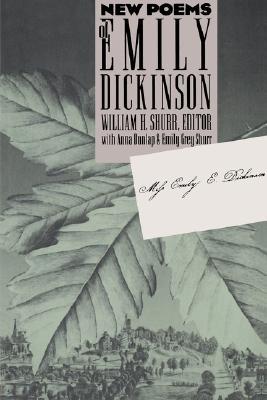
New Poems of Emily Dickinson

This is the book that Rory is reading in the school cafeteria just before she confront Paris about the the gossip she has been spreading about Lorelai and Max.

New Poems of Emily Dickinson, edited by William H. Shurr and others, presents 500 new poems that were found embedded in Emily Dickinson’s correspondence. The book was first published in 1993, and republished in 1999.

This isn’t the textbook that the English Literature class used to study Emily Dickinson, and that assignment is over anyway. It shows that Rory continues to follow up and expand on things she learns at school for her own interest and satisfaction – one sign of an excellent student.

English Literature Class

While talking to his class and their parents on Parents’ Day, Max explains that they will be spending the next two weeks on a creative writing assignment. However, that doesn’t mean they will stop reading, as writers find inspiration reading other writers that they admire. He mentions several writers during his short speech.

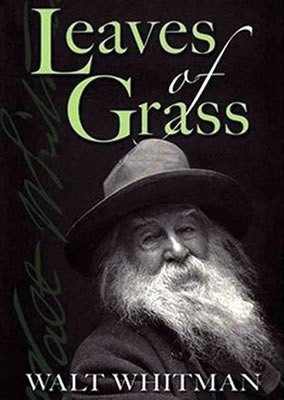
Walt Whitman (1819-1892) was an American poet, essayist, and journalist. Highly influential, he is often called “the father of free verse”. His major work is his poetry collection Leaves of Grass (1855), originally self-published and very controversial at the time. The class must have just finished studying Walt Whitman, as their assignment on him is due the next day.

Homer is the name the ancient Greeks gave to the traditional author of The Iliad and The Odyssey, two epic poems which are the central works of ancient Greek literature. Walt Whitman first read Homer as a teenager, read his works frequently, and regarded Homer as the ideal to which all poets should aspire.

Dante, born Durante Alighieri (c1265-1321) was a major medieval Italian poet. His epic poem The Divine Comedy is considered the most important poem of the Middle Ages and the greatest literary work in the Italian language. Walt Whitman greatly admired Dane’s economy of language, and re-read The Inferno (the section of The Divine Comedy devoted to Hell) as part of his preparation for becoming a nurse during the American Civil War.

William Shakespeare was another of Walt Whitman’s literary idols. He believed that Homer, Shakespeare, and the Bible were the pinnacle of poetic vision.

Edna O’Brien (born 1930) is an award-winning Irish author, regarded as changing the nature of Irish literature, and one of the finest writers in the English language. Her first novel was The Country Girls (1960), credited with breaking silence on sexuality and social issues in post-war Ireland. It was banned and even burned in Ireland. In 2000 her most recent novel was Wild Decembers (1999), set in Ireland during the 1970s.

I have not been able to locate the source of O’Brien’s quote about Marcel Proust, but he is one of her favourite authors.

Max and Rory’s Code Names

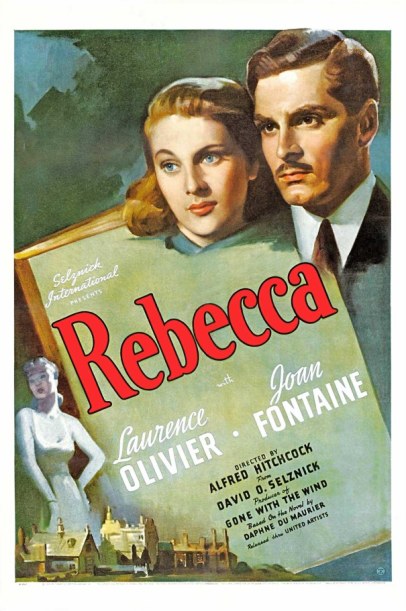
When Rory says she is uncomfortable calling her teacher by his first name outside school, even though he is also her mother’s boyfriend, Max suggests they use code names for each other. He offers to call her “Rebecca” – probably just because it starts with the same letter as Rory, and was then a common name for girls of Rory’s age (it also has the same number of syllables as her full name, Lorelai).

From their ensuing conversation, we can tell that Rory immediately links the name with the 1940 romantic mystery film Rebecca, directed by Alfred Hitchcock and based on the 1938 best-selling novel of the same name by Daphne Du Maurier. Rebecca was the #1 film of 1940, and won two Academy Awards, including Best Picture; it is still regarded as a classic of Gothic romance and psychological drama.

The character of Rebecca never appears in the film, as she is already dead, the first wife of Max De Winter (Laurence Olivier) whose memory continues to haunt him and his new wife (Joan Fontaine). Rory feels that, like Rebecca, she should never have been seen – her role was to disappear before Max arrived for his date, as per the “Gilmore Dating Rules”.

Disturbingly, Max De Winter in the film secretly hated Rebecca, who led a scandalous life, and was glad when a struggle between them ended with her death. You can’t help but feel that Rory subconsciously believes that Max would prefer it if she didn’t exist, and perhaps even that she is a “scandal” as Lorelai’s illegitimate child to another man – the cause of Rebecca and Max’s final fight was because she (falsely) claimed she was bearing another man’s child, who would inherit his estate.

Because Rory already has her mind on Hitchcock films, she offers to call Max “Norman”, saying that Psycho was on (television?) earlier that evening. (Note that she cannot call him by the film name from Rebecca, as he is already named Max).

Psycho is a 1960 thriller directed by Alfred Hitchcock, based on the 1959 novel of the same name by Robert Bloch. Filmed on a low budget, the film received mixed reviews on release, but was a massive box office success, and the #2 film of 1960. Now Hitchcock’s best known film, it is regarded as one of the most influential films of all time, and one of the greatest in its genre.

Rory calls Max after Norman Bates (Anthony Perkins), the murderer in the film. Norman Bates first appears to be a pleasant-looking, rather shy young man, but is subsequently exposed as a deranged killer who had a perverted relationship with his mother – one of his first victims. Rory could not make it clearer that she secretly fears Max wants her out of the way, and feels threatened by him dating her mother. Possibly Max’s pleasant manner to her is, in the depths of her mind, hiding something much more sinister.

Struggling to come up with another name, she can only think of “Alfred” after Alfred Hitchcock, the director of Rebecca and Psycho. Known for his voyeuristic camera style, his films often involve characters with a problematic relationship with their mothers, and beautiful yet icy women. Maybe Rory has already subconsciously picked up that there are problems between Lorelai and Max.


Marilyn Monroe-Arthur Miller Syndrome

MADELINE: I bet his [Max’s] girlfriend’s pretty.
LOUISE: I bet she’s dumb.
MADELINE: Why?
LOUISE: Dumb girls crave smart men. It’s that whole Marilyn Monroe-Arthur Miller syndrome.

Hollywood actress Marilyn Monroe and left-wing playwright Arthur Miller married in 1956, after meeting in the early 1950s and dating seriously since 1955. The media saw the marriage as a mismatch, because Monroe’s typecast screen persona was a “dumb blonde”: one headline read Egghead Marries Hourglass. The couple divorced in 1961.

Lorelai and Max do fit the Monroe-Miller stereotype, as Max is written as far more literary and intellectual than the vivacious Lorelai.

“There’s a certain slant of light”

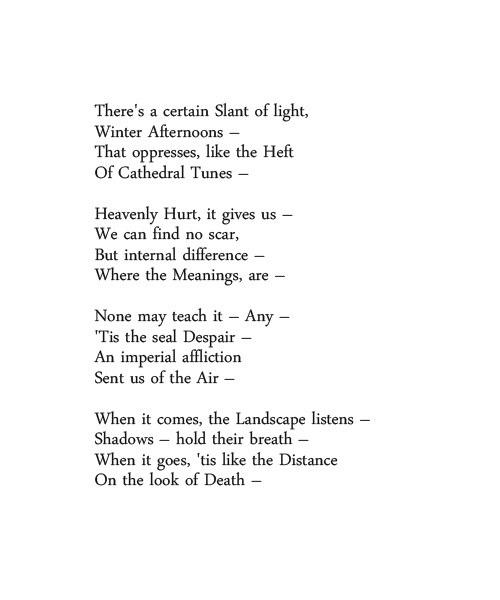
MAX: “There’s a certain slant of light, winter afternoons, that oppresses like the heft of cathedral tunes.” That, my friends is the first verse of a poem by Emily Dickinson. Now read some of those tonight, and as you do, consider the fact that Emily Dickinson writes convincingly about passion and about the world in spite of the fact that she lived as a virtual recluse. It’ll help you appreciate her mind.

Max is reading from the Emily Dickinson poem identified by its first line, There’s a certain slant of light, numbered as 258 in her collected works. It was written around 1861, although not published until after her death.

The poem is about the oppression and even despair brought on by the bleak New England winter. Max and Lorelai began their relationship on the first snowfall of the year – something which for Lorelai is imbued with an almost magical sense of joy and expectation.

As Max reads from this poem which describes the sense of impending doom and death brought on by winter, we can feel that their relationship is about to become much colder. We might also remember that on the day Max first asked Lorelai on a date, he mentioned her icy attitude toward him. Now is the time for that frosty snow queen to reawaken.

Swann’s Way

This is the book that Max loans Lorelai after she said she always wanted to read Proust.

It is the first volume of Marcel Proust’s In Search of Lost Time, and begins with the narrator’s childhood, centred on his family’s country house in the village of Combray. M. Swann is a neighbour of the family, with one of their favourite country walks being past his house – Swann’s Way. M. Swann will end up being a major character in the novel, and the narrator greatly attracted to his daughter, Gilberte Swann.

We learn later that it took Rory ages to read the book, having to renew it at the library ten times (if she’s not exaggerating, she may have taken 4-5 months to read it, depending on how long the library allows books to be checked out).

Lorelai tells Rory she only read the first sentence of Swann’s Way, which is: “For a long time I used to go to bed early”. That seems rather soon to give up, but later she tells Max she read the first twenty pages, which she exaggerates as all one sentence. The first twenty pages or so are the “Overture”, all of which are involved with that first going to bed.

Lorelai defends herself by saying she is too busy to begin reading the “longest book known to man”. Presumably she means the entire seven volumes, which are over 4000 pages long as a whole. It is indeed the longest novel in the world according to the Guiness World Book of Records.

Lorelai is not alone. Many readers have abandoned their attempt to read Swann’s Way, which has a beautiful style, but very lengthy, dense paragraphs with meticulous observations, and a plot so painfully slow, discursive, and ambiguous that it sometimes seems not to have one at all.

Those who complete it may take years to do so, and just managing to finish the book, let alone enjoy or understand it, is often considered a rare feat in itself.

(I don’t know whether one of the original titles for Gilmore Girls, The Gilmore Way, was an allusion to this book).