Fairy godmother


LORELAI: When I was five, I had a really bad ear infection and I had been home in bed for a week and I was very sad. So I wished really hard that something wonderful would happen to me, and I woke up the next morning and it had snowed. And I was sure that some fairy godmother had done it just for me. It was my little present.

Little Lorelai was thinking of the fairy godmother in fairy tales such as Cinderella and Sleeping Beauty. This story explains Lorelai’s love of snow. It also lets us know that when she unexpectedly sees Max in her town, she is thinking that this is another miraculous gift from her “fairy snowmother”.

Charlotte Bronte


DEAN: Wow, she brings me cookies. How can I repay her?
RORY: How about a little Charlotte Brontë?

Charlotte Brontë (1815-1855) was an English novelist whose works have become literary classics. Her best known novel is Jane Eyre (1847).

It might seem natural to go from Jane Austen to Charlotte Brontë, as they are both 19th century female authors – it almost seems as if Rory is devising a reading programme for Dean. They are quite different in style and approach though, so Rory shouldn’t assume that just because Dean liked Emma he would enjoy reading Charlotte Brontë.

Charlotte Brontë herself disliked Jane Austen, although she was probably justifiably prejudiced from having her own works compared to Austen’s.

Hunter Thompson

RORY: I told [Dean] he would [like Jane Austen], but he was all, “Forget Jane Austen, you have to read Hunter Thompson.”

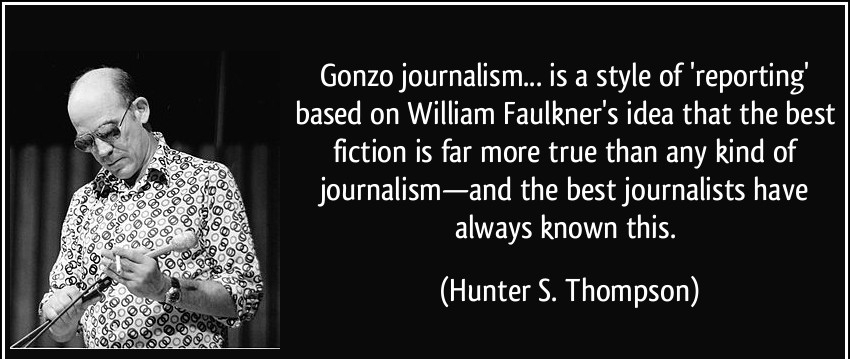
Hunter S. Thompson (1937-2005) was an American journalist and author. He became a countercultural icon, and founded what he called “Gonzo Journalism”, where the reporter involves themselves in the action to such an extent that they become a central part of the story. His best known work is Fear and Loathing in Las Vegas (1972), an autobiographical novel about the failure of the 1960s countercultural movement. His output declined as he became so famous that he could no longer insert himself into events without being recognised.

The Rory and Dean who can happily swap book suggestions for each other don’t seem to last long. Maybe Dean only had the one writer to recommend, or simply couldn’t keep up with Rory’s reading.

Emma

RORY: Aha! You liked it, you liked Jane Austen. I knew you would. Lane, Dean likes Jane Austen.

Emma is a 1815 novel by English author Jane Austen. Unlike other of her books, the heroine Emma Woodhouse, blessed with youth, beauty, and intelligence, is independently wealthy and has no need to marry a rich man. In fact, rather than being under any pressure to marry, her elderly father would much prefer she remain as his companion. This is quite similar to Rory’s situation with Lorelai, who certainly isn’t pressuring her into a relationship, and that she has freely chosen Dean.

Emma, who believes she always knows what’s best, has a habit of meddling in her friends’ love lives, and is much more interested in doing so than thinking about romance for herself. Ironically, Rory can’t be bothered listening to her best friend’s love problems, as she is so wrapped up in her new relationship with Dean.

Rory’s choice of book might also remind us of Emma Bovary from Madame Bovary, which Rory was reading when Dean first noticed her: both Emma Woodhouse and Emma Bovary are great readers. It’s a reminder of the two “Emmas” in Rory’s character – the detached, intelligent Emma Woodhouse, and the romantic Emma Bovary who makes foolish choices.

NB: I have more often seen this book identified as Northanger Abbey, but I cannot locate an edition of that novel which resembles the book Dean hands over to Rory. To me it looks as if it might be the 1996 Signet edition of Emma, with an introduction by British author and critic, Margaret Drabble. However, I welcome input on this question, and will edit this entry if the correct edition of Northanger Abbey is shown to me.

Buttock eating

MICHEL: The thrilling sensation of getting lost in a blizzard, of freezing to death in the woods, and having to eat your friend’s buttocks to stay alive, that is lost on many people.

Michel is no doubt referring to the 1993 drama film Alive directed by Frank Marshall. Based on the 1974 book Alive: The Story of the Andes Survivors by Piers Paul Read, it depicts the true story of the Uruguayan rugby team and their family and friends whose plane went down in the Andes Mountains in October 1972. Trapped for more than two months in below-freezing temperatures, once the rations ran out the survivors had to eat their dead companions in order to stay alive.

The film’s subject was so well known in the 1990s that it was not necessary to have seen it to immediately understand any reference to eating people as relating to the movie. Unlike Michel’s comment, the film actually handled the cannibalism with great sensitivity.

Emily Dickinson

MAX: [on answering machine] Lorelai, it’s Max … Medina. Maaaax Medina. And once again we miss each other. It’s now 2 o’clock in the afternoon on Thursday and I’m in my office grading a paper titled Emily Dickinson: Get a Life.

Emily Dickinson (1830-1886) was an American poet. She lived most of her life in reclusive isolation, and was considered an eccentric. By the end of her life she was reluctant to even leave her bedroom. This probably explains the title of the paper on Emily Dickinson that Max is grading – which seems most unlikely as the work of a Chilton student.

Dickinson was a prolific poet, but less than a dozen of her poems were published during her lifetime, and were usually altered to fit the poetic conventions of the day. Dickinson’s work was unique for her time, with short lines, slant rhymes, and unconventional capitalisation and punctuation. They are rarely titled, and many are on the themes of death and immortality.

Her poems were first published in 1890, but it wasn’t until 1955 that the complete unedited collection was published.

“How the mighty have fallen”

LORELAI: You’re comparing me to my mother? … I’m Emily Gilmore? My, how the mighty have fallen.

A common expression meaning that those who were once powerful have now been reduced to a lowly status. The idiom comes from the King James version of the Bible, and is first found in Samuel 2 1:19, where it laments, The beauty of Israel is slain upon thy high places: how are the mighty fallen!

Lorelai always prided herself on being a “cool mom”, and now she discovers she’s actually a mother. A mother just like her own mother, Emily. Rory could hardly have said anything more hurtful to her. Bring on the tourniquet, her heart is bleeding.

Gene Wilder


Dean correctly identifies actor Gene Wilder (1933-2016) as playing the title role in Willy Wonka & The Chocolate Factory, which is one of his best known films. Other notable performances are for the films he did with Mel Brooks, and those with Richard Pryor.

Like Gene Hackman, Gene Wilder became an author later in life, producing three novels, a book of short stories, and two memoirs. Wilder and Hackman both appeared in Bonnie and Clyde (1967), and Young Frankenstein (1974).

Gene Hackman

LORELAI: It’s Willy Wonka and the Chocolate Factory.
CASHIER: Oh, that’s nice. Isn’t that the one with Gene Hackman?

Gene Hackman (born Eugene Hackman in 1930) is a retired actor. His career in Hollywood spanned five decades, and he won Best Actor for The French Connection (1971), and Best Supporting Actor for Unforgiven (1992). Hackman became a writer in 1999, and has written five novels.

He tended to do tough guy roles in action and crime films, so that the idea of him playing the whimsically flamboyant Willy Wonka is slightly ludicrous.