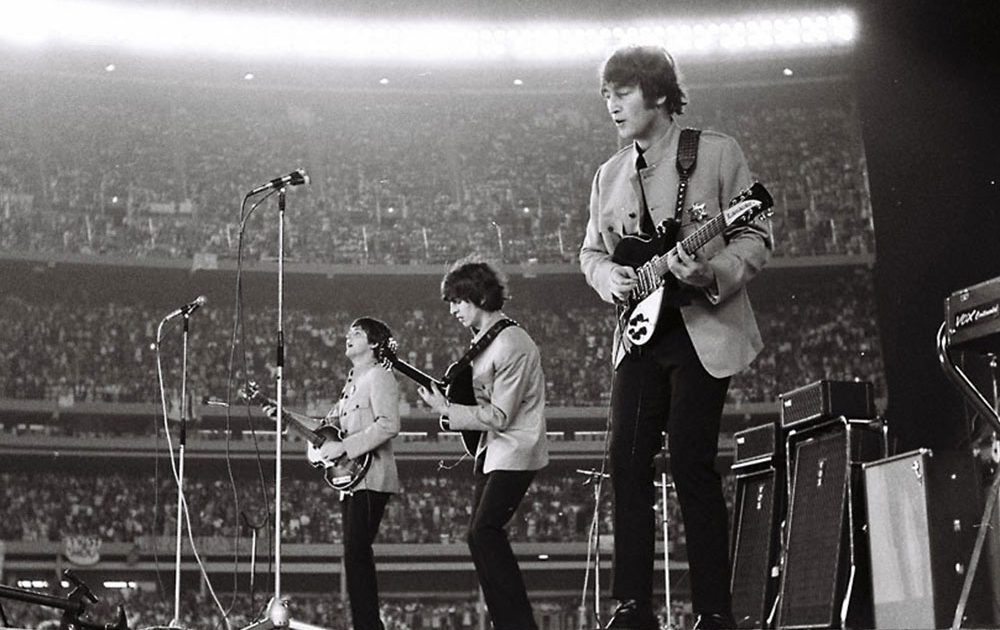
PARIS: I was working with the losers in the AV club to project it on a giant video screen. And all Mr. Hunter said was, “Paris, this isn’t The Beatles at Shea Stadium.” Nice anachronism, huh? Like they had video screens in ’63. His references are as topical as his suits.
The Beatles actually performed there in 1965, not 1963. They must have realised that they made a mistake, because on Netflix, there is re-recorded audio correcting the error to 1965 instead.
This is the song Lane puts on to help her make “deep cuts” to her rock band advertisement.
“I Wanna Be Sedated” is a song by punk rock band the Ramones, from their 1978 album Road to Ruin. It was released in the UK as the B-side to “She’s the One” the same year, then released as a single in the Netherlands in 1979, before being released as a single in the US in 1980. Written by Joey Ramone, previously mentioned, the song is about the rigours of being a touring band on the road. It is considered one of the best rock songs of all time.
LORELAI: And what’s with Jackson Browne making the list?
LANE: Ah, see, cool people know that he’s more than a mellow hippie-dippy folkie, that he actually wrote some of Nico’s best songs and was in fact her lover before he bored us with “Doctor, My Eyes.” That will separate the poseurs from the non-poseurs.
Clyde Jackson Browne (born 1948), musician, songwriter, and political activist. A precocious teenaged songwriter from Los Angeles in the 1960s, he had his first success writing songs for others. As a sixteen-year-old, he wrote “These Days” for the Nitty Gritty Dirt Band, which became a minor hit for German singer Nico, previously mentioned as one of Lane’s music idols, in 1967. After moving to Greenwich Village, he backed Nico, and they were romantically involved. He was a significant contributor to her debut album, Chelsea Girl, writing and playing guitar on several of the songs.
Jackson Browne’s self-titled debut album came out in 1972, and this includes the track “Doctor, My Eyes”, an upbeat-sounding track about being world-weary. It was a surprise hit, reaching #8 on the US charts, and most popular in Canada at #4. It’s become one of his concert mainstays, but Lane seems to regard his debut album as the start of Browne being “boring”!
Jackson Browne continued to have successful albums, with his signature work being 1977’s Running On Empty, peaking at #3, and with the title track reaching #11 in the US (#4 in Canada). His success continued through the 1980s, and his most recent album is Downhill from Everywhere (2021). He is regarded as one of the greatest songwriters of all time.
Note that Lane has no problems telling Lorelai that she has been lumped in with the uncool “poseurs” for not knowing about Jackson Browne and Nico – even though Lorelai has helped form many of Lane’s musical tastes (this seems very believable from a teenager). Viewers may find it amusing that Lane sees herself as having the ability to separate the poseurs from the non-poseurs, considering she’s quite the musical poseur herself.
RORY: But do you have to list every album he ever recorded, plus your personal rating between one to ten?
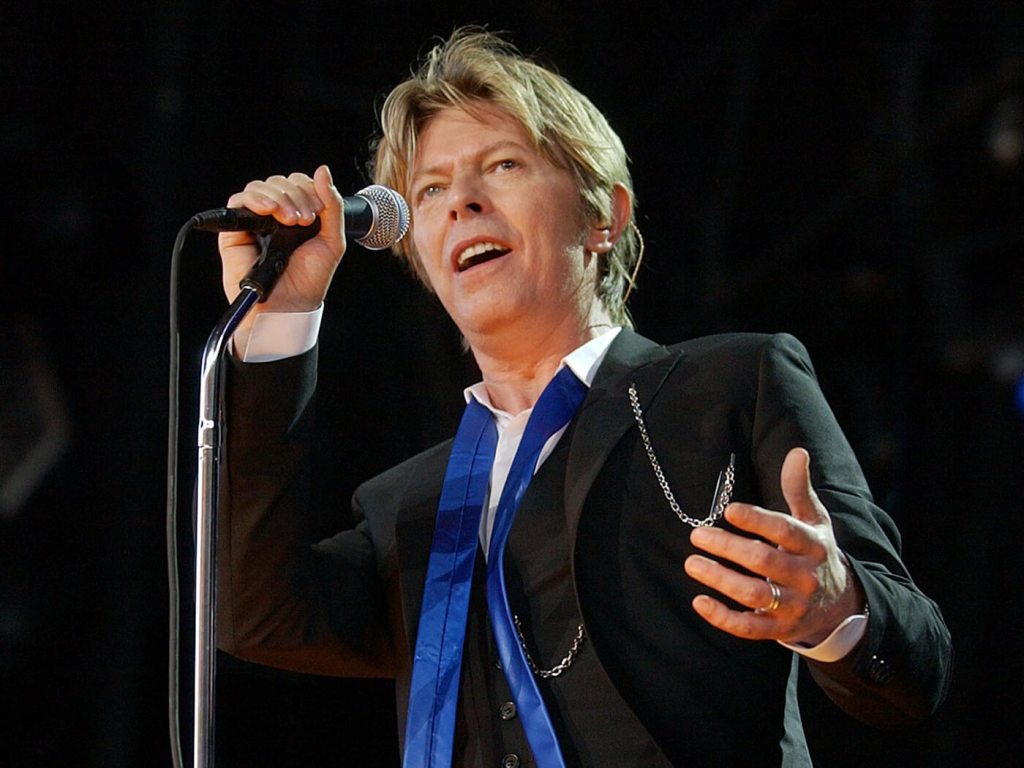
David Bowie, born David Jones (1947-2016), English singer-songwriter and actor. He is regarded as one of the most influential musicians of the twentieth century, and acclaimed by critics, particularly for his innovative work in the 1970s. He is known for his constant reinvention of his image, and his music and stagecraft had a significant impact on popular music. During his lifetime, he was one of the best-selling musical artists of all time, and he was inducted into the Rock and Roll Hall of Fame in in 1996. Rolling Stone named him “the greatest rock star ever”, and he is the best-selling vinyl artist of the twenty-first century.
David Bowie has released 27 studio albums, including one posthumously, as well as multiple live recordings and compilations. Nine of his studio albums have gone to #1 in the UK, but only one in the US – his 2016 Blackstar. His 1972 album, The Rise and Fall of Ziggy Stardust, is widely considered his best album, and one of the greatest of all time.
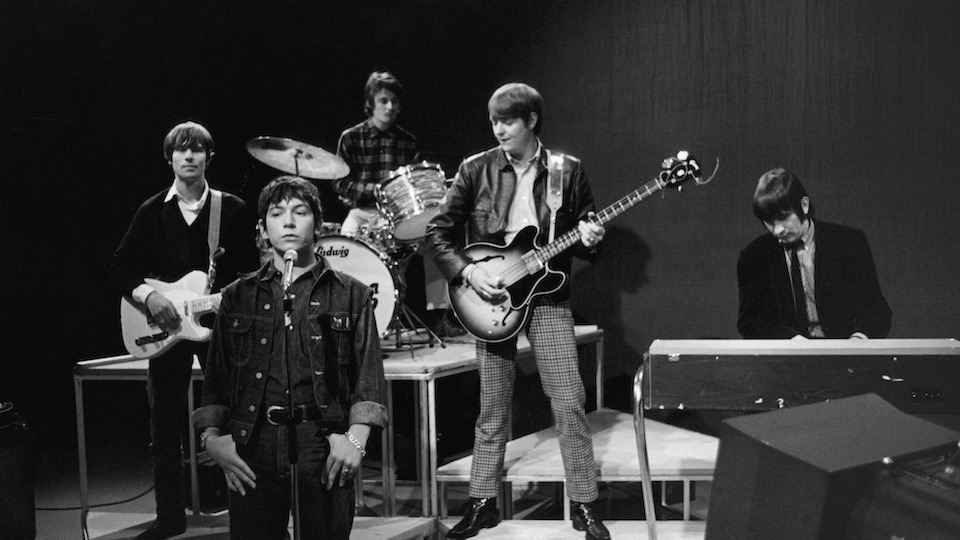
The Animals [pictured]: English rhythm and blues and rock band, formed in 1962. They were known for their gritty, bluesy sound and deep-voiced frontman, Eric Burdon, most famous for their signature song and international #1, “The House of the Rising Sun”, as well as hits such as “We Gotta Get Out of This Place”, and “Please Don’t Let Me Be Misunderstood”. After a new line-up, they moved to California in 1966 and achieved commercial success as a psychedelic and hard rock band, with hits such as “San Franciscan Nights”, and “When I Was Young”, before disbanding at the end of the decade. They were inducted into the Rock and Roll Hall of Fame in 1994.
A-ha: Norwegian synth-pop band founded in Oslo in 1982 by Paul Waaktaar-Savoy (guitar), Magne Furuholmen (keyboards/guitar/vocals), and Morten Harket (vocals). Their 1985 debut album, Hunting High and Low, is their most successful – it yielded international hits such as “Take On Me” and “The Sun Always Shines on TV”, and went to #1 in Norway, #2 in the UK, and #15 in the US. They are the most successful global pop act to come out of Norway, and the first Norwegian band to be nominated for a Grammy. Their music has often been included in music soundtracks, they performed the theme song for the 1987 James Bond film The Living Daylights, and are one of the highest-grossing bands of all time.
I feel as if the commercial success and international acclaim of these bands might be what caused Lane to cut them from her extensive list. A-ha is probably a “guilty pleasure” because it is pop, rather than rock.
RORY: Let’s see – “Drummer with strong beat seeks band into the Accelerators, the Adolescents, the Adverts, Agent Orange, the Angelic Upstarts, the Agnostic Front, Ash . . .”
The Accelerators: Rock band from Raleigh, North Carolina, formed in 1982 by singer Gerald Duncan. They released three albums, and broke up in 1991, but Duncan recruited new musicians and brought out another album before retiring in 2000, then making a comeback in 2007 for a final fifth album. They had a bit of a following on college radio, and received some positive reviews.
The Adolescents: Punk rock band formed in Fullerton, California in 1980 by bassist Steve Soto. Part of the hardcore punk movement in southern California in the early 1980s, they were one of the main punk acts to come out of Orange County. They went through constant line-up changes, and released nine albums before Soto’s death in 2018, then another in 2020. Their self-titled debut album was one of the best-selling from the California hardcore scene, selling 10 000 copies.
The Adverts [pictured]: English punk band who formed in 1976 and broke up in 1979 after the accidental electrocution of their manager. They were one of the first punk bands to have chart success in the UK – their 1977 single “Gary Gilmore’s Eyes” reached #18 on the UK charts, and was considered one of the best punk singles of the 1970s. Bassist Gaye Advert (born Gaye Black) has been described as the first female punk star, which might be another reason Lane is drawn to them.
Agent Orange: Punk rock band formed in Placentia, California in 1979 – like The Adolescents, they were leading lights in the 1980s southern Californian hardcore punk scene, and were also founded by Steve Soto. They were one of the first bands to mix punk with surf rock, for a distinctively Californian punk sound. They brought out three studio albums, and are still going, despite the deaths of three of their bassists.
Angelic Upstarts: English punk rock band formed in 1977, described as one of the most politically-charged and thought provoking of the era. Their politics are anti-fascist and socialist working class, pioneers of the Oi! subgenre that unites punk and skinhead cultures. They have released twelve studio albums, with the most recent in 2016. Their debut single, “The Murder of Liddle Towers”, was included inMojo‘s list of the best punk rock singles of all time.
Agnostic Front: Hardcore punk band formed in New York City in 1980 by lead guitarist Vincent “Vinnie Stigma” Cappuccio. They are considered an important influence on the New York hardcore scene, as well as pioneers of the crossover thrash genre that fuses thrash metal and hardcore punk. From the beginning, they have had a strong connection with skinheads, like the Angelic Upstarts. They’ve had twelve studio albums, most recently in 2019.
Ash, previously discussed. This is now the third time this band has been mentioned. It is a favourite of both Rory and Lane.
Just from the bands starting with A, we can see that Lane’s favourite bands tend to be hardcore punk and alternative/indie rock.
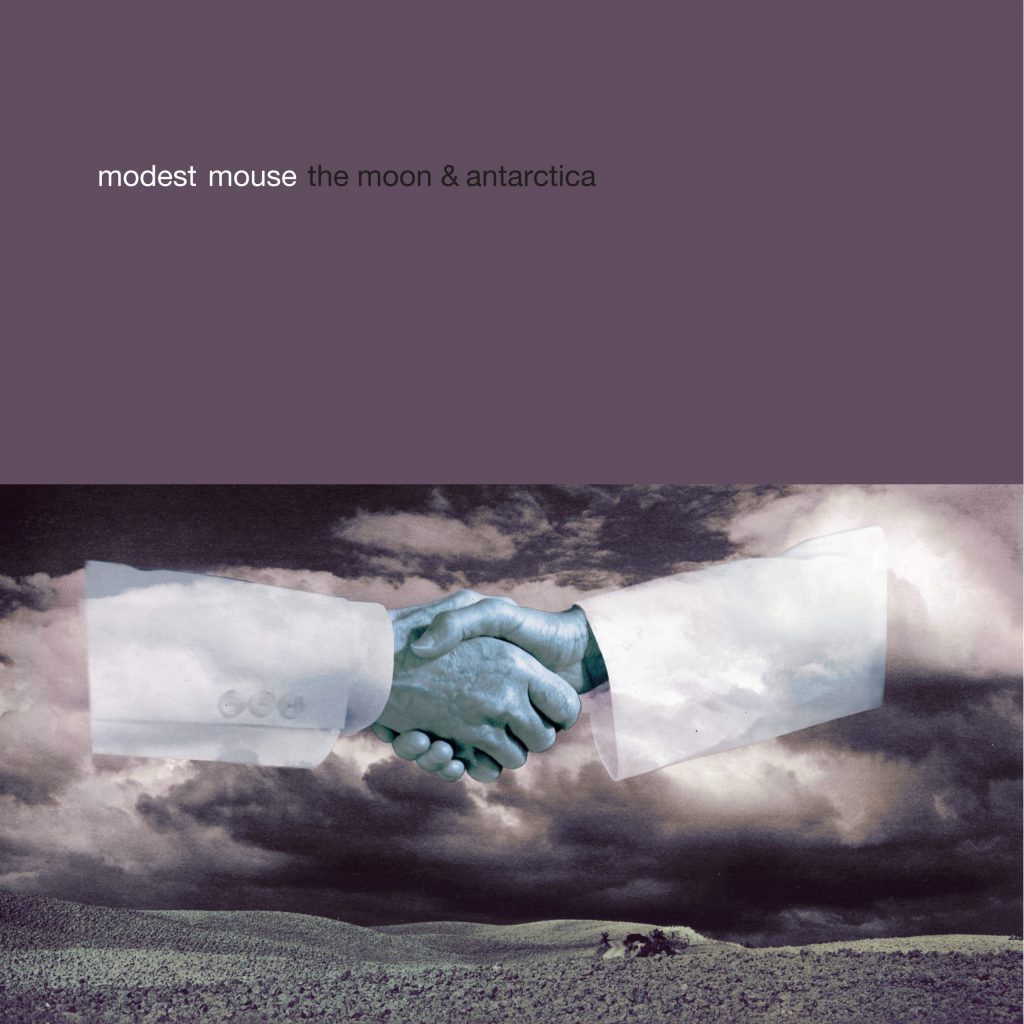
This song by alternative rock band Modest Mouse is playing in Rory’s bedroom during the opening scene. Only later do we discover Lane is in her bedroom, and it is she who is listening to it.
“Tiny Cities Made of Ashes” is a track from the band’s 2000 album, The Moon & Antarctica. The first to be released by the band on a major record label (Epic Records), it led to fans being worried that they would lose their unique sound. However, the album received positive reviews, with some critics feeling that it was actually the band’s “weirdest” album. It was ranked as one of the best albums of that year. The album went to #120 in the US, and has been certified gold, having sold almost half a million copies.
Knowing that Lane is in Rory’s bedroom the whole time in this scene, it seems a bit strange that Rory doesn’t share the big news of the Harvard application arriving with her best friend. I suppose it’s something Rory wants to experience with Lorelai first, and perhaps she doesn’t want to shove her academic opportunities in Lane’s face – and she also knows Lane is too busy concentrating on writing her band ad to listen. Still, it’s a slightly melancholy indication that their lives are going to continue in different directions.
LORELAI: Are you sure that’s not just the sight of Robert Reed in the tight clown pants?
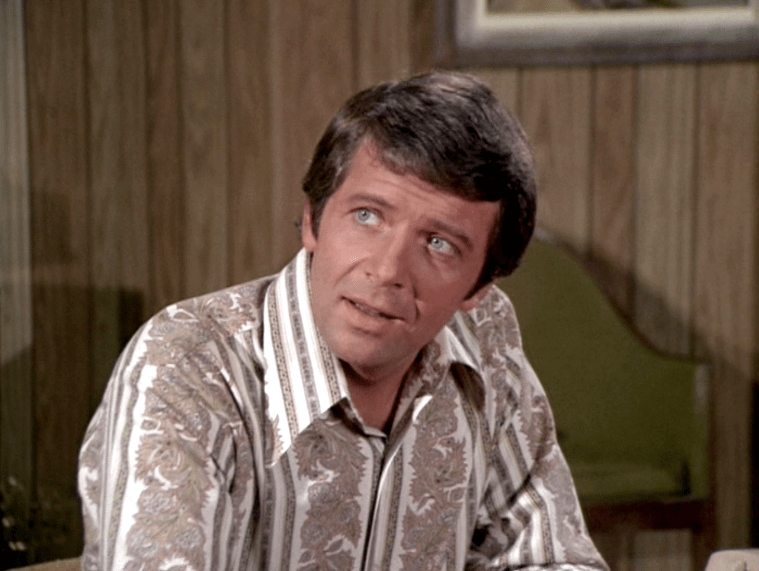
Robert Reed, born John Robert Rietz Jr (1932-1992), actor best known for playing father Mike Brady in The Brady Bunch, and its various specials and spin-offs. From the very beginning, Reed was unhappy with his role as Mike Brady, feeling that the show was far too silly for a serious classically-trained Shakespearean actor such as himself. Although he got on very well with the rest of the cast and behaved professionally at all times, he often argued with the creator and producer over the scripts (he was allowed to direct a few episodes to appease him). Despite this, he appeared in all the specials and spin-offs, and actually really loved doing The Brady Bunch Variety Hour, as it gave him the opportunity to sing, dance, and have fun.
RORY: I know, [The Brady Bunch Hour‘s] on my top fifty best.
LORELAI: Yeah, right after Holmes & Yoyo and Hee Haw Honeys.
Holmes & Yoyo [pictured], comedy TV series that aired during the 1976-1977 season. The series follows police detective Alexander Holmes (played by Richard B. Shull), and his partner Gregory “Yoyo” Yoyonovich (played by John Schuck), who he discovers to be an android crime-fighting machine, designed as a secret weapon by the police department. Many of the gags involved Yoyo’s constant malfunctions. The series performed poorly and was cancelled after eleven episodes, the final two being shown during the summer. It was #33 on TV Guide‘s worst shows of all time list.
Hee Haw Honeys, a short-lived spin-off from variety show Hee Haw, previously discussed, which aired during the 1978-1979 season. It starred Kathie Lee Johnson (later Gifford) and members of the Hee Haw cast as a family who owned a truck stop restaurant where guest country artists would perform their latest hits. It was #10 on TV Guide‘s worst shows of all time list.
This is the first song which is performed on The Brady Bunch Hour, sung by The Brady Bunch, which you can hear at the start of the episode.
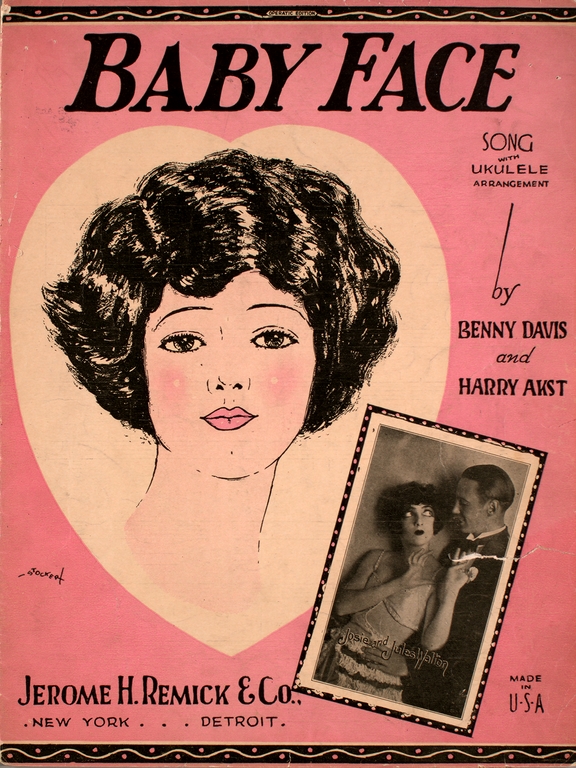
“Baby Face” is a popular Tin Pan Alley jazz song from 1926, with music by Harry Askt, and lyrics by Benny Davis. The first recording was by Jan Garber and his Orchestra, with Benny Davis signing the chorus only. It was a #1 hit in 1926. The same year, the song was recorded in its entirety by “Whispering” Jack Smith, with Arthur Johnston on piano.
It has been covered numerous times, perhaps most notably by Little Richard, who went to #41 with his version of the song in 1958 – it went to #2 in the UK, his highest-charting single in Britain.




 The Annotated Gilmore Girls