In the first scene, Lorelai is reading this 1987 memoir by Pamela Des Barres. During the late 1960s and ’70s, Pamela found fame by leading a wild party life with some of the biggest rock stars of the day. It became a New York Times Best Seller.
The book was republished in 2003, but a little later than this episode aired, and Lorelai is reading the original edition, suggesting that she has owned it since the 1980s. Rory called Lorelai “Pamela Des Barres” a few episodes previously, as if the author and the book are well known subjects for both of them. This is another example of Lorelai reading a quirky memoir.
JESS: I got tickets to the Distillers … For tonight. I would’ve been here sooner, but I had to wait in line. So we should probably get going. I mean, we don’t wanna miss anything, right?
The Distillers, punk rock band, formed in Los Angeles in 1998 by Australian-born vocalist and guitarist Brody Dalle. Their self-titled debut album came out in 2000, and their most recent album was 2002’s Sing Sing Death House, which reached #29 on the US indie charts. Its single “City of Angels” went to #13 on the UK rock charts.
In real life, the Distillers did not perform at a concert in Connecticut in February/March of 2003. They played The Big Day Out at the Green in Glasgow, Scotland on March 24 2003, which seems to be their first gig for that year. However, on February 14 2002, the Distillers played at Toad’s Place, a nightclub in New Haven, Connecticut, which may be part of the inspiration for this scene.
The timeline for this seems questionable. Jess went to Rory’s place at 7.30 pm, where Lorelai gave him a talking to. He then apparently drove to Hartford or New Haven, in order to line up and buy concert tickets. He somehow has time to then drive back to Stars Hollow, and catch Rory just as she is leaving the hockey game, which would have finished no later than 9 pm.
Now he and Rory are going to drive to Hartford or New Haven again, getting there around 10 pm to watch the concert. This doesn’t seem to be possible, especially as Rory is shown getting home when Lorelai is still up and having a late night meal in the kitchen.
I suppose if the Distillers were the last act on the bill, and played a very short set of 30-40 minutes or so, then perhaps Jess and Rory could have got out around midnight and made it back to Stars Hollow by 1 am, and Lorelai could still be awake and having a midnight snack then. It seems like a lot of driving around and a lot of money spent for such a short time, though.
The alternative explanation is that Jess had in fact already bought the tickets and arrived at Rory’s house ready to surprise her when Lorelai jumped down his throat. In that case, his story about waiting in line is just that – a story. However, that doesn’t explain where he went afterwards, unless he just sat in the car park and waited for Rory to come out. I find this whole plotline pretty confusing.
When Rory comes home from the concert, she doesn’t tell Lorelai where she has been, or anything much about her night. Can Lorelai not smell smoke on her, or notice any other sign that she has been at a concert? (Cigarette bans in clubs and places of entertainment would not be passed in Connecticut until May 2003).
There is no sign that Rory enjoyed her night out with Jess. When we see her alone in her room, she lies on her bed with a pensive and enigmatic look on her face which gradually becomes sadder and sadder. Her expression doesn’t say “I’ve had a great night out at a cool concert with my boyfriend”, it says, “My ex-boyfriend has found someone new and my boyfriend isn’t living up to my expectations”.
In fact, all the signs point to Rory not being over her break up with Dean, and not being exactly happy with Jess.
EMILY: I caught some of Love in the Afternoon the other day, the movie. Have you seen it, Mom? TRIX: I don’t believe I have. EMILY: Oh, well, it’s wonderful. And a wonderful concept, too, don’t you think? Anyway, I must have the music stuck in my head. That must be why I’m singing it. I mean, what else could it be, hm?
Love in the Afternoon, 1957 romantic comedy film directed and produced by Billy Wilder, based on the 1920 novel, Ariane, Young Russian Girl, by French author. It stars Gary Cooper, Audrey Hepburn, and Maurice Chevalier. The story explores the relationship between a notorious middle-aged American playboy business magnate and the daughter of a private detective hired to investigate him.
The film was a failure at the box office in the US, as audiences thought Gary Cooper was too old to be having an affair with the much younger Audrey Hepburn. However, in Europe it was a major success, released under the name Ariane. The theme music “Love in the Afternoon” was written by jazz composer Matty Malneck.
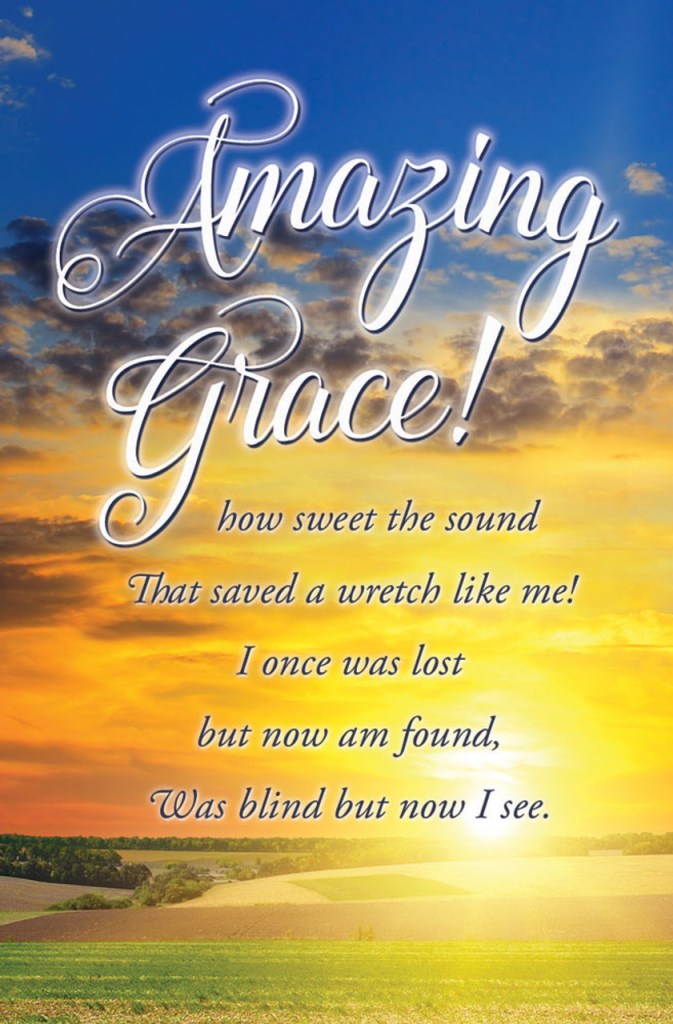
This is the song Dave’s band sing at Mrs Kim’s prayer meeting.
“Amazing Grace” is a 1779 Christian hymn by English Anglican clergyman John Newton. It is an immensely popular hymn, particularly in the United States, where it is used for both religious and secular purposes.
The national anthem of the US, which is sung by Miss Patty and Babette at the hockey game.
The lyrics come from the “Defence of Fort M’Henry”, a 1814 poem by lawyer Francis Scott Key after witnessing the bombardment of Fort McHenry by British ships of the Royal Navy during the Battle of Baltimore in the War of 1812. Key was inspired by the large US flag, with 15 stars and 15 stripes, known as the Star-Spangled Banner, flying above the fort during the US victory.
The poem was set to the tune of a popular British song by John Stafford Smith, called “To Anacreon in Heaven”, which was already popular in the US. “The Star-Spangled Banner” soon became a well-known US patriotic song, famously known for being very difficult to sing. Although the poem has four stanzas, only the first is commonly sung today.
“The Star-Spangled Banner” was first recognised for official use by the US Navy in 1889. In 1931 it became the official national anthem of the US.
MRS. KIM: Where’s your tambourine? DAVE: We don’t have one. MRS. KIM: Next time bring one.
Tambourine, a small, typically handheld, percussion instrument, with pairs of metal jingles, which are called zills. In use since ancient times, they have a long history being used for religious music, a tradition which goes back at least since the Old Testament.
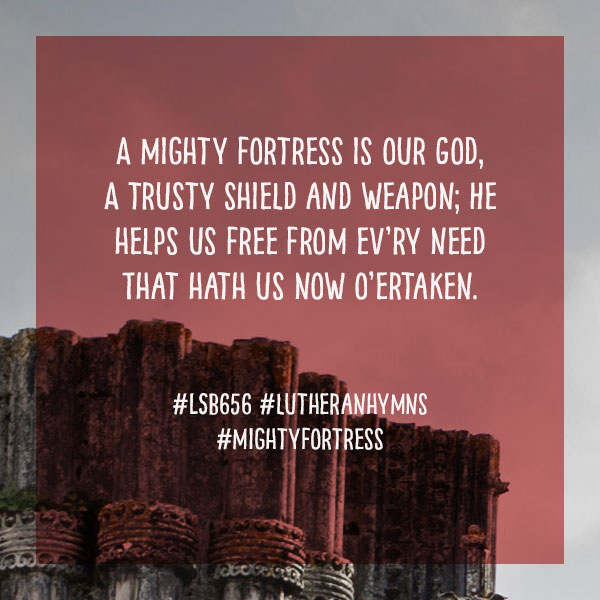
Dave is trying to pronounce the word abideth (said ah-BY-deth), an archaic form of the word abides. The fourth stanza of “A Mighty Fortress is Our God” begins:
That Word above all earthly powers no thanks to them abideth
This is the hymn which Dave’s band is rehearsing, since Mrs Kim has hired them as a Christian act.
“A Mighty Fortress is Our God”, a well known hymn written by Protestant reformer Martin Luther, composed around 1528. The first line paraphrases that of Psalm 48.
ZACH: But no way are we playing Creed, man … Or Amy Grant. That’s where we draw the line.
Creed, rock band from Tallahassee, Florida with several songs addressing themes in Christian theology and spirituality. Prominent in the post-grunge movement of the mid-1990s, the band released three consecutive multi-platinum albums, with their album Human Clay being certified diamond. Creed has sold over 28 million records but has been panned by some critics; Rolling Stone magazine ranked the band the worst artist of the 1990s.
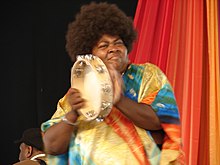
Amy Grant (born 1960), [pictured] pop singer-songwriter, and musician. She began in contemporary Christian music before crossing over to pop music in the 1980s and 1990s. She has been referred to as “The Queen of Christian Pop”. She had sold more than 30 million albums worldwide, won six Grammy Awards, 22 Gospel Music Association Dove Awards, and had the first Christian album to go platinum. She was honoured with a star on the Hollywood Walk of Fame in 2006 and in 2022, she was announced as a recipient of the Kennedy Center Honors.
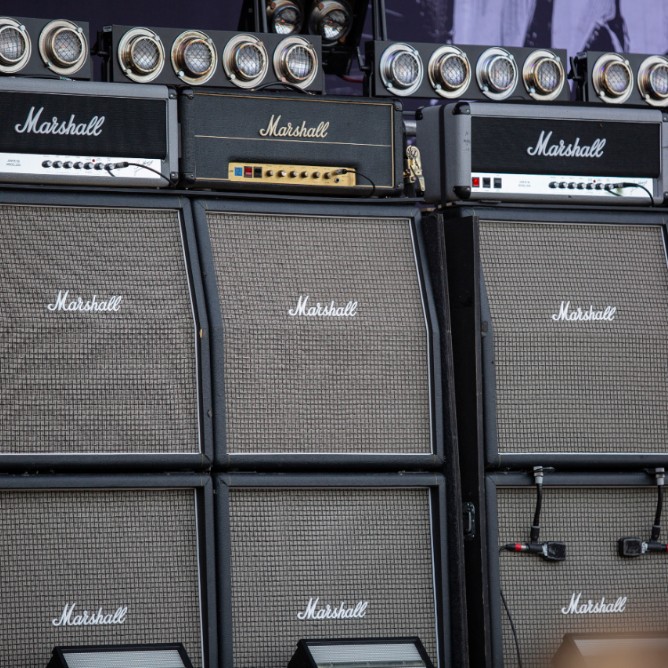
LANE: Yeah, yeah, Dave. Christians can still rock, don’t hide it. ZACH: Marshall stacks don’t know Christians from atheists. DAVE: Gosh, I just wasn’t sure if you guys would be accepting of my devoutness.
Marshall, British company that designs and manufactures music amplifiers, speakers, headphones and earphones, drums and bongos. The company also owns a record label called Marshall Records. It was founded in London in 1962 by drum shop owner and drummer, Jim Marshall, and is now based in Milton Keynes, England.
Their amplifiers are known as Marshall stacks, due to their size. Iconic in rock and roll, famous customers of Marshall include The Who, Eric Clapton, Jimi Hendrix, and John Mayall.
When Zach and Brian realise that Dave has been moonlighting as a Christian guitarist for Lane’s mother, they comically miss the point, and decide that Dave has been hiding a secret from them – that he’s a devout Christian. They immediately assure Dave that his religion makes no difference to how they feel about him, and he had no reason to hide it from them.





 The Annotated Gilmore Girls