Lorelai’s Contributions to Stars Hollow

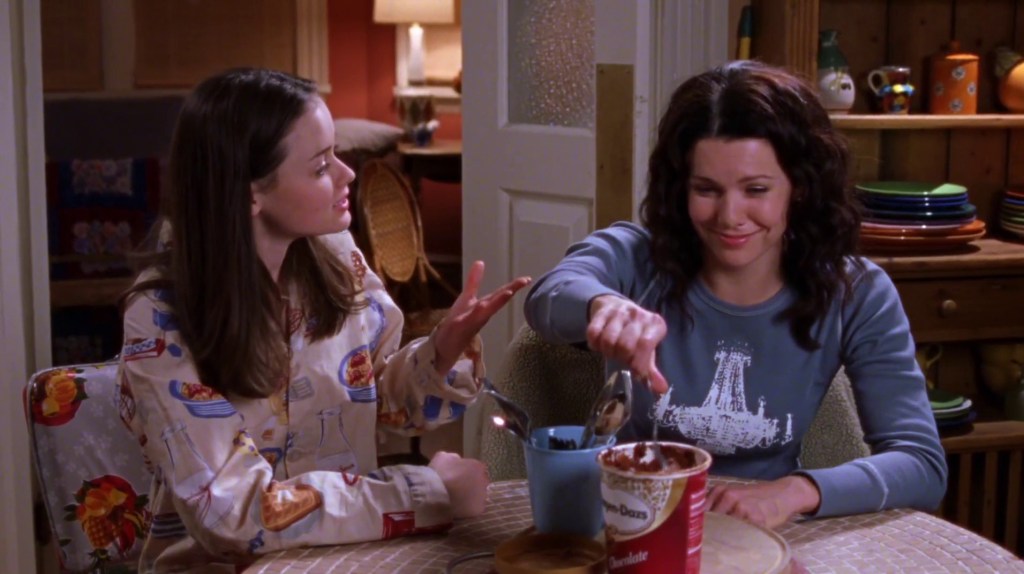
Made all the donkey outfits for the 2001 Christmas Festival – we never saw this, but presumably it’s the same festival that the Christmas pageant is a part of. Seems like a lot of people dressed up as donkeys for the festival, in typical quirky Stars Hollow fashion.

Organised the Save the Historic Oak Tree campaign. Apparently Stars Hollow has a historic oak tree, which we haven’t seen, and Lorelai saved it.

Played the role of Tevye in Fiddler on the Roof for the Stars Hollow Community Theater. Tevye is the father and patriarch in the musical, so Lorelai must have been great to beat any male competitors for the role (unless she was the only candidate, or they were doing a gender-flipped version). Either way, she obviously gave a standout performance. A reminder that Lorelai has to be both mother and father, as a single parent.

I don’t know why Sookie and Rory think any of these things will help Lorelai get a loan – do either of them know how banks work? They don’t give you loans based on how nice and community-minded you are.
Que Sera, Sera (Whatever Will be, Will Be)

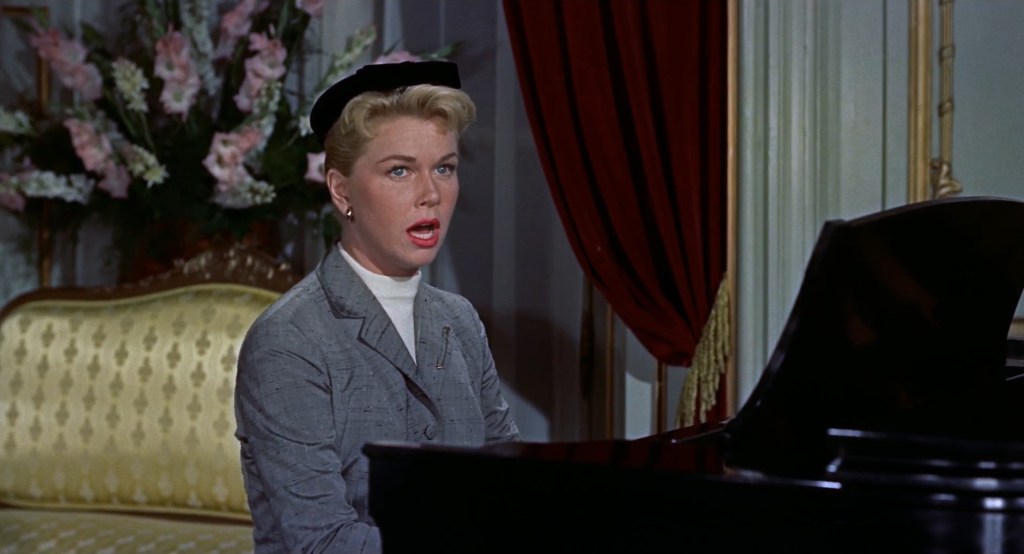
This song plays as Lorelai wakes up happy, gets coffee, goes outside, and falls through the porch. It was written by Jay Livingston and Ray Evans, published in 1955. It was introduced in the 1956 Alfred Hitchcock film, The Man Who Knew Too Much, sung by Doris Day. Her rendition went to #2 in the US and #1 in the UK, and the film received the Academy Award for Best Song. It became Doris Day’s signature song, and is regarded as one of the best songs in cinema history.

The song popularised the phrase que sera sera to indicate a sort of cheery fatalism, although the phrase itself was used as a heraldic motto as early as the 16th century. It is an English mistranslation of “what will be, will be” from the Spanish; in Spanish it would be lo que será, será. No such similar phrase is known of in Spanish or Italian, it has always been an English saying.

In The Man Who Knew Too Much, Doris Day sings the song in the hopes that her kidnapped son will hear it. The song’s message of hope is often used in film and television juxtaposed against disastrous events to create a moment of black comedy, of which we see a very mild version in Gilmore Girls. The joke is that Lorelai has no idea what is coming.

(It might seem unusual to go out on your porch in the your pyjamas early in the morning in the depths of winter to drink your coffee, but Lorelai has that special relationship with snow. And they’re actually in California).

Rocky Horror Picture Show

LORELAI: Okay. So we should celebrate. Hey, how about we get all dressed up tonight and hit The Rocky Horror Picture Show?

The Rocky Horror Picture Show, the 1975 musical comedy horror film, previously mentioned. Directed by Jim Sharman, it is based on the 1973 stage production of The Rocky Horror Show, with music, book, and lyrics by Richard O’Brien (who co-wrote the film’s screenplay and plays Riff Raff in the film).

The film begins with a young engaged couple named Brad and Janet who get lost one night and end up at the castle of a cross-dressing bisexual mad scientist named Dr Frank-n-Furter, who is from another planet. The film both parodies and celebrates science fiction and horror films from the 1930s to the 1970s, set against the backdrop of the glam rock era, which allowed much exploration and transgression of gender and sexuality.

The quirky film originally struggled to find an audience, but midnight screenings soon led to it gaining a cult following, especially in the LGBT community. Free admission was often given to those who arrived dressed as the characters, so it became an early example of cosplay fandom, and there is traditionally strong audience participation, with the audience encouraged to sing, dance, and shout lines from the film. Can you see why this is a film Lorelai would love?

The Rocky Horror Picture Show continues to be shown in cinemas, making it the longest-running release in cinema history. Midnight screenings are still popular, but Stars Hollow is showing it at the sensible time of 8 pm. Even so, I don’t believe Mrs Kim would have approved of Lane seeing the film on a school night, although Rory intends to invite her.

Human Behaviour

This is the song which plays out to the end of the episode. It’s a 1993 song by Björk, the lead single from her first solo album, Debut. It reflects on the mysteries of human behaviour, apparently from an animal’s point of view, although the lyrics can also be understood as from a small child’s viewpoint.

If you ever get close to a human and human behaviour
Be ready, be ready to get confused and me and my here after
There’s definitely, definitely, definitely no logic to human behaviour
But yet so, yet so irresistible and me and my fear can
And there is no map uncertain

The song was praised by critics, and was an underground smash hit, peaking at #2 on the US dance charts, and reaching #36 in the UK. It went to #1 in Björk’s home country of Iceland.

It’s a fitting tribute to Björk, whose effigy plays a central role in this episode, and we learn that both Lorelai and Rory are fans of hers. It also underlines that Rory doesn’t really understand Jess’ behaviour, and her own behaviour is going to become increasingly unclear to those around her – and herself, too.

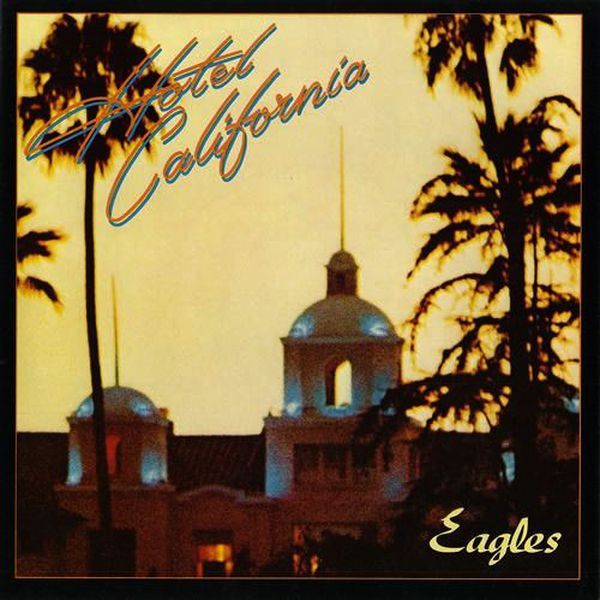
Hotel California

RORY: Most people didn’t notice anything.
LORELAI: I guess. Bootsy singing Hotel California accompanied by spoons drew people’s attention away.

Hotel California, the 1977 song by the Eagles, and the title track from their album of the same name. It is considered to be the best-known of the band’s songs, often performed live, and won the 1978 Grammy for Record of the Year. It reached #1 in the US and was an international hit.

Battle of the Bands

LORELAI: A bizarro Battle of the Bands.

A Battle of the Bands is a contest in which bands, usually rock or metal, but not always, compete for the title of best band, with the winner usually chosen by popular vote from the audience. They are often held as part of live music events, and sometimes at schools and universities. Their history goes back to at least the big band era of the 1930s.

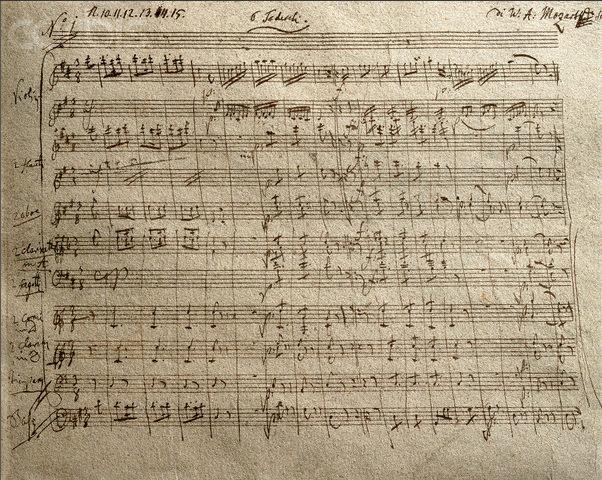
Mozart’s Prague Symphony

RICHARD: Well, I was appalled. Prague has played host to some of the greatest composers in history. Mozart named a symphony after it, for heaven’s sake. So what did I do?
EMILY: I have tried so hard to forget this.
RICHARD: I stood beside them and their boombox and I hummed Mozart’s Prague Symphony as loud as I could. [starts humming]

Symphony No. 38 in D major (K. 504), was composed by Wolfgang Amadeus Mozart, previously discussed, in late 1786. It premiered in Prague in 1787, during Mozart’s first visit to the city. Because of this, it is popularly known as the Prague Symphony. Mozart didn’t actually give it this name, and it’s not certain that Mozart wrote it in honour of Prague, although there is some evidence that he might have done.

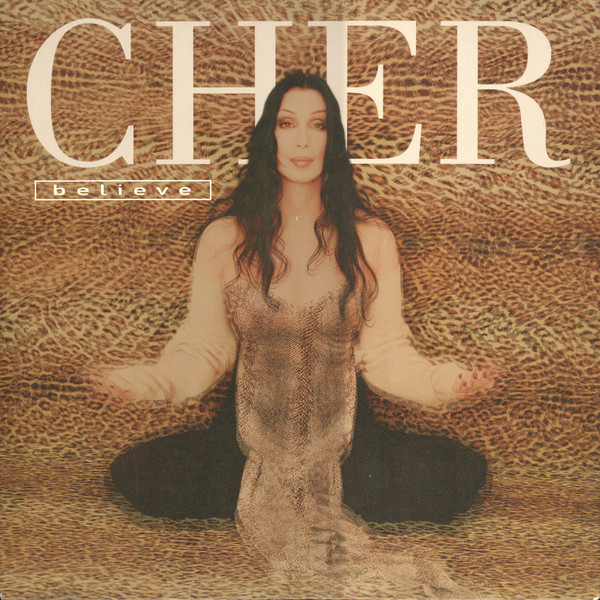
The Year of “Do You Believe in Life After Love?”

RICHARD: Oh, that awful woman. Who is she? The tall bony one, married to the deceased mustachioed congressman.
RORY: Cher?
EMILY: That’s the one!
LORELAI: The year of “do you believe in life after love?”.

Cher’s single Believe was released in October 1998, the title track from her album of the same name. The chorus begins: “Do you believe in life after love?”. A departure from her usual style, it’s an upbeat dance-pop number which heavily features Auto-Tune, then a new software; for some time Auto-Tune was known as “the Cher effect”.

The song went to #1 world-wide, making Cher (then 52) the oldest female artist to reach the Billboard Hot 100, while Believe was the highest-selling single by a female artist in the UK. One of the best-selling singles of all time, Believe won a Grammy for Best Dance Recording that year. It is considered to be one of the most iconic songs of the 1990s, and one of the best dance tracks ever released. Rolling Stone has it listed as both one of the greatest songs of all time, and one of the most annoying.

Cher is tall with a strong bone structure, and from 1964 to 1975 was married to Sonny Bono, a Republican congressman in California from 1995 until his death in 1998.

Lorelai’s statement tells us that Richard and Emily went to Prague in December 1998. Although Richard cannot identify the song by Cher, Lorelai can guess because she knows it was such a huge hit that year.

Chuck Mangione

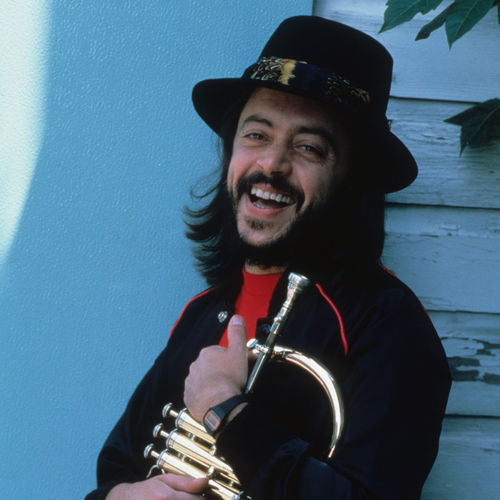
RUNE: Welcome Lords and Ladies. I call upon these sprightly horns to commence our proceedings. [horns play] Hey Chuck Mangione, you wanna back up a step?

Charles “Chuck” Mangione (born 1940) is a flugelhorn player, trumpeter, and composer. He came to prominence in the 1960s as a member of Art Blakey’s jazz band, then formed The Jazz Brothers with his brother Gaspare “Gap” Mangione. He has released more than sixty albums, and achieved international success with his 1977 jazz-pop single, Feels So Good. His compositions have been used in films and for the Olympic Games. He played himself as a voice actor on animated sitcom King of the Hill (1997-2010).

“What do you and Dean talk about?”

JESS: Hey, what do you and Dean talk about? … I mean, does he know Björk?
RORY: I’ve played him some stuff.
JESS: Hm. So you got a teacher-student thing going?

Rory completely throws Dean under the bus at this point. She could have said, “Dean is a fan of Nick Drake, he actually got me into Pink Moon. And he loves Liz Phair and The Sugarplastic”.

She doesn’t mention that Dean likes old movies, and that they originally bonded over Rosemary’s Baby when they met, or watched Willy Wonka on their first date. She doesn’t tell him that Dean recommended Hunter S. Thompson to her.

The fact that she makes no attempt to defend Dean’s intellect, or even to tell Jess to butt out of her relationship with her boyfriend, is extremely telling. She does tell Jess that, despite his scepticism, Dean is exactly her sort of guy, but it doesn’t sound very enthusiastic – especially considering Rory couldn’t think of one thing she and Dean talk about.