Cabbage patching

LORELAI: “Three months. Well, woohoo. Hold on, I’m going to cartwheel.”
RORY: Forget it.
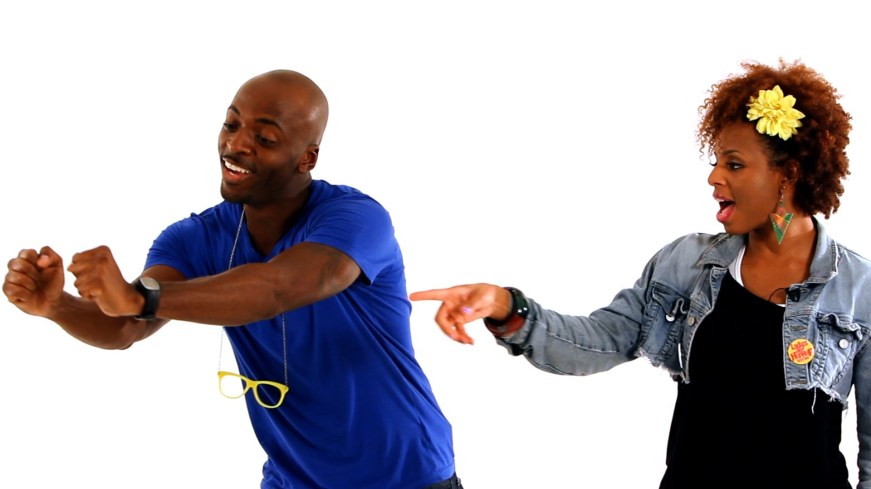
LORELAI: Oh, no wait. She’s telling my dad now. Why, I think they’re cabbage patching.

Cabbage patching means to do the cabbage patch dance, a hip-hop dance where you put your hands together as fists and move them in horizontal circles. The dance features in the 1988 song The Cabbage Patch by Miami bass group Gucci Crew II, which became popular in dance clubs. The dance seems to have been inspired by Cabbage Patch Kids, the doll fad of the 1980s, combined with “cabbage” as slang for paper money. It’s a celebratory dance, often associated with sporting victories.

Cleopatra, Queen of Denial

Rory calls Lorelai “Cleopatra, Queen of Denial” when she refuses to admit that she’s in a bad mood because she misses Max, who she broke up with a couple of months ago. Perhaps her night with Christopher in the previous episode only made it clearer how superior Max is.

Rory’s referencing the 1993 country song Cleopatra, Queen of Denial by Pam Tillis, an obvious pun on Cleopatra, Queen of the Nile. It’s from her album Homeward Looking Angel, and got to #11 on the country music charts. It helped popularise the phrase “queen of denial” to mean a woman who deals with her problems by denying they exist. It seems to have originated with Alcoholics Anonymous and the Twelve Step Program, which became mainstream in the early 1990s.

Tito Puente

MISS PATTY: Who wants to hear about the time I danced in a cage for Tito Puente?
KIDS: [raising hands] Me!
MISS PATTY: It was the summer of ’66 …

Ernesto “Tito” Puente (1923-2000) was an American singer, songwriter, big band leader, percussionist, and music producer. He is best known for his mambo, cha-cha-cha, and Latin jazz compositions, produced over a fifty year career, several of which were used in films. He was sometimes known as “The Musical Pope” and “The King of Latin Music”, and was at the peak of his popularity in the 1950s. He was posthumously awarded a Grammy Lifetime Achievement Award in 2003.

It is unclear where Miss Patty may have danced for Tito Puente. He was a fixture at the Palladium Ballroom in New York, a centre for Afro-Caribbean dance music, but that had just closed down, in May 1966. Maybe she means the spring of 1966?

Fiddler on the Roof

LORELAI: We can’t get married Christopher. We don’t know each other as adults.
CHRISTOPHER: So let’s get married and get to know each other as adults.
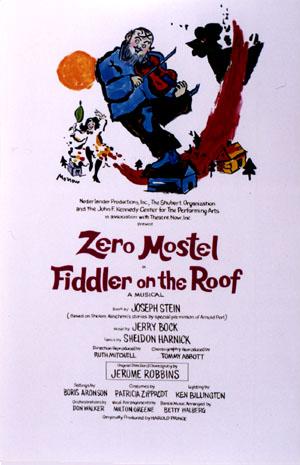
LORELAI: Well, that’s very Fiddler on the Roof of you.

Fiddler on the Roof is a 1964 musical with music by Jerry Bock, lyrics by Sheldon Harnick, and book by Joseph Stein. Set in a Jewish community in Russia in 1905, the play is based on Tevye and His Daughters, a series of short stories written in Yiddish by Russian author Sholom Alecheim.

Tevye (played by Zero Mostel in the original Broadway production), a poor man, wants to arrange the marriages of his daughters, with the idea that although the couple may not know each other very well before marriage, they will learn to know each other after marriage. This was the case in his own happy marriage to his wife Golde, but his daughters have other ideas.

Fiddler on the Roof was a massive hit with both critics and audiences, and won nine Tony Awards, including Best Musical. For many years it was the longest-running musical on Broadway, and has had numerous revivals. Successfully adapted to film in 1971, it remains popular around the world.

Lorelai and Christopher’s Band Rivalry

CHRISTOPHER: You know I don’t deserve that, I’m as mature as you.
LORELAI: What? The Offspring is your favorite band.
CHRISTOPHER: So? You’re into Metallica.
LORELAI: Well, Metallica is way more substantial than The Offspring.
CHRISTOPHER: Here we go, it’s the same Black Sabbath riff all over again.
LORELAI: Oh! The Offspring have like one chord progression. They use it over and over. They just popped on new words and called it a single, and I don’t want to talk about this anymore!

The Offspring is an American rock band formed in 1984 by Bryan “Dexter” Holland and Greg Kriesel. Their self-titled debut album was released in 1989, and they gained mainstream success in 1994 with their biggest-selling album, Smash. In 2001, their most recent album was Conspiracy of One, which came out the previous year. They were one of the most popular punk bands of the 1990s, and their biggest hits of this era include Come Out to Play (1994) and Pretty Fly (For a White Guy) (1998).

Metallica is an American heavy metal band formed in 1981 by Lars Ulrich and James Hetfield, and one of the founding bands of thrash metal. Metallica attracted a fan base in the underground music community while also gaining critical acclaim. Their 1986 album Master of Puppets was highly influential in thrash metal, while their self-titled 1991 album brought them wider mainstream success and is their biggest-selling album. In 2001 their most recent album was Reload (1997). One of the most commercially successful bands of all time, Metallica have won nine Grammy Awards, and were inducted into the Rock and Roll Hall of Fame in 2009. By these standards, Metallica would be judged as “more substantial” than The Offspring.

Black Sabbath, earlier mentioned, were an English rock band formed in 1968 by Tommy Iommi, Geezer Butler, Ozzy Osbourne, and Bill Ward. Often seen as pioneers in heavy metal music for their occult themes and image, their 1970 self-titled debut album was poorly reviewed, but a commercial success. By their 1973 album Sabbath Bloody Sabbath, they had begun to win the critics over while still remaining popular. The band broke up in 2017, and are often regarded as the greatest metal band of all time. Black Sabbath have won two Grammy Awards and were inducted into the Rock and Roll Hall of Fame in 2006.

A riff is a short repeated musical phrase, generally used as the opening or refrain of a song. Both being heavy metal bands, it isn’t surprising that Metallica sometimes have similar riffs to Black Sabbath – Black Sabbath were pioneers in the genre, so their riffs tended to set the standard for defining what heavy metal sounds like. A particularly noticeable example is the opening riff to Metallica’s 1984 track For Whom the Bell Tolls, and its similarity to the final riff in Black Sabbath’s 1970 track Fairies Wear Boots.

A chord progression is a series of musical chords played in a sequence. Certain chord progressions become very popular in certain genres, so it wouldn’t be surprising for The Offspring, like many other bands, to rely heavily on a certain chord progression. The Offspring often uses the I-V-vi-IV progression very popular in punk music, but so ubiquitous that it can also be found in songs by Bruce Springsteen, Coldplay, Celine Dion, Green Day, Madonna, Red Hot Chili Peppers, John Denver, and many others – it’s also the chord progression in Auld Lang Syne.

Christopher later says that he and Lorelai are arguing just like an old married couple, which he sees as a good sign for their relationship. Instead, you can see that they are arguing like a couple of teenagers, and that neither of them is mature enough for marriage.
 

Charlie Manson

CHRISTOPHER: I want to marry you …
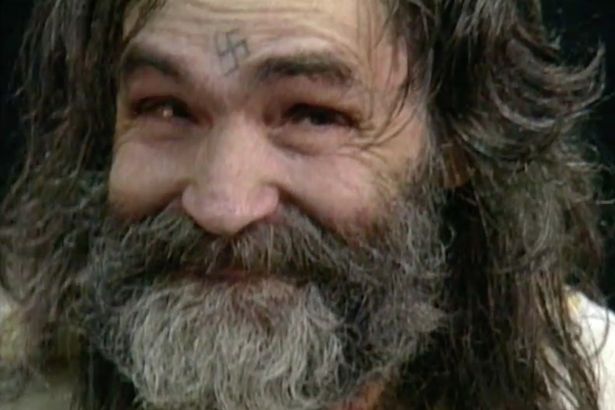
LORELAI: You are out of your mind. You are completely insane. You have flipped your lid. Charlie Manson is freaked out by you right now!

Charles Manson (1934-2017) was an American criminal and cult leader, earlier alluded to as the head of the notorious Manson Family. His followers committed a series of murders in 1969 under his instructions.

Obsessed with The Beatles, Manson believed their song Helter Skelter was a warning of an apocalyptic war between whites and blacks, and that the Manson Family were being instructed to preserve the worthy from the impending disaster. By committing the murders, his followers would help precipitate the race war, and also control it, allowing them to escape from harm.

In 1971 he was convicted of murder and conspiracy to commit murder. Originally sentenced to death, his sentence was commuted to life imprisonment, which he served in California State Prison.

Lorelai believes Manson was mentally ill, and the prison system agreed. He was diagnosed with schizophrenia and paranoid delusions, had no remorse for any of his crimes, or apparent understanding of their magnitude, with highly controlling behaviour, and an exceptionally callous disregard for human suffering.

Lorelai and Christopher’s Childhood Duet

CHRISTOPHER: Lucy, Schroeder, you laying on the coffee table.
LORELAI: You pretending it was a piano. God, why is that remembered?
EMILY: Because it was such a wonderful production.
LORELAI: I don’t know if it was a production, Mom. It was just one song.
CHRISTOPHER: Suppertime.
RICHARD: Did you write that? That was really very good.
LORELAI: Dad, that’s from You’re a Good Man, Charlie Brown. It’s a famous musical.

At the age of ten (around 1978), Lorelai and Christopher sang a song for at least Richard and Emily, and possibly Christopher’s parents as well.

The song was Suppertime, from the 1967 musical comedy You’re a Good Man, Charlie Brown by Clark Gesner, based on the characters from the Peanuts comic strip drawn by Charles M. Schulz. The show premiered off-Broadway in 1967, went to London’s West End in 1968, and opened on Broadway in 1971. It had a Broadway revival in 1999.

The show was adapted for television in 1973, when Lorelai and Christopher were about five. This might be where they knew of the musical from, although it’s a favourite for amateurs to perform, and they might have seen a local production, or even been in a school production. The musical was adapted for TV again in 1985.

Suppertime is a song sung by the dog Snoopy, about his excitement in being fed after waiting hopelessly for the food to arrive. It’s a strange song to choose as a duet, because Snoopy sings almost the entire song, with only a few interjections from Charlie Brown. I presume Lorelai sung Snoopy’s part, and Christopher sung Charlie Brown’s – it seems like her to hog the limelight, and like him to do only minimal work. Possibly they chose that song because they were performing it just before dinner was served.

Lorelai and Christopher recall playing the roles of Lucy and Schroeder, in the iconic pose of Lucy lying on the piano while Schroeder plays it. It isn’t clear how this fitted in with the song by Snoopy. In the musical, Lucy and Schroeder have a scene together where he plays Beethoven’s Moonlight Sonata on the piano while Lucy expresses her love for him and asks about marriage, while Schroeder remains detached. This is ironic considering what comes later.

Chuck Berry

RICHARD: I’m a Chuck Berry man myself.
LORELAI: … Chuck Berry?
RICHARD: Yes, Chuck Berry. He was all the rage when I was in school.
LORELAI: So we’re talking pre-My Ding-a-ling?

Charles “Chuck” Berry (1926-2017) was an American singer, songwriter, and musician who was one of the pioneers of rock and roll, most famous for 1950s songs such as Maybellene, Roll Over Beethoven, Rock and Roll Music, and Johnny B. Goode. Chuck Berry was one of the first musicians to be inducted into the Rock and Roll Hall of Fame when it opened in 1986, with his lyric structures, guitar riffs, and showmanship seen as laying the groundwork for modern rock and roll. He won the Grammy Lifetime Achievement Award in 1984, and is regarded as one of the greatest rock musicians of all time.

My Ding-a-ling is a novelty song that was first written written and recorded by Dave Bartholomew in 1952, and covered by Chuck Berry in 1972. The song is about a child’s toy covered in silver bells – the “ding-a-ling” – which is constantly held and played with, but the song uses double entendre as most of the lyrics would still make sense if the “ding-a-ling” was actually a penis. It was Chuck Berry’s only single to get to #1.

Richard says he became of a fan of Chuck Berry because his songs were popular when he was at school: Richard would have been aged 12-15 when Berry became famous in the 1950s. Richard being a fan of Chuck Berry continued to be a feature of the the show throughout its run.

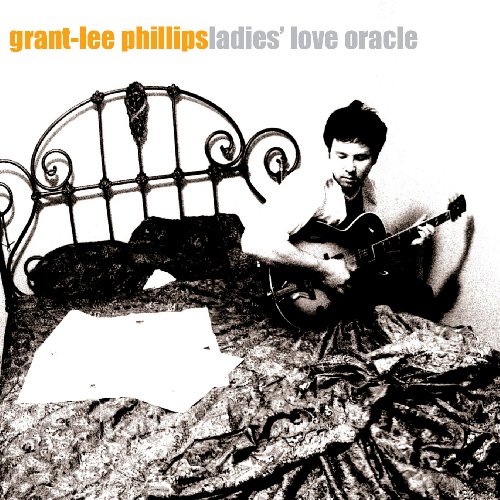
Christopher’s Musical Abilities

CHRISTOPHER: Hey, I play guitar.
LORELAI: You know the opening lick to Smoke on the Water.
CHRISTOPHER: And I’ve since mastered the opening lick to Jumpin’ Jack Flash.

Smoke on the Water is a 1973 song by English heavy-metal pioneers Deep Purple, from their 1972 album Machine Head; it was written by the band’s guitarist, Ritchie Blackmore. The song retells the true story of when Deep Purple were in Montreux, Switzerland to record an album at the casino in 1971, when the casino caught fire. The “smoke on the water” is the image of the smoke from the fire over Lake Geneva. Smoke on the Water went gold and got to #4 in the US. It is famous for its opening riff, which is often chosen as a piece by beginner guitarists, although playing it correctly is actually fairly difficult, and most learners opt for a simpler power chord version. This may be what Christopher did as well.

Jumpin’ Jack Flash is a 1968 song by English rock band The Rolling Stones, released as a single. It was written by Mick Jagger and Keith Richards, but Bill Wyman claims it was he who wrote the famous opening riff, and remained uncredited for it. Jumpin’ Jack Flash went to #1 in the UK and #3 in the US, and is one of the band’s most popular songs, often covered by other performers and featured in films.