Mister Kelly’s

BABETTE (to Dean): There used be a great club there called – what was it called baby?
MOREY: Uh … Mr. Kelly’s.
BABETTE: Oh, yeah – Mr. Kelly’s. You ever go there?

Mister Kelly’s was a nightclub in Chicago, which began in 1953. From 1956 onward it became a place where many entertainers, especially jazz singers and comedians, began their careers, including Barbra Streisand, Lenny Bruce, Eartha Kitt, and George Carlin. The nightclub closed in 1975, so it isn’t possible for Dean to have ever gone there.

Chi-Town

Rory warns her mother not to refer to Chicago as “Chi-Town” when she meets her new boyfriend Dean, who is from Chicago.

The term Chi-Town originated as trucker’s slang to refer to Chicago via citizens’ band radio; it obviously takes the first three letters of Chicago and adds Town to it. The slang term spread more widely than CB radio usage after it featured in the 1975 novelty song Convoy by C.W. McCall, from the album Black Bear Road. The song went to #1 in the national charts, as well as #1 in the country charts, and inspired the 1978 film Convoy.

Shaft

LORELAI: I’m going to be so cool in there you will mistake me for Shaft.

John Shaft is a fictional African-American private detective based in New York City. He first appeared in the 1970 detective novel Shaft by Ernest Tidyman, adapted into a film of the same name in 1971 which was directed by Gordon Parks with Richard Roundtree in the title role; Ernest Tidyman was one of the screenwriters. The movie was successful and well-received by both white and black audience members, in large part because of John Shaft’s elegant flair, and the excellent score by Isaac Hayes, which won an Academy Award.

John Shaft detective novels continued being published through the 1970s, and Shaft went on to become a television series from 1973-74, with Richard Roundtree continuing in the role of John Shaft. Two sequels to Shaft were produced in the 1970s.

Shaft came out in June 2000 – not a remake or reboot, but another sequel. In this film, Samuel L. Jackson plays John Shaft II, the nephew of the original John Shaft. It did well at the box office and received generally positive reviews.

Lorelai and Rory could easily have seen the new Shaft the preceding summer, but knowing Lorelai’s love of 1970s cinema, she is probably (mostly) referring to the original film here. The 2000 Shaft soundtrack is R&B and hip-hop – I don’t know if this helps explain Lorelai’s supposed “love of rap” or not.

Dean’s Favourite Musical Artists

LANE: He likes Nick Drake and Liz Phair and The Sugarplastic

Nicholas “Nick”Drake (1948-1974) was an English singer-songwriter known for his acoustic guitar-based folk music. He produced three albums between 1969 and 1972, none of which were a commercial success, partly because Drake was reluctant to perform live or give interviews to promote his work. Suffering from major depression, he committed suicide by overdosing on prescribed antidepressants at the age of 26.

He remained somewhat obscure, although his work was re-released after his death, gathering him new fans as a doomed romantic hero. By the 1980s he was cited as a musical influence by artists such as David Sylvian and Robert Smith, and had gained critical appreciation; a “best of” compilation album was released in the 1990s. His career had a posthumous revival after his song Pink Moon was used in a 1999 Volkwagen Cabrio commercial, aimed at young people. Since then he has sold more than 2 million albums and downloads.

We can assume that Dean was one of the young people who became instant Nick Drake fans after seeing the VW commercial. As we later disover Dean is a car fanatic, it makes sense that he would discover a favourite singer through a car.

Liz Phair (born Elizabeth Phair in 1967) [pictured]  is an American indie rock singer-songwriter. Her first album, Exile in Guyville, came out in 1993 to critical acclaim, and was hailed as a landmark in alternative rock. Her 1994 second album, Whip-Smart, brought her mainstream attention, and is her most commercially successful album. In 2000 her most recent album would have been Whitechocolatespaceegg (1998).

Liz Phair was born in New Haven, Connecticut, but grew up in Winnetka, a wealthy village just outside Chicago – it was a favourite film location for director John Hughes, as seen in movies such as Home Alone, Ferris Bueller’s Day Off, The Breakfast Club, and Sixteen Candles. Liz Phair may have been chosen as a favourite singer for Dean because she is connected with both Chicago and Connecticut, his birthplace and later home.

The Sugarplastic is an alternative rock band founded in 1989 by Ben Eshbach and Kiara Geller. Their first album came out in 1995, and their third album, Resin, in April 2000. The most genuinely obscure of Dean’s choices, he may have become a fan quite recently. His indie/alternative tastes in music make him seem like a worthy beau for Rory. For now …

“Smell a rose”

MRS. KIM: Maybe you should be less busy. Then you can remember to pick up chairs.
LORELAI: Right. Absolutely. Smell a rose, got it.

Lorelai is referring to the cliched advice to “stop and smell the roses”, meaning to slow down and allow yourself to notice and enjoy the beauty of life.

The saying appears to come from golfer Walter Hagen’s 1956 book of golfing memoirs, The Walter Hagen Story. In it he advises his readers: “You’re only here for a short visit. Don’t hurry, don’t worry. And be sure to smell the flowers along the way. ”

It was further popularised by American singer-songwriter Mac Davis, in his 1974 pop song Stop and Smell the Roses, from his album of the same name. Davis got the idea for the song from the bandleader on The Tonight Show, whose doctor had said the phrase to him.

Note the implication from Lorelai that she is so busy she only has time to smell one rose.

Allegro in F Major

This classical piece is playing at Miss Patty’s as Lorelai and Rory walk past, the accompanying music to her dance class, who are rehearsing for the Autumn Festival with a Thanksgiving-inspired dance. It is part of Concerto No. 3 in F Major, the “Autumn” section of The Four Seasons violin concerti by Italian composer Antonio Vivaldi. It was first published in 1725, with each concerto accompanied by a sonnet about the season. The “Autumn” one begins, Celebrate the peasant with songs and dances. The music is perfect for the Autumn Festival, and to accompany dancers in a small town.

What a Wonderful World

This 1967 ballad by Louis Armstrong plays while everyone is downstairs at Rory’s second party, trading Rory stories, and then continues as Lorelai and Emily talk upstairs. Written by Bob Thiele and George David Weiss, it was not at first a hit in the US because the record company didn’t promote it, but went to #1 in the UK and was successful around the world.

When it was re-released in 1988 after featuring in the film Good Morning, Vietnam, it went to #32 in the US, and was #7 on the adult contemporary charts. It has become a pop standard, with many cover versions, and often used in film and television soundtracks.

Happy Birthday to You

Everyone sings this traditional birthday song to Rory when her birthday cake is brought out. The song dates back to the 19th century, when Kentucky sisters Patty and Mildred Hall wrote a kindergarten song called Good Morning to All, publishing it in 1893. At some point (and by someone) the lyrics were changed to Happy Birthday to You, and early in the twentieth century the words and lyrics were published together.

Happy Birthday to You is said to be most recognisable song in the English language, and the highest-earning song in history, having made perhaps fifty million dollars. After a protracted legal battle, the song was declared to be in the public domain in the US in 2016, and copyright ended in Europe in 2017.

You can see in this scene that Rory’s cake has 16 candles – 8 on each side of the cake – confirming that this is her sixteenth birthday.

This Ole House

This popular 1954 song is on in the background at the start of Rory’s second birthday party as she opens her presents surrounded by friends and neighbours. Written by Stuart Hamblen, it was a hit for Rosemary Clooney that year.

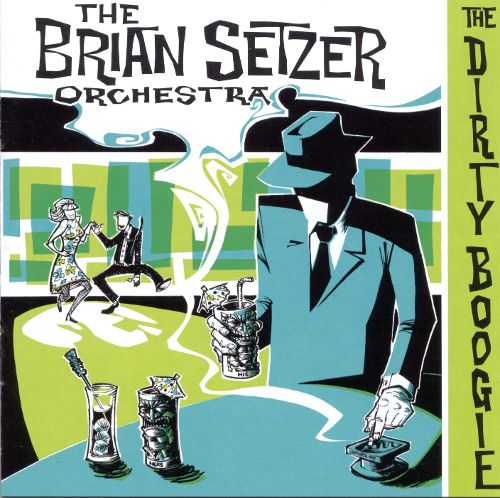
The version played on the show is from 1998 by the Brian Setzer Orchestra, from their successful album The Dirty Boogie. Brian Setzer was in the rockabilly band Stray Cats in the early 1980s, and his orchestra revived swing in the 1990s.