Progressive Rock

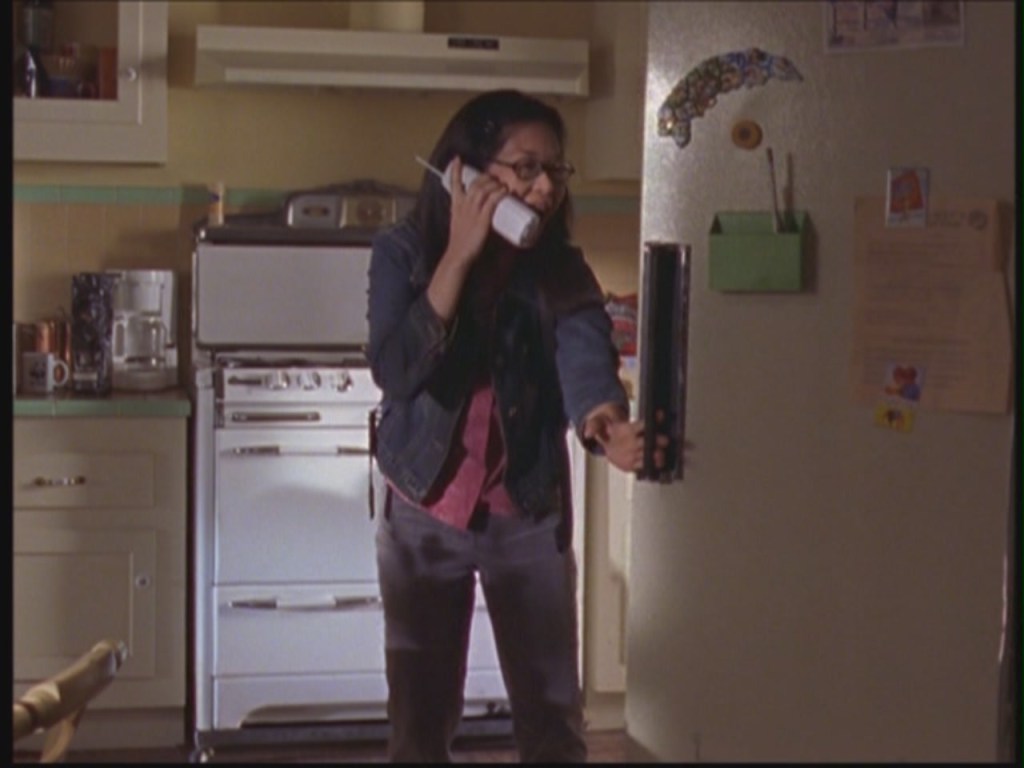
LANE: [on phone] No, wait, wait, wait, progressive rock is a really passé style now but I listed it as an influence because it was a progenitor of great things that came afterwards.

Progressive rock, usually shortened to prog rock or just prog, a broad genre of rock music developed during the mid-to late 1960s, peaking in the early 1970s. Initially termed “progressive pop”, the style grew out of psychedelic bands who abandoned standard pop traditions in favour of instrumentation and composition more often associated with jazz, folk, or classical music.

Additionally, lyrics were more poetic, technology was harnessed for new sounds, music approached the condition of “art”, and the studio, rather than the stage, became the focus of musical activity, which often involved creating music for listening rather than dancing. Examples of prog rock bands include Emerson Lake & Palmer, Genesis, King Crimson, The Moody Blues, and Pink Floyd.

Lane says that progressive rock is passé, in that its heyday was in the 1970s, but in fact there were a wave of bands in the 2000s who revived the genre, such as System of a Down and Thirty Seconds to Mars. Perhaps that’s what she means by it being a progenitor of great things?

Lane is receiving responses to the advertisement she posted looking for a band that needed a drummer. Naturally she is deluged with enquiries, beginning early in the morning! Yes, the local area is filled with bands looking for a drummer, scanning the advertisements for one, and eagerly calling before breakfast to find them! We are in complete fantasy land here. Instead of being stunned that she gets any answers at all, Lane is irritated that they aren’t all on her musical wavelength.

Rory and Lorelai Freak Out

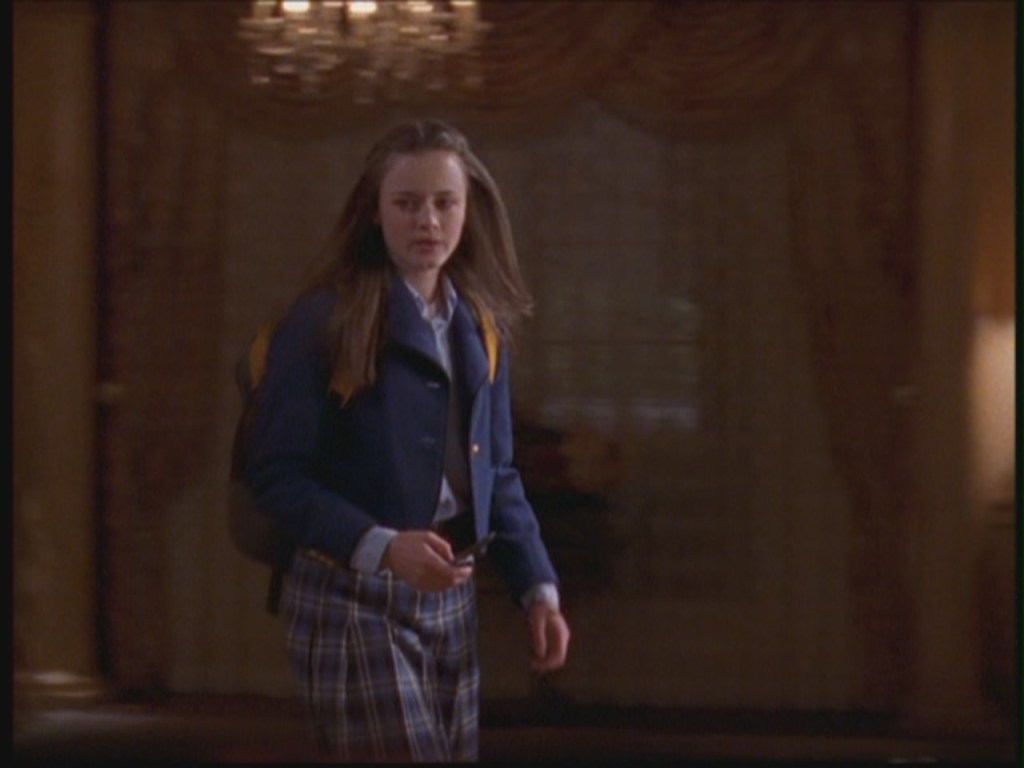
Rory and Lorelai share their application anxiety with each other, as these two finally get a reality check and realise that it’s possible Rory won’t just waltz into Harvard. It’s unbelievable that Chilton wouldn’t have prepared her for the rigours of a college application – they’re a Harvard feeder school! Instead she discovers it for herself, through an after-school panel that she and Paris had to organise.

This sudden realisation is mostly for reasons of plot – it’s much more dramatic for Rory and Lorelai to receive a sudden shock. The result is to make Chilton look utterly useless – why are parents paying huge fees to send their children to Chilton, where they are getting less help to prepare for college than a local public school would give?

The Bus Stop

EMILY: You look flushed.

RORY: I ran from the bus stop, I’m okay.

In the very first episode of Gilmore Girls, Emily said that Chilton was five minutes from their house. That may have been an exaggeration, but the show has always implied that Rory’s grandparents lived within walking distance of her school. Now she seemingly has to catch a bus to reach her grandparents’ house.

Perhaps their house is 5 minutes drive from Chilton, or around 20 minutes walk. It’s possible Rory usually walks the mile or so to get there, but took a bus this time, worrying that she would be late for dinner.

Kate Hudson

EMILY: I was watching TV and that insipid Kate Hudson was talking about going to a university. If she decides to go to Harvard, she’ll get right in over Rory, who we know is more qualified.

Kate Hudson (born 1979), actress, the daughter of actress Goldie Hawn and singer and actor Bill Hudson, although raised by her mother and stepfather, actor Kurt Russell. Her film debut was in Desert Blue (1998), and at this stage, her best known film was Almost Famous (2000) [pictured]. Her most recent movie in 2002 was the war film The Four Feathers, released in September, around the same time as the events of this episode, which was panned by critics. She went on to greater success during the 2000s, and has won several awards.

Kate Hudson was accepted into New York University’s Tisch School of the Arts in 1997, but turned it down to concentrate on her acting career. I don’t know what television program Emily could have been watching – by this stage, Kate Hudson was 23, and not exactly college aged.

Random College Admissions

EMILY: Every child that applies has the same high grade point average, they’ve taken the same AP classes, and they’re all on the student council … One college admissions officer said that he sometimes puts a random stack of applications in the yes pile and the rest in the no pile because he knows it doesn’t make any difference. He doesn’t even so much as glance at them.

It’s true that it’s very difficult to tell apart applications from high-achieving students who’ve all been to Ivy League feeder schools and all got the same grades in the same classes. And a college admissions officer only has a few minutes to decide whether an application should go on the yes or no pile. It’s a hard decision to make in a very competitive Ivy League college environment.

However, like Lorelai, I find it hard to believe this story – most of all, I find it hard to believe in a college admissions officer who would openly admit to this practice in a print publication. I think Emily must have got over-excited, and what they really said was something like, “Sometimes it seems as if I might as well choose the applications randomly when they are all so similar”. Or else the magazine just made it up.

College admissions officers certainly admit that it’s a tough decision to make, and that they don’t always make the right choice – many of them have stories about rejecting a candidate who didn’t seem quite good enough, and then they went on to become something amazing. (They also remember the times they had to grit their teeth and let in terrible candidates because they were on athletics scholarships or had bought their way in). In any case, the final decision is made by a committee, it isn’t just one person deciding who gets in.

The Competition for Harvard

EMILY: I’ve unearthed some shocking statistics. I mean, do you have any idea how hot the competition is to get into a school like Harvard?

LORELAI: Well, yeah, it’s very hot. It’s one of the top schools in the country.

EMILY: In the world. People from China, Russia, India, children from every country apply to Harvard. There’s more competition than ever before.

Lorelai should have already known this. Why is it Emily reading the college magazines to educate herself, why not Lorelai? You can forgive Emily and Richard for being behind the times on college applications in the 21st century, as competition was much less when they went to college, and Emily is trying to catch up.

Lorelai tells Emily that she already knows how hard it is to get into Harvard – which is true, she discovered how low the acceptance rate was in Season 2, when she took Rory for a day trip to Harvard. However, this episode makes clear that she hasn’t really been thinking about it, because the minute she’s forced to, she goes into a panic. And that’s when Lorelai and Emily start getting application anxiety as well.

Early Applications

PARIS: Okay. So, how early should a student get an application in?

MR. ROMAINE: By the due date. Earlier makes no difference. It’s a complete myth that there’s a benefit to be derived from early admission.

This is arguable. You would think the obvious benefit to applying early is a smaller pool of applicants. If applying to Harvard, you cannot apply early to another university, meaning that the restriction of doing so may discourage a lot of people. People who apply early are more likely to gain admittance to the university of their choice – but according to Harvard, that’s because quality candidates are more likely to apply early. Harvard insists there is nothing to be gained from applying early, even though the standard advice is to apply early if you can. The only real drawback is that you have less time to polish your application.

The early application date for Harvard is November 1st, and notifications of their decision are sent out in mid-December. An early decision seems like a good way to avoid application anxiety!

Princeton University and Ivy League College Consultant

PARIS: My panelists are Jim Romaine, admissions officer at Princeton University, and Ivy League college consultant, Rose Samuels.

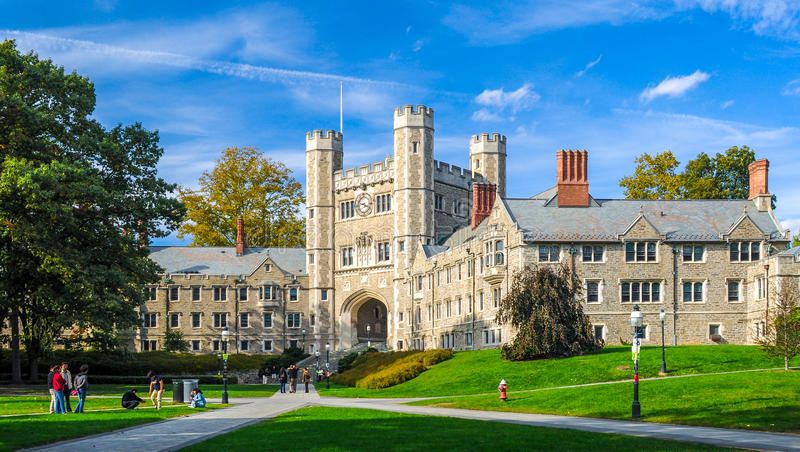
Princeton University, previously discussed. Paris’ boyfriend attends Princeton – I don’t know whether that had any bearing on Paris getting their admissions officer on their panel. I wouldn’t put it past Paris, though.

Jim Romaine and Rose Samuels are of course fictional characters, played by Philip Pavel and Karen Bankhead respectively.

In real life, an admissions officer at Princeton University, Stephen LeMenager, had just been removed (in August 2002) after gaining unauthorised access to student’s files on a Yale admissions website the previous April. The investigation and subsequent scandal may have been what put the idea of using Princeton in this episode – they could have had a representative from any Ivy League university, after all.

Ivy League college consultants, also called independent education counsellors, work with students and their parents to decide which schools a student should apply to. They also guide them through the application and essay-writing processes. Top tier college consultants can cost a small fortune, so this is yet another area where being very wealthy can help you on your path to college.