LORELAI: I’ve known guys like Jess. He seems cool because he’s got this dangerous vibe and this problem with authority and he’s seen a lot of Sylvester Stallone movies.
Sylvester Stallone, (born Michael Sylvester Stallone in 1946), actor, screenwriter, producer, and director. He won critical acclaim for his co-starring role in The Lords of Flatbush (1974), and gained his greatest critical and commercial success in Rocky (1976). He is the only actor in US cinema history to have starred in a #1 film across six decades.
Lorelai is probably thinking about Stallone’s roles in the Rambo films, beginning with First Blood (1982), and in a slew of other commercially successful but critically panned action films in the 1980s and ’90s, which made Stallone one of the highest-paid action stars of his era.
Amusingly, Milo Ventimiglia (Jess) played Sylvester Stallone’s son in the 2006 film Rocky Balboa. Casting must have agreed that Jess really did have a bit of a Sylvester Stallone vibe.
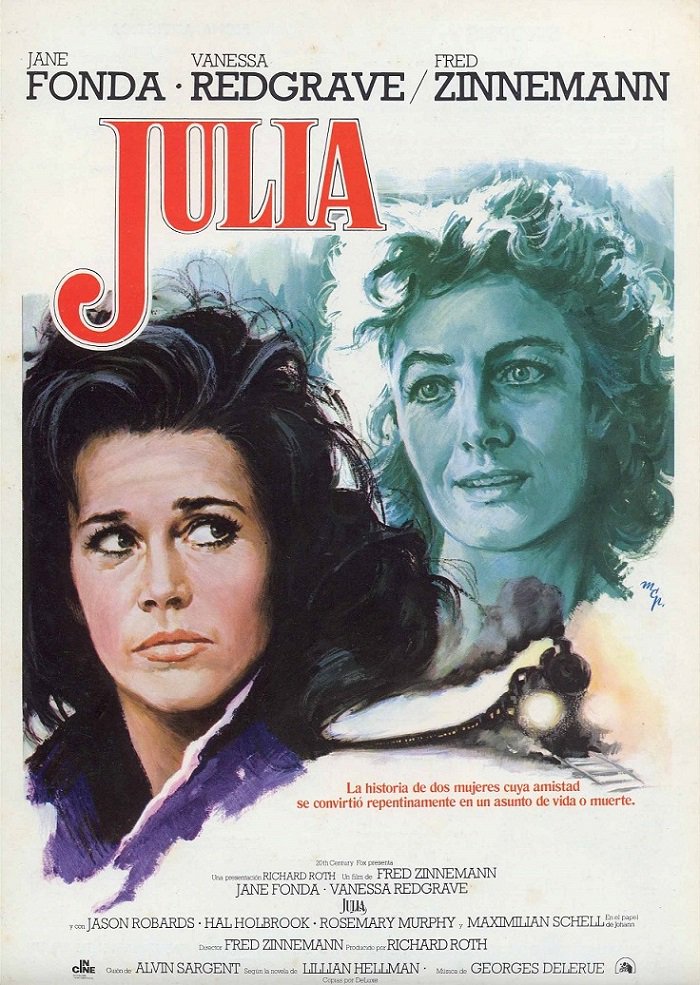
RORY: You said you wanted to read The Children’s Hour. LORELAI: I did? RORY: The other night when we were watching Julia, and Jane Fonda was playing Lillian Hellman.
The Children’s Hour, 1934 play by Lillian Hellman. It is set in a girl’s boarding school run by two women, and when an angry student runs away, she tells her grandmother the women are having a lesbian affair to avoid being sent back. This false accusation destroys the women’s careers, relationships, and lives.
The play is based on an incident which occurred in Scotland in the 19th century, which Hellman read about in a 1930 true crime anthology called Bad Companions by William Roughead. The Children’s Hour was a financial and critical success, and was adapted into a film called These Three in 1936, then again under its original title in 1961; both versions were directed by William Wyler.
Julia, 1977 period drama film [pictured] directed by Fred Zinnemann, based on a chapter in 1973 Lillian Hellman’s controversial book Pentimento: A Book of Portraits. It is about Hellman’s alleged friendship with a woman named Julia, who fought against the Nazis prior to World War II. Jane Fonda plays Lillian Hellman, and Vanessa Redgrave is in the role of Julia. An image of the real Lillian Hellman is shown at the end.
Julia performed well at the box office and received generally positive reviews. However, it was felt, with good reason, that the supposedly true story must have been, at best, heavily fictionalised. At the time of her death, Lillian Hellman was still in the process of suing the writer Mary McCarthy for libel after she cast strong doubt on the story’s veracity.
In 1983, New York psychiatrist Muriel Gardiner claimed that she was the person the “Julia” character was based on. Lillian Hellman had never met Gardiner, but had heard about her through a mutual friend, so they couldn’t possibly have had the relationship or adventures together that Hellman had written about. This does seem the most likely explanation, however.
Muriel Gardiner wrote about her anti-Fascist activities in Vienna of the 1930s in a 1983 book, Code Name Mary: Memoirs of an American Woman in the Austrian Underground.
JESS: Okay, tomorrow I will try again, and you will . . . RORY: Give the painful Ernest Hemingway another chance. Yes, I promise. JESS: You know, Ernest only has lovely things to say about you.
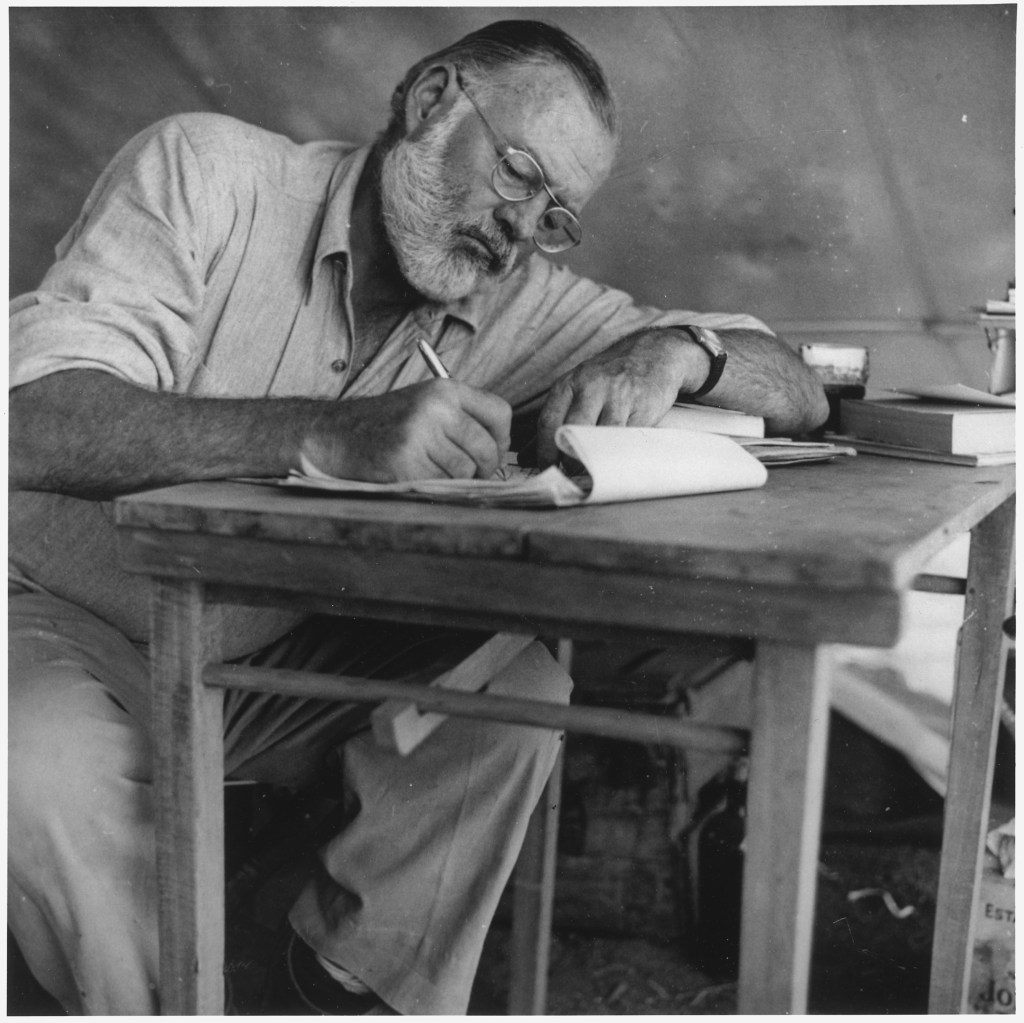
Ernest Hemingway (1899-1961), author, journalist, and sportsman. He is famous for his economical and understated style, which had a profound influence on 20th century fiction, while his public image and adventurous lifestyle brought many admirers. He produced most of his work during the 1920s to the 1950s, and was awarded the 1954 Nobel Prize for Literature. Many of his works are considered classics of American literature.
Hemingway’s hard, lean prose style and strongly masculinist ethos (to the point where it sometimes seems misogynistic) seem at odds with the more diffuse, subtle writing that Rory seems to appreciate. The irony is that Hemingway was a journalist, which helped to hone his spare writing style.
I’m not sure exactly what Jess means by “Ernest only has lovely things to say about you”, but in his works, brunettes are usually good, while blondes are bad (hm, rather like Gilmore Girls). Hemingway married four times times, three times to fellow journalists, as Rory plans to be.
LUKE: I am going to the diner, I am going to get us some edible food and I’m gonna bring it back here for us to eat. LORELAI: That is so not the point of today. I made this. I am insulted. I will now proceed to pout. LUKE: I’ll bring back some brownies. LORELAI: Ooh, the pouting has left the building.
Lorelai is referencing the phrase, “Elvis has left the building”. It’s a phrase that was often used by announcers at the end of Elvis Presley concerts, in order to disperse crowds who were waiting for another encore. It’s since become a catchphrase and a punchline to refer to anyone or anything that has made a final exit.
Jackson is piqued because Sookie hasn’t picked up on his hints he wants to move in with her, and petulantly refuses to bid on her basket. With nobody else making a move, Andrew from Stars Hollow Books puts in a bid for it. At this point, Andrew appears to be single, but it’s unclear whether he wants the delicious basket, or Sookie herself. He certainly doesn’t seem worried about upsetting Jackson.
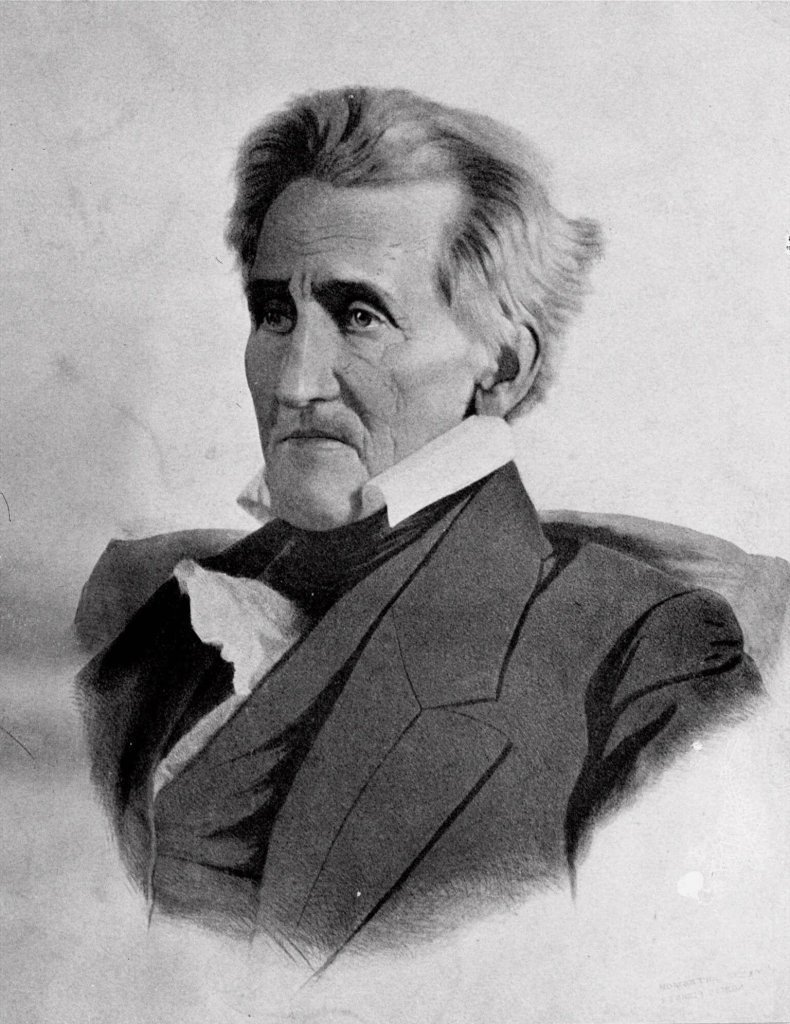
The point where Andrew and Jackson’s names are said together is almost certainly a joking reference to Andrew Jackson (1767-1845), lawyer, soldier, and statesmen who served as the 7th President of the United States, from 1829 to 1837.
DEAN: She’s not going with you. JESS: Really, is that true? DEAN: Yes, it’s true. JESS: Excuse me Edgar Bergen, I think I’d like Charlie McCarthy to answer now.
Edgar Bergen, born Edgar Berggren (1903-1978), actor, comedian, vaudeville star, and radio performer. He was best known as a highly skilled and successful ventriloquist, working with a dummy called Charlie McCarthy. Their routines were very witty, and rather cheeky, with Charlie getting away with saying things that a person never could. Incidentally, Edgar was the father of actress Candice Bergen.
Jess is obviously saying that Dean is speaking for Rory, as if she is his puppet.
DEAN: You think this is funny. JESS: Well, it’s no Lenny Bruce routine but it has its moments.
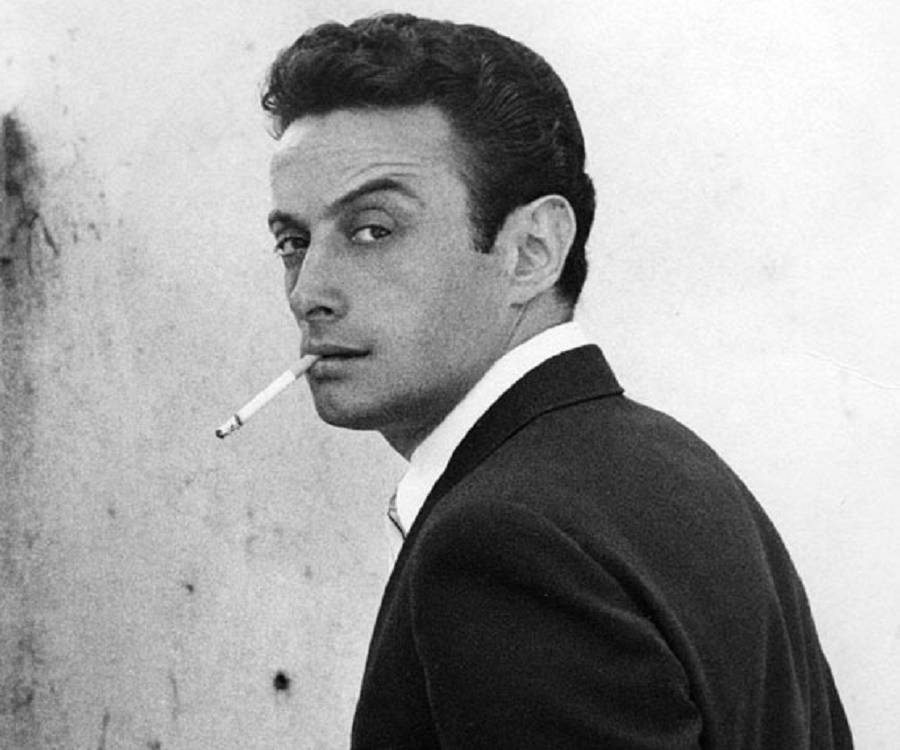
Lenny Bruce, born Leonard Schneider (1925-1966), stand-up comedian, social critic, and satirist. He was known for his open, freestyle, and critical comedy, containing satire, politics, religion, sex, and vulgarity. His 1964 conviction in an obscenity trial was followed by a posthumous pardon, the first in New York state.
Lenny Bruce paved the way for counterculture era comedians, and his trial was a landmark for freedom of speech. He is considered one of the greatest American comedians of all time.
It makes perfect sense for bad boy Jess to be a Lenny Bruce fan. Lenny Bruce also appears as a character in Amy Sherman-Palladino’s television show, The Marvelous Mrs Maisel, played by Luke Kirby.
LORELAI: Ugh, every great relationship has its obstacles. You’d know that if you weren’t dating Andy Hardy.
Andrew “Andy” Hardy, fictional character played by Mickey Rooney in 16 films made by Metro-Goldwyn between 1937 and 1946 (and another in 1958, trying unsuccessfully to continue the series). The Hardy films, enormously popular in their day, were sentimental comedies set in a Midwestern town, celebrating ordinary American life.
The Hardy family first appeared in the 1928 play Skidding by Aurania Rouverol, with Charles Eaton as Andy. The first film was A Family Affair, based on the play, with Mickey Rooney as Andy, and he continued in the role from the ages of 16 to 25.
Andy Hardy soon became the central character, with the films focusing on the relationship between he and his father, Judge Hardy (a bit like Gilmore Girls focusing on Rory and Lorelai). The plot typically involved Andy getting in trouble with money or girls because of selfishness or trying to fudge the truth. He would then have a man-to-man talk with his father, a man of absolute integrity, and end up doing the right thing (very different to Gilmore Girls).
Lorelai seems to be teasing Rory about Dean, suggesting that she’s dating a wholesome, inexperienced teenage boy from the Midwest, like Andy Hardy. Meanwhile, Lorelai is looking for a real man, like William Holden.
Interestingly, the cast of A Family Affair were plucked straight from the 1935 comedy, Ah, Wilderness! The plot involves a well-read teenage boy named Richard (played by Eric Linden) from a Connecticut town, graduating as valedictorian and going to Yale, just like Rory. The film also features a box social!
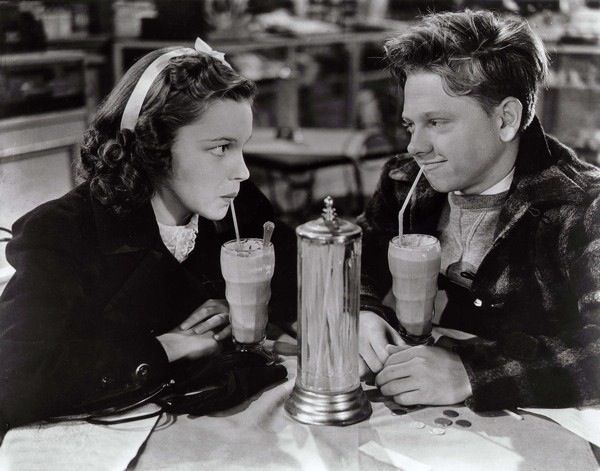
[Picture shows Mickey Rooney and Judy Garland in Love Finds Andy Hardy, 1938].
LORELAI: So I’ve decided I’m saving myself for William Holden … Sunset Boulevard was on last night, and I don’t know…I’ve known him for years – Sabrina, Stalag 17 – and yet last night something snapped.
William Holden, born William Beedle (1918-1981), actor who was one of the biggest box-office draws of the 1950s. Winner of an Academy Award and an Emmy for Best Actor, he starred in some of Hollywood’s most popular and highly-acclaimed films. He was named as one of the biggest stars of the year six times between 1954 and 1961, and is considered one of the greatest male stars of Classic Hollywood Cinema.
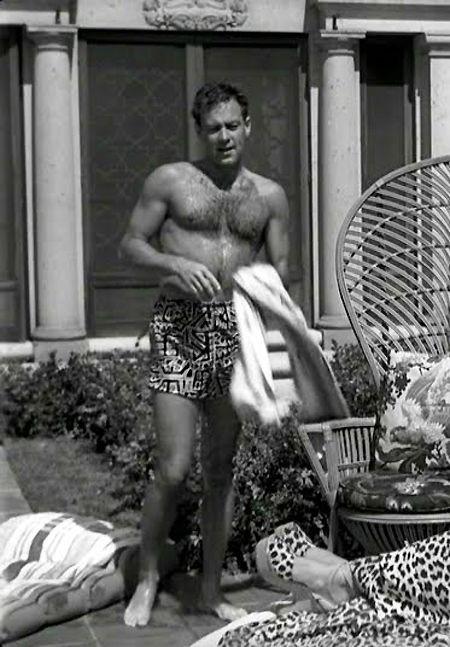
Sunset Boulevard, 1950 black comedy film noir directed by Billy Wilder, starring William Holden as a screenwriter and Gloria Swanson as a former silent film star, who draws him into her demented fantasy world where she dreams of making a triumphant return to the screen. A commercial success, the film was praised by critics and won three Academy Awards. It is regarded as one of the greatest films ever made. William Holden wears a swimsuit in the film [pictured] which has made many others interested in him – it’s not just Lorelai!
Sabrina, 1954 romantic-comedy drama directed by Billy Wilder, starring William Holden as a thrice-married playboy who is the lifelong crush of a young woman named Sabrina, played by Audrey Hepburn. She finds love with his brother, played by Humphrey Bogart. Backstage, it was Holden and Hepburn who got hot and heavy. Sabrina was a box-office success, and won an Academy Award for Best Costumes.
JESS: I don’t know, bet you have a lot of supporters on this. Pat Buchanon, Jerry Falwell, Kathie Lee Gifford.
Patrick “Pat” Buchanan (born 1938), right-wing political commentator, politician and broadcaster. He was an assistant and consultant to Presidents Richard Nixon, Gerald Ford, and Ronald Reagan, and one of the original hosts of CNN’s current events program, Crossfire. He has expressed sympathy for Nazi war criminals and support for eugenics, denied the Holocaust, and called for the lynching and horse-whipping of the young men of colour wrongly convicted in the Central Park jogger case. In 1990, he argued the case for music censorship in a debate on Crossfire.
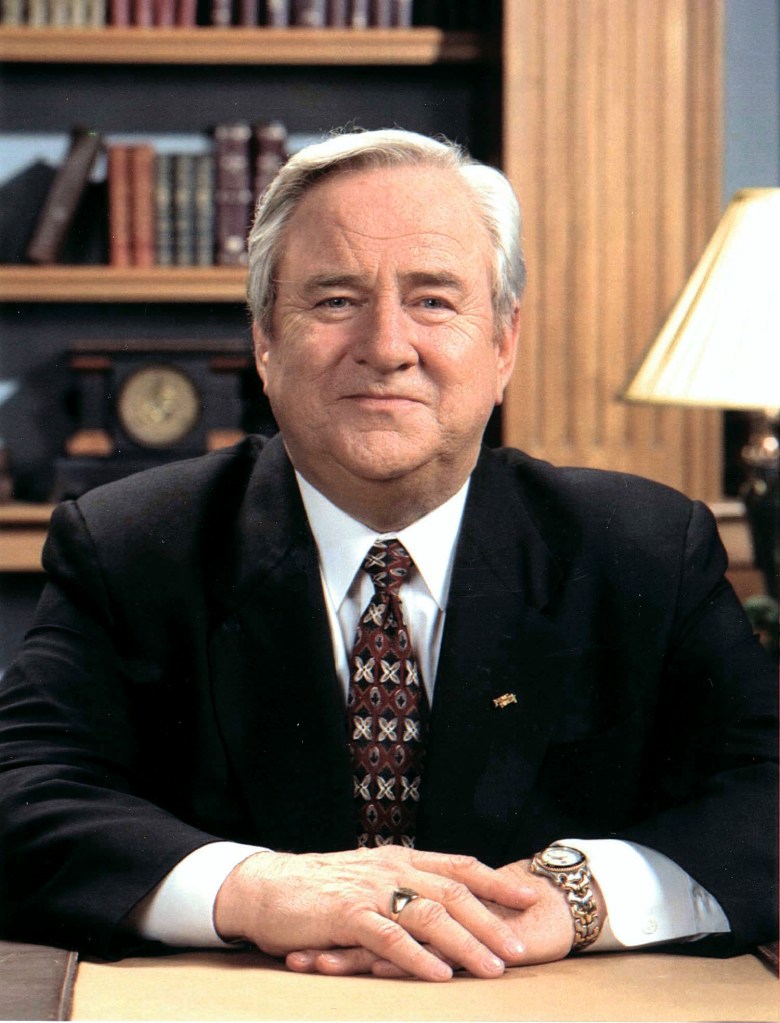
Jerry Falwell Sr (1933-2007) [pictured], Southern Baptist pastor, televangelist, and conservative activist. He was pro-segregation and pro-apartheid, and a supporter of Anita Bryant’s campaign to oppose equal rights for gay people (he denounced Tinky Winky from the Teletubbies as a gay icon). He sued both Penthouse and Hustler magazine in the 1980s for an article and an advertisement that he believed had defamed him or caused him distress; the courts ruled in favour of free speech.
Kathie Lee Gifford (born Kathryn Epstein in 1953), television presenter, singer, songwriter, and author. She is best known for her fifteen-year run as co-host of Live! With Regis and Kathie Lee. She became a born-again Christian at the age of 12, and was a secretary/babysitter to Anita Bryant. I’m not actually aware of any censorship she has advocated for.



 The Annotated Gilmore Girls