InStyle Weddings

RORY: What’cha reading?
LORELAI: Oh God, do not sneak up on a person like that.
RORY: InStyle Weddings. Very interesting.

InStyle Weddings is a quarterly periodical put out by InStyle magazine, previously mentioned as one of Lorelai’s favourite magazines. It features celebrity weddings, as well as wedding tips and ideas.

Lorelai is reading the Spring 2001 issue, which featured actress Courtney Thorne-Smith on the cover, who had married scientist Andrew Conrad in June 2000. Famously, by the time the magazine came out, Thorne-Smith had already filed for divorce. This is another sign to Lorelai that marriage doesn’t always last.

In real life, it wouldn’t have been possible for Lorelai to buy the magazine as late as May.

Books, Periodicals, and Comics Referenced in Season One

Novels

Emma by Jane Austen

Alice’s Adventures in Wonderland by Lewis Carroll

Don Quixote by Miguel de Cervantes

Timeline by Michael Chrichton

David Copperfield by Charles Dickens

Great Expectations by Charles Dickens

Little Dorrit Charles Dickens

A Tale of Two Cities by Charles Dickens

Madame Bovary by Gustave Flaubert

Mistress of Mellyn by Victoria Holt

The Hunchback of Notre Dame by Victor Hugo

Finnegan’s Wake by James Joyce

Ulysses by James Joyce

The Metamorphosis by Franz Kafka

The Witch Tree Symbol by Carolyn Keene

On the Road by Jack Kerouac

To Kill a Mockingbird by Harper Lee

The Group by Mary McCarthy

Moby Dick by Herman Melville

Gone With the Wind by Margaret Mitchell

The Bell Jar by Sylvia Plath

Swann’s Way by Marcel Proust

Harry Potter and the Goblet of Fire by J.K. Rowling

Chikara!: A Sweeping Novel of Japan and America by Robert Skimin

The Grapes of Wrath by John Steinbeck

Anna Karenina by Leo Tolstoy

War and Peace by Leo Tolstoy

Adventures of Huckleberry Finn by Mark Twain

Short Stories

Fairy Tales by Hans Christian Anderson

Grimm’s Fairy Tales by Jakob and Wilhelm Grimm

Poetry

Mother Goose Nursery Rhymes

Poems, Chiefly in the Scottish Dialect by Robert Burns

Complete Poems by Emily Dickinson

An Essay on Criticism by Alexander Pope

Shakespeare’s Sonnets by William Shakespeare

New Poems of Emily Dickinson edited by William Shurr et al

Drama

Love for Love by William Congreve

The Mourning Bride by William Congreve

The Crucible by Arthur Miller

The Comedy of Errors by William Shakespeare

Hamlet by William Shakespeare

Macbeth by William Shakespeare

Measure for Measure by William Shakespeare

Richard III by William Shakespeare

Romeo and Juliet by William Shakespeare

The Glass Menagerie by Tennessee Williams

A Streetcar Named Desire by Tennessee Williams

Non-Fiction

Tuesdays With Morrie by Mitch Albom

The Second Sex by Simone de Beauvoir

Kitchen Confidential by Anthony Bourdain

Mommie Dearest by Christina Crawford

Out of Africa by Isak Dinesen

Women Who Run with the Wolves by Clarissa Pinkola Estés

Stiffed: The Betrayal of the American Man by Susan Faludi

The Art of Eating by M.F. K. Fisher

James Joyce’s Ulysses by Stuart Gilbert

The Walter Hagen Story by Walter Hagen

Partial Portraits by Henry James

The Unabridged Journals of Sylvia Plath edited by Karen V. Kukil

To the Christian Nobility of the German Nation by Martin Luther

John Adams by David McCullough

The Days of H.L. Mencken by H.L. Mencken

A Mencken Chrestomathy by H.L. Mencken

The Total Woman by Marabel Morgan

Who’s Who and What’s What in Shakespeare by Evangeline M. O’Connor

The Portable Dorothy Parker by Dorothy Parker

The Republic by Plato

Etiquette by Emily Post

Everybody’s Autobiography by Gertrude Stein

Hell’s Angels by Hunter S. Thompson

Walden by Henry David Thoreau

Secrets of the Flesh: A Life of Colette by Judith Thurman

A Room of One’s Own by Virginia Woolf

Reference

The Bible

The Compact Edition of the Oxford English Dictionary

The Oxford Shakespeare

Webster’s Dictionary

Newspapers

Barron’s

The Financial Times

The Hartford Courant

The New York Times 

The Wall Street Journal

Magazines

CosmoGirl

Cosmopolitan

Glamour

GQ

Highlights for Children

InStyle

Ms.

The New Yorker

Playboy

Comics

Archie

Mister Miracle

Superman

Authors

Francis Bacon

Honore de Balzac

Elizabeth Barrett Browning

Judy Blume

Charlotte Bronte

Colette

Dante

Fyodor Dostoevsky

Sigmund Freud

Václav Havel

Homer

Ben Jonson

Stephen King

Christopher Marlowe

John Muir

Friedrich Nietzsche

Edna O’Brien

George Sand

Jean-Paul Sartre

John Webster

Edith Wharton

Walt Whitman

Goofus and Gallant

LORELAI (to Rory): Okay, you’ve been in this mood for a week now, and while I love the unexpected ups and downs of motherhood, I’ve got to say I’m tired of Goofus and I’d like my Gallant back.

Goofus and Gallant is a children’s comic strip created by Garry Cleveland Myers which has been published in the children’s magazine Highlights for Children since 1946 (it was originally in Children’s Activities, first published in 1940).

Goofus and Gallant are two boys. The comic shows two panels, contrasting the actions of the polite, virtuous Gallant with the rude, selfish Goofus – for example, Goofus will take the last piece of food, while Gallant politely offers the plate around to see if anyone else wants it.

Rory hasn’t really been in this mood “for a week” – it’s only been a few days. For some reason, everyone is instantly concerned about her. The average person can be suicidal for months with nobody even noticing; Rory gets a bit crabby for two or three days and suddenly everyone goes into crisis mode on her behalf.

GQ

LUKE: This is how you like your guys, all GQed up, huh?
LORELAI: It’s not GQed up, its just a little less casual.

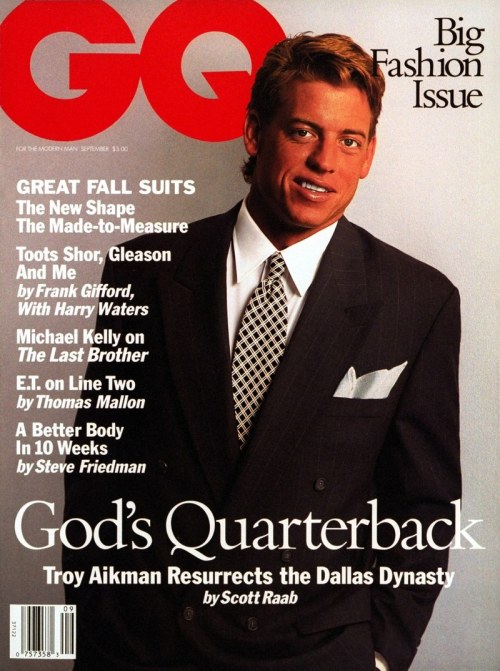
GQ (originally Gentleman’s Quarterly) is a men’s lifestyle magazine based in New York and founded in 1931. Aimed at single men with disposable income, it concentrates on high-end male fashion.

The New Yorker

DEAN: Well, come on, you always bring a book with you and I was just wondering, what’s the three month anniversary book?
RORY: Actually, I brought The New Yorker.
DEAN: A magazine. Really?
RORY: It’s the Fiction Issue.

The New Yorker is an American magazine, first published in 1925, which comes out 47 times a year. Although often focused on the cultural life of New York City, it has a wide audience around the country and internationally. It’s well known for its commentaries on popular culture, rigorous journalism on political and social issues, and attention to modern fiction.

Some of the famous authors who have written for The New Yorker include Alice Munro, Truman Capote, John Cheever, Vladimir Nabokov, J.D. Salinger, Shirley Jackson, James Thurber, John Updike, Eudora Welty, Stephen King, and Dorothy Parker.

The New Yorker traditionally brings out their Fiction Issue during the summer. The June 19 2000 edition was for debut authors, and that Fiction Issue included works by Marisa Silver, David Schickler, Akhil Sharma, and ZZ Packer.

Was the fifteen-year-old Rory who bought that magazine in her summer vacation just looking for great new stories to read, or was she also dreaming of one day being a first-time writer published in The New Yorker herself?

Miss September and Johnny Depp

LORELAI: And he’s staring at her like she’s Miss September, and she’s looking at him like he’s Johnny Depp, and I was just babbling like a moron. What is wrong with me?!

American men’s magazine Playboy features a nude or semi-nude centrefold model as their Playmate of the Month, with each one known as Miss January, Miss February, and so on.

John “Johnny” Depp II (born 1963) is an American actor, producer, and musician. He rose to prominence in the police show 21 Jump Street, airing from 1987 to 1991, where he became a popular teen idol. Depp played the title role in the dark fantasy Edward Scissorhands (1990), which established him as a major film star, and gained critical praise for his performances in films such as What’s Eating Gilbert Grape (1993), Ed Wood (1994), and Donnie Brasco ( 1997). He is regarded as one of the biggest stars in Hollywood.

Lorelai’s Magazines

LORELAI: Okay, the last sighting was here, by the InStyle magazine. But then she burrowed through the Glamour and jumped over the Cosmo and knocked over a brand new bottle of nail polish so all I can tell you is if there was any doubt that this chick was a girl, well, there isn’t anymore.

InStyle (founded 1994), Glamour (founded 1939), and Cosmopolitan (founded 1886, became women’s magazine in 1965), are magazines with a focus on beauty, fashion, celebrities, and lifestyle.

Martha Stewart

LUKE: No stenciling!
LORELAI: Excuse me – do you even know what stenciling is?
LUKE: Does Martha Stewart do it?
LORELAI: Yes.
LUKE: (firmly) No stenciling.

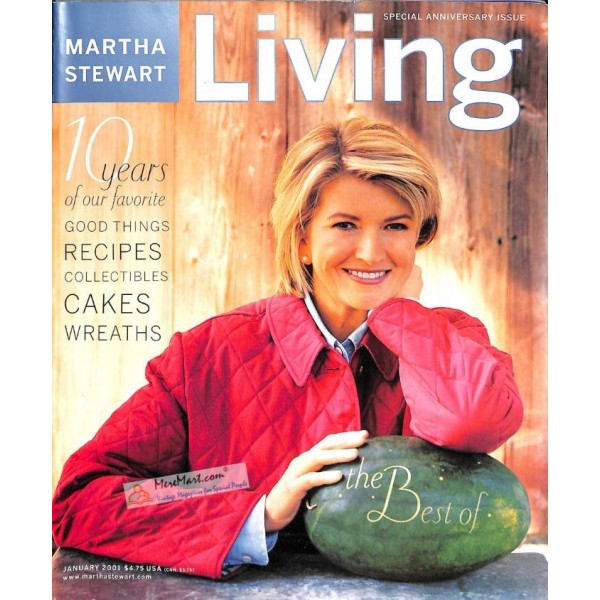
Martha Stewart (born Martha Kostyra in 1941) is an American businesswoman, writer, and television personality. The author of numerous cooking and craft books, her magazine Martha Stewart Living was founded in 1990, and her television show of the same name ran from 1993 to 2005. Both magazine and show focus on entertaining, lifestyle, food, crafts, decorating, and DIY. The model for the program’s TV studio was the Stewarts’ country house in Connecticut.