Midnight Express

RORY: Hey, maybe on our big trip to Europe we could go to Prague and stay in his [Havel’s] cell.
LORELAI: Absolutely. And then we can go to Turkey and stay in that place from Midnight Express.

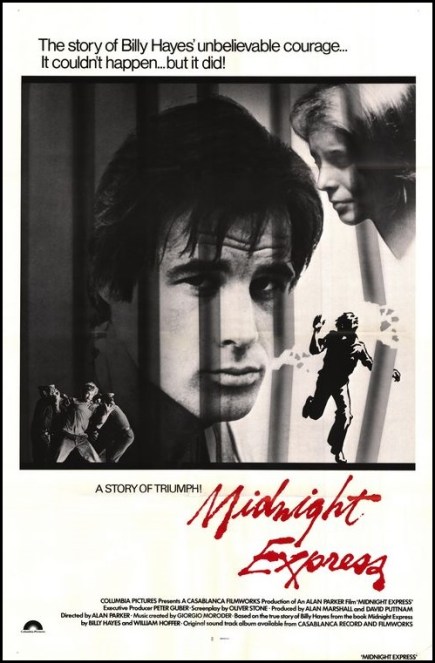
Midnight Express is a 1978 drama film directed by Alan Parker, with screenplay by Oliver Stone, and based on the memoir of the same name by Billy Hayes. Hayes was a young American college student who was sent to prison in Istanbul for trying to smuggle hashish out of Turkey. The film’s title is prison slang for an escape attempt. Midnight Express did well at the box office and gained critical praise, receiving four Academy Awards.

The film differed from Billy Hayes’ book in several significant ways. In the film, Hayes spent several years in Sağmalcılar Prison (still in existence), although in real life he was in two other prisons as well, and escaped from a different one. As filming in the prison wasn’t an option, Midnight Express was filmed at Fort St. Elmo in Malta, which is a war museum.

This is another reminder of Rory and Lorelai’s planned trip to Europe, and that Rory seems to have Prague on the itinerary.

Václav Havel

RORY: Did you know the cell that Václav Havel was held in is now a hostel? You can stay there for like $50 a night.

Václav Havel (1936-2011) was a Czech statesman, author, and former dissident. He was the last president of Czechoslavakia from 1989 to 1992, then the first president of the Czech Republic from 1993 to 2003.

Havel was a playwright in Prague who rose to prominence with anti-communist works such as The Garden Party. After participating in the Prague Spring, he became more politically active, and played a major role in the Velvet Revolution that ended communism in Czechoslavakia in 1989. A popular president and major intellectual figure of the twentieth century, he was awarded multiple international awards for peace and freedom.

During his period of political activism against communism, Havel was under the surveillance of the secret police, and sent to prison several times, the longest period being from from 1979 to 1983. Havel was held in a prison opposite the police station in Prague; it was a basement cell in a building that had once been a convent run by the Franciscan Grey Sisters (religion was banned under communism, and all church property siezed by the state).

Once communism had ended and the nuns were allowed to have their convent back, they turned part of it into a hostel for budget travellers and called it Pension Unitas; it generated enough funds to rebuild the convent, the church, and other buildings owned by the Grey Sisters.

Pension Unitas closed in 2006 after hosting 150 000 guests, and was relaunched as the Unitas Hotel. You can stay at the hotel for about $180 a night, and it receives excellent reviews.

Prague

EMILY: Your grandfather called last night and told me to let you know he’s bringing you back something very special from Prague.
RORY: Wow, Prague. How amazing is it that he’s going to Prague?
EMILY: It’s supposed to be lovely, very dramatic, castles everywhere.

Prague is the capital and largest city in the Czech Republic, and is also the historic capital of the Kingdom of Bohemia. Rich in history and culture, the original settlement grew out from the 9th century Prague Castle, the largest ancient castle in the world, which is now the official residence of the President of the Czech Republic. The other main castle in the city is the 10th century Vyšehrad (“upper castle”), which contains the Basilica of St Peter and St Paul, and the Vyšehrad Cemetery, where lie the remains of many famous people from Czech history.

Emily speaks as if she has never been to Prague, but in the next season we learn that she went there with Richard in 1998.

Bellevue

MAX: So possibly I’m crazier than you are.
LORELAI: Again, very possible.
MAX: A match made in heaven.
LORELAI: Or in Bellevue.

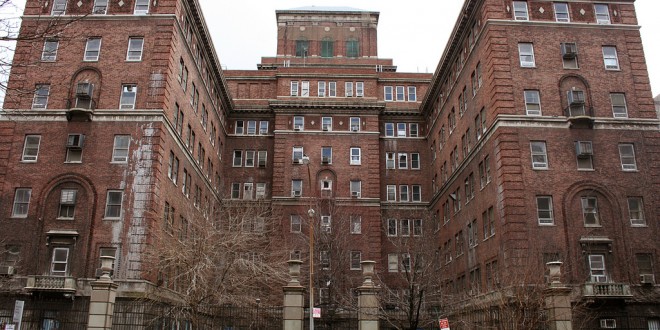
Bellevue Hospital in Manhattan was founded in 1736 and is the oldest public hospital in the US. Its psychiatric hospital opened in 1931, and became a byword for medical neglect and maltreatment of recovering alcoholics and the mentally ill. The name “Bellevue” soon became applied to any psychiatric facility.

The old psychiatric hospital closed in 1984, and part of it is used as a homeless shelter. The new psychiatric unit at Bellevue Hospital is now regarded as one of the best in the country.

Stamford

We learn from his phone message that as well as teaching at Chilton, Max teaches a night class twice a week in Stamford, a city in Connecticut about an hour and a half drive south from Hartford, on the coast.

The fact that Max sees the sign to Stars Hollow on the way suggests again that it around the Wallingford area, as you would drive past Wallingford going from Hartford to Stamford using Interstate 91. It isn’t actually a turnpike though as it is toll-free at that point: the Connecticut Turnpike (I-95) goes further on from Stamford toward New Haven.

Max possibly teaches in the English department at the Stamford campus of the University of Connecticut, a public university. We learn a bit later that one of the nights he teaches class is on Fridays, so with Lorelai attending classes twice a week and Max teaching classes twice a week, it’s going to be hard for them to find a free day in the week to date.

USSR

MAYOR: If you don’t like it here in America, why don’t you go stand in line for toilet paper in the USSR!
LUKE: There is no more USSR, Harry.

The Union of Soviet Socialist Republics, abbreviated to USSR, and also known as Soviet Russia, existed from 1922 to 1991. It came into being shortly after the Russian Revolution, and collapsed at the end of the Cold War. The picture shows the present day countries which were once part of the USSR.

Soviet Russia was notorious for its long queues because of the shortages caused by the Communist system, which prioritised industry over consumer goods. People would line up for hours in order to buy any commodity that was in short supply

Mister Kelly’s

BABETTE (to Dean): There used be a great club there called – what was it called baby?
MOREY: Uh … Mr. Kelly’s.
BABETTE: Oh, yeah – Mr. Kelly’s. You ever go there?

Mister Kelly’s was a nightclub in Chicago, which began in 1953. From 1956 onward it became a place where many entertainers, especially jazz singers and comedians, began their careers, including Barbra Streisand, Lenny Bruce, Eartha Kitt, and George Carlin. The nightclub closed in 1975, so it isn’t possible for Dean to have ever gone there.

Miss German train

RORY: Maybe something happened. Maybe he’s not coming.
LORELAI: Maybe he’s just late, Miss German train.

Despite the common perception that German trains must be extremely punctual, in fact delays are common on long-distance trains in Germany, as the infrastructure is overstretched. However commuter trains in cities are generally pretty good, although nothing remarkable.

Note that this is yet another reference to someone running late on the show.

Niagara Falls

RORY: I can’t believe you did this. I’m so humiliated.
LORELAI: You’re totally overreacting. I invited him to a movie and pizza, not to Niagara Falls.

Niagara Falls are three impressive, beautiful waterfalls which are on the border between the United States and Canada (between upstate New York and Ontario). They are a popular honeymoon destination.


Amish country

LORELAI: I’m sorry. I thought you would be happy about this [that Lorelai invited Dean to their movie night].
RORY: In what universe would I be happy? This isn’t Amish country. Girls and boys usually date alone.

In conservative Amish groups, teenage couples might be expected to date each other with groups of friends, or even with their parents accompanying them. However some Amish teenagers do go on dates alone, at least sometimes. The most conservative Amish of all practice a form of dating where the boy and girl talk all night in the same bed, fully clothed, and with no touching. (Yet when Rory and Dean tried that, all hell broke loose!)

When people say Amish country, they usually mean south-eastern Pennsylvania.