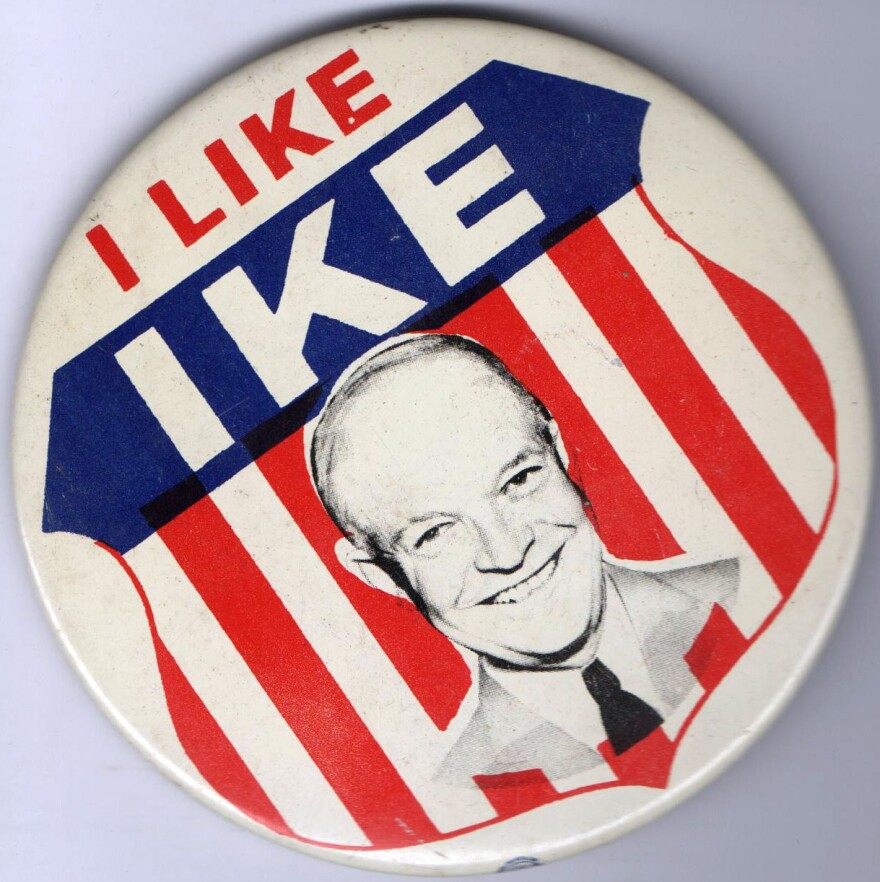
JESS: So when was the last time you had those gutters cleaned? LORELAI: It’s been awhile. JESS: Yeah, I found an ‘I like Ike’ bumper sticker up there.
“I like Ike” was the campaign slogan for the 1952 election campaign of US President Dwight D. “Ike” Eisenhower. He won the election for the Republicans in a landslide victory, and became the country’s 34th president.
Hopefully Jess is joking – not having your gutters cleaned for half a century sounds pretty bad.
Rory buys several books at the fundraiser, but only a couple of the titles are visible. Gypsy the mechanic is volunteering her time to work at the fundraiser, and she points Rory to the astronomy section, as if Rory has an interest in this area, and Gypsy somehow knows about it. Both quite surprising things to learn! The Buy a Book Fundraiser is held outside the library, and may be raising funds for new books.
Inherit the Wind
A 1955 play by Jerome Lawrence and Robert E. Lee, fictionalising the events of the Scopes “Monkey” Trial. This was a legal trial in July 1925 where schoolteacher John Scopes was taken to court by the state of Tennessee for teaching human evolution. There was intense media scrutiny of the case, with publicity given to the high-profile lawyers who had taken the case. The prosecution had former Secretary of State, William Jennings Bryan, while Clarence Darrow defended Scopes – the same lawyer who had defended child murders Leopold and Loeb, previously discussed. Scopes was fined $100, but the case was overturned on a technicality. The case was seen as both a theological contest, and a test as to whether teachers could teach modern science in schools.
The play gives everyone involved in the Scopes Trial different names, and substantially alters numerous events. It is not meant to be a historical account, and is a means to discuss the McCarthy trials of the 1950s, where left-wing individuals were persecuted as Communist sympathisers, under a regime of political repression and a fear-mongering campaign.
Rory might be particularly interested in the play because of the focus it places on the media, with reporter E.K. Hornbeck covering the case for a fictional Baltimore newspaper. He is based on journalist and author H.L. Mencken, previously discussed as one of Rory’s heroes, who gained attention for his satirical reporting on the Scopes Trial for the Baltimore Morning Herald.
Inherit the Wind premiered in Dallas in 1955 to rave reviews, and opened on Broadway a few months later with Paul Muni, Ed Begley, and Tony Randall in the cast. It’s been revived on Broadway in 1996 and in 2007, as well as in Philadelphia, London, Italy, and India.
It was adapted into film in 1960, directed by Stanley Kramer, and with Spencer Tracey starring as the defence lawyer, Dick York as the schoolteacher, and Gene Kelly as the Baltimore journalist. It received excellent reviews and won awards at the Berlin Film Festival. It’s also been made for television in 1966, 1988, and in 1999 (starring George C. Scott, Jack Lemmon, and Beau Bridges). It seems likely that Rory watched the most recent version on television.
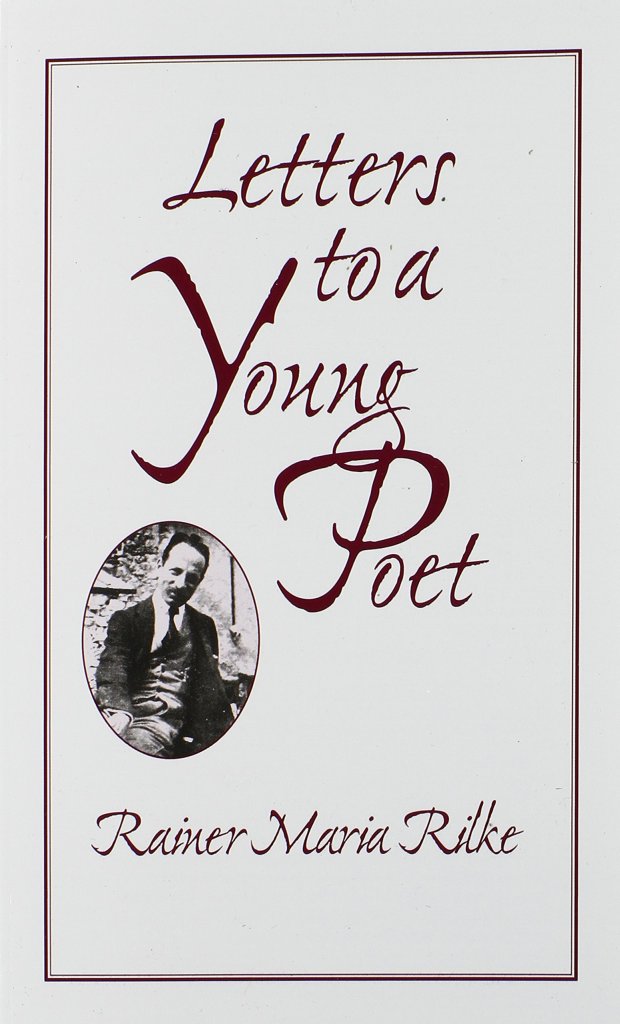
Letters to a Young Poet
A 1929 collection of ten letters written by the Bohemian-Austrian poet Rainer Maria Rilke, to a young officer cadet named Franz Xaver Kappus at the Theresian Military Academy in Wiener Neustadt, Austria between 1902 and 1908.
Kappus had written to Rilke, seeking advice on the quality of his poetry, to help him choose between a literary career, or one as an officer in the Austro-Hungarian Army. Kappus had been reading Rilke’s poetry when he discovered that Rilke had earlier studied at the academy’s lower school in St. Pölten, and decided to write to him for advice.
Rilke gave Kappus very little criticism or suggestions on improving his writing, and said that nobody could advise him or make life decisions for him. Over the course of ten letters, he instead provided essays on how a poet should feel and seek truth in experiencing the world around him. They offer insights into Rilke’s poetic ideas and themes, and his work processes.
Kappus did meet Rilke at least once, and despite his concerns about pursuing a military career, he continued his studies and served for 15 years as an army officer. During the course of his life, he worked as a journalist and reporter, and wrote poems, stories, novels, and screenplays. However, he never achieved lasting fame.
This is a book which features a future journalist – but one who yearns to become a poet. Is it a sign that Rory secretly wishes she could become a creative writer instead? Is she hoping that being successful in journalism will help her become a published author (it’s definitely a help in getting novels published, or at least considered). Is it even a hint that she will become a writer in the future, as she does in A Year in the Life, but is not destined to become famous from her writing? (Most published writers, even quite successful ones, don’t get famous, after all).
And is this correspondence between a poet and a student at a military academy meant to suggest that Rory is still thinking of Tristan, who went away to military school? Are she and Tristan actually writing to each other, or is the show leaving the door open for Tristan to possibly return in a future season, since they didn’t know how long One Tree Hill was going to last?
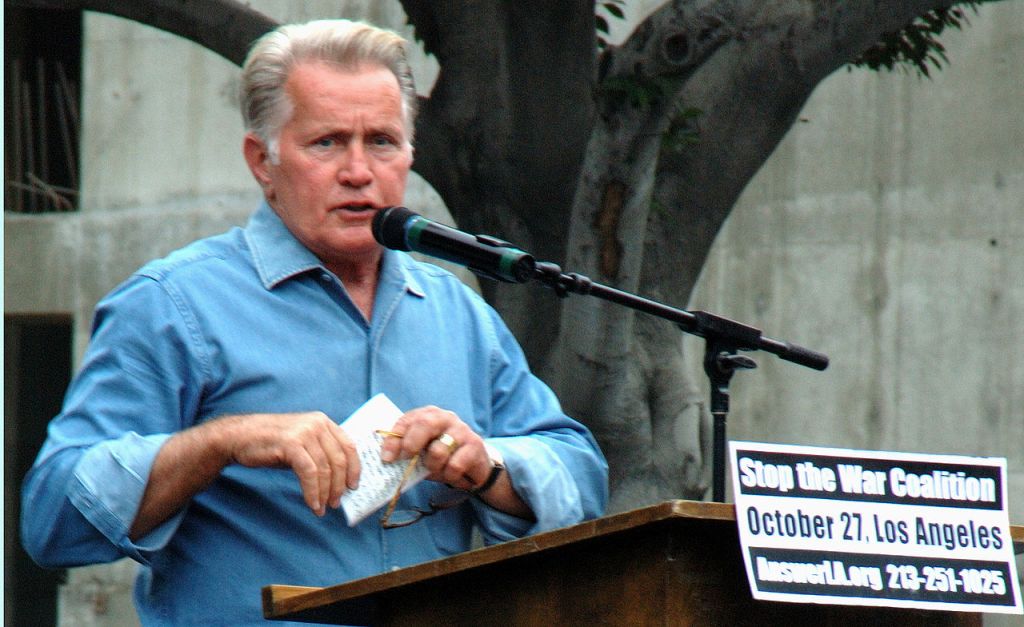
LORELAI: I think we probably would’ve met eventually. SHERRY: Perhaps, at some function or other. LORELAI: Yeah – you, me, Martin Sheen, all chained to the same tree.
Ramón Estévez (born 1940), award-winning actor known professionally as Martin Sheen. He first became known for his work in The Subject Was Roses (1968), and later achieved recognition for his leading role in Apocalypse Now (1979). He played President Josiah Bartlett in the television series The West Wing (1999-2006). He has a star on the Hollywood Walk of Fame.
Martin Sheen has been active in countless non-violent acts of civil disobedience, and been arrested for protesting 66 times. He has rallied for peace, gun control, and in support of immigration, and protested against nuclear power, nuclear weapons testing, dangerous arms buildup, abuse of farmworkers, Canadian sealclubbing, the invasion of Iraq, and numerous other environmental, political, and social causes.
Lorelai jokes that the function she and Sherry might have met at could have been at an environmental protest against logging with Martin Sheen. Of course, Sherry is thinking of functions at Chilton.
RORY: Really? Try it. The Fountainhead is classic. JESS: Yeah, but Ayn Rand is a political nut. RORY: Yeah, but nobody could write a forty page monologue the way that she could.
The Fountainhead, 1943 novel by Russian-American author Ayn Rand, and her first literary success. The novel is about a ruggedly individualistic architect named Howard Roark, who battles against conventional standards and refuses to compromise his ideals. Rand said that Roark was the embodiment of her ideal man, and the novel reflects her views that the individual is more valuable than the collective.
Twelve publishers rejected the manuscript before Bobbs-Merrill took a chance on it, and contemporary reviews were mixed. However, it gained a following by word of mouth, and eventually became a bestseller. It has had a lasting influence, especially among architects, business people, conservatives, and libertarians. It was adapted into film in 1949, and turned into a stage play in 2014.
We here learn that Rory attempted to read The Fountainhead when she was ten, without success, but tried again when she was fifteen and liked it. Jess is taken aback by her recommending a text beloved of right-wing libertarians and “political nuts”, but Rory says she enjoys it as a piece of literature. The Fountainhead is absolutely full of characters having lengthy monologues where they clearly explain their philosophies, plans, and ideals.
The character of Howard Roark (allegedly based on architect Frank Lloyd-Wright) is a brooding man of few words, rather like Jess. Could Rory be recommending the book to Jess for that reason, to let him know that she likes a book where the protagonist is like Jess? A literary flirtation, like Jess annotating her copy of Howl?
Jess’ later career has a few things in common with Roark – neither of them graduate because they can’t be fettered by a conventional curriculum, both believe themselves to be misunderstood, both would prefer to take any paying job rather than compromise their creative integrity, and both become successful in their chosen fields.
More eye-raising is the character of Dominique, Roark’s love interest, and said to be his perfect match. Their first sexual encounter is so rough that Dominique describes it as a “rape”, and yet comes back for more, again and again. It’s a risque (or even plain risky) thing for a teenage girl to recommend to a boy she likes, and if this is a flirtation-by-literature, Rory seems to have suggested that Jess make things physical, even without her explicit consent.
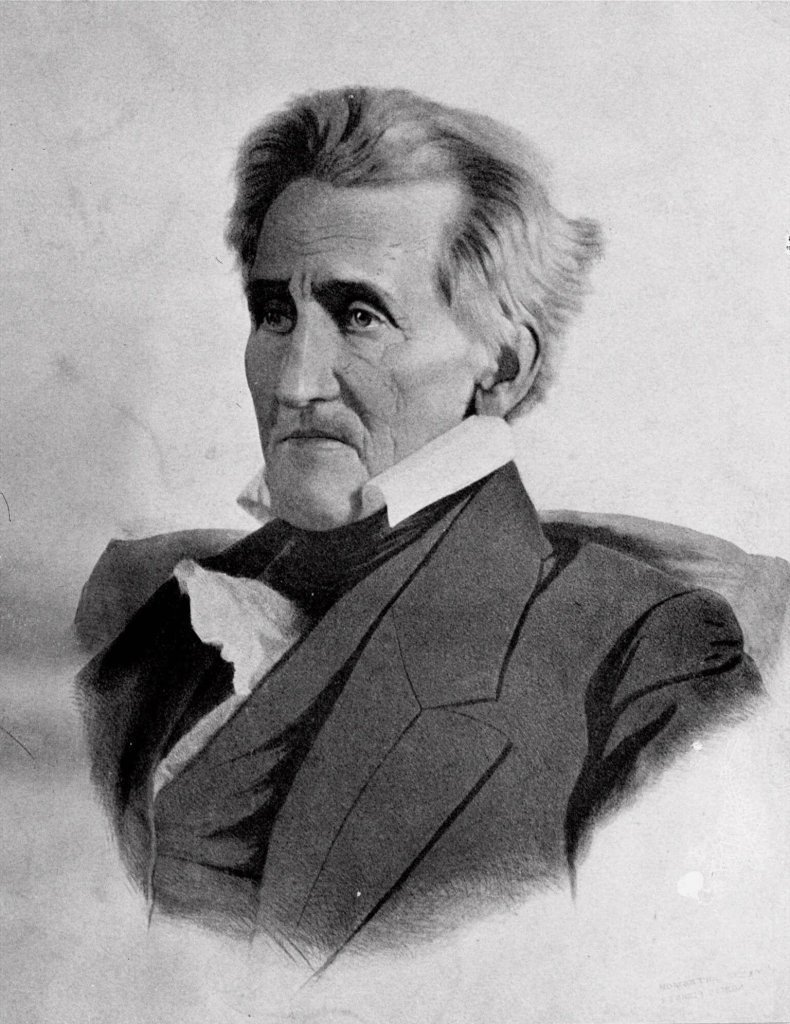
Jackson is piqued because Sookie hasn’t picked up on his hints he wants to move in with her, and petulantly refuses to bid on her basket. With nobody else making a move, Andrew from Stars Hollow Books puts in a bid for it. At this point, Andrew appears to be single, but it’s unclear whether he wants the delicious basket, or Sookie herself. He certainly doesn’t seem worried about upsetting Jackson.
The point where Andrew and Jackson’s names are said together is almost certainly a joking reference to Andrew Jackson (1767-1845), lawyer, soldier, and statesmen who served as the 7th President of the United States, from 1829 to 1837.
JESS: I don’t know, bet you have a lot of supporters on this. Pat Buchanon, Jerry Falwell, Kathie Lee Gifford.
Patrick “Pat” Buchanan (born 1938), right-wing political commentator, politician and broadcaster. He was an assistant and consultant to Presidents Richard Nixon, Gerald Ford, and Ronald Reagan, and one of the original hosts of CNN’s current events program, Crossfire. He has expressed sympathy for Nazi war criminals and support for eugenics, denied the Holocaust, and called for the lynching and horse-whipping of the young men of colour wrongly convicted in the Central Park jogger case. In 1990, he argued the case for music censorship in a debate on Crossfire.
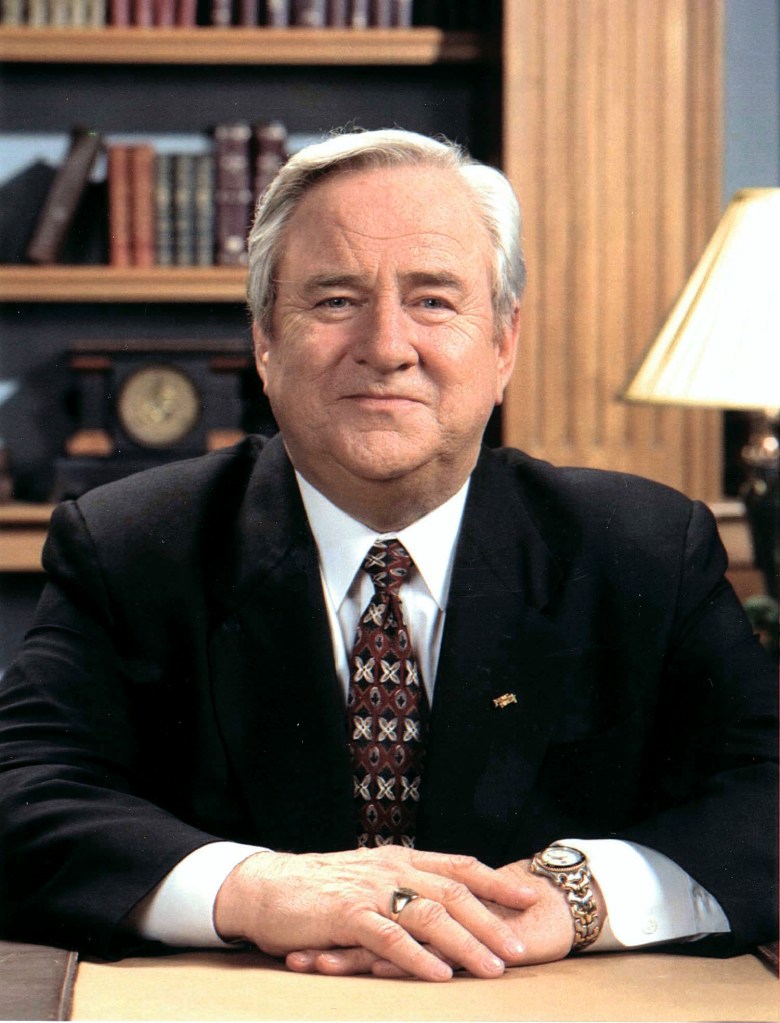
Jerry Falwell Sr (1933-2007) [pictured], Southern Baptist pastor, televangelist, and conservative activist. He was pro-segregation and pro-apartheid, and a supporter of Anita Bryant’s campaign to oppose equal rights for gay people (he denounced Tinky Winky from the Teletubbies as a gay icon). He sued both Penthouse and Hustler magazine in the 1980s for an article and an advertisement that he believed had defamed him or caused him distress; the courts ruled in favour of free speech.
Kathie Lee Gifford (born Kathryn Epstein in 1953), television presenter, singer, songwriter, and author. She is best known for her fifteen-year run as co-host of Live! With Regis and Kathie Lee. She became a born-again Christian at the age of 12, and was a secretary/babysitter to Anita Bryant. I’m not actually aware of any censorship she has advocated for.
RICHARD: You know what else I noticed? RORY: What? RICHARD: A first edition Flaubert, mint condition, shoved behind several of my Churchill biographies.
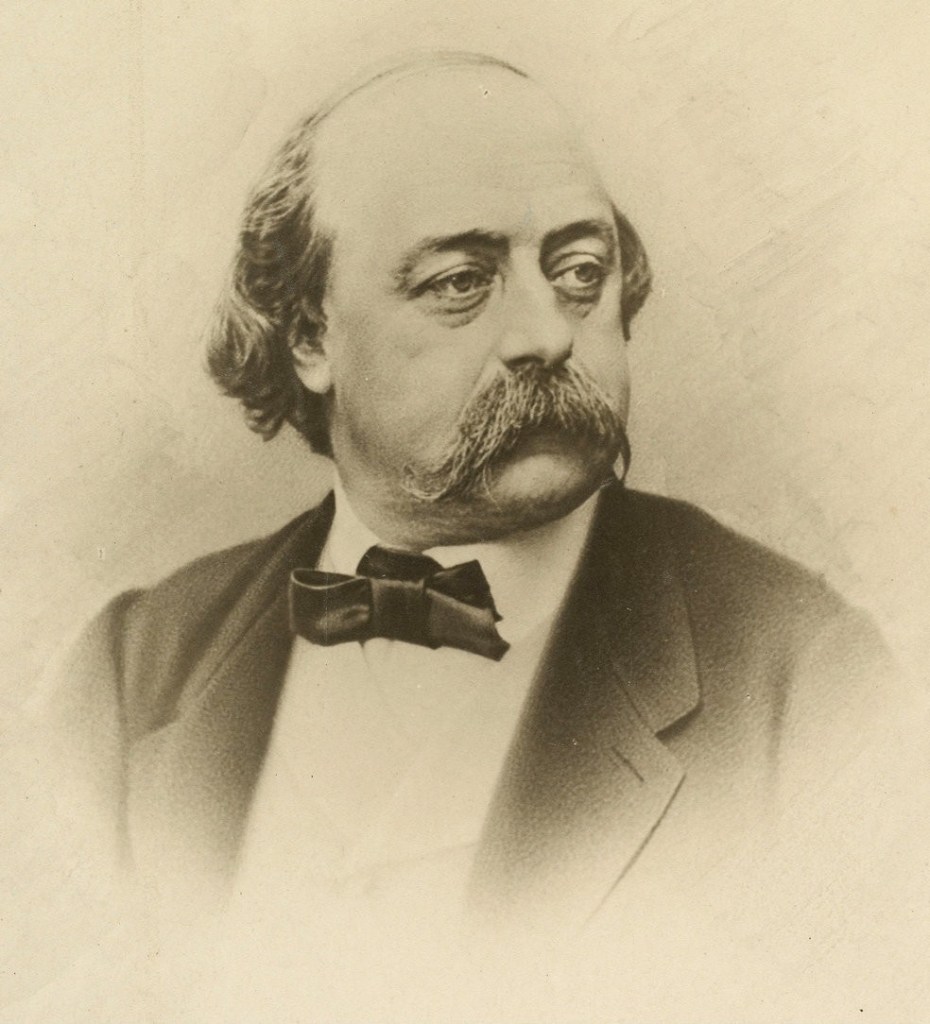
Gustave Flaubert (1821-1880), French novelist [pictured]. Highly influential, he is considered the leading exponent of literary realism in France. He is especially famous for his debut novel, Madame Bovary (1857), previously discussed.
Richard never specifies which book he has a first edition of, but fans often assume it is Madame Bovary, since Rory likes it. A first edition of even the English translation would cost tens of thousands of dollars, making this very unlikely. However, the first edition of the English translation of Three Tales (1877), published by Chatto and Windus in 1923, can be picked up for as little as $50, and is a very handsome volume. This would be my pick for Richard’s first edition.
Sir Winston Churchill (1874-1965), British statesman who served as Prime Minister from 1940 to 1945, and then again from 1951 to 1955. He is especially famous for his inspiring wartime speeches, and is considered one of the most significant figures of the twentieth century.
Richard does not say whether he means biographies by Churchill or about him, but probably the latter, since Churchill only wrote two biographies (not several, although Richard could have multiple copies of each).
LORELAI: Have you seen my bag with the beads and the fur, kind of looks like Stalin’s head?
Joseph Stalin (1878-1953), Georgian revolutionary and Soviet leader who governed the Soviet Union from 1924 until his death. He is occasionally depicted wearing a round furry hat, which might be what Lorelai is thinking of. Of course Lorelai has a Communist bag!
LORELAI: The Bible said all that, huh? Did it, did it mention me by name? I’m just . . . okay, I’m just kidding. So, um, judging by your Billy Graham impression, I am guessing that you didn’t send me an ice cream maker, so maybe you could just give me Aunt Clarissa’s phone number?
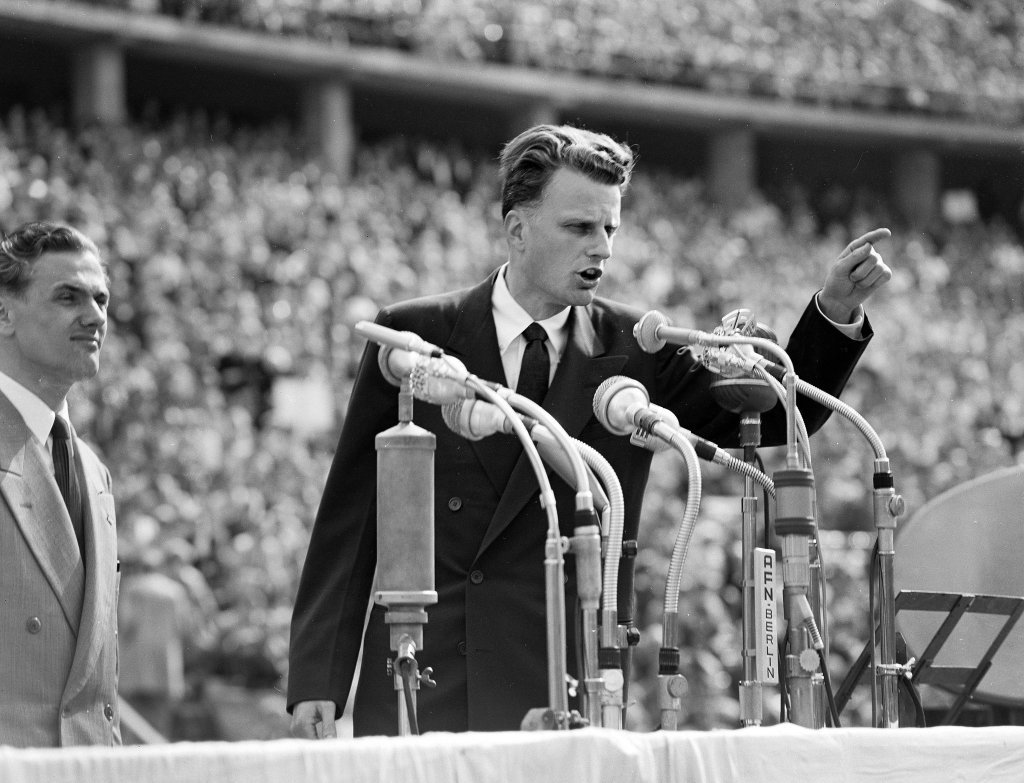
William “Billy” Graham (1918-2018) was a prominent American evangelist and ordained Southern Baptist who became well-known internationally in the 1940s. He held large outdoor rallies and his sermons were broadcast on television from 1947 to 2005, with an entire lifetime audience of over two billion, meaning he preached the Gospel to more people than anyone in history. He repudiated racial segregation, and invited Martin Luther King Jr to preach alongside him at a joint rally in 1957. He became the spiritual adviser for every US president from Harry S. Truman to Barack Obama.
MIA: He [Luke] would help people carry groceries home. RORY: Oh, how very Boy Scout-y of you. MIA: For a quarter a bag. LORELAI: Oh, how very John Birch Society-y of you.
The John Birch Society is an ultraconservative, radical far-right political advocacy group. It was founded in 1958 by businessman Robert W. Welch Jnr (1899-1985), who saw it as a way to oppose Communism. Welch owned the Oxford Candy Company in Brooklyn, so maybe he was just on a major sugar high, but he denounced nearly everyone as a Communist agent, including former presidents Truman and Eisenhower.
The society is named in honour of Baptist missionary John Birch (1918-1945), a US military intelligence captain in China who was killed in a confrontation with Chinese Communist soldiers, ten days after the end of World War II. He was posthumously awarded the Army Distinguished Service Medal. Welch saw Birch as the first casualty of the Cold War.
The John Birch Society has had a resurgence with the election of Donald Trump, previously discussed, and its previously fringe views have now become mainstream in right-wing politics.



 The Annotated Gilmore Girls