“Oprah seal on the cover”

HARRIS: It was a pleasure to meet you. I’ll read that book you recommended.

RORY: And don’t be fooled by the Oprah seal on the cover, it’s actually very good.

Rory refers to Oprah’s Book Club, a segment on the Oprah Winfrey Show, which highlighted books selected by the host, Oprah Winfrey. It ran from 1996 until 2011 (with a hiatus in 2002), and in that time it recommended 70 books. Because of the book club’s popularity, previously obscure works could become bestsellers, making an Oprah’s Book Club seal on the cover a highly influential piece of marketing.

Rory does not tell Richard (or the viewer) which book she recommended to the Dean of Admissions. However, due to the aforesaid hiatus, Oprah’s Book Club only recommended two works in 2002. My guess is that Rory recommended Sula, a 1973 novel by Toni Morrison, and her second published work.

The novel is set in the 1920s and ’30s in a fictional small town in Ohio (a favourite setting for Dawn Powell stories, one of Rory’s most admired authors). It is about two black girls named Nel and Sula who are close friends, but who take different paths in life (rather like Rory and Lane). While Nel chooses marriage, motherhood, and the close bonds of the town’s black community, Sula goes to college, lives in the city, and defies conventional sexual morality, bringing down condemnation from the town’s community.

It feels like a book which Rory would be interested in, and would also think suitable to recommend to a Dean, since it is by a Nobel Prize winning author, and the plot involves college and female education.

Dickens

LORELAI: What’s he so excited about?

EMILY: Oh, who knows? Dickens must have dropped a pencil here at some point.

English author Charles Dickens, previously mentioned.

Charles Dickens made his first trip to the US in 1842, and did visit New Haven and Yale University, praising both. In 1868, after another trip, he described Hillhouse Avenue in New Haven as the most beautiful street in America. It’s possible he really did drop a pencil somewhere on campus!

Yale University does have a quill pen once owned by Charles Dickens [pictured], held at the Beinecke Rare Book and Manuscript Library at Yale University. Richard may have taken Rory to see it, inspiring Emily’s comment.

Timothy Dwight Dining Hall

RICHARD: See that? That is my favorite building in the whole school … Because that’s where the Timothy Dwight Dining Hall is.

This is the dining hall of Timothy Dwight College, a residential college at Yale University which opened in 1935. Presumably it was Richard’s old college. The dining room at the college is a replica of a New England town hall with maple tables and captain’s chairs. According to Richard, they serve a delicious pot roast (one of Rory’s favourite meals), although that no longer seems to be on the menu.

Collection of British Art

RORY: Grandpa, that art gallery was amazing. Thank you.

RICHARD: Yale has one of the finest collections of British art in the world.

Richard refers to the Yale Center for British Art, which houses the largest and most comprehensive collection of British art outside the UK. The collection of paintings, sculpture, drawings, prints, rare books, and manuscripts reflects the development of British art and culture from the Elizabethan period onward.

It was established in 1966 by a gift from philanthropist and Yale alumnus Paul Mellon, together with an endowment for operations of the centre, and funds for a building to house the works of art. It is across the street from the Yale University Art Gallery [pictured], and no doubt Richard has taken Rory there as well – this could well be the amazing art gallery she speaks of.

The Yale University Art Gallery is the oldest university art museum in the Western Hemisphere. It houses an encyclopedic collection of art in several interconnected buildings on Yale’s campus. It was founded in 1832, after patriot artist John Trumbull donated more than 100 paintings of the American Revolutionary War.

It turns out that the art gallery at Yale was one of Richard’s favourite places to bring girls on dates, in order to impress them with his knowledge of art.

Hector’s

LORELAI: Anyhow, I looked through it and it just so happens that one of the best taco places on the East Coast is ten minutes from campus … [reads] “You haven’t had a taco until you’ve spent some time at Hector’s, crisp and meaty … not greasy”.

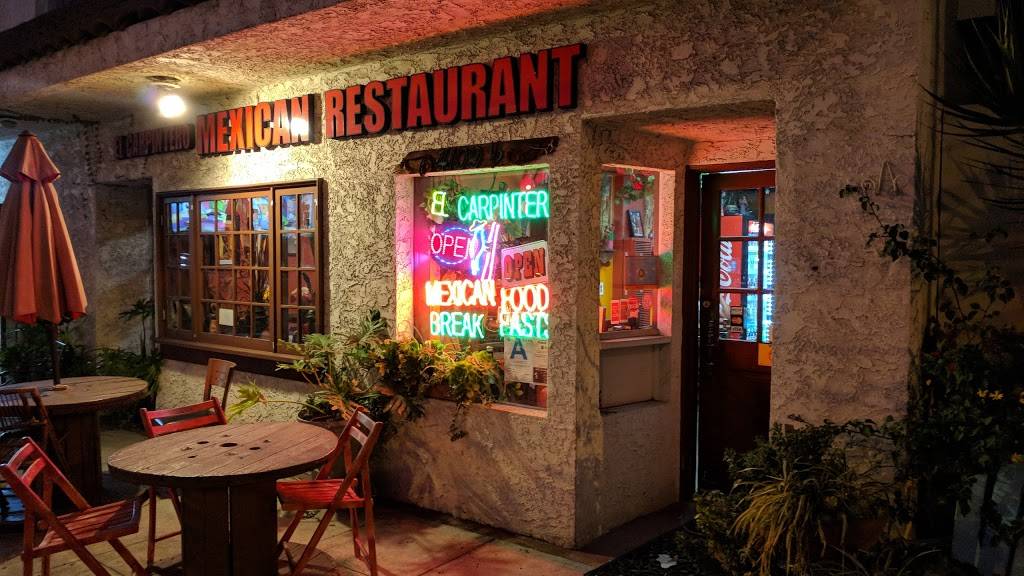
There isn’t a taco place called Hector’s in New Haven, but there’s a popular Mexican restaurant called El Carpintero run by a guy named Hector in Burbank, Los Angeles – across the street from Warners Bros and much frequented by people who work there. This seems so suspiciously similar that I think it must be the inspiration for the fictional Hector’s in New Haven.

A Frank Lloyd Wright Situation

LORELAI: Mom, you know, if you’re not a little nicer to your help, you might find yourself in a Frank Lloyd Wright situation … Mrs. Wright apparently had this major problem with her help. She was very rough on them and they totally hated her. So this guy who had worked for her forever, he had finally had enough … Anyhow, Mrs. Wright invites this whole posse of people over for dinner and they’re all sitting around eating, and Mr. Disgruntled Servant Guy goes outside and locks all the doors and windows and douses the whole house in gasoline and sets the place on fire … So the house is on fire, and people are freaking out, so they run to the doors but the doors are locked, so a few of them try to get out through the windows, but Mr. Angry-Puss is standing outside with an ax hacking them to death and so they all died.

Lorelai refers to the famous architect Frank Lloyd Wright (1867-1959). It’s often been speculated that he was one of the inspirations for the character of Howard Roark in Ayn Rand’s novel, The Fountainhead.

Although Lorelai typically gets her facts a little mangled, the seemingly outrageous story she relates about him is essentially true. The woman involved wasn’t Wright’s wife, but the woman he had left his wife for and was living with in a domestic partnership that was considered scandalous at the time.

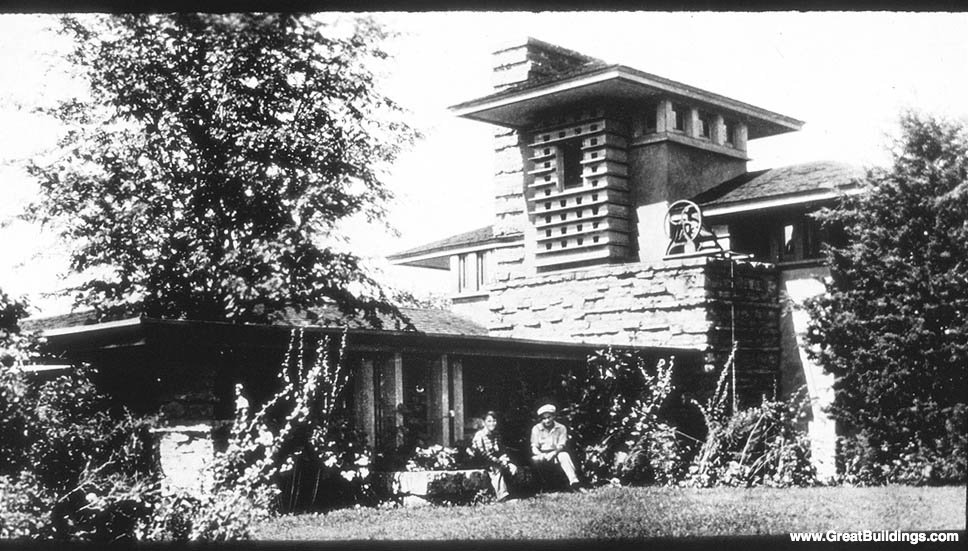
Her name was Mary “Mamah” Borthwick, a translator who had left her husband and children to be with Wright in 1909, living together since 1911 (after her divorce came through), in a house Wright built for Mamah in Spring Green, Wisconsin, called Taliesin (“shining brow” in Welsh).

In 1914, their recently-hired servant Julian Carlton, a man from Barbados who was mentally unstable, set fire to their house and murdered seven people with an axe as they fled the burning structure. The dead included Mamah Borthwick, her two visiting children, aged 8 and 12, a gardener, a draftsman, a workman, and the son of Wright’s carpenter. Carlton attempted suicide straight after the attack, and starved himself to death in jail despite receiving medical attention.

Julian Carlton never did give a motive for his actions, but there’s some evidence that he had disputes with the workmen, and that he knew he was about to lose his job. There’s no evidence that it had anything to do with Mamah Borthwick herself, and the victims, apart from Borthwick and her children, were not dinner guests, but workmen employed by Frank Lloyd Wright.

The devastated Frank Lloyd Wright rebuilt the house in Mamah’s honour, but it burned down again in 1925 after being hit with a lightning storm. It was rebuilt again, and this third version of Taliesin is now open for tours and events.

[Photo shows Taliesin as it was in 1911]

Salad After the Main Course

LORELAI: You know, Mom, in Europe, they eat the salad last and the main course first.

I’m not sure how many European countries this rule supposedly applies to, but in France and Italy at least, it is customary to eat the salad between the main course and the dessert, as a palate cleanser (it’s probably falling out of favour, like a lot of customs). Lorelai’s idea is actually pretty practical!

Liam Neeson

ANDREW: [in background] You went out with Liam Neeson! Are you kidding me?

William “Liam” Neeson (born 1952), actor from Northern Ireland. He began his career in the Belfast theatre scene, and his first film role was in Excalibur (1981). He rose to prominence playing the title role in Schindler’s List (1993), starred in dramas such as Nell (1994) and provided the narration for Everest (1998). In November 2002, his most recent films were Stars Wars: Attack of the Clones and K-19: The Widowmaker, although Gangs of New York was just about to come out. He has received numerous honours, including an OBE in 2000.

Liam Neeson was married to actress Natasha Richardson in 1994, a marriage which lasted until her death in 2009. Presumably, Andrew’s dance partner went out with Liam Neeson prior to his marriage (or prior to him meeting Richardson, which took place in 1993).

“Find a pirate to sit on”

JAMIE: Yes, talking to you would’ve been a distraction.

PARIS: I know. I heard you already. My God, find a pirate to sit on, okay?

Paris refers to the popular stereotype of pirates having a pet parrot sitting on their shoulder (meaning that Jamie is repeating himself, like a parrot). It stems from the character of Long John Silver in Treasure Island by Robert Louis Stevenson [pictured] – for ever after, the idea that pirates and parrots go together has sunk firmly into our collective imagination.

Although there are no accounts of pirates having parrots in real life, exotic birds would have been very valuable at that time, and well worth stealing. It’s more likely that pirates had parrots as profitable cargo, rather than as pets.