Lane’s Bands in a Line from Progressive Rock

LANE: [on phone] I mean, I contend that you can draw a straight line from Yes to Jethro Tull to The Jam to Nirvana, bing bang boom . . . Who are the Jam? [to Rory and Lorelai] That’s disturbing.

Yes: English progressive rock band formed in 1968 by lead singer and frontman Jon Anderson, bassist Chris Squire, guitarist Peter Banks, keyboardist Tony Kaye and drummer Bill Bruford. It has had numerous lineup changes since then. Yes have explored several musical styles over the years and are regarded as progressive rock pioneers. They had a move towards more commercial, pop-oriented rock, and had their highest-selling album in 1983, 90125, with its #1 single, “Owner of a Lonely Heart”. Yes are one of the most successful, influential, and longest-lasting progressive rock bands, selling tens of millions of records, winning a Grammy, and being inducted into the Rock and Roll Hall of Fame in 2017.

Jethro Tull: British rock band formed in 1967, and forging a signature progressive rock sound. The group’s bandleader, founder, primary composer and only constant member is Ian Anderson (no relation to Jon Anderson), a multi-instrumentalist who mainly plays flute and acoustic guitar, and is also the lead vocalist. Their first commercial success was Stand Up (1969), which went to #1 in the UK, while Thick as a Brick (1972) is regarded as a classic. They have sold 60 million albums, won a Grammy, and are one of the most commercially successful and eccentric progressive rock bands of all time.

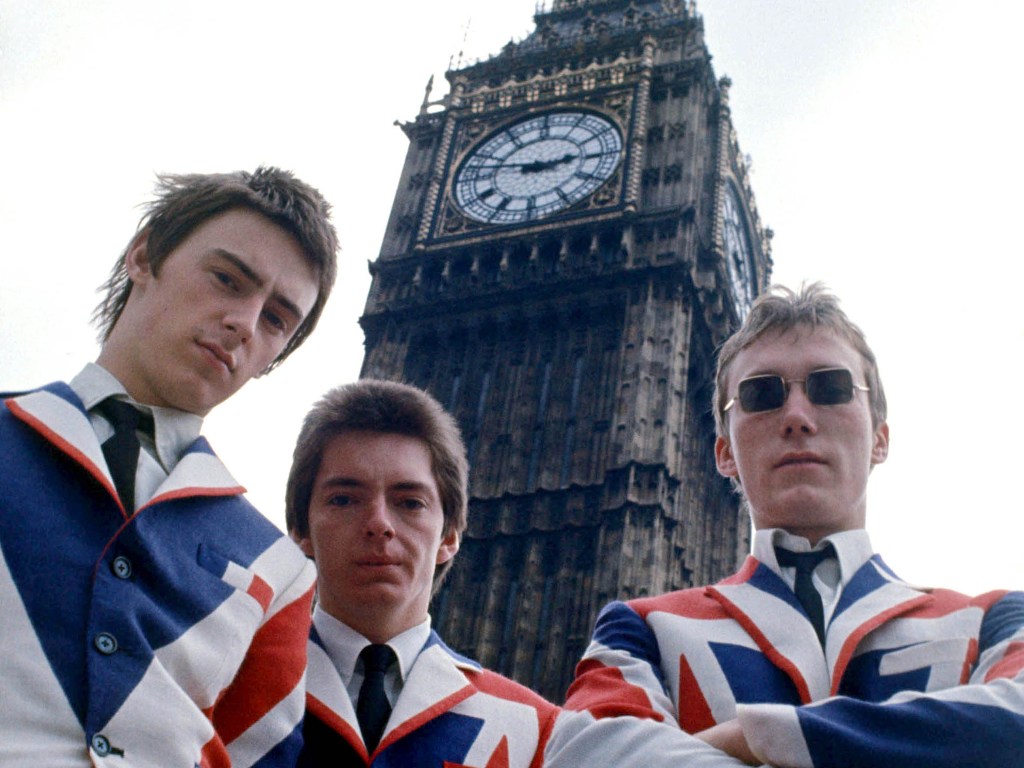
The Jam [pictured]: English mod revival and punk rock band which formed in 1972, led by Paul Weller on bass and lead vocals, and broke up in 1982. While The Jam shared the angry social protest and fast tempo of punk, they wore tailored suits and were influenced by 1960s bands such as The Who and The Kinks, as well as Motown, and were at the forefront of the Mod Revival movement in the UK. They released six studio albums, and had eighteen consecutive Top 40 singles in the UK, of which “Going Underground”, “Start!”, Town Like Malice”, and “Beat Surrender” all went to #1. The guy on the phone hasn’t heard of The Jam, because they broke up twenty years earlier, and were not well known in the US – their biggest hit there was “Town Like Malice”, which got to #31.

Nirvana: Rock band founded in 1987 in Aberdeen, Washington, by lead singer and guitarist Kurt Cobain, previously discussed, and bassist Krist Novoselic; Dave Grohl, previously mentioned, was recruited as drummer in 1990. They established themselves as part of the Seattle grunge scene and found unexpected mainstream success with “Smells Like Teen Spirit”, the first single from their landmark second album Nevermind (1991). Nirvana’s success popularised alternative rock, and they were often referenced as the figurehead band of Generation X. Their music maintains a popular following and continues to influence modern rock culture. Nirvana is one of the best-selling bands in the world, had five #1 hits, received a Grammy Award, and were inducted into the Rock and Roll Hall of Fame in 2014.

You can’t actually draw a straight line from Yes to Jethro Tull to The Jam to Nirvana (the difficulty of drawing one from Yes to Jethro Tull seems quite enough, when Jethro Tull came first!). However, they’d all fit into some sort of Venn diagram with psychedelic rock, so Lane’s bold assertion is incorrect, but not completely crazy.

Paris Freaks Out

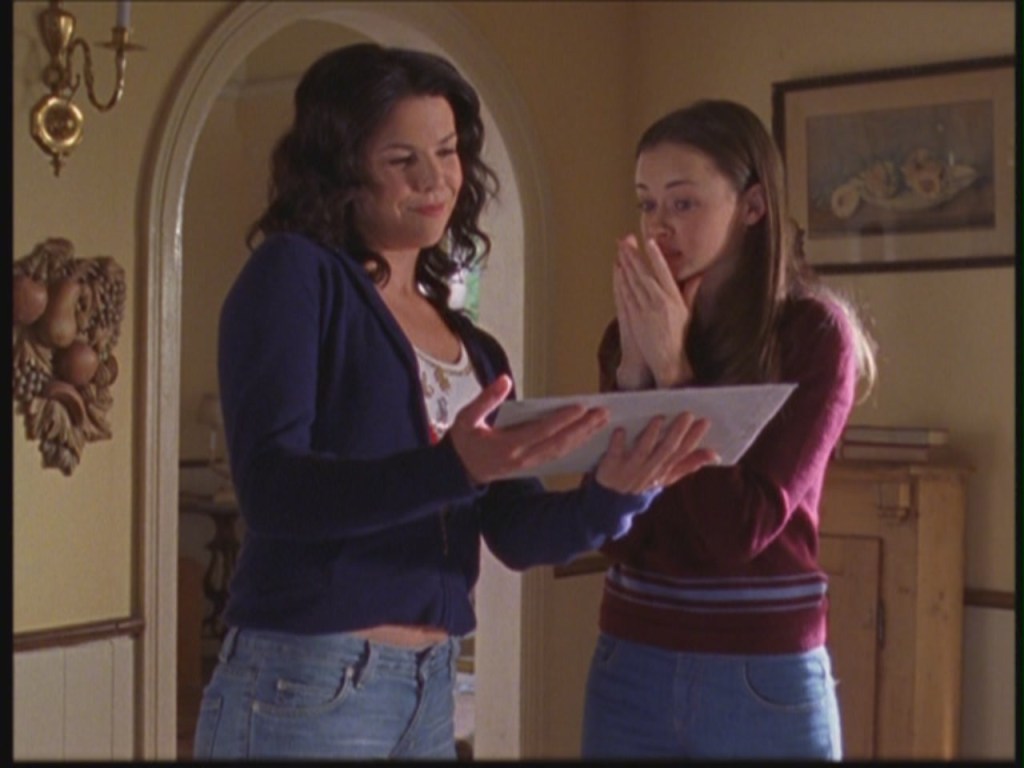
PARIS: What the hell did Romaine mean when he was going on about weeding out the hyper-intense in the interview process? He stopped just short of calling me by name, I’m losing it!

Paris also freaks out over the college panel, even having to run home and throw up out of anxiety. She’s especially upset that Mr Romaine mentioned weeding out “the hyper-intense” during college interviews. In a future episode, Paris will indeed miss out on a place in her first choice of college because of her hyper-intense interview.

Note that Rory has a cell phone for the first time in this scene – previously, she always used a pager. Don’t get attached to the cell phone, she will revert to using a pager in the very next episode. It’s possible that Paris called Lorelai’s phone, and Rory was borrowing it; Lorelai has lent Rory her phone before.

Kate Hudson

EMILY: I was watching TV and that insipid Kate Hudson was talking about going to a university. If she decides to go to Harvard, she’ll get right in over Rory, who we know is more qualified.

Kate Hudson (born 1979), actress, the daughter of actress Goldie Hawn and singer and actor Bill Hudson, although raised by her mother and stepfather, actor Kurt Russell. Her film debut was in Desert Blue (1998), and at this stage, her best known film was Almost Famous (2000) [pictured]. Her most recent movie in 2002 was the war film The Four Feathers, released in September, around the same time as the events of this episode, which was panned by critics. She went on to greater success during the 2000s, and has won several awards.

Kate Hudson was accepted into New York University’s Tisch School of the Arts in 1997, but turned it down to concentrate on her acting career. I don’t know what television program Emily could have been watching – by this stage, Kate Hudson was 23, and not exactly college aged.

Random College Admissions

EMILY: Every child that applies has the same high grade point average, they’ve taken the same AP classes, and they’re all on the student council … One college admissions officer said that he sometimes puts a random stack of applications in the yes pile and the rest in the no pile because he knows it doesn’t make any difference. He doesn’t even so much as glance at them.

It’s true that it’s very difficult to tell apart applications from high-achieving students who’ve all been to Ivy League feeder schools and all got the same grades in the same classes. And a college admissions officer only has a few minutes to decide whether an application should go on the yes or no pile. It’s a hard decision to make in a very competitive Ivy League college environment.

However, like Lorelai, I find it hard to believe this story – most of all, I find it hard to believe in a college admissions officer who would openly admit to this practice in a print publication. I think Emily must have got over-excited, and what they really said was something like, “Sometimes it seems as if I might as well choose the applications randomly when they are all so similar”. Or else the magazine just made it up.

College admissions officers certainly admit that it’s a tough decision to make, and that they don’t always make the right choice – many of them have stories about rejecting a candidate who didn’t seem quite good enough, and then they went on to become something amazing. (They also remember the times they had to grit their teeth and let in terrible candidates because they were on athletics scholarships or had bought their way in). In any case, the final decision is made by a committee, it isn’t just one person deciding who gets in.

Dot-Com Bust

EMILY: With the dot-com bust and the job market dwindling and the stock market going up and down like a yo-yo, everyone and his brother knows the best chance for success and financial security is not just to go to college, but to go to a top college.

The dot-com burst, or bust, was the ending of the dot-com bubble of 1997-2001, previously mentioned, involving excessive speculation in internet-based services and businesses. Higher interest rates are generally thought of as a major contributor to the dot-com burst. The stock market had a significant downturn in September 2002, the time of the events of this episode, which is why Emily is probably more alarmed about the economy than usual.

Early Applications

PARIS: Okay. So, how early should a student get an application in?

MR. ROMAINE: By the due date. Earlier makes no difference. It’s a complete myth that there’s a benefit to be derived from early admission.

This is arguable. You would think the obvious benefit to applying early is a smaller pool of applicants. If applying to Harvard, you cannot apply early to another university, meaning that the restriction of doing so may discourage a lot of people. People who apply early are more likely to gain admittance to the university of their choice – but according to Harvard, that’s because quality candidates are more likely to apply early. Harvard insists there is nothing to be gained from applying early, even though the standard advice is to apply early if you can. The only real drawback is that you have less time to polish your application.

The early application date for Harvard is November 1st, and notifications of their decision are sent out in mid-December. An early decision seems like a good way to avoid application anxiety!

Princeton University and Ivy League College Consultant

PARIS: My panelists are Jim Romaine, admissions officer at Princeton University, and Ivy League college consultant, Rose Samuels.

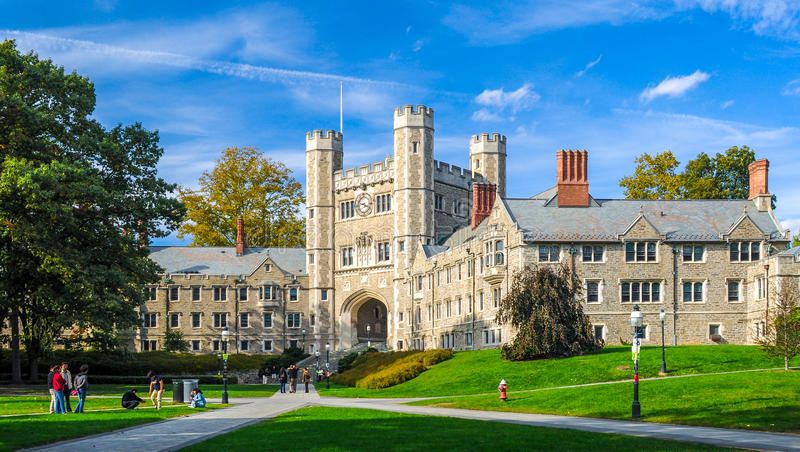
Princeton University, previously discussed. Paris’ boyfriend attends Princeton – I don’t know whether that had any bearing on Paris getting their admissions officer on their panel. I wouldn’t put it past Paris, though.

Jim Romaine and Rose Samuels are of course fictional characters, played by Philip Pavel and Karen Bankhead respectively.

In real life, an admissions officer at Princeton University, Stephen LeMenager, had just been removed (in August 2002) after gaining unauthorised access to student’s files on a Yale admissions website the previous April. The investigation and subsequent scandal may have been what put the idea of using Princeton in this episode – they could have had a representative from any Ivy League university, after all.

Ivy League college consultants, also called independent education counsellors, work with students and their parents to decide which schools a student should apply to. They also guide them through the application and essay-writing processes. Top tier college consultants can cost a small fortune, so this is yet another area where being very wealthy can help you on your path to college.

The Application for Harvard

RORY: Oh my God … It’s here … My application to Harvard.

This episode is focused on Rory receiving her application for Harvard University, and the stress she goes through as a result. The US university application process is somewhat different to many other countries, so it’s necessary to understand a little bit of how it works.

It’s not the case that you simply send off your academic results to the university and if you make the cutoff point, you get in. You are also expected to tell the university about yourself, about your interests, goals, and contributions you’ve made to society, and supply letters of recommendation from teachers and community leaders to bolster your case.

Most importantly, you need to write a short essay, usually around 600 words or so, that somehow convinces them you’re more than academically gifted, you’re also a wonderful person who deserves a college education, but are far too modest to actually say that. As these essays tend to end up very much alike, they also need to be fascinating enough to keep the admissions officer reading them! But they can’t be too edgy or creative either, because then you’ll seem too weird for the college to handle. Stressful or what?

There are also opportunities to have an in-depth personal interview with an alumnus of the university, who hasn’t read your application, and doesn’t know anything about you except your name and contact details. It’s basically a job interview, but instead of trying to get a job, you’re trying to get into college, answering questions about all your positive traits that will serve to make the college a better place, while letting them see what kind of person you are.

The harder a university is to get into, the more rigorous and exacting the entire process is – you will need to have higher grades, more impressive goals and aspirations, and have made some kind of major contribution to the world. You will do well to have letters of recommendation from people who are leaders in their field, or actually famous. Your essay will preferably be of publishable standard. You will dazzle, astound, charm, and knock the socks off your interviewer. And that’s just to get in!

Rory’s application arrives in what appears to be mid-to-late September, but that’s just to fit in with the timing of the season in Gilmore Girls. In real life, Harvard usually sends its applications out around the start of August.

“Putting her on an iceberg”

RORY: Are you sure the first thing you wanna do in office is to get a ninety-three year old woman sacked?

PARIS: Hey, at least I’m not putting her on an iceberg and shoving her off to sea …

Paris refers to a stereotype of Eskimo culture where the elderly were put on an ice floe to die when they became a burden. Although some Eskimos did practice senilicide (the killing of the elderly), it was rare, usually only practised during famines, and there is no record of anyone being put out on the ice to die – simple abandonment was probably the most common method. In many cases, it may have been what we might refer to as assisted suicide. It is no longer practised in Eskimo culture, and hasn’t been for a very long time.

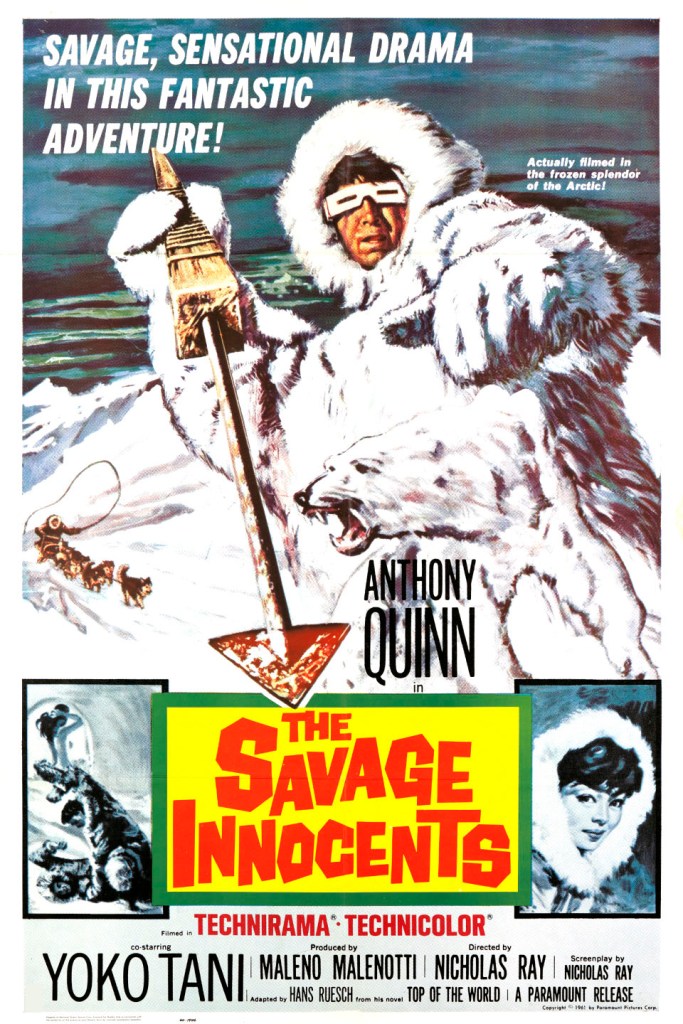
The idea of elderly Eskimos being pushed out to sea on ice floes might have come from the 1960 adventure film, The Savage Innocents, directed and co-written by Nicholas Ray, and based on the 1950 novel Top of the World by Swiss author Hans Ruesch. The film stars Anthony Quinn as an Inuit hunter – which is believed to be the inspiration for Bob Dylan’s 1967 song, “Quinn the Eskimo (The Mighty Quinn)”, successfully recorded by British band Manfred Mann in 1968.

In the film, the hunter’s mother-in-law is put on the ice to die, but is rescued soon after. In another scene, the hunter’s wife walks across the ice to commit suicide; a piece of ice breaks off and she briefly floats on the ice floe before drowning herself. The two scenes together may have suggested the popular idea of the elderly being set adrift on the ice to die.

Although Paris is made to seem a monster by getting rid of the librarian, she is ninety-three years old, and is in intensive care during this episode! Surely it is time for her to retire, on health grounds? I don’t feel as if Paris is being that unreasonable here.

We Are Family

RORY: Hey, we are family.

LORELAI: Yeah, well, look how great that worked out for Sister Sledge.

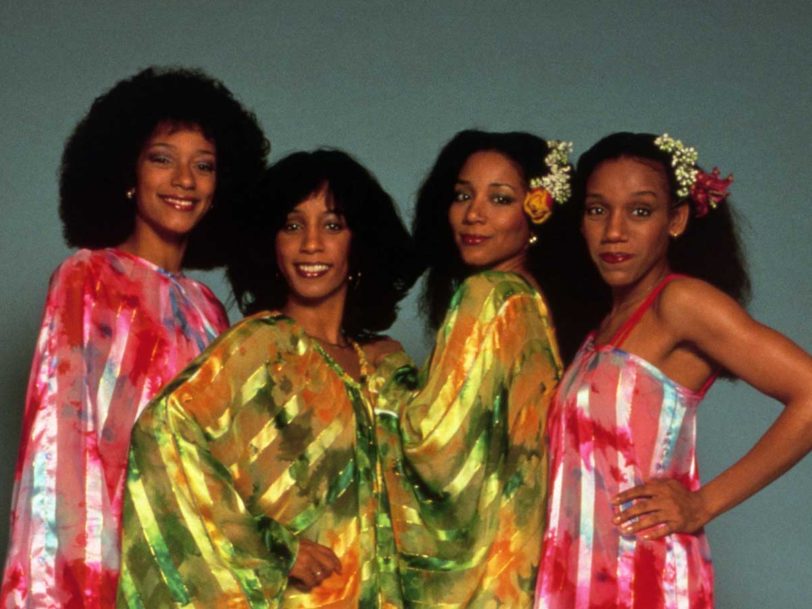
“We Are Family” by vocal group Sister Sledge, previously discussed, and now the third mention of this song on the show.

The group were made up of four sisters – Debbie, Joni, Kim, and Kathy Sledge, who began their musical careers in 1971. Lorelai makes it sound as if some terrible fate befell the Sledge sisters, but in fact “We Are Family” was a worldwide smash hit, and the group was named Billboard’s Best New Artists. They continued on to further career success, touring internationally, and performed at the White House for President Clinton in 2000, and for the Pope in 2015. Although Joni died in 2017, the other three sisters are still performing as Sister Sledge.

Lorelai is very possibly thinking of the period in the early 2000s when Debbie, Joni, and Kim produced solo works. Their final 2003 album remains unreleased, but by 2005 they’d got over this hitch, and performed at Glastonbury. In 2002, it might have seemed as if Sister Sledge was washed up, but they really did get through it all by sticking together as a family.