Rory’s Car

DEAN: Your car.
RORY: No!
DEAN: Finished it yesterday.

The car that Dean rebuilds and gives to Rory is a pale blue 1961 Dodge Lancer sedan. A rebuilt Dodge Lancer would cost around $10 000 today, so it’s a significant gift, quite apart from all the work he’s put into it.

We now discover that even though they broke up on the night he told Rory he was giving her a car, Dean has continued to work on it. It seems that Rory and Lorelai have been kept informed about his progress, because they seem excited, but not surprised about it, and Lorelai seems to have already given permission for it to go ahead.

Richard’s unease with Dean giving Rory the car is probably not only the safety issue (and no car from 1961 is going to be as safe as a modern one), but because it is inappropriate as a gift from a teenage boyfriend that Rory has only been seeing for about a year (and was broken up with for three months). He may have handled it badly, but Richard has a point.

The day with Richard now becomes an unmitigated disaster, and it’s all thanks to Dean. He just shows up with the car, rather than call ahead and make sure that it’s alright. He also ignores the fact that when he arrives, Richard’s car is out the front, so he knows that they have a guest, and can probably guess who it is. Does Dean actually deliver the car that night on purpose, as a way to show Richard that he isn’t a useless waste of space, and to rub it in how special he is to Rory and Lorelai?

It’s a real slap in the face to Richard and Emily, who wanted to buy Rory a new car, but were not given permission to do so by Lorelai. It must hurt Richard that she instead gave permission for an unsafe old car, built by a teenage boy, and this no doubt informs a lot of his behaviour.
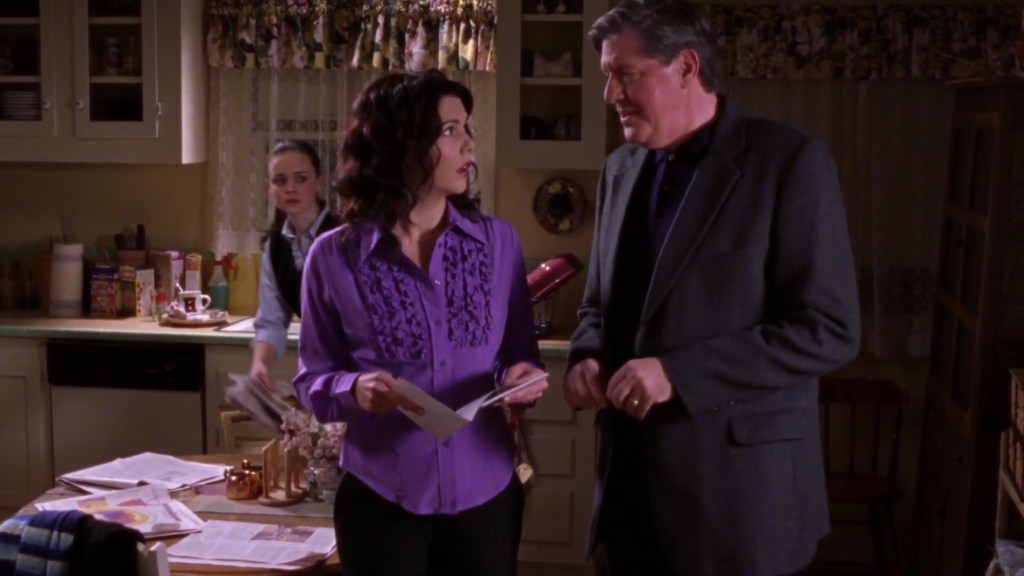
“We order way too much”

RICHARD: Lorelai, you cannot order all of that food. You’re teaching your daughter wastefulness and gluttony.
LORELAI: Um Dad, we do this all the time. We order way too much and then we eat like a third of it and live off the leftovers for a week and a half. It’s a finely honed system.

More evidence that Lorelai and Rory don’t really eat that much. They order a huge amount of food, but then only eat 30% of it. The leftovers take them another ten days to get through, suggesting they’re only picking at them. That doesn’t sound like people with big appetites.

They’re also not worried about food poisoning – you’re meant to eat leftovers within two days (four at the absolute most), not ten! How they never get sick is a miracle. Unless constant vomiting and diarrhoea is their secret to staying slim.

Rory’s Bookshelf

When Rory shows Richard her bedroom, he checks out her bookshelf. Here are some of the books we can see:

Summer of Fear

A 1993 serial killer novel by T. Jefferson Parker, who writes bestselling police procedural novels set in California. Parker is a journalist who turned novelist – perhaps a tiny hint of where Rory’s career is eventually headed.

The Scarecrow of Oz

A 1915 children’s book by L. Frank Baum, the ninth in his series of Oz books. The Wizard of Oz is a touchstone for Gilmore Girls, and this seems to be a little nod to the land of Oz. The Scarecrow from the original story is the magical helper (the one who didn’t have a brain, but was actually quite smart), and the human protagonists are a man and a little girl from California.

Contact

A 1985 science novel by scientist Carl Sagan. The heroine is a scientist named Ellie who showed a strong aptitude for science and mathematics from a young age, and has been left emotionally bereft by the loss of her father, with a problematic relationship with her mother. Contact with an alien civilisation allows Ellie a strange chance to reconnect with her memories of her father. It feels like something that would resonate with Rory. Ellie is also from California. The novel was a bestseller, and made into a film in 1997, starring Jodie Foster. The film might have given Rory an interest in reading the novel.

The Apocalyptics: Cancer and the Big Lie

Edith Efron was a journalist who began her career at the New York Times Magazine, became a member of Ayn Rand’s circle and wrote for her magazine, and then became editor of TV Guide at the height of its popularity. She was critical of what she perceived as “liberal bias in the media”, but provided a strong voice on race relations (Efron had a biracial son during 1950s segregation). She later wrote for the libertarian publication, Reason. The Apocalyptics is a 1984 exposé of the cancer industry and a criticism of environmental policy which Efron saw as being based on “bad science” (basically saying Rachel Carson etc were all a bunch of doom-merchants). It’s an obscure, controversial, and extremely heavy-going work. An intriguing insight into Rory’s interests.

Working: People Talk About What They Do All Day and How They Feel About What They Do

A 1974 non-fiction book by oral historian and radio broadcaster Louis “Studs” Terkel. An exploration of what makes work meaningful for people, based on interviews with people from all walks of life. It was a bestseller, and turned into a Broadway musical in 1977, and a graphic novel in 2009.

A book by “Tobias Allcot”

This seems to be a fictional book which would have been created by the props department as a slightly odd joke. Tobias Allcot is the name of a Pulitzer Prize-winning author in the film The Man from Elysian Fields, directed by George Hinkenlooper; James Coburn portrays Allcot. The film wasn’t released until September 2002, but had been shown at the Toronto Film Festival in September 2001.

“Bad, depressing Lifetime movie”

LORELAI: It’s going to be horrible. It is going to be a bad, depressing Lifetime movie and Nancy McKeon will be playing me. I am Jo.

Nancy McKeon (1966) is an actress best known for playing Jo Polniaczek on the sitcom The Facts of Life, a spin-off of Diff’rent Strokes which ran from 1979 to 1988, making it one of the longest-running sitcoms of the 1980s. The show was set at a private girl’s school, and Jo was an extremely intelligent but rebellious tomboy who rode a motorcycle to school and often got into trouble before graduating as class valedictorian. Jo must have been a role model for the ambitious yet wayward young Lorelai (another TV heroine with a motorcycle!).

Nancy McKeon appeared in television movies based on real life stories, as well Afterschool Special episodes with titles like, “Schoolboy Father”, and “Please Don’t Hit Me, Mom”. She starred in the 1989 domestic violence drama, A Cry for Help: The Tracey Thurman Story, and the 1992 kidnapping drama, Baby Snatcher. These are the types of “bad depressing” movies Lorelai probably has in mind.

Nancy McKeon has only ever been in one Lifetime movie, and it aired in 2003, after this episode was broadcast. Called Comfort and Joy, it’s a quirky romantic Christmas film, and not depressing at all.

Maine

LORELAI: I was kicked out of summer class for refusing to call the camp counselor Peaches because I thought the entire concept of the counselors choosing summer fruit names was stupid. So they called my dad and he came to get me and it was just the two of us alone in the car all the way from Maine with nothing to talk about but my camp failure. Luckily I had also flashed the swim team or even that subject would’ve gotten stale.

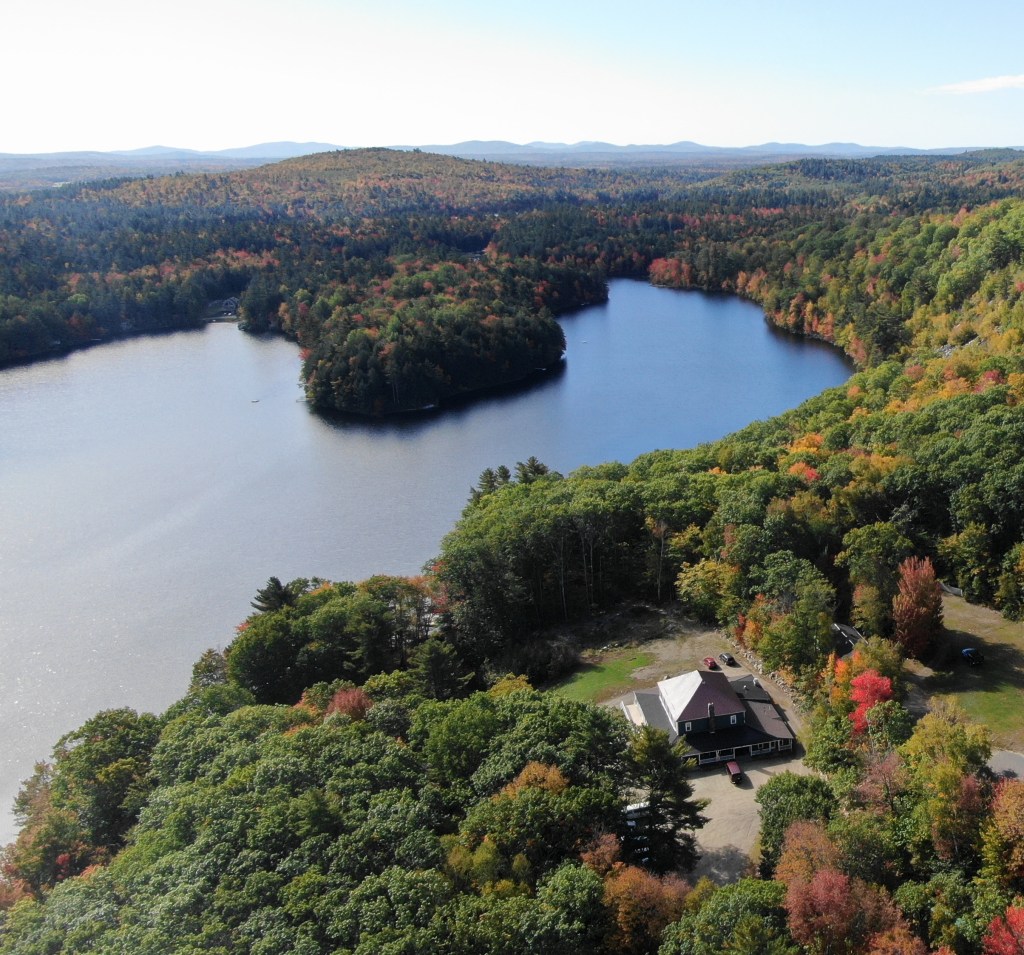
Maine is a New England state, the most north-eastern state in the US, the only state to have one-syllable name, and the only state that borders only one other US state (it borders New Hampshire, Canada, and the Atlantic Ocean). It is also the most rural of all the states of the US, with many farms. It is known for its rocky coastline, forests, smooth mountains, and picturesque lakes. It is famous for its maritime culture and seafood cuisine, especially lobster.

There are many summer camps for children and teens in Maine, and quite a few are exclusive and very expensive – only for the children of the wealthy and powerful, a few with a rigorous application process (one is known as “the Harvard of summer camps”), and a couple that require a uniform. It seems likely that Richard and Emily would have sent Lorelai to one of them.

It takes five to six hours to drive from Maine to Hartford. That’s bad enough, but Richard and Emily always vacation in Martha’s Vineyard during the summer. If Richard had to drive Lorelai back to their summer house in Massachusetts, the drive is even longer – six to seven hours. Considering that Richard might have had a fourteen hour drive that day to pick up his errant daughter and take her home, I can imagine he would have been in a very bad mood.

Rhode Island

EMILY: You have to take your father …Tomorrow, for the whole day, just take him.
LORELAI: Take him where?
EMILY: I don’t care – the zoo, the mall, Rhode Island, just get him out of my house!

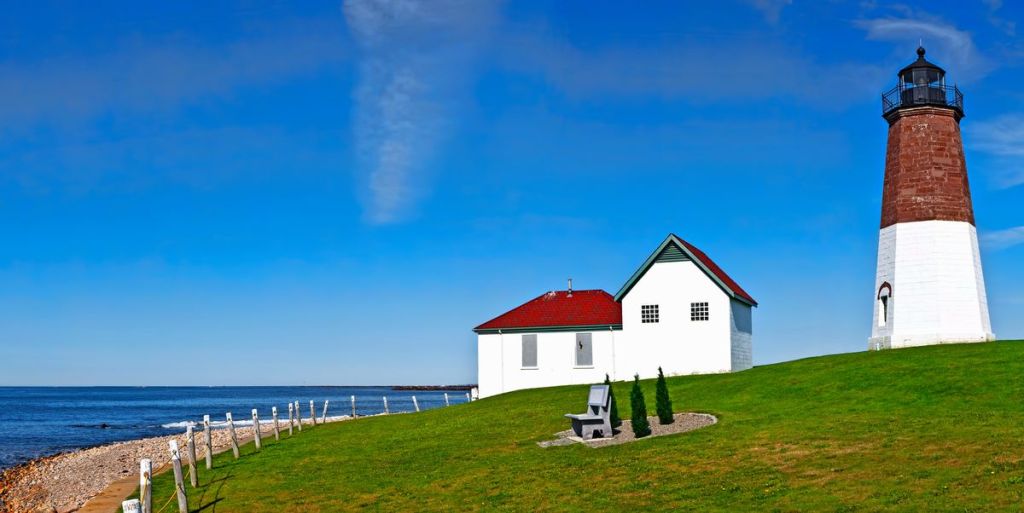
Rhode Island is a state in New England, the smallest state in the US. It takes its name from an island in Narragansett Bay, although most of the state is actually on the mainland. There are many beachside towns here, making it a common place for people to come for vacations, and there is a strong maritime culture. It would take about 90 minutes to drive to Rhode Island from Hartford.

The mention of Rhode Island may be a nod to animated sitcom Family Guy, which is set in Rhode Island, and which Daniel Palladino worked on.

Movies Seen or Advertised at the Video Store

Alamo Bay (1985)

Annie (1982)

Autumn Leaves (1956)

Beetlejuice (1988) – directed by Tim Burton, one of Amy Sherman-Palladino’s favourites

Blow (2001)

Body Double (1984)

Break Up (1988)

Cahill US Marshal (1973)

Cats & Dogs (2001)

Cobra (1986)

Cool Hand Luke (1967)

The Cowboys (1972)

Dave (1993)

David and Lisa (1962)

Fair Game (1995)

Field of Dreams (1989) – another Kevin Costner film

Forbidden Planet (1956)

Glitter (2001) – previously discussed

Goodfellas (1990)

Hairspray (1988) – previously mentioned

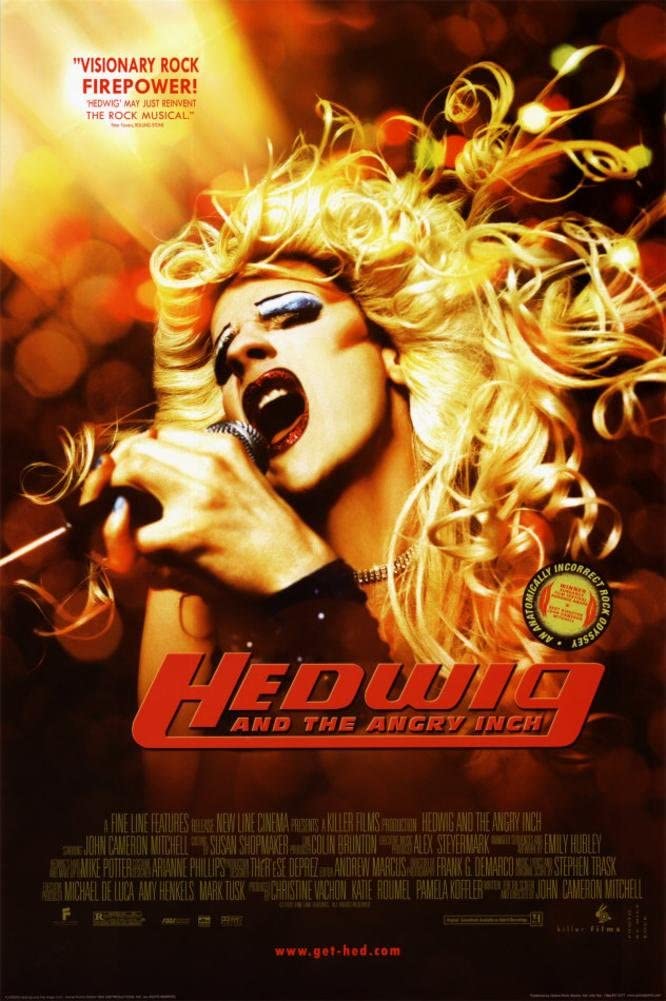
Hedwig and the Angry Inch (2001) – only film where you see both the video and the poster for it

Hook (1991)

In a Lonely Place (1950)

Jack Frost (1998)

King Kong (1933)

Little Shop of Horrors (1986)

The Mambo Kings (1992)

The Matrix (1999) – mentioned several times during the show

The Mighty Ducks (1992)

Monster High (1989)

The Negotiator (1998)

Pretty Woman (1990)

Romeo Must Die (2000)

Rush Hour (1998)

Seven Beauties (1975) – directed by Lina Wertmuller, 1st female director to get Oscar nomination

To Sleep With Anger (1990)

A Star is Born (1954)

Sweet November (2001)

Swordfish (2001)

Tin Cup (1996) – another Kevin Costner film

The Toy (1982)

Valentine (2001)

“Tape cover that’s kind of mature”

RORY: Hey Kirk, there are a couple of little kids over there and they’re, uh, looking at this tape cover that’s kind of mature. You might wanna put that stuff on a higher shelf or something.
KIRK: Mature? How mature?
RORY: Uh, it’s a half-naked woman just standing there.
KIRK: Is she a blonde?

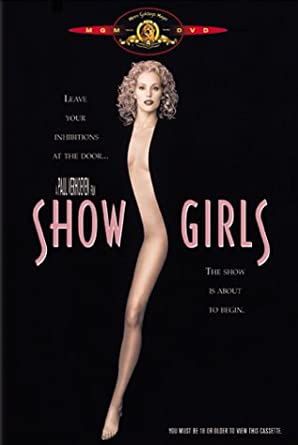
The video that the boys are looking is Showgirls, a 1995 erotic drama directed by Paul Verhoeven and starring Elizabeth Berkley and Kyle MacLachlan (who played Dale Cooper in the 1990-91 David Lynch television series, Twin Peaks, a secret touchstone for Gilmore Girls). Showgirls is a about a street-smart drifter who goes to Las Vegas and climbs the seedy ladder from stripper to showgirl.

It was the first, and so far, only, NC-17 film given wide release in mainstream cinemas. Critically panned, it was a box office bomb, but a success on the home video market, despite being named as one of the worst films ever made. It’s often cited as a guilty pleasure, a camp classic, or a “so bad it’s good” film. It was made into a stage musical in 2013. (Amy Sherman-Palladino commented on the film Glitter, “It was no Showgirls“.) Some critics now believe it is a brilliant satire.

The video is correctly catalogued under Drama by the video store, and Showgirls was cut to an R rating for video store rentals. R rated videos were not kept in a separate section from other films, so Rory comes across as more of a meddlesome prude than a concerned citizen. The cover doesn’t actually show anything very salacious – just a leg and a tiny bit of side boob.

The woman on the cover is actually a blonde.

The Three Faces of Costner, and Tom Petty

LORELAI: The three faces of Costner – Bull Durham, Dances with Wolves, The Postman. Tom Petty playing Tom Petty, that great big speech about “Once upon a time there was a thing called mail”. It’ll make you laugh, it’ll make you cry, it’ll make you wanna mail something.

Kevin Costner (born 1955), award-winning actor and filmmaker. The three faces of Costner seem to be the first big success of his career, the greatest success of his career, and what seemed at the time to be the fading of his career with a failed film. In fact, he was to have renewed success with The Open Range in 2003, and received his star on the Hollywood Walk of Fame that same year, so his comeback was just around the corner.

Bull Durham, 1988 romantic comedy sports film. It’s partly based on writer/director Ron Shelton’s experiences in the baseball minor leagues, and depicts the players and fans of the Durham Bulls from Durham, North Carolina. Kevin Costner plays a veteran catcher brought in to teach a rookie pitcher (played by Tim Robbins) about the game in preparation for moving to the major leagues. It was a commercial and critical success, and was named the #1 sports film ever by Sports Illustrated. It’s also considered one of the best comedies. It helped solidify Costner as an A-list celebrity.

Dances with Wolves, 1990 epic western which stars, and was produced and directed by, Kevin Costner, in his directorial debut. It’s based on the 1988 novel of the same name by Michael Blake, and tells the story of a Union Army Lieutenant who travels to the American frontier to find a military post, and his dealings with a group of Lakota (much of the dialogue is in Lakota with English subtitles). It was a box office hit, and the #4 film of the year. It was also favourably reviewed, and won seven Academy Awards, including Best Picture and Best Director. It is credited with revitalising the western genre in film.

The Postman, 1997 post-apocalyptic action adventure film, which was also produced and directed by Kevin Costner, who plays the lead role. It is based on the 1985 novel of the same name by David Brin. Set in a neo-western version of a disestablished US in the near future of 2013, an unspecified apocalyptic event has led to war and plagues, leaving a huge impact on human civilisation and erasing most technology. A nomadic drifter finds an old uniform of a US Postal Services mail carrier, and unwittingly inspires hope, becoming a national hero. It failed at the box office and was heavily criticised in reviews.

Thomas “Tom” Petty (1950-2017), singer, songwriter, and musician. He was the lead vocalist and guitarist for Tom Petty and the Heartbreakers, formed 1976, and was a member of the supergroup The Traveling Wilburys, as well as performing as a solo artist. He sold more than 80 million records worldwide, making him one of the most successful music artists of all time. He was inducted into the Rock and Roll Hall of Fame in 2002.

He seemingly plays himself as the mayor of Bridge City in The Postman, as Kevin Costner’s character immediately recognises him as a famous person. Tom Petty had a post-apocalyptic themed story in his 1982 song I Got Lucky, and mentioned wanting to have a small part in a futuristic postwar movie. He finally got the chance in this film. [Picture shows Petty as the mayor].