Rory’s PSAT Scores

RORY: I got a 740 Verbal and a 760 Math.

In 2001, the PSAT was split into three sections, not two: Math, Writing, and Critical Reading, and the maxiumum score in each section was 80.

Rory seems to have taken the pre-1997 PSAT, which only had two sections, Math and Verbal, and had a maximum score of 800 in each section. No doubt the writer (Linda Loiselle Guzik) based it on her memories of taking the PSAT in high school, not the PSAT then in use.

Rory’s scores are extremely good in both categories, putting her in the top 1%, and making her a virtual certainty as a Merit Scholarship semi-finalist. Somehow she never seemed to receive a Merit Scholarship to help her pay for her college education, and we never hear of it as a possibility.

PSATs

While Lorelai is doing her homework for business school in the diner, Rory comes in, clutching her PSAT results. It’s four-thirty, but somehow Rory is already back from school, which gets out at 4.05 pm and is forty minutes away, gone home to get their mail, and walked to the diner to meet her mother, all within twenty-five minutes. But let’s ignore yet another time zone issue.

The SAT is a standardised test widely used for college admissions in the US, in use since 1926. Originally the Scholastic Aptitude Test, its name has changed several times, and by now it isn’t an acronym of anything – everyone just knows that SAT means the test to get into college.

The PSAT is the Preliminary SAT, which high school students take in early to mid-October – Rory probably took hers in the period between Presenting Lorelai Gilmore and Like Mother Like Daughter.

Taking the PSAT is said to improve your scores when taking the SAT, and furthermore, the top scorers are rewarded with scholarships, so they are considered to be very important.

Results of the PSAT are usually mailed out perhaps six to eight weeks after the taking the test, so in the real world, Rory would have already had her results by late January.

Mozart’s Prague Symphony

RICHARD: Well, I was appalled. Prague has played host to some of the greatest composers in history. Mozart named a symphony after it, for heaven’s sake. So what did I do?
EMILY: I have tried so hard to forget this.
RICHARD: I stood beside them and their boombox and I hummed Mozart’s Prague Symphony as loud as I could. [starts humming]

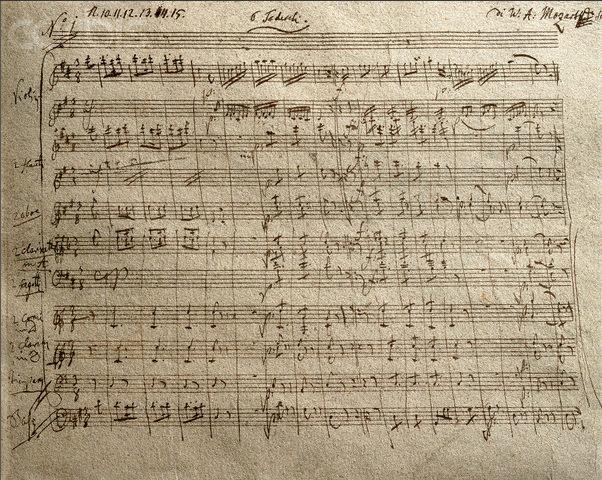
Symphony No. 38 in D major (K. 504), was composed by Wolfgang Amadeus Mozart, previously discussed, in late 1786. It premiered in Prague in 1787, during Mozart’s first visit to the city. Because of this, it is popularly known as the Prague Symphony. Mozart didn’t actually give it this name, and it’s not certain that Mozart wrote it in honour of Prague, although there is some evidence that he might have done.

The Year of “Do You Believe in Life After Love?”

RICHARD: Oh, that awful woman. Who is she? The tall bony one, married to the deceased mustachioed congressman.
RORY: Cher?
EMILY: That’s the one!
LORELAI: The year of “do you believe in life after love?”.

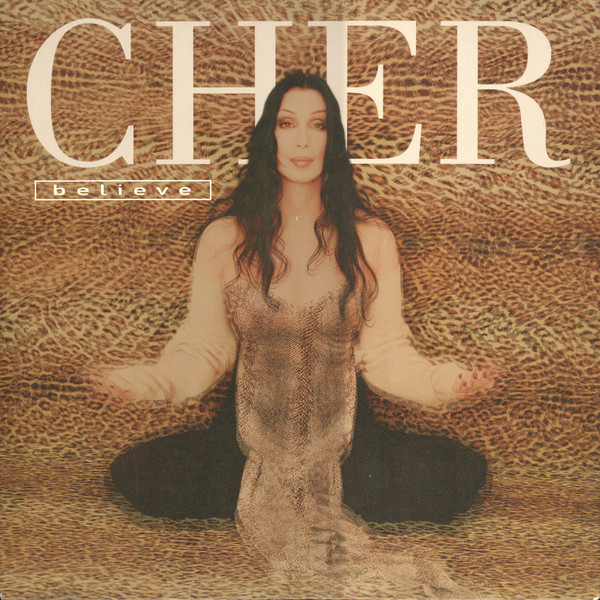
Cher’s single Believe was released in October 1998, the title track from her album of the same name. The chorus begins: “Do you believe in life after love?”. A departure from her usual style, it’s an upbeat dance-pop number which heavily features Auto-Tune, then a new software; for some time Auto-Tune was known as “the Cher effect”.

The song went to #1 world-wide, making Cher (then 52) the oldest female artist to reach the Billboard Hot 100, while Believe was the highest-selling single by a female artist in the UK. One of the best-selling singles of all time, Believe won a Grammy for Best Dance Recording that year. It is considered to be one of the most iconic songs of the 1990s, and one of the best dance tracks ever released. Rolling Stone has it listed as both one of the greatest songs of all time, and one of the most annoying.

Cher is tall with a strong bone structure, and from 1964 to 1975 was married to Sonny Bono, a Republican congressman in California from 1995 until his death in 1998.

Lorelai’s statement tells us that Richard and Emily went to Prague in December 1998. Although Richard cannot identify the song by Cher, Lorelai can guess because she knows it was such a huge hit that year.

Charles Bridge

RICHARD: So there we are, it’s a beautiful moonlit Prague night, and we’re strolling across the Charles Bridge when we come across this group of kids blasting this song …

Charles Bridge is a medieval stone arch bridge that crosses the Vltava river in Prague, Czech Republic. Its construction started in 1357 under the auspices of King Charles IV, and finished in the early 15th century. Originally called Stone Bridge, it has been referred to as “Charles Bridge” since 1870. It’s been restricted to pedestrian traffic only since the late 1970s, hence Richard and Emily stroll across it while teenagers could congregate listening to music.

Emily earlier talked about Prague as if she had never been, saying it was “supposed to be lovely”. Now we discover she and Richard had already been there on one of their traditional December trips.

Buckingham Palace and I Love Lucy

LORELAI: Hey, did you ever see that I Love Lucy where she goes to Buckingham Palace?
RORY: Mom.
LORELAI: She tries to get the palace guard to break character. That was a funny one.

Buckingham Palace is the official residence of the monarch of the UK, located in the City of Westminster, the centre of London. It was originally a townhouse built for the Duke of Buckingham in 1703, and acquired by King George III in 1761. It was enlarged during the 19th century, and became the monarch’s official home on the accession of Queen Victoria in 1837. Used for state functions and extending hospitality to visiting world leaders, it has been a focal point for the British at times of national rejoicing and mourning.

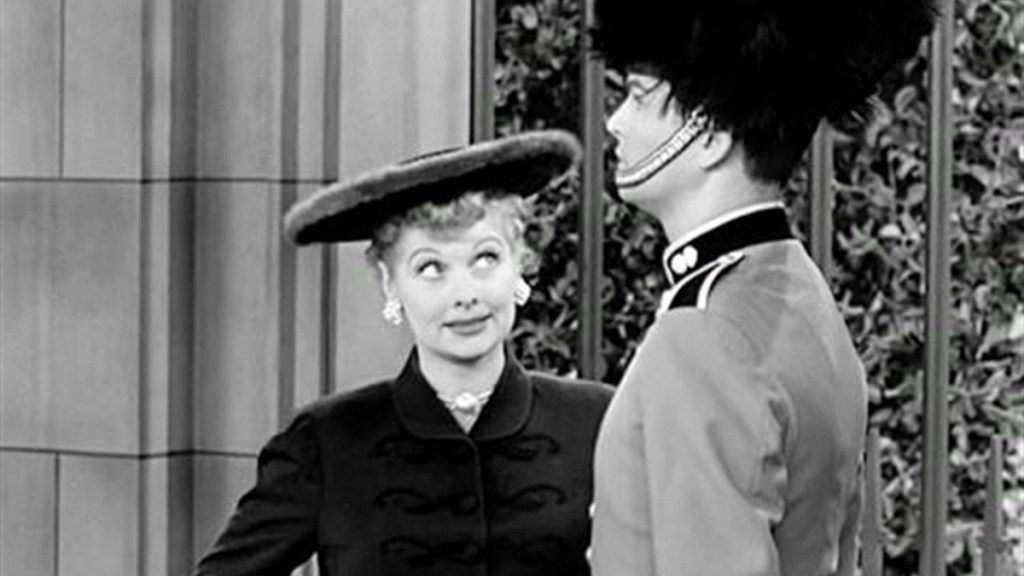
I Love Lucy, previously discussed and frequently mentioned. The episode Lorelai is talking about is Lucy Meets the Queen (1956), set during the season when Ricky is on his tour of Europe, and Lucy is accompanying him. Lucy visits Buckingham Palace as a tourist, and tries to make one of the Queen’s Guard outside the palace laugh by cracking jokes. The guards at Buckingham Place are famous for remaining stony-faced on duty – they are meant to be fined £200 if they don’t. They will sometimes smile and pose for pictures with polite, respectful tourists, especially children.

Coney Island Roller Coaster

RICHARD: Say, when was the last time we were on a roller coaster?
EMILY: Never.
RICHARD: Didn’t we ever go to Coney Island?
EMILY: That must’ve been your other wife.

Coney Island is a neighbourhood of Brooklyn in New York. Originally one of the Outer Barrier Islands, it became a peninsula in the early twentieth century when landfill connected it to Long Island. It became a seaside resort in the mid-nineteenth century, and by the late nineteenth century amusement parks had been built there.

The amusement parks began to decline after World War II, and by the 1950s were confined to a small area. At the time Richard and Emily would have been dating in the 1960s, Coney Island was considered crime-ridden and dangerous, so I don’t think Richard could ever have taken Emily there, and the last amusement park closed there in 1964, not to open again until the next decade. He might have gone there as a child though.

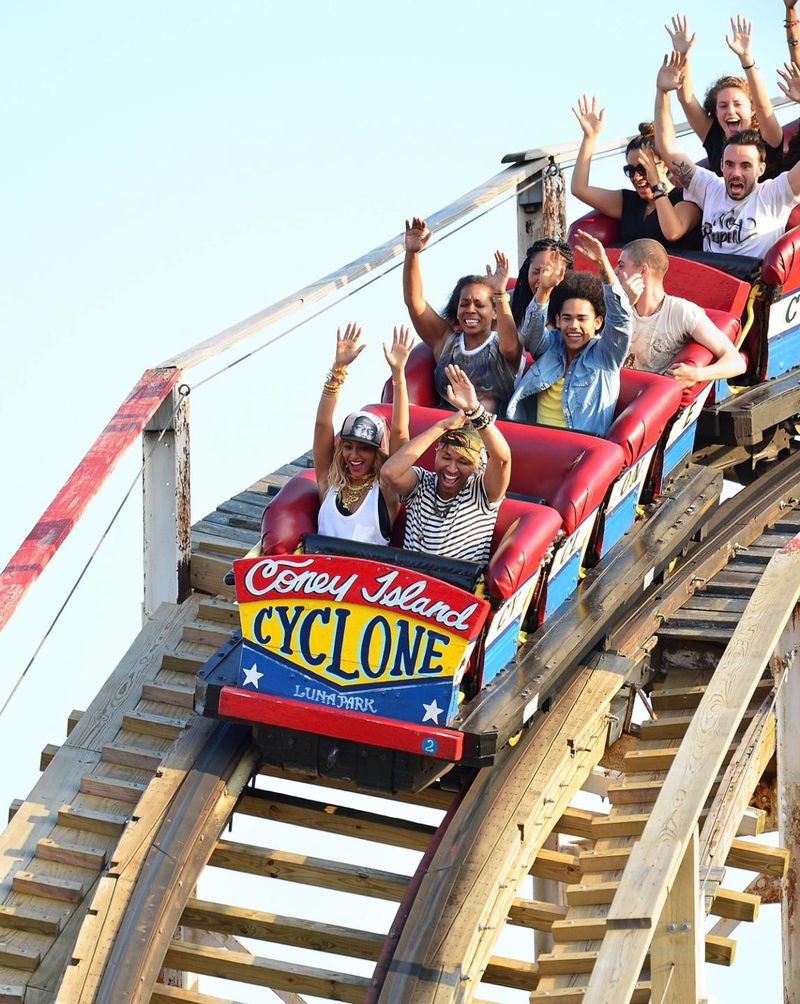
The amusement parks began to be revitalised in the early twenty-first century, and once more has many attractions. The famous roller coaster there is the Coney Island Cyclone, built in 1927, and placed on the National Register of Historic Places in 1991. Richard and Emily could have gone on it in 2001-2002 when it was part of Astroland, despite feeling as if Coney Island is something from another era.

Ben-Hur

LORELAI: Hey, you in the belt – get in.
LUKE: What? Oh, no, I was just sort of checking things out.
LORELAI: Come on. We can pull a Ben-Hur and take down Taylor’s sleigh.

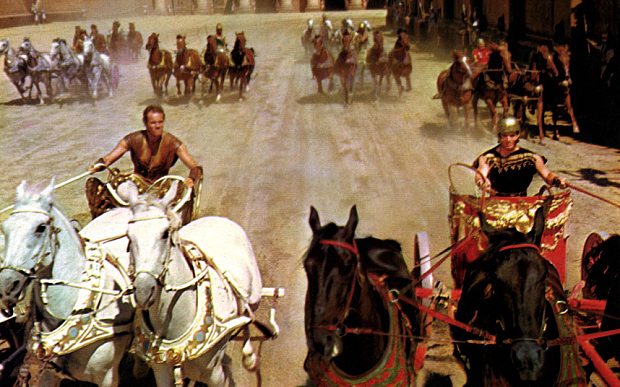
Ben-Hur, 1959 religious epic film directed by William Wyler and starring Charlton Heston, previously discussed, in the title role. It’s based on the 1880 novel Ben-Hur: A Tale of the Christ by Lew Wallace, and a remake of the 1925 silent film version.

The film focuses on a Jewish prince named Judah Ben-Hur, living in Jerusalem during the days of Christ’s ministry. Unfairly condemned to the galleys as a slave after an accidental death, Ben-Hur is later freed and becomes a champion charioteer, the film reaching its climax with a thrilling race-to-the-death against the man who sent him to the galleys.

Ben-Hur had the largest budget and the largest sets built of any film produced at the time, leading to the phrase “bigger than Ben-Hur” to describe anything on a grand scale. It was the #1 film of 1959 at the box office, received overwhelming critical acclaim, and was the second-highest grossing film of that time, after Gone With the Wind. It won a record eleven Academy Awards, including Best Picture, Best Director, Best Actor in a Leading Role, and Best Cinematographer. It is considered one of the greatest epics of all time, and one of the best films in cinematic history.

The film was released on DVD in 2001, suggesting the possibility that Lorelai had watched it fairly recently.

Montana

BOOTSY: I spent a summer training horses in Montana.

Montana is the fourth-largest US state, situated in the north west region of the nation. Its name is from the Spanish for “mountainous country”, and the Rocky Mountains are in the west of the state, while the eastern side is characterised by prairies and badlands. It is sometimes called “Big Sky Country”. The economy is primarily based on agriculture, including cereal crops and ranching. Dude ranches are common here, and it’s possible that Bootsy is exaggerating a summer vacation on a dude ranch as “working with horses”.

EDIT: Thanks to sharp-eyed reader melcauble for pointing out a silly error in this entry, where I accidentally wrote Rune instead of Bootsy!

Washington Irving

SOOKIE: No! It tastes too twentieth century guys. It’s gotta shout Washington Irving, not Irving my accountant.

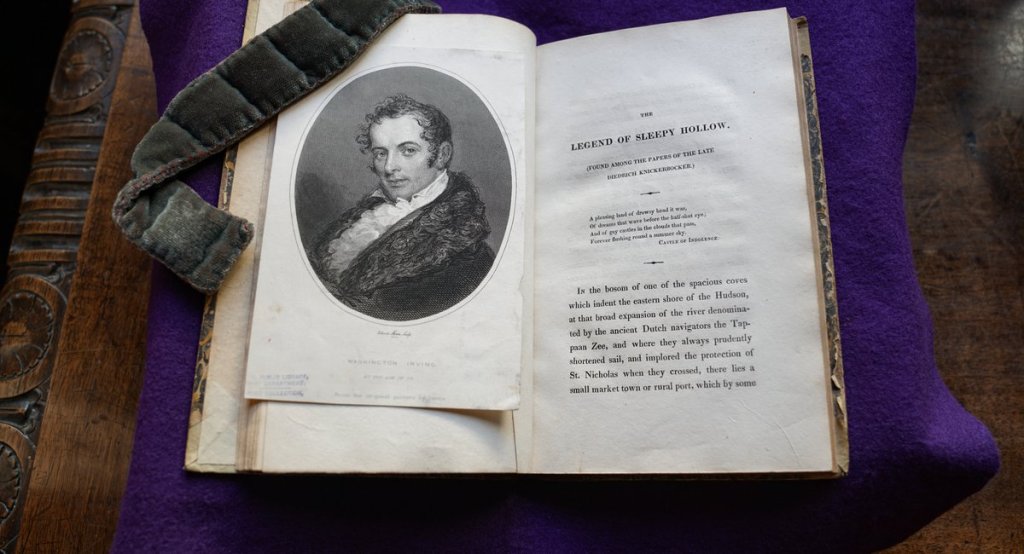
Washington Irving (1783-1859), American author most famous for his stories “Rip van Winkle” and “The Legend of Sleepy Hollow”, both of which appear in his collection, The Sketchbook of Geoffrey Crayon, Gent., previously mentioned as the source of the Bracebridge Dinner.

The Bracebridge Dinner at the Ahwahnee Hotel is in fact quite contemporary, and doesn’t shout Washington Irving either. Sookie may be too stressed to remember that she is actually living and cooking in the twenty-first century.