RORY: Oh, a girl told me once that if your scalp is hurting from bleach, drink a 7 Up. It’s something to do with the bubbles.
LANE: The Kim household does not have soft drinks.
RORY: Well, what do you got?
LANE: Something called Salad Water imported from Korea. Believe me, it’s nothing like 7 Up.
7 Up, a lemon-lime flavoured soft drink owned by Dr Pepper, and distributed by Pepsi. It was created by Charles Leiper Grigg in St Louis in 1929, two weeks before the Wall Street stock market crash of that year. Originally called Bib-Label Lithiated Lemon-Lime Soda, it contained lithium citrate, a mood stabiliser used to treat manic states and bipolar disorder. It became 7 Up in 1936, and nobody really knows why that name was chosen – some say that it refers to the seven original ingredients, some that it’s a coded reference to lithium, which has an atomic mass around 7.
7 Up won’t do anything to stop your scalp hurting after bleach (and if it’s the bubbles, wouldn’t any soft drink do the same thing?), but I’ve seen it recommended for stomach ache and the common cold, so there seems to be a lot of belief in it as a folk remedy. I suspect Rory is saying anything to distract Lane, and possibly hoping for a placebo effect.
Salad Water, or Water Salad [pictured], is water flavoured with green salad, produced by Coca-Cola in Japan. I’m not sure why the Kims have imported it from Korea when it’s a Japanese product – perhaps the Korean import-export company imports it from Japan, then exports it to the US.
LANE: So I have to figure out a way to rehearse in Hartford two or three nights a week … And maybe at the same time I’ll attempt to master quantum physics, and throw Sanskrit in there, too.
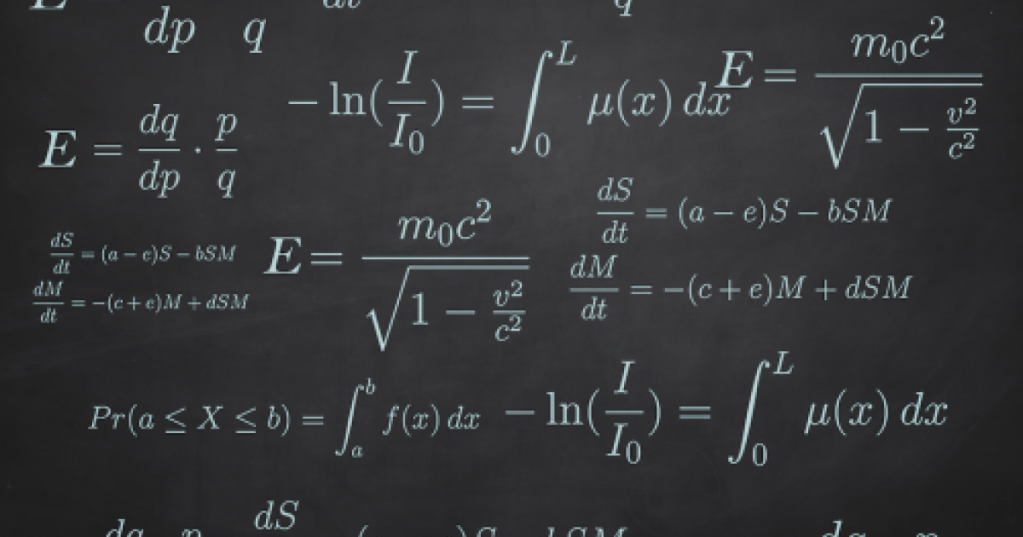
Quantum Physics: quantum mechanics, a fundamental theory in physics that provides a description of the physical properties of nature at the scale of atom and subatomic particles.
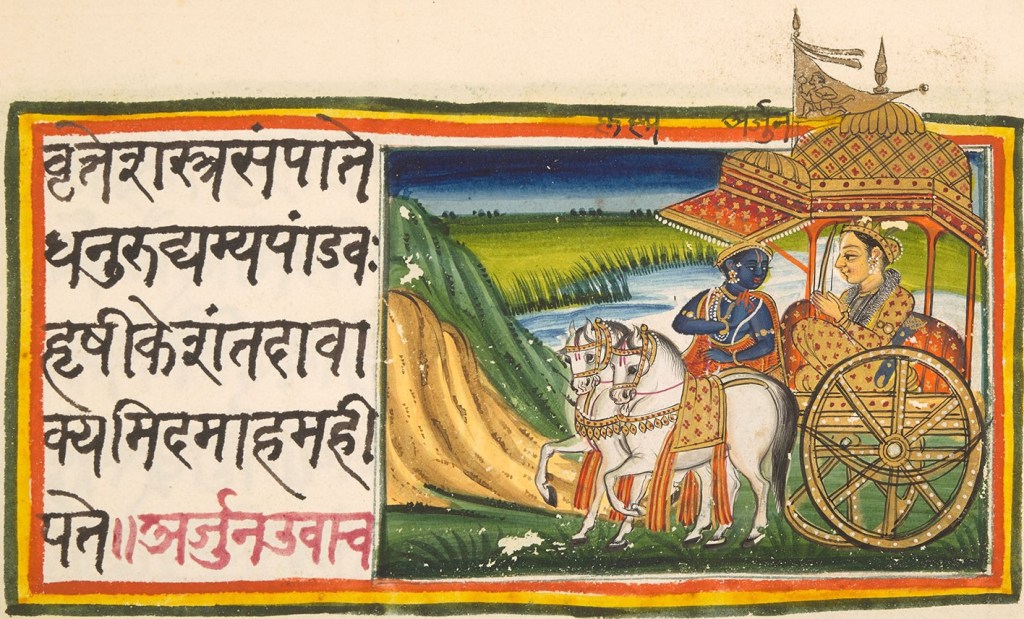
Sanskrit: a classical language of South Asia belonging to the Indo-Aryan branch of languages. It is the sacred language of Hinduism, the language of Hindu philosophy, and of historical texts for Buddhism and Jainism. The word literally means “well-made, perfectly formed”, to suggest pure, carefully prepared sacred texts.
[Picture shows a passage from the Bhagavad Gita in Sanskrit]
DARREN: Jennifer, can you give me the three sub-classes of the Mesozoic Era?
JENNIFER: Triassic, Jurassic, and Cretaceous … Follow-up – what preceded the Mesozoic Era?
DARREN: Paleozoic.
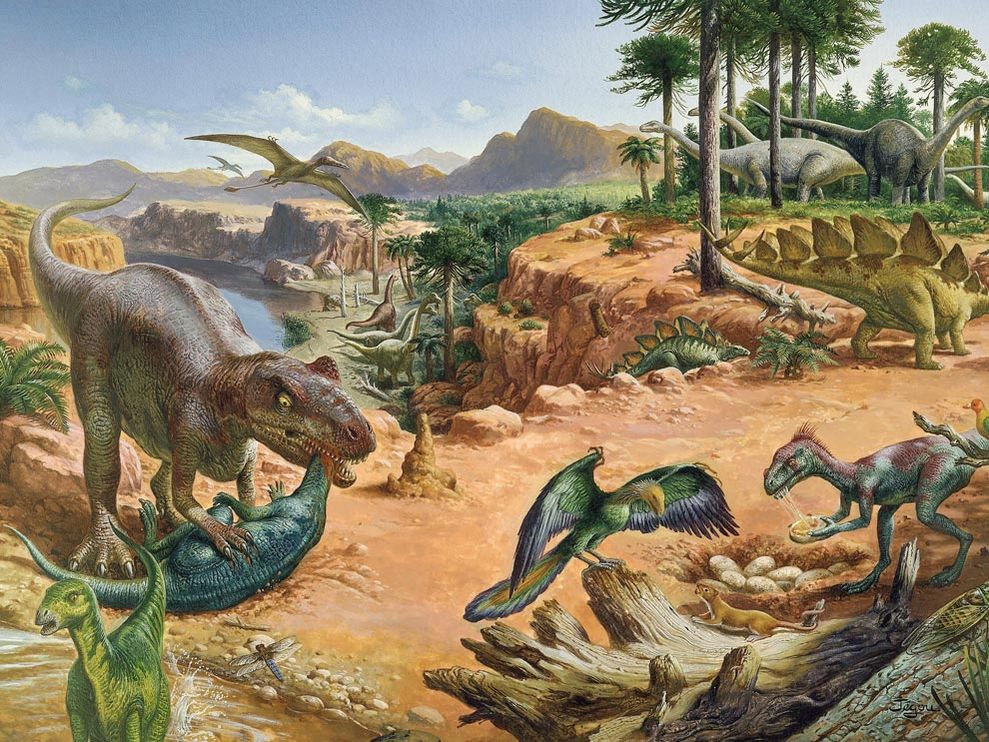
The Mesozoic Era is the second-last era of Earth’s geological history, lasting from 252 to 66 million years ago, and comprising the Triassic, Jurassic, and Cretaceous periods. It is sometimes called the Age of Reptiles of the Age of Conifers, and is characterised by the dominance of dinosaurs, an abundance of conifers and ferns, a hot greenhouse climate, and the tectonic breakup of the supercontinent Pangaea. The name Mesozoic means “middle life” in ancient Greek.
The Paleozoic Era came before the Mesozoic Era, the earliest of the three eras of geological history, with a name meaning “ancient life”. It was a time of dramatic geological, climatic, and evolutionary change, seeing an explosion of new species emerging, and life beginning in the ocean, but transitioning to the land.
LUKE: Taylor, no, no, no, no, and every day from now on ’til the end of my life, I am gonna come in here and say, “Taylor, no!” And when I die, I’m gonna have them freeze me next to Ted Williams, and when they find the cure to what I died of and they unfreeze me, my first words are gonna be, “How’s Ted?” followed closely by, “Taylor, no!”.
Theodore “Ted” Williams (1918-2002), professional baseball player and manager who played his entire career for the Boston Red Sox, from 1939-1960. Inducted into the Baseball Hall of Fame in 1966.
Ted Williams died in Florida of cardiac arrest at the age of 83 on July 5, 2002. Although his last will and testament asked that he be cremated and his ashes scattered in the Florida Keys, his son John-Henry and his younger daughter Claudia chose to have his remains cryonically frozen.
Ted’s elder daughter, Bobby-Jo Ferrell, brought a suit to have her father’s wishes recognised. John-Henry’s lawyers then produced a “pact” signed by Ted, John-Henry, and Claudia, agreeing that they would all be frozen, in the hopes of being together again one day. Ted’s signature was found to be genuine, and Bobby-Jo dropped the case due to lack of funds. Publicity from the case increased the number of enquiries to cryonics organisations.
Ted Williams’ biographer, Leigh Montville, claims that Williams’ signature on the pact was a practice autograph on a plain piece of paper, around which the family agreement was written. He had signed the pact Ted Williams, as he did for autographs, while legal documents were signed Theodore Williams.
John-Henry Williams unexpectedly died from acute leukaemia in 2004, and was also cryonically frozen by Alcor in fulfilment of the family agreement.
PARIS: I said, I’m not taking AP Calculus from Henemen.
Calculus, is a branch of mathematics focused on limits, functions, derivatives, integrals, and infinite series. This subject constitutes a major part of contemporary mathematics education. It has widespread applications in science, economics, and engineering.
In Season 1, Rory implied she was studying Trigonometry, usually part of pre-calculus mathematics courses. Most likely, she is now preparing to take AP Calculus in her senior year.
RORY: That diploma hanging on the wall is going to make this all worthwhile, trust me.
LORELAI: I guess, unless I turn into John Nash and start drooling on people.
John Nash (1928-2015), mathematician who made fundamental contributions to game theory, differential geometry, and the study of partial differential equations. His theories are widely used in economics. Nash is the only person to win both the Abel Prize and the Nobel Memorial Prize in Economics Sciences.
In 1958, Nash began showing clear signs of mental illness and spent several years in psychiatric hospitals being treated for schizophrenia. His condition slowly improved in the 1970s, allowing him a return to academic work by the mid 1980s.
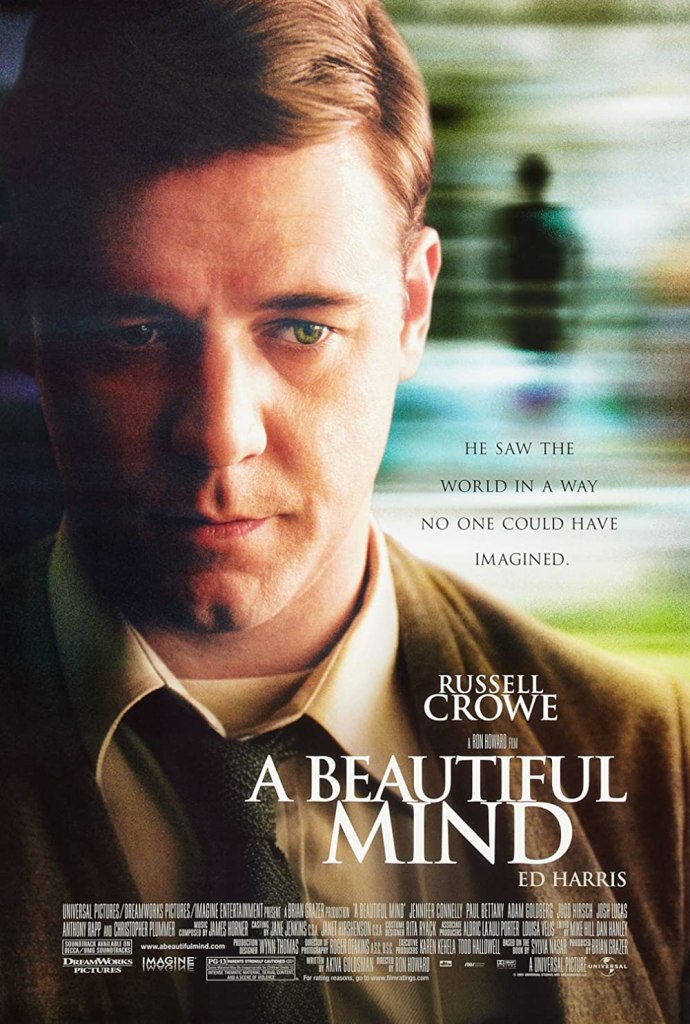
John Nash’s struggles with mental illness and his recovery were highlighted in the 2001 biographical film, A Beautiful Mind, directed by Ron Howard and based on the 1997 best-selling Pulitzer-winning biography of the same name by Sylvia Naser, with Russell Crowe starring as Nash. A Beautiful Mind was a commercial and critical success, winning four Academy Awards, including Best Picture and Best Director.
TAYLOR: That boy [Jess] is a walking natural disaster, they should name a tornado after him.
Tornadoes don’t receive personal names, that’s only for hurricanes and tropical cyclones. There has never been a Hurricane Jess, or Tropical Cyclone Jess.
The reference to tornadoes is yet another allusion to The Wizard of Oz [pictured], because it was a tornado that carried Dorothy to the Land of Oz. A possible hint that Jess could provide a gateway to another world for Rory.
Albert Einstein (1879-1955), German-born theoretical physicist, widely acknowledged as one of the greatest physicists of all time. Einstein is best known for developing the theory of relativity, but he also made important contributions to the development of the theory of quantum mechanics – relativity and quantum mechanics are the two pillars of modern physics.
His intellectual achievements and originality resulted in the name “Einstein” becoming synonymous with the word “genius”, so that Luke is saying that he is the genius of his family. In fact, Jess looks to be the genius of the family we know so far, and in a future season, Luke will meet a previously unknown relative who appears to be the real family genius.
Rory buys several books at the fundraiser, but only a couple of the titles are visible. Gypsy the mechanic is volunteering her time to work at the fundraiser, and she points Rory to the astronomy section, as if Rory has an interest in this area, and Gypsy somehow knows about it. Both quite surprising things to learn! The Buy a Book Fundraiser is held outside the library, and may be raising funds for new books.
Inherit the Wind
A 1955 play by Jerome Lawrence and Robert E. Lee, fictionalising the events of the Scopes “Monkey” Trial. This was a legal trial in July 1925 where schoolteacher John Scopes was taken to court by the state of Tennessee for teaching human evolution. There was intense media scrutiny of the case, with publicity given to the high-profile lawyers who had taken the case. The prosecution had former Secretary of State, William Jennings Bryan, while Clarence Darrow defended Scopes – the same lawyer who had defended child murders Leopold and Loeb, previously discussed. Scopes was fined $100, but the case was overturned on a technicality. The case was seen as both a theological contest, and a test as to whether teachers could teach modern science in schools.
The play gives everyone involved in the Scopes Trial different names, and substantially alters numerous events. It is not meant to be a historical account, and is a means to discuss the McCarthy trials of the 1950s, where left-wing individuals were persecuted as Communist sympathisers, under a regime of political repression and a fear-mongering campaign.
Rory might be particularly interested in the play because of the focus it places on the media, with reporter E.K. Hornbeck covering the case for a fictional Baltimore newspaper. He is based on journalist and author H.L. Mencken, previously discussed as one of Rory’s heroes, who gained attention for his satirical reporting on the Scopes Trial for the Baltimore Morning Herald.
Inherit the Wind premiered in Dallas in 1955 to rave reviews, and opened on Broadway a few months later with Paul Muni, Ed Begley, and Tony Randall in the cast. It’s been revived on Broadway in 1996 and in 2007, as well as in Philadelphia, London, Italy, and India.
It was adapted into film in 1960, directed by Stanley Kramer, and with Spencer Tracey starring as the defence lawyer, Dick York as the schoolteacher, and Gene Kelly as the Baltimore journalist. It received excellent reviews and won awards at the Berlin Film Festival. It’s also been made for television in 1966, 1988, and in 1999 (starring George C. Scott, Jack Lemmon, and Beau Bridges). It seems likely that Rory watched the most recent version on television.
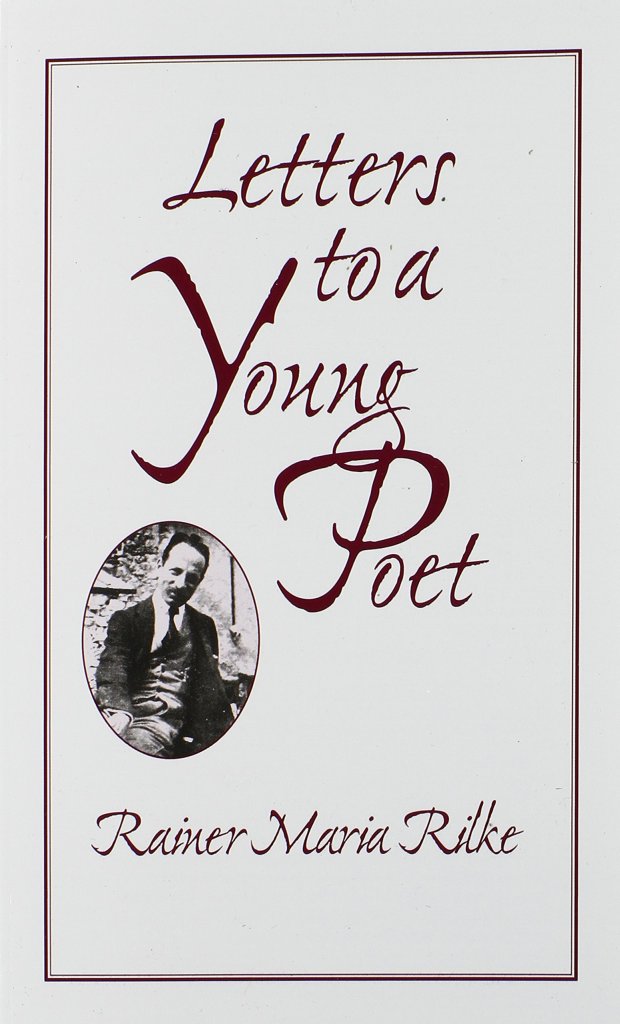
Letters to a Young Poet
A 1929 collection of ten letters written by the Bohemian-Austrian poet Rainer Maria Rilke, to a young officer cadet named Franz Xaver Kappus at the Theresian Military Academy in Wiener Neustadt, Austria between 1902 and 1908.
Kappus had written to Rilke, seeking advice on the quality of his poetry, to help him choose between a literary career, or one as an officer in the Austro-Hungarian Army. Kappus had been reading Rilke’s poetry when he discovered that Rilke had earlier studied at the academy’s lower school in St. Pölten, and decided to write to him for advice.
Rilke gave Kappus very little criticism or suggestions on improving his writing, and said that nobody could advise him or make life decisions for him. Over the course of ten letters, he instead provided essays on how a poet should feel and seek truth in experiencing the world around him. They offer insights into Rilke’s poetic ideas and themes, and his work processes.
Kappus did meet Rilke at least once, and despite his concerns about pursuing a military career, he continued his studies and served for 15 years as an army officer. During the course of his life, he worked as a journalist and reporter, and wrote poems, stories, novels, and screenplays. However, he never achieved lasting fame.
This is a book which features a future journalist – but one who yearns to become a poet. Is it a sign that Rory secretly wishes she could become a creative writer instead? Is she hoping that being successful in journalism will help her become a published author (it’s definitely a help in getting novels published, or at least considered). Is it even a hint that she will become a writer in the future, as she does in A Year in the Life, but is not destined to become famous from her writing? (Most published writers, even quite successful ones, don’t get famous, after all).
And is this correspondence between a poet and a student at a military academy meant to suggest that Rory is still thinking of Tristan, who went away to military school? Are she and Tristan actually writing to each other, or is the show leaving the door open for Tristan to possibly return in a future season, since they didn’t know how long One Tree Hill was going to last?




 The Annotated Gilmore Girls