PARIS: [on phone] Hola, es Paris. Voy a comer la cena de cas de Rory. Hay mucho mac and cheese!
Paris’ nanny is Portuguese, yet Paris speaks Spanish to her here (is Nanny bilingual? Why can’t she speak English?).
She says, “Hi, it’s Paris. I’m going to eat dinner at Rory’s house. There’s a lot of mac and cheese!”.
She doesn’t translate “mac and cheese” into Spanish, which would be macarrones con queso. Probably because American mac and cheese feels like a completely different dish to what a Spanish-speaker would be expecting, unless she couldn’t think of the right word for it.
Paris is allergic to dairy products, which was introduced in the episode, “Concert Interruptus” (Lorelai ordered her a cheese-free pizza). Someone eating something they’re allergic to isn’t a “splurge”, it’s a potential medical emergency!
Paris asks if Stars Hollow, a town of less than 10 000 people, has a 24-hour pharmacy in case she has a severe allergic reaction. Unbelievably, they do! In real life, the nearest 24-hour pharmacy to them would be in Waterbury or Hartford.
Rory may simply be lying, eager to keep Paris there so she is not left alone with Jess. If so, she’s taking a bit of a risk with Paris’ health in the process.
JESS: He wasn’t sure how long your mom was gonna be gone for.
RORY: Just tonight.
Emily invited Lorelai to spend the weekend with her, then turned up to collect her on Friday morning (rather than Saturday morning, as a weekend would suggest). Rory indicates that they were only spending Friday night at the spa, yet at the end of the episode, Emily and Lorelai are said to be leaving early when they go home on Saturday morning.
Either Rory is psychic, or she is trying to discourage Jess from thinking he can hang around or pester her all weekend. She may be protecting herself from Jess even more carefully than she protected herself from Dean, out of worry that sex might be on the menu as well as macaroni cheese.
Good thinking, because Jess needs only the slightest encouragement to invite himself to dinner, which was his plan all along.
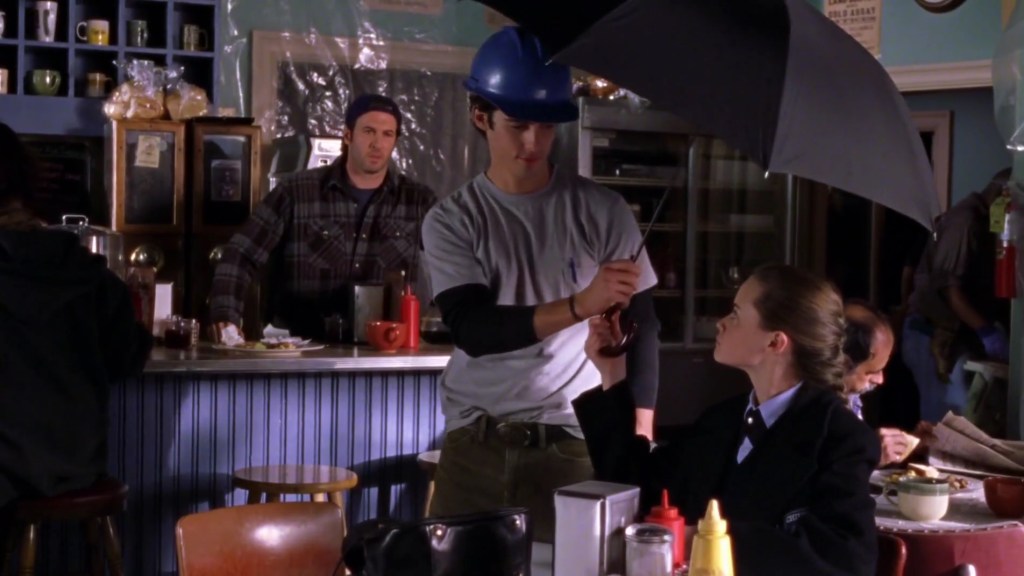
We open with the diner in disarray, because Luke’s apartment that he bought in the previous episode is still under construction. In real life, it usually takes months for the sale of a property to go through so you can begin work on it, but this is television, and Luke is already in the middle of renovations.
Jess, wearing a construction helmet, chivalrously brings Rory an umbrella to shield her from the mess. Although Luke gets cranky about Jess making fun of the situation, the umbrella saves Rory from being hit by debris just a minute or so later.
This is the first official sighting of Tom the Contractor, although it is the same actor (Biff Yeager) who played Tom who was the foreman at Rebuilding Together in Hartford where Rory did volunteer work. They have the same name and personality, and obviously look the same, so it seems perfectly possible that they are actually the same character. This is never confirmed, however.
It’s not clear how much time has passed since the previous episode, but Luke complains to Tom about the renovation taking another week, and in 2002 Easter was at the end of March, so perhaps three weeks have gone by and it’s now early April (Thursday 4th April). I won’t be able to keep blog entries in step with events in the show, or I will run out of time. Time gets very stretchy in the last few episodes of the season!
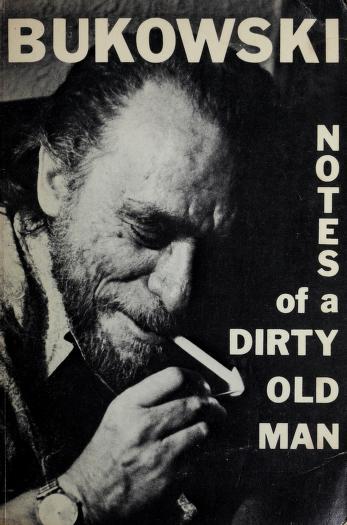
This is the book that Jess is reading on his bed when Luke comes in.
Notes of a Dirty Old Man is a 1969 book by Charles Bukowski, a collection of his newspaper columns for the underground Los Angeles newspaper, Open City. His articles showcased his trademark crude humour and attempts to provide a truthful viewpoint of events in his life. He writes openly about his alcoholism and hook-ups with prostitutes and married women.
Some of the quotes from the book sound like things that Jess could probably relate to:
The people walk with such an indifference I begin to hate them, but then again I’ve never really been fond of anything.
Is it possible to love a human being? Of course, especially if you don’t know them too well.
The people will always betray you. Never trust the people.
This kind of nihilistic self-hatred and detachment from others is heady stuff for a teenage boy who’s been kicked around, and I can imagine Jess reading this as a kind of wisdom needed to survive in the world.
Like Rory, Jess has a strong interest in journalism – but a very different type of journalism. Did he recommend this book to Rory? It seems likely. And likely that she would read it, too.
JESS: It’s really that big a deal? RORY: What do you mean? JESS: I mean, I know it’s got an ‘I’ve been pinned’ Bye Bye Birdie kind of implication to it, but it was just a bracelet.
Bye Bye Birdie, 1963 musical comedy film directed by George Sidney, based on the award winning 1960 Broadway musical of the same name, with music by Charles Crouse, lyrics by Lee Adams, and book by Michael Stewart.
Set in 1958, the story was inspired by Elvis Presley’s draft into the US army in 1957. Jesse Pearson plays Conrad Birdie, a teen idol based on Elvis, his name a play on Conway Twitty, Presley’s rival at the time.
Conrad Birdie is giving a farewell performance in Columbus, Ohio, to end with his song, “One Last Kiss”. It is arranged for him to kiss a randomly chosen high school girl at the end of the song before going into the army. The teenager chosen is Kim MacAfee (played by Ann-Margret) from the town of Sweet Apple, but Kim’s boyfriend Hugo Peabody (played by Bobby Rydell) isn’t thrilled, as he and Kim have got “pinned” – he’s given her his fraternity pin to wear, indicating a serious commitment between them. When Birdie kisses Kim in a rehearsal, she swoons.
Elvis Presley himself was the first choice for the role of Birdie, but his manager Colonel Tom Parker wouldn’t allow it. The film helped make Ann-Margret such a star that in 1964 she appeared with Elvis himself in Viva Las Vegas.
Jess is saying that Rory and Dean are the small-town teenage sweethearts, and he is the sexy outsider. It seems slightly egotistical, and a bit demeaning to Rory, as if he has randomly chosen her for a meaningless encounter; it strongly suggests Jess doesn’t intend to stick around.
The film ends with Hugo knocking Birdie out before he can kiss Kim on stage, which might be what Jess is expecting from Dean – that he’ll punch Jess before he gets a chance with Rory. In the stage musical, the story continues with Kim going off to hang out with Birdie, and he is arrested for attempted statutory rape. Kim claims to have been intimidated by Birdie, and gladly returns to Hugo.
Quite a few warnings for Rory in this apparently casual reference! Foreshadowing, on multiple levels.
The reference to Birdie being about to go into the army makes me wonder if this reference was originally meant for Tristan, who went off to military school. Jess is much more of a Birdie than Tristan, however.
While Lorelai checks the car to see if the bracelet is there, we see Jess outside, staring at the bracelet with a look of unhappy disillusionment. All this time he has been cherishing it as a memento of Rory, something which has actually touched her skin. He must feel such a fool when he discovers he’s been unwittingly sighing over something Dean made for her, and probably concerned when he realises that losing it has upset Rory and caused her to worry about Dean’s reaction.
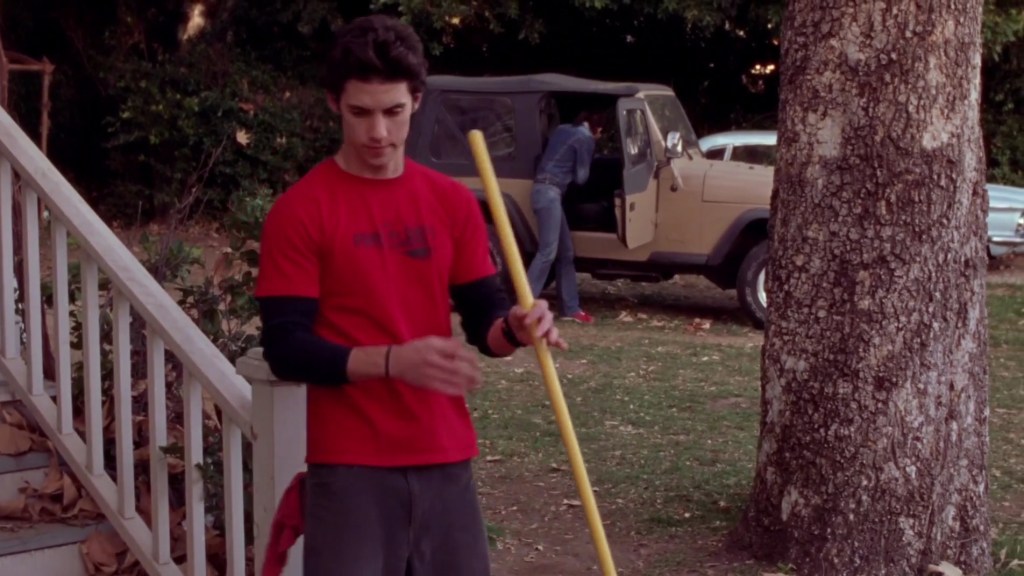
Jess is actually wearing the bracelet on his wrist, so he has made no effort to conceal that he has it, and both Rory and Lorelai have seen it without realising its significance. Jess wears several leather bracelets, so it doesn’t stand out, although he has been careful to wear Rory’s bracelet on a different wrist from the others. Talk about hiding in plain sight!
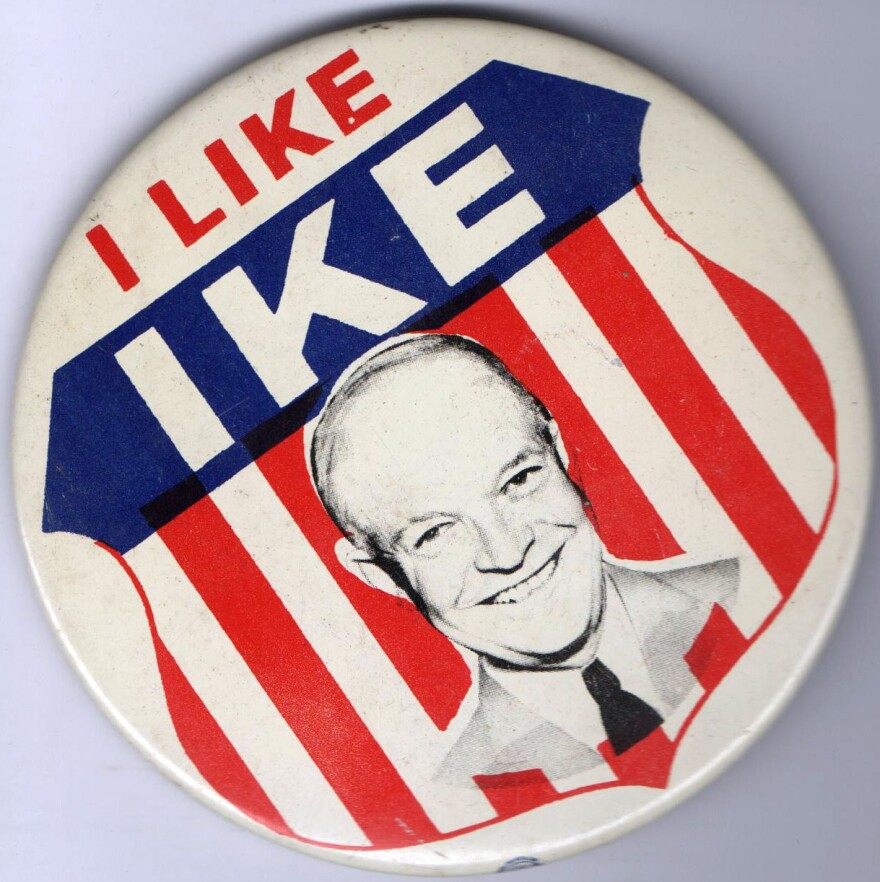
JESS: So when was the last time you had those gutters cleaned? LORELAI: It’s been awhile. JESS: Yeah, I found an ‘I like Ike’ bumper sticker up there.
“I like Ike” was the campaign slogan for the 1952 election campaign of US President Dwight D. “Ike” Eisenhower. He won the election for the Republicans in a landslide victory, and became the country’s 34th president.
Hopefully Jess is joking – not having your gutters cleaned for half a century sounds pretty bad.
This is the book Kirk is trying to buy at the fundraiser, while haggling over the price with Gypsy.
Like Water for Chocolate (in Spanish, Como agua para chocolate) is a novel by Mexican author and screenwriter Laura Esquivel, published in 1989. It is about a young girl named Tita who is forbidden to be with her love, Pedro, and can only express her emotions through cooking. Each chapter of the book contains a recipe for a Mexican dish.
The novel is a magical realist romantic tragedy which has sold more than a million copies in Spain and Latin America, and was also successful in the US. Despite winning the 1994 American Booksellers Book of the Year Award, it received only lukewarm reviews.
The novel was adapted into a highly successful Mexican film in 1992; the screenplay was written by Esquivel. The phrase “like water for chocolate” is a Spanish phrase, referring to emotions that are hot and bubbling over, like water being boiled for making hot chocolate.
Kirk may have enjoyed the film so decided to read the book as well. It’s yet another reference to forbidden love (and food!) in the Gilmore Girls series.
Rory buys several books at the fundraiser, but only a couple of the titles are visible. Gypsy the mechanic is volunteering her time to work at the fundraiser, and she points Rory to the astronomy section, as if Rory has an interest in this area, and Gypsy somehow knows about it. Both quite surprising things to learn! The Buy a Book Fundraiser is held outside the library, and may be raising funds for new books.
Inherit the Wind
A 1955 play by Jerome Lawrence and Robert E. Lee, fictionalising the events of the Scopes “Monkey” Trial. This was a legal trial in July 1925 where schoolteacher John Scopes was taken to court by the state of Tennessee for teaching human evolution. There was intense media scrutiny of the case, with publicity given to the high-profile lawyers who had taken the case. The prosecution had former Secretary of State, William Jennings Bryan, while Clarence Darrow defended Scopes – the same lawyer who had defended child murders Leopold and Loeb, previously discussed. Scopes was fined $100, but the case was overturned on a technicality. The case was seen as both a theological contest, and a test as to whether teachers could teach modern science in schools.
The play gives everyone involved in the Scopes Trial different names, and substantially alters numerous events. It is not meant to be a historical account, and is a means to discuss the McCarthy trials of the 1950s, where left-wing individuals were persecuted as Communist sympathisers, under a regime of political repression and a fear-mongering campaign.
Rory might be particularly interested in the play because of the focus it places on the media, with reporter E.K. Hornbeck covering the case for a fictional Baltimore newspaper. He is based on journalist and author H.L. Mencken, previously discussed as one of Rory’s heroes, who gained attention for his satirical reporting on the Scopes Trial for the Baltimore Morning Herald.
Inherit the Wind premiered in Dallas in 1955 to rave reviews, and opened on Broadway a few months later with Paul Muni, Ed Begley, and Tony Randall in the cast. It’s been revived on Broadway in 1996 and in 2007, as well as in Philadelphia, London, Italy, and India.
It was adapted into film in 1960, directed by Stanley Kramer, and with Spencer Tracey starring as the defence lawyer, Dick York as the schoolteacher, and Gene Kelly as the Baltimore journalist. It received excellent reviews and won awards at the Berlin Film Festival. It’s also been made for television in 1966, 1988, and in 1999 (starring George C. Scott, Jack Lemmon, and Beau Bridges). It seems likely that Rory watched the most recent version on television.
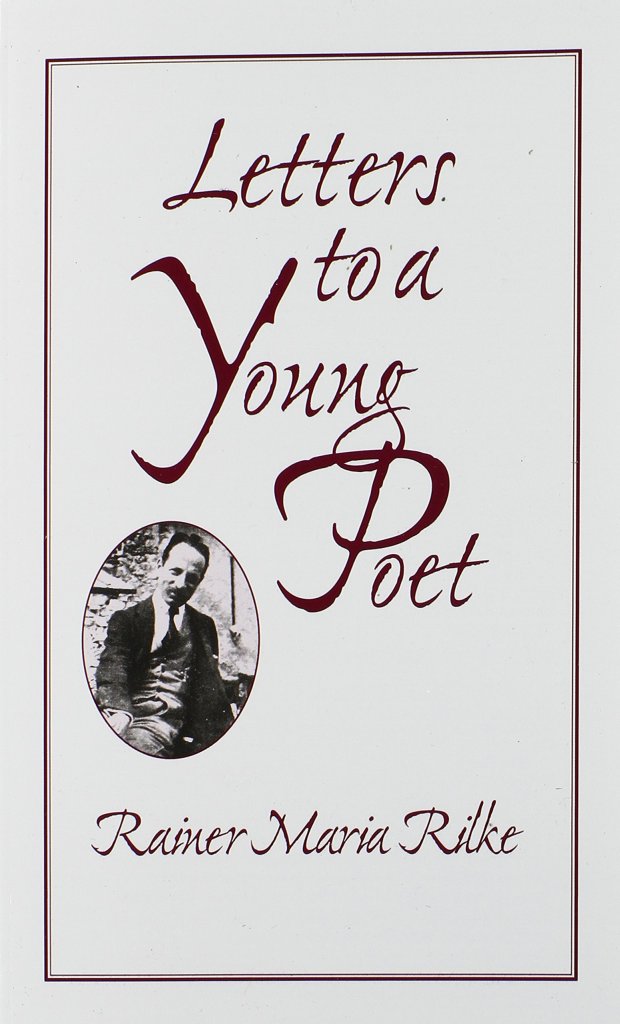
Letters to a Young Poet
A 1929 collection of ten letters written by the Bohemian-Austrian poet Rainer Maria Rilke, to a young officer cadet named Franz Xaver Kappus at the Theresian Military Academy in Wiener Neustadt, Austria between 1902 and 1908.
Kappus had written to Rilke, seeking advice on the quality of his poetry, to help him choose between a literary career, or one as an officer in the Austro-Hungarian Army. Kappus had been reading Rilke’s poetry when he discovered that Rilke had earlier studied at the academy’s lower school in St. Pölten, and decided to write to him for advice.
Rilke gave Kappus very little criticism or suggestions on improving his writing, and said that nobody could advise him or make life decisions for him. Over the course of ten letters, he instead provided essays on how a poet should feel and seek truth in experiencing the world around him. They offer insights into Rilke’s poetic ideas and themes, and his work processes.
Kappus did meet Rilke at least once, and despite his concerns about pursuing a military career, he continued his studies and served for 15 years as an army officer. During the course of his life, he worked as a journalist and reporter, and wrote poems, stories, novels, and screenplays. However, he never achieved lasting fame.
This is a book which features a future journalist – but one who yearns to become a poet. Is it a sign that Rory secretly wishes she could become a creative writer instead? Is she hoping that being successful in journalism will help her become a published author (it’s definitely a help in getting novels published, or at least considered). Is it even a hint that she will become a writer in the future, as she does in A Year in the Life, but is not destined to become famous from her writing? (Most published writers, even quite successful ones, don’t get famous, after all).
And is this correspondence between a poet and a student at a military academy meant to suggest that Rory is still thinking of Tristan, who went away to military school? Are she and Tristan actually writing to each other, or is the show leaving the door open for Tristan to possibly return in a future season, since they didn’t know how long One Tree Hill was going to last?





 The Annotated Gilmore Girls